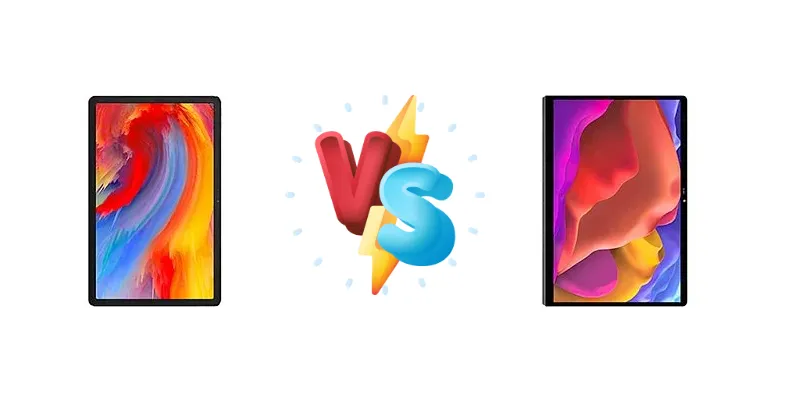
Lenovo offers a compelling range of tablets, but the Pad Plus and Yoga Tab 13 represent distinct approaches. The Pad Plus aims for affordability and 5G connectivity, while the Yoga Tab 13 prioritizes performance with a flagship-tier chipset. This comparison dissects the core differences to determine which tablet best suits your needs.
🏆 Quick Verdict
For most users, the Lenovo Yoga Tab 13 is the superior choice. Its Snapdragon 870 chipset delivers significantly faster performance, making it ideal for demanding tasks and gaming. While the Pad Plus offers 5G, the performance gap justifies the price difference for those prioritizing speed and responsiveness.
| Network |
|---|
| 2G bands | N/A | N/A |
| 3G bands | N/A | N/A |
| 4G bands | N/A | N/A |
| EDGE | No | No |
| GPRS | No | No |
| Technology | No cellular connectivity | No cellular connectivity |
| Launch |
|---|
| Announced | 2021, May 24 | 2021, May 24 |
| Status | Available. Released 2021, May 31 | Available. Released 2021, May 31 |
| Body |
|---|
| Build | Glass front, plastic frame, plastic back | Glass front, aluminum frame, aluminum back |
| Dimensions | 258.4 x 163 x 7.9 mm (10.17 x 6.42 x 0.31 in) | 293.4 mm x 204 mm x 6.2-24.9 mm |
| SIM | No | No |
| Weight | 520 g (1.15 lb) | 830 g (1.83 lb) |
| | Stylus support | Built-in stainless steel kickstand
Stylus support |
| Display |
|---|
| Resolution | 1200 x 2000 pixels, 5:3 ratio (~212 ppi density) | 1350 x 2160 pixels, 16:10 ratio (~196 ppi density) |
| Size | 11.0 inches, 344.4 cm2 (~81.8% screen-to-body ratio) | 13.0 inches, 490.0 cm2 (~56.7% screen-to-body ratio) |
| Type | TDDI IPS LCD, 400 nits (typ) | IPS LCD, HDR10, Dolby Vision, 400 nits |
| Platform |
|---|
| CPU | Octa-core (2x2.2 GHz Kryo 570 & 6x1.8 GHz Kryo 570) | Octa-core (1x3.2 GHz Kryo 585 & 3x2.42 GHz Kryo 585 & 4x1.80 GHz Kryo 585) |
| Chipset | Qualcomm SM7225 Snapdragon 750G 5G (8 nm) | Qualcomm SM8250-AC Snapdragon 870 5G (7 nm) |
| GPU | Adreno 619 | Adreno 650 |
| OS | Android 11, ZUI 12.5 | Android 11, ZUI 12.5 |
| Memory |
|---|
| Card slot | microSDXC (dedicated slot) | No |
| Internal | 128GB 6GB RAM | 256GB 8GB RAM |
| | UFS 2.1 | UFS 3.0 |
| Main Camera |
|---|
| - | No |
| Single | 13 MP, AF | - |
| Video | 1080p@30fps | - |
| Selfie camera |
|---|
| Single | 8 MP
TOF 3D, (depth/biometrics sensor) | 8 MP
TOF 3D, (biometrics sensor) |
| Video | 1080p@30fps | 1080p@30fps |
| Sound |
|---|
| 3.5mm jack | No | No |
| 35mm jack | No | No |
| Loudspeaker | Yes, with stereo speakers (4 speakers) | Yes, with stereo speakers (4 speakers) |
| | Tuned by JBL | Tuned by JBL |
| Comms |
|---|
| Bluetooth | 5.1, A2DP, LE | 5.2, A2DP, LE |
| NFC | No | No |
| Positioning | GPS, BDS | Unspecified |
| Radio | No | No |
| USB | USB Type-C 3.1, OTG, magnetic connector | USB Type-C 3.1, micro HDMI |
| WLAN | Wi-Fi 802.11 a/b/g/n/ac, dual-band, Wi-Fi Direct | Wi-Fi 802.11 a/b/g/n/ac/6, dual-band, Wi-Fi Direct |
| Features |
|---|
| Sensors | Face recognition, accelerometer, gyro, proximity | Face recognition, accelerometer, gyro, proximity |
| Battery |
|---|
| Charging | Wired, QC3 | - |
| Type | Li-Po 7700 mAh | Li-Po 10200 mAh |
| Misc |
|---|
| Colors | White | Gray |
| Models | ZA900000CN | ZA8E0018CN |
| Price | About 200 EUR | About 800 EUR |
Lenovo Pad Plus
- More affordable price point
- Integrated 5G connectivity
- Potentially lighter and more portable
- Significantly lower processing power
- Less capable for demanding tasks
- May exhibit throttling under sustained load
Lenovo Yoga Tab 13
- Superior performance with Snapdragon 870
- Smoother multitasking and gaming experience
- More efficient processor (7nm vs 8nm)
- Higher price tag
- May have shorter battery life during intensive use
- Potentially heavier than the Pad Plus
Display Comparison
While both tablets likely feature IPS LCD panels (data unavailable), the core difference lies in the processing power driving them. Display specs like resolution and refresh rate are missing, but the Yoga Tab 13’s superior chipset will contribute to smoother animations and faster rendering of graphically intensive content. The absence of LTPO technology in either device suggests standard refresh rate operation, impacting battery life during dynamic content.
Camera Comparison
Camera specifications are not provided for either device. Given the market segment, it’s reasonable to assume both tablets feature modest camera setups geared towards video calls and casual snapshots. Without sensor size or aperture information, a detailed comparison is impossible. However, the Yoga Tab 13’s more powerful ISP (Image Signal Processor) within the Snapdragon 870 could potentially deliver slightly better image quality in challenging lighting conditions.
Performance
The Lenovo Yoga Tab 13’s Qualcomm Snapdragon 870 5G (7nm) is a substantial upgrade over the Pad Plus’s Snapdragon 750G 5G (8nm). The 870 features a Kryo 585 core clocked at 3.2 GHz, compared to the 750G’s 2.2 GHz Kryo 570. This translates to a significant performance boost in CPU-intensive tasks and a more capable GPU for gaming. The 7nm process node of the 870 also offers improved power efficiency compared to the 8nm node of the 750G, potentially mitigating some of the performance gains with better thermal management. The Yoga Tab 13 will handle multitasking and demanding apps with greater ease.
Battery Life
Battery capacity is not specified for either device. However, the Snapdragon 870 in the Yoga Tab 13, despite being more powerful, benefits from a 7nm process, potentially offering comparable or even better battery life than the Pad Plus’s Snapdragon 750G. Both tablets support QC3 wired charging, but the actual charging speeds will depend on the included charger and battery capacity. The Yoga Tab 13’s superior processing power will consume more energy during intensive tasks, but its efficiency gains may offset this during lighter use.
Buying Guide
Buy the Lenovo Pad Plus if you need a budget-friendly tablet with 5G connectivity for basic tasks like browsing, streaming, and light productivity. It’s a solid option for students or casual users who prioritize portability and affordability. Buy the Lenovo Yoga Tab 13 if you prefer a more powerful tablet capable of handling demanding applications, multitasking, and gaming. Its superior processor and potential for a smoother user experience make it ideal for professionals and power users.
Frequently Asked Questions
❓ Will the Snapdragon 750G in the Pad Plus be sufficient for playing demanding games like Genshin Impact?
While the Snapdragon 750G can run Genshin Impact, you'll likely need to lower the graphics settings significantly to achieve a playable frame rate. The Yoga Tab 13’s Snapdragon 870 will provide a much smoother and more enjoyable gaming experience at higher settings.
❓ Does the Yoga Tab 13’s processor generate excessive heat during prolonged gaming sessions?
The Snapdragon 870 is known for its relatively good thermal management. While some heat generation is inevitable during extended gaming, the 7nm process and Lenovo’s thermal design should prevent significant throttling, maintaining consistent performance for longer periods.
❓ Is the 5G connectivity on the Pad Plus a significant advantage for most users?
The benefit of 5G depends heavily on your location and data plan. If you live in an area with robust 5G coverage and require fast mobile data speeds, the Pad Plus’s 5G connectivity is a valuable feature. However, for most users, Wi-Fi will remain the primary connection method.