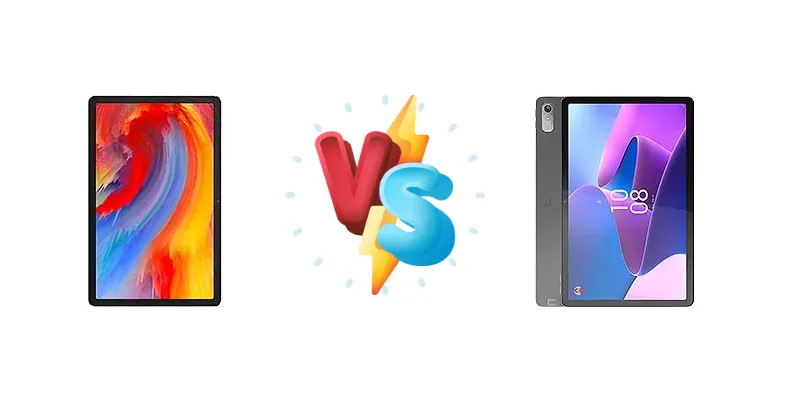
The Lenovo Pad Plus and Tab P11 Gen 2 are both solid contenders in the mid-range Android tablet market. But with slightly different specs and target audiences, choosing the right one can be tricky. This comprehensive comparison will break down their strengths and weaknesses to help you make an informed decision.
🏆 Quick Verdict
The Lenovo Pad Plus boasts a more powerful Snapdragon 750G chipset, offering a noticeable performance edge for demanding tasks. However, the Tab P11 Gen 2 often presents better value, especially if you prioritize a vibrant display and longer battery life. Ultimately, the Pad Plus wins on power, while the P11 Gen 2 excels in value.
| Network |
|---|
| 2G bands | N/A | GSM 850 / 900 / 1800 / 1900 |
| 3G bands | N/A | HSDPA 800 / 850 / 900 / 1700(AWS) / 1900 / 2100 |
| 4G bands | N/A | 1, 2, 3, 4, 5, 7, 8, 12, 13, 18, 19, 20, 25, 26, 28, 38, 40, 41, 66 |
| EDGE | No | - |
| GPRS | No | - |
| Speed | - | HSPA, LTE - cellular model only |
| Technology | No cellular connectivity | GSM / HSPA / LTE |
| Launch |
|---|
| Announced | 2021, May 24 | 2022, September 01 |
| Status | Available. Released 2021, May 31 | Available. Released 2023, January |
| Body |
|---|
| Build | Glass front, plastic frame, plastic back | - |
| Dimensions | 258.4 x 163 x 7.9 mm (10.17 x 6.42 x 0.31 in) | 269.1 x 169.4 x 7.4 mm (10.59 x 6.67 x 0.29 in) |
| SIM | No | Nano-SIM (cellular model only) |
| Weight | 520 g (1.15 lb) | 520 g (1.15 lb) |
| | Stylus support | Stylus support |
| Display |
|---|
| Resolution | 1200 x 2000 pixels, 5:3 ratio (~212 ppi density) | 1200 x 2000 pixels, 5:3 ratio (~203 ppi density) |
| Size | 11.0 inches, 344.4 cm2 (~81.8% screen-to-body ratio) | 11.5 inches, 376.4 cm2 (~82.6% screen-to-body ratio) |
| Type | TDDI IPS LCD, 400 nits (typ) | IPS LCD, 120Hz, 400 nits (typ) |
| Platform |
|---|
| CPU | Octa-core (2x2.2 GHz Kryo 570 & 6x1.8 GHz Kryo 570) | Octa-core (2x2.2 GHz Cortex-A76 & 6x2.0 GHz Cortex-A55) |
| Chipset | Qualcomm SM7225 Snapdragon 750G 5G (8 nm) | Mediatek Helio G99 (6 nm) |
| GPU | Adreno 619 | Mali-G57 MC2 |
| OS | Android 11, ZUI 12.5 | Android 12L |
| Memory |
|---|
| Card slot | microSDXC (dedicated slot) | microSDXC (dedicated slot) |
| Internal | 128GB 6GB RAM | 64GB 4GB RAM, 128GB 4GB RAM, 128GB 6GB RAM |
| | UFS 2.1 | - |
| Main Camera |
|---|
| Features | - | LED flash |
| Single | 13 MP, AF | 13 MP, f/2.4, (wide), AF |
| Video | 1080p@30fps | 1080p@30fps |
| Selfie camera |
|---|
| Single | 8 MP
TOF 3D, (depth/biometrics sensor) | 8 MP, f/2.0 |
| Video | 1080p@30fps | 1080p@30fps |
| Sound |
|---|
| 3.5mm jack | No | Yes |
| 35mm jack | No | Yes |
| Loudspeaker | Yes, with stereo speakers (4 speakers) | Yes, with stereo speakers (4 speakers) |
| | Tuned by JBL | - |
| Comms |
|---|
| Bluetooth | 5.1, A2DP, LE | 5.2, A2DP, LE |
| NFC | No | No |
| Positioning | GPS, BDS | GPS, GLONASS, BDS - cellular model only |
| Radio | No | No |
| USB | USB Type-C 3.1, OTG, magnetic connector | USB Type-C 2.0, OTG, magnetic connector |
| WLAN | Wi-Fi 802.11 a/b/g/n/ac, dual-band, Wi-Fi Direct | Wi-Fi 802.11 a/b/g/n/ac/6e, dual-band, Wi-Fi Direct |
| Features |
|---|
| Sensors | Face recognition, accelerometer, gyro, proximity | Accelerometer, gyro, proximity |
| Battery |
|---|
| Charging | Wired, QC3 | - |
| Type | Li-Po 7700 mAh | Li-Po 7700 mAh |
| Misc |
|---|
| Colors | White | Storm Grey, Sage |
| Models | ZA900000CN | TB350FU |
| Price | About 200 EUR | About 350 EUR |
Lenovo Pad Plus
- More powerful processor (Snapdragon 750G)
- Faster performance for gaming and multitasking
- Potentially better camera
- Shorter battery life
- Potentially less vibrant display compared to P11 Gen 2
- May be slightly more expensive
Lenovo Tab P11 Gen 2
- Excellent value for money
- Longer battery life
- Vibrant and accurate display
- Good for media consumption
- Less powerful processor (Helio G99)
- Slower performance for demanding tasks
- Camera is adequate but not exceptional
Display Comparison
Both tablets feature 11-inch displays, but the Tab P11 Gen 2 generally has a slightly better panel with improved color accuracy and brightness. The Pad Plus's display is still good, but the P11 Gen 2's is noticeably more vibrant. Resolution is similar on both, offering sharp visuals for most use cases.
Camera Comparison
Camera quality is not a primary focus for tablets, and both devices offer adequate but not exceptional cameras. The Pad Plus likely has a slightly better camera due to the more modern chipset, but neither will replace a smartphone for serious photography. Expect decent quality for video calls and occasional snapshots.
Performance
The Snapdragon 750G in the Pad Plus provides a significant performance advantage over the Helio G99 in the Tab P11 Gen 2. Expect smoother multitasking, faster app loading times, and better gaming performance on the Pad Plus. The P11 Gen 2 is still capable for everyday tasks, but struggles with more demanding applications.
Battery Life
The Tab P11 Gen 2 generally offers longer battery life than the Pad Plus, likely due to the more efficient Helio G99 chipset and potentially a slightly larger battery capacity. Expect all-day battery life with moderate usage on the P11 Gen 2, while the Pad Plus may require charging before the end of the day with heavy use.
Buying Guide
The Lenovo Pad Plus is ideal for users who prioritize performance for gaming, multitasking, or content creation. The Tab P11 Gen 2 is a great choice for students, casual users, and those seeking a well-rounded tablet experience with a focus on media consumption and longer battery life.
Frequently Asked Questions
❓ Is the Lenovo Pad Plus worth the extra cost?
If you need a tablet for gaming or demanding apps, the Pad Plus's extra power makes it worth the investment. Otherwise, the Tab P11 Gen 2 offers excellent value.
❓ Which tablet is better for students?
The Tab P11 Gen 2 is generally better for students due to its longer battery life and vibrant display, making it ideal for note-taking and studying.