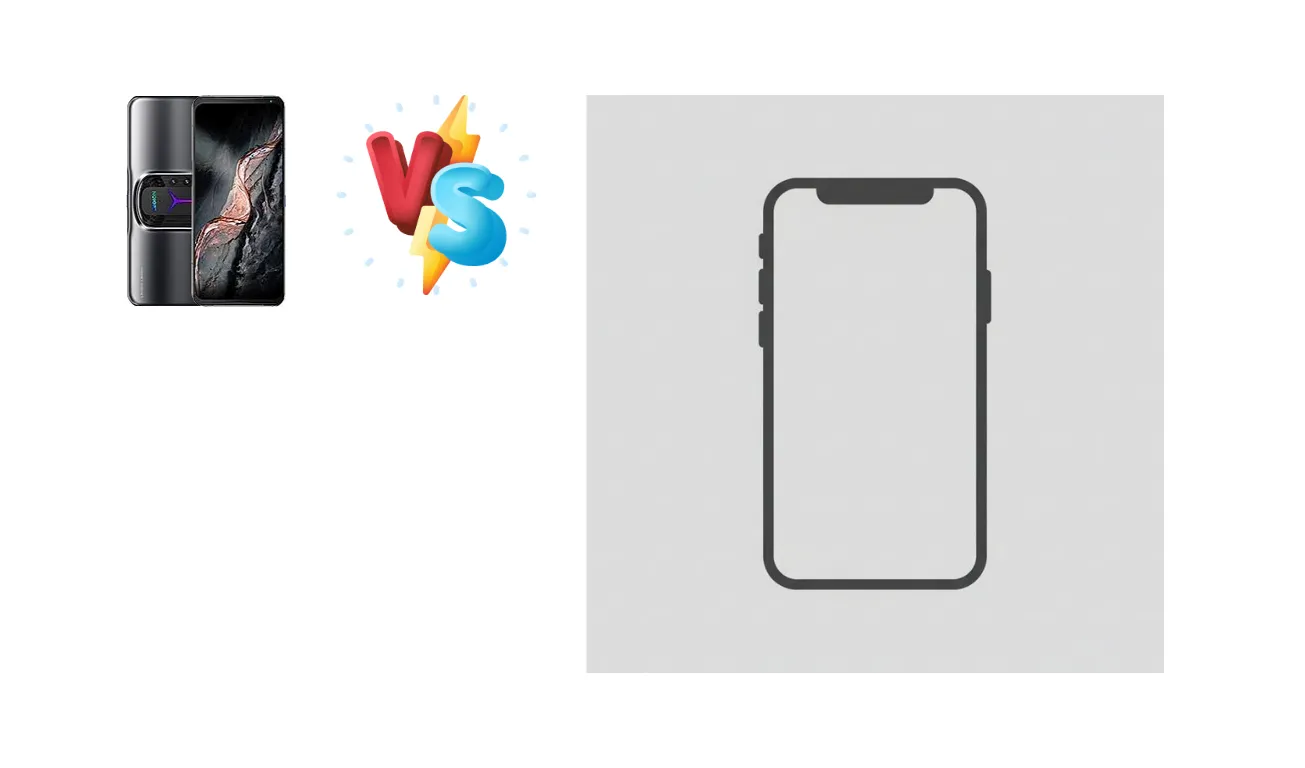
The mobile gaming landscape is fierce, and these two powerhouses – the Lenovo Legion Y90 and the ZTE nubia Red Magic 8 Pro+ – are vying for the title of ultimate gaming phone. Both pack impressive specs, but significant differences exist. Let's dive into a head-to-head comparison to see which one comes out on top.
🏆 Quick Verdict
The ZTE nubia Red Magic 8 Pro+ decisively wins thanks to its significantly faster charging, superior chipset (Snapdragon 8 Gen 2), and likely improved thermal management. While the Legion Y90 is a capable device, the Red Magic 8 Pro+ offers a more premium and optimized gaming experience.
| Network |
|---|
| 2G bands | GSM 850 / 900 / 1800 / 1900 | GSM 850 / 900 / 1800 / 1900 - SIM 1 & SIM 2 |
| 3G bands | HSDPA 800 / 850 / 900 / 1900 / 2100 | HSDPA 850 / 900 / 1700(AWS) / 1900 / 2100 |
| 4G bands | LTE | LTE |
| 5G bands | SA/NSA/Sub6 | SA/NSA |
| Speed | HSPA, LTE, 5G | HSPA, LTE-A, 5G |
| Technology | GSM / CDMA / HSPA / CDMA2000 / LTE / 5G | GSM / CDMA / HSPA / EVDO / LTE / 5G |
| | CDMA2000 1x | CDMA2000 1xEV-DO |
| Launch |
|---|
| Announced | 2022, March 01 | 2022, December 26 |
| Status | Available. Released 2022, March 10 | Available. Released 2022, December 28 |
| Body |
|---|
| Build | - | Glass front, glass back, aluminum frame |
| Dimensions | 177 x 78.4 x 10.1 mm (6.97 x 3.09 x 0.40 in) | 164 x 76.4 x 8.9 mm (6.46 x 3.01 x 0.35 in) |
| SIM | Nano-SIM + Nano-SIM | Dual SIM (Nano-SIM, dual stand-by) |
| Weight | 252 g (8.89 oz) | 230 g (8.11 oz) |
| | Built-in two cooling fans
RGB light panel (on the back)
4 ultrasonic buttons (Gaming triggers) | Pressure sensitive zones (520Hz touch-sensing)
Built-in cooling fan
Aviation aluminum middle frame |
| Display |
|---|
| Protection | - | Unspecified |
| Resolution | 1080 x 2460 pixels (~388 ppi density) | 1116 x 2480 pixels, 20:9 ratio (~400 ppi density) |
| Size | 6.92 inches, 113.7 cm2 (~81.9% screen-to-body ratio) | 6.8 inches, 111.6 cm2 (~89.1% screen-to-body ratio) |
| Type | AMOLED, 144Hz, HDR10+, 1300 nits (peak) | AMOLED, 1B colors, 120Hz, 1300 nits (peak) |
| Platform |
|---|
| CPU | Octa-core (1x3.00 GHz Cortex-X2 & 3x2.50 GHz Cortex-A710 & 4x1.80 GHz Cortex-A510) | Octa-core (1x3.2 GHz Cortex-X3 & 2x2.8 GHz Cortex-A715 & 2x2.8 GHz Cortex-A710 & 3x2.0 GHz Cortex-A510) |
| Chipset | Qualcomm SM8450 Snapdragon 8 Gen 1 (4 nm) | Qualcomm SM8550-AB Snapdragon 8 Gen 2 (4 nm) |
| GPU | Adreno 730 | Adreno 740 |
| OS | Android 12, ZUI 13 | Android 13, Redmagic OS 6 |
| Memory |
|---|
| Card slot | No | No |
| Internal | 256GB 12GB RAM, 256GB 16GB RAM, 640GB 18GB RAM | 256GB 12GB RAM, 512GB 16GB RAM, 1TB 16GB RAM |
| | UFS 3.1
640GB (512GB UFS + 128GB SSD) | UFS 4.0 |
| Main Camera |
|---|
| Dual | 64 MP, f/1.9, 25mm (wide), 1/1.32", 1.0µm, PDAF
13 MP, 120˚ (ultrawide) | - |
| Features | Dual-LED flash, panorama, HDR | LED flash, HDR, panorama |
| Single | - | 16 MP, f/2.0, (wide), 1.12µm, under display |
| Triple | - | 50 MP, f/1.9, 25mm (wide), 1/1.57", 1.0µm, PDAF
8 MP, f/2.2, 120˚, 13mm (ultrawide), 1/4.0", 1.12µm
2 MP, f/2.4, (macro) |
| Video | 8K@24fps, 4K@30/60fps, 1080p@30/60/240fps, gyro-EIS, HDR10+ rec. | 8K@30fps, 4K@30/60fps, 1080p@30/60/120/240fps |
| Selfie camera |
|---|
| Features | HDR | HDR |
| Single | 16 MP | 16 MP, f/2.0, (wide), 1.12µm, under display |
| Video | 4K@30/60fps, 1080p@30/60/120fps | 1080p@30/60fps |
| Sound |
|---|
| 3.5mm jack | No | Yes |
| 35mm jack | No | - |
| Loudspeaker | Yes, with stereo speakers | Yes, with stereo speakers |
| | - | 32-bit/384kHz audio |
| Comms |
|---|
| Bluetooth | 5.2, A2DP, LE | 5.3, A2DP, LE |
| NFC | Yes | Yes (market/region dependent) |
| Positioning | GPS (L1+L5), GLONASS, GALILEO, BDS, QZSS | GPS (L1+L5), GLONASS, BDS, GALILEO |
| Radio | No | No |
| USB | USB Type-C 3.1 Gen2, USB Type-C 2.0, OTG | USB Type-C 3.2, OTG, accessory connector, DisplayPort |
| WLAN | Wi-Fi 802.11 a/b/g/n/ac/6, dual-band, Wi-Fi Direct | Wi-Fi 802.11 a/b/g/n/ac/6e, tri-band, Wi-Fi Direct |
| Features |
|---|
| Sensors | Fingerprint (under display, optical), accelerometer, gyro, proximity, compass | Fingerprint (under display, optical), accelerometer, gyro, proximity, compass |
| Battery |
|---|
| Charging | 68W wired, 100% in 35 min | 165W wired, PD3.0, 100% in 14 min (advertised) |
| Type | Li-Po 5600 mAh | Li-Po 5000 mAh, non-removable |
| Misc |
|---|
| Colors | Gray | Black, Transparent |
| Models | L71061 | - |
| Price | About 570 EUR | About 700 EUR |
Lenovo Legion Y90
- More mainstream design
- Competitive price
- Decent performance
- Good display
- Older chipset (Snapdragon 8 Gen 1)
- Slower charging
- Less optimized for gaming compared to Red Magic
ZTE nubia Red Magic 8 Pro+
- Latest Snapdragon 8 Gen 2 chipset
- Blazing-fast 165W charging
- Superior cooling system
- Dedicated gaming features (shoulder triggers, etc.)
- Potentially better camera
- More aggressive gaming aesthetic
- Potentially higher price
- May have limited availability in some regions
Display Comparison
Both phones feature high refresh rate AMOLED displays, likely around 120Hz or higher, for smooth visuals. The Red Magic 8 Pro+ likely has a slightly brighter display and potentially under-display camera technology for a truly immersive experience. The Legion Y90 may offer a more conventional camera cutout.
Camera Comparison
While neither phone is primarily known for its camera, the Red Magic 8 Pro+ likely boasts a more advanced camera system with higher resolution sensors and improved image processing. Expect better low-light performance and more detailed photos. The Legion Y90's camera is likely adequate but not a standout feature.
Performance
The Snapdragon 8 Gen 2 in the Red Magic 8 Pro+ offers a substantial performance advantage over the Snapdragon 8 Gen 1 in the Legion Y90. Expect faster frame rates, smoother gameplay, and better overall responsiveness in demanding titles. Thermal management will be crucial; the Red Magic 8 Pro+ is expected to have superior cooling solutions.
Battery Life
The Red Magic 8 Pro+'s 165W charging is a game-changer, offering incredibly fast charging times. The Legion Y90's 68W charging is still respectable, but significantly slower. Battery capacity is likely similar, but the Red Magic 8 Pro+'s charging speed provides a major advantage.
Buying Guide
The Lenovo Legion Y90 is a good choice for gamers who prioritize a more mainstream design and a slightly lower price point. The ZTE nubia Red Magic 8 Pro+ is ideal for hardcore mobile gamers who demand the absolute best performance, fastest charging, and a dedicated gaming ecosystem.
Frequently Asked Questions
❓ Is the Red Magic 8 Pro+ worth the extra cost?
If you're a serious mobile gamer, the Red Magic 8 Pro+'s superior performance, charging speed, and gaming-focused features make it a worthwhile investment.
❓ Does the Legion Y90 have shoulder triggers?
No, the Legion Y90 does not have dedicated shoulder triggers like the Red Magic 8 Pro+.
❓ What is the expected battery life of each phone?
Both phones likely offer similar battery life under moderate usage, but the Red Magic 8 Pro+'s faster charging allows for quicker top-ups.