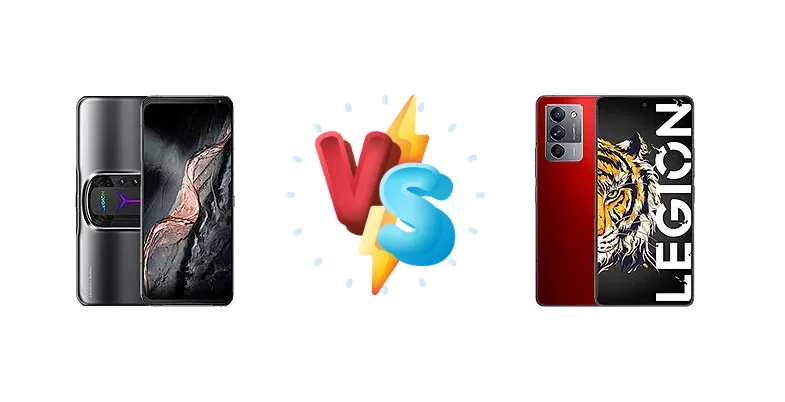
The Lenovo Legion series has carved a niche for itself in the gaming smartphone market, and the Y90 and Y70 are two of their latest contenders. Both promise high-performance gaming experiences, but key differences exist. Let's dive into a detailed comparison to see which phone emerges as the ultimate champion.
🏆 Quick Verdict
The Lenovo Legion Y70 edges out the Y90 thanks to its Snapdragon 8+ Gen 1 chipset, offering slightly better sustained performance and efficiency. While the Y90 boasts a slightly faster peak CPU clock, the Y70's improved chip makes it the more compelling choice for serious mobile gamers.
| Network |
|---|
| 2G bands | GSM 850 / 900 / 1800 / 1900 | GSM 850 / 900 / 1800 / 1900 |
| 3G bands | HSDPA 800 / 850 / 900 / 1900 / 2100 | HSDPA 800 / 850 / 900 / 1900 / 2100 |
| 4G bands | LTE | LTE |
| 5G bands | SA/NSA/Sub6 | SA/NSA/Sub6 |
| Speed | HSPA, LTE, 5G | HSPA, LTE, 5G |
| Technology | GSM / CDMA / HSPA / CDMA2000 / LTE / 5G | GSM / CDMA / HSPA / CDMA2000 / LTE / 5G |
| | CDMA2000 1x | CDMA2000 1x |
| Launch |
|---|
| Announced | 2022, March 01 | 2022, August 18 |
| Status | Available. Released 2022, March 10 | Available. Released 2022, August 23 |
| Body |
|---|
| Build | - | Glass front, aluminum frame |
| Dimensions | 177 x 78.4 x 10.1 mm (6.97 x 3.09 x 0.40 in) | 163.6 x 77 x 8 mm (6.44 x 3.03 x 0.31 in) |
| SIM | Nano-SIM + Nano-SIM | Nano-SIM + Nano-SIM |
| Weight | 252 g (8.89 oz) | 209 g (7.37 oz) |
| | Built-in two cooling fans
RGB light panel (on the back)
4 ultrasonic buttons (Gaming triggers) | - |
| Display |
|---|
| Resolution | 1080 x 2460 pixels (~388 ppi density) | 1080 x 2400 pixels, 20:9 ratio (~395 ppi density) |
| Size | 6.92 inches, 113.7 cm2 (~81.9% screen-to-body ratio) | 6.67 inches, 107.4 cm2 (~85.3% screen-to-body ratio) |
| Type | AMOLED, 144Hz, HDR10+, 1300 nits (peak) | OLED, 144Hz, HDR10+, 1000 nits (peak) |
| Platform |
|---|
| CPU | Octa-core (1x3.00 GHz Cortex-X2 & 3x2.50 GHz Cortex-A710 & 4x1.80 GHz Cortex-A510) | Octa-core (1x3.19 GHz Cortex-X2 & 3x2.75 GHz Cortex-A710 & 4x1.80 GHz Cortex-A510) |
| Chipset | Qualcomm SM8450 Snapdragon 8 Gen 1 (4 nm) | Qualcomm SM8475 Snapdragon 8+ Gen 1 (4 nm) |
| GPU | Adreno 730 | Adreno 730 |
| OS | Android 12, ZUI 13 | Android 12, ZUI 14 |
| Memory |
|---|
| Card slot | No | No |
| Internal | 256GB 12GB RAM, 256GB 16GB RAM, 640GB 18GB RAM | 128GB 8GB RAM, 256GB 12GB RAM, 512GB 16GB RAM |
| | UFS 3.1
640GB (512GB UFS + 128GB SSD) | UFS 3.1 |
| Main Camera |
|---|
| Dual | 64 MP, f/1.9, 25mm (wide), 1/1.32", 1.0µm, PDAF
13 MP, 120˚ (ultrawide) | - |
| Features | Dual-LED flash, panorama, HDR | Dual-LED flash, panorama, HDR |
| Triple | - | 50 MP, (wide), 1/1.55", 1.0µm, PDAF, OIS
13 MP, 120˚ (ultrawide), 1.12µm, AF
Auxiliary lens |
| Video | 8K@24fps, 4K@30/60fps, 1080p@30/60/240fps, gyro-EIS, HDR10+ rec. | 8K@30fps, 4K@30/60fps, 1080p@30/60/240fps, gyro-EIS |
| Selfie camera |
|---|
| Features | HDR | - |
| Single | 16 MP | 16 MP |
| Video | 4K@30/60fps, 1080p@30/60/120fps | Yes |
| Sound |
|---|
| 3.5mm jack | No | No |
| 35mm jack | No | No |
| Loudspeaker | Yes, with stereo speakers | Yes, with stereo speakers |
| Comms |
|---|
| Bluetooth | 5.2, A2DP, LE | 5.2, A2DP, LE |
| NFC | Yes | Yes |
| Positioning | GPS (L1+L5), GLONASS, GALILEO, BDS, QZSS | GPS (L1+L5), GLONASS, GALILEO, BDS, QZSS |
| Radio | No | No |
| USB | USB Type-C 3.1 Gen2, USB Type-C 2.0, OTG | USB Type-C |
| WLAN | Wi-Fi 802.11 a/b/g/n/ac/6, dual-band, Wi-Fi Direct | Wi-Fi 802.11 a/b/g/n/ac/6, dual-band, Wi-Fi Direct |
| Features |
|---|
| Sensors | Fingerprint (under display, optical), accelerometer, gyro, proximity, compass | Fingerprint (side-mounted), accelerometer, gyro, proximity, compass |
| Battery |
|---|
| Charging | 68W wired, 100% in 35 min | 68W wired, 80% in 34 min |
| Type | Li-Po 5600 mAh | Li-Po 5100 mAh |
| Misc |
|---|
| Colors | Gray | Black, Silver, Red |
| Models | L71061 | L71091 |
| Price | About 570 EUR | About 440 EUR |
Lenovo Legion Y90
- Latest Snapdragon 8 Gen 1 chipset
- Potentially slightly faster peak CPU performance
- Aggressive gaming design
- Snapdragon 8 Gen 1 can throttle under sustained load
- Potentially higher price
- Camera not a primary focus
Lenovo Legion Y70
- Snapdragon 8+ Gen 1 chipset (better sustained performance)
- More efficient chipset
- Likely better value for money
- Fast charging
- Slightly older chipset compared to Y90
- Gaming design may not appeal to everyone
Display Comparison
Both phones likely feature high refresh rate AMOLED displays (144Hz or higher) with excellent color accuracy and brightness, typical of the Legion series. The Y90 *might* have a slightly larger display or a marginally improved panel, but both will deliver a premium visual experience. Expect minimal differences here.
Camera Comparison
Both phones are expected to have capable camera systems, likely featuring a 50MP main sensor and ultrawide lens. Image quality will likely be comparable, with both offering decent performance in good lighting conditions. Low-light performance may vary slightly, but neither is likely to be a standout in the camera department compared to flagship phones.
Performance
The Snapdragon 8+ Gen 1 in the Y70 is a significant upgrade over the 8 Gen 1 in the Y90. While both are powerful, the 8+ Gen 1 offers improved thermal management and sustained performance, meaning it will maintain higher clock speeds for longer during intense gaming sessions. The Y90's peak CPU clock speed is slightly higher, but the 8+ Gen 1's efficiency is key.
Battery Life
Both phones feature 68W wired charging, with the Y70 charging slightly faster (80% in 34 min vs 35 min for the Y90 at 68%). Battery capacity is likely similar (around 5000mAh), but the Y70's more efficient chipset should translate to slightly better battery life overall.
Buying Guide
The Lenovo Legion Y90 is ideal for users prioritizing the absolute latest chipset and potentially slightly faster peak performance, though real-world gains may be minimal. The Lenovo Legion Y70 is a better buy for most gamers, offering a more efficient and consistently powerful experience at a potentially lower price point.
Frequently Asked Questions
❓ Is the Lenovo Legion Y90 worth the extra cost?
The Y90's value depends on your priorities. If you absolutely want the latest chipset and are willing to pay a premium, it's an option. However, the Y70 offers a better balance of performance and price for most gamers.
❓ Which phone has better cooling?
The Lenovo Legion Y70, with its Snapdragon 8+ Gen 1, is expected to have better thermal management and sustained performance due to its improved efficiency.