
Lenovo Legion Y700 vs Asus ROG Phone 7 Ultimate: A Deep Dive into Gaming Power
| Phones Images | |||||
|---|---|---|---|---|---|
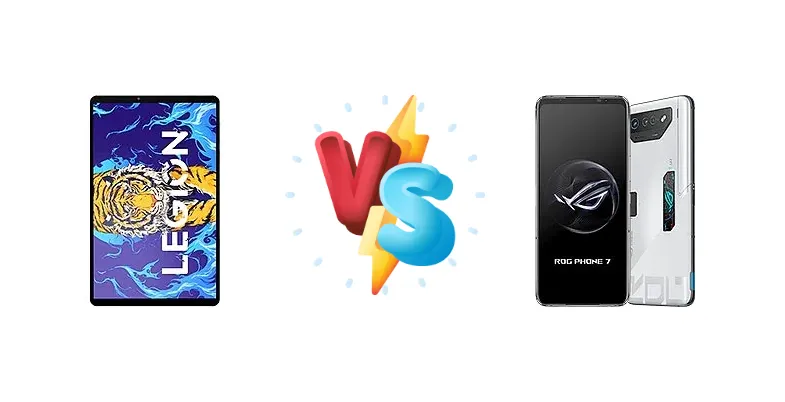
|
🏆 Quick Verdict
For the average gamer prioritizing raw power and future-proofing, the Asus ROG Phone 7 Ultimate is the clear winner. Its Snapdragon 8 Gen 2 offers a substantial performance leap over the Legion Y700’s Snapdragon 870, coupled with faster charging and a brighter display. However, the Legion Y700 remains a compelling option for budget-conscious gamers.
| PHONES | ||
|---|---|---|
| Phone Names | Lenovo Legion Y700 | Asus ROG Phone 7 Ultimate |
| Network | ||
|---|---|---|
| 2G bands | GSM 850 / 900 / 1800 / 1900 | GSM 850 / 900 / 1800 / 1900 |
| 3G bands | HSDPA 850 / 900 / 1900 / 2100 | HSDPA 800 / 850 / 900 / 1700(AWS) / 1900 / 2100 |
| 4G bands | LTE | 1, 2, 3, 4, 5, 7, 8, 12, 17, 18, 19, 20, 25, 26, 28, 32, 34, 38, 39, 40, 41, 42, 43, 48, 66 - International |
| 5G bands | - | 1, 2, 3, 5, 7, 8, 12, 18, 20, 25, 26, 28, 38, 40, 41, 48, 66, 77, 78, 79 SA/NSA/Sub6 - International |
| Speed | HSPA, LTE - cellular model only | HSPA, LTE (Up to 7CA), 5G |
| Technology | GSM / HSPA / LTE | GSM / CDMA / HSPA / LTE / 5G |
| - | 1, 3, 5, 8, 28, 41, 77, 78, 79 SA/NSA/Sub6 - China | |
| Launch | ||
|---|---|---|
| Announced | 2022, March 01 | 2023, April 13 |
| Status | Available. Released 2022, March 10 | Available. Released 2023, May |
| Body | ||
|---|---|---|
| Build | - | Glass front (Gorilla Glass Victus), glass back (Gorilla Glass 3), aluminum frame |
| Dimensions | 207.1 x 128.1 x 7.9 mm (8.15 x 5.04 x 0.31 in) | 173 x 77 x 10.3 mm (6.81 x 3.03 x 0.41 in) |
| SIM | Nano-SIM (cellular model only) | Nano-SIM + Nano-SIM |
| Weight | 375 g (13.23 oz) | 239 g (8.43 oz) |
| - | Built-in motorized cooling air vent (AeroActive Portal) IP54 water resistant 2" OLED display (on the back) Pressure sensitive zones (Gaming triggers) | |
| Display | ||
|---|---|---|
| Protection | - | Corning Gorilla Glass Victus |
| Resolution | 1600 x 2560 pixels, 16:10 ratio (~343 ppi density) | 1080 x 2448 pixels (~395 ppi density) |
| Size | 8.8 inches, 224.5 cm2 (~84.6% screen-to-body ratio) | 6.78 inches, 109.5 cm2 (~82.2% screen-to-body ratio) |
| Type | IPS LCD, 120Hz, Dolby Vision, HDR10, 500 nits (typ) | AMOLED, 1B colors, 165Hz, HDR10+, 1000 nits (HBM), 1500 nits (peak) |
| Platform | ||
|---|---|---|
| CPU | Octa-core (1x3.2 GHz Kryo 585 & 3x2.42 GHz Kryo 585 & 4x1.80 GHz Kryo 585) | Octa-core (1x3.2 GHz Cortex-X3 & 2x2.8 GHz Cortex-A715 & 2x2.8 GHz Cortex-A710 & 3x2.0 GHz Cortex-A510) |
| Chipset | Qualcomm SM8250-AC Snapdragon 870 5G (7 nm) | Qualcomm SM8550-AB Snapdragon 8 Gen 2 (4 nm) |
| GPU | Adreno 650 | Adreno 740 |
| OS | Android 12, ZUI 13 | Android 13, up to 2 major Android upgrades |
| Memory | ||
|---|---|---|
| Card slot | microSDXC (dedicated slot) | No |
| Internal | 128GB 8GB RAM, 256GB 12GB RAM | 512GB 16GB RAM |
| UFS 3.1 | UFS 4.0 NTFS support for external storage | |
| Main Camera | ||
|---|---|---|
| Features | LED flash | LED flash, HDR, panorama |
| Single | 13 MP | - |
| Triple | - | 50 MP, f/1.9, 24mm (wide), 1/1.56", 1.0µm, PDAF 13 MP, f/2.2, 13mm, 120˚ (ultrawide) 5 MP (macro) |
| Video | 1080p@30fps | 8K@24fps, 4K@30/60fps, 1080p@30/60/120/240fps, 720p@480fps; gyro-EIS, HDR10+ |
| Selfie camera | ||
|---|---|---|
| Features | - | Panorama, HDR |
| Single | 8 MP | 32 MP, f/2.5, 29mm (wide), 1/3.2", 0.7µm |
| Video | 1080p@30fps | 1080p@30fps |
| Sound | ||
|---|---|---|
| 3.5mm jack | Yes | Yes |
| 35mm jack | Yes | Yes |
| Loudspeaker | Yes, with stereo speakers | Yes, with stereo speakers (2 amplifiers) |
| Tuned by JBL | 32-bit/384kHz audio | |
| Comms | ||
|---|---|---|
| Bluetooth | 5.1, A2DP, LE | 5.3, A2DP, LE, aptX HD, aptX Adaptive, aptX Lossless |
| NFC | No | Yes |
| Positioning | No | GPS (L1+L5), GLONASS (L1), BDS (B1I+B1c+B2a), GALILEO (E1+E5a), QZSS (L1+L5), NavIC (L5) |
| Radio | Unspecified | No |
| USB | USB Type-C 3.1 Gen2 | USB Type-C 3.1 (side), DisplayPort 1.4; USB Type-C 2.0 (bottom), OTG, accessory connector |
| WLAN | Wi-Fi 802.11 a/b/g/n/ac/6, dual-band, Wi-Fi Direct | Wi-Fi 802.11 a/b/g/n/ac/6e/7, tri-band, Wi-Fi Direct |
| Features | ||
|---|---|---|
| Sensors | Accelerometer, gyro, proximity, compass | Fingerprint (under display, optical), accelerometer, gyro, proximity, compass |
| Battery | ||
|---|---|---|
| Charging | 45W wired, 100% in 45 min | 65W wired, PD3.0, QC5, 100% in 42 min 10W reverse wired |
| Type | Li-Po 6550 mAh | Li-Po 6000 mAh |
| Misc | ||
|---|---|---|
| Colors | Gray | Storm White |
| Models | TB-9707F | - |
| Price | About 360 EUR | About 780 EUR |
| Tests | ||
|---|---|---|
| Battery life | - | Endurance rating 131h |
| Camera | - | Photo / Video |
| Display | - | Contrast ratio: Infinite (nominal) |
| Loudspeaker | - | -25.5 LUFS (Very good) |
| Performance | - | AnTuTu: 1325105 (v9) GeekBench: 5139 (v5.5), 5567 (v6) GFXBench: 107fps (ES 3.1 onscreen) |
Lenovo Legion Y700
- More affordable price point
- Capable Snapdragon 870 performance
- Solid gaming experience for the price
- Older Snapdragon 870 chipset
- Slower charging speed (45W)
- Less detailed display specifications
Asus ROG Phone 7 Ultimate
- Cutting-edge Snapdragon 8 Gen 2 performance
- Faster 65W charging with PD3.0/QC5
- Brighter and higher-quality display
- Significantly higher price
- May experience some thermal throttling under extreme load
- Larger size and weight
Display Comparison
The Asus ROG Phone 7 Ultimate boasts a significantly brighter display, reaching a measured peak of 1095 nits, compared to an unspecified brightness for the Legion Y700. While both likely utilize high refresh rate panels, the ROG Phone’s higher peak brightness translates to better visibility in direct sunlight. The ROG Phone’s infinite contrast ratio (nominal) suggests a superior OLED panel, offering deeper blacks and more vibrant colors. The Legion Y700’s display specs are less detailed, making a direct comparison difficult, but it likely targets a more cost-effective panel solution.
Camera Comparison
Both devices feature photo and video capabilities, but detailed camera specifications are limited. Without sensor size or aperture information for either device, a direct comparison is challenging. However, given the ROG Phone 7 Ultimate’s positioning as a flagship, it likely incorporates a more sophisticated camera system with features like optical image stabilization (OIS) and advanced image processing algorithms. The Legion Y700 likely prioritizes cost savings in this area, potentially resulting in lower image quality in challenging lighting conditions.
Performance
The core difference lies in the chipsets. The Asus ROG Phone 7 Ultimate’s Snapdragon 8 Gen 2 (4nm) represents a generational leap over the Lenovo Legion Y700’s Snapdragon 870 (7nm). The 8 Gen 2 features a new CPU architecture (Cortex-X3) and a more efficient manufacturing process, resulting in significantly improved CPU and GPU performance. The 8 Gen 2’s CPU configuration – 1x3.2 GHz Cortex-X3, 2x2.8 GHz Cortex-A715, 2x2.8 GHz Cortex-A710, and 3x2.0 GHz Cortex-A510 – is more advanced than the 870’s Octa-core (1x3.2 GHz Kryo 585 & 3x2.42 GHz Kryo 585 & 4x1.80 GHz Kryo 585). This translates to faster app loading, smoother multitasking, and higher frame rates in demanding games. While the Legion Y700 is still capable, the ROG Phone 7 Ultimate offers a more future-proof and sustained gaming experience.
Battery Life
Both phones share an endurance rating of 131 hours, suggesting similar real-world battery life despite differing charging speeds. The ROG Phone 7 Ultimate’s 65W wired charging (with PD3.0 and QC5 support) is significantly faster than the Legion Y700’s 45W charging, achieving a full charge in 42 minutes versus 45 minutes. The ROG Phone 7 Ultimate also offers 10W reverse wired charging, a feature absent on the Legion Y700. While the battery capacity isn’t specified for either device, the faster charging of the ROG Phone 7 Ultimate provides greater convenience.
Buying Guide
Buy the Lenovo Legion Y700 if you need a capable gaming phone that doesn’t break the bank, and are comfortable with slightly older hardware. It’s ideal for users who play a mix of casual and demanding titles. Buy the Asus ROG Phone 7 Ultimate if you demand the absolute best mobile gaming experience, prioritize sustained performance under heavy load, and are willing to pay a premium for features like a brighter display and faster charging.