
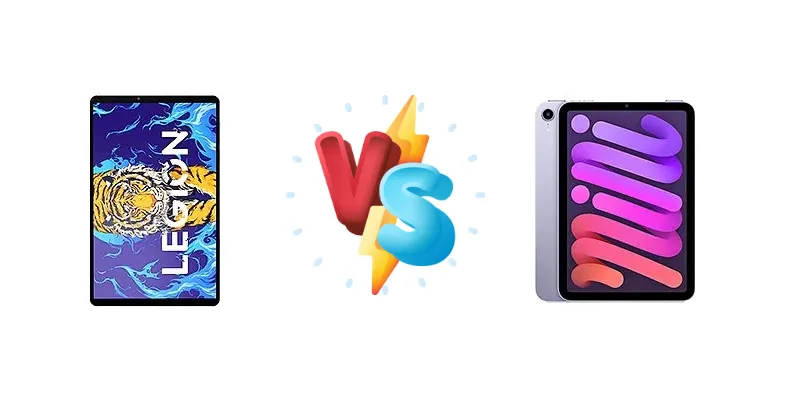
Lenovo Legion Y700 vs Apple iPad mini (2021): A Detailed Showdown
| Phones Images | |||||
|---|---|---|---|---|---|
|
🏆 Quick Verdict
The Lenovo Legion Y700 takes the crown for raw gaming performance thanks to its Snapdragon 870 and optimized cooling. However, the iPad mini (2021) offers a superior user experience, stunning display, and unmatched portability, making it ideal for productivity and media consumption on the go.
| PHONES | ||
|---|---|---|
| Phone Names | Lenovo Legion Y700 | Apple iPad mini (2021) |
| Network | ||
|---|---|---|
| 2G bands | GSM 850 / 900 / 1800 / 1900 | GSM 850 / 900 / 1800 / 1900 |
| 3G bands | HSDPA 850 / 900 / 1900 / 2100 | HSDPA 850 / 900 / 1700(AWS) / 1900 / 2100 |
| 4G bands | LTE | 1, 2, 3, 4, 5, 7, 8, 11, 12, 13, 14, 17, 18, 19, 20, 21, 25, 26, 28, 29, 30, 32, 34, 38, 39, 40, 41, 46, 48, 66, 71 |
| 5G bands | - | 1, 2, 3, 5, 7, 8, 12, 20, 25, 28, 29, 30, 38, 40, 41, 48, 66, 71, 77, 78, 79 SA/NSA |
| Speed | HSPA, LTE - cellular model only | HSPA, LTE, 5G - cellular model only |
| Technology | GSM / HSPA / LTE | GSM / HSPA / LTE / 5G |
| Launch | ||
|---|---|---|
| Announced | 2022, March 01 | 2021, September 14 |
| Status | Available. Released 2022, March 10 | Available. Released 2021, September 24 |
| Body | ||
|---|---|---|
| Build | - | Glass front, aluminum back, aluminum frame |
| Dimensions | 207.1 x 128.1 x 7.9 mm (8.15 x 5.04 x 0.31 in) | 195.4 x 134.8 x 6.3 mm (7.69 x 5.31 x 0.25 in) |
| SIM | Nano-SIM (cellular model only) | Nano-SIM + eSIM (cellular model only) |
| Weight | 375 g (13.23 oz) | 293 g (Wi-Fi) / 297 g (Wi-Fi + Cellular) (10.34 oz) |
| - | Stylus support (2nd gen only) | |
| Display | ||
|---|---|---|
| Protection | - | Scratch-resistant glass, oleophobic coating |
| Resolution | 1600 x 2560 pixels, 16:10 ratio (~343 ppi density) | 1488 x 2266 pixels, 3:2 ratio (~327 ppi density) |
| Size | 8.8 inches, 224.5 cm2 (~84.6% screen-to-body ratio) | 8.3 inches, 203.9 cm2 (~77.4% screen-to-body ratio) |
| Type | IPS LCD, 120Hz, Dolby Vision, HDR10, 500 nits (typ) | Liquid Retina IPS LCD, 500 nits (typ) |
| Platform | ||
|---|---|---|
| CPU | Octa-core (1x3.2 GHz Kryo 585 & 3x2.42 GHz Kryo 585 & 4x1.80 GHz Kryo 585) | Hexa-core (2x2.93 GHz + 4xX.X GHz) |
| Chipset | Qualcomm SM8250-AC Snapdragon 870 5G (7 nm) | Apple A15 Bionic (5 nm) |
| GPU | Adreno 650 | Apple GPU (5-core) |
| OS | Android 12, ZUI 13 | iPadOS 15, upgradable to iPadOS 26.1 |
| Memory | ||
|---|---|---|
| Card slot | microSDXC (dedicated slot) | No |
| Internal | 128GB 8GB RAM, 256GB 12GB RAM | 64GB 4GB RAM, 256GB 4GB RAM |
| UFS 3.1 | - | |
| Main Camera | ||
|---|---|---|
| Features | LED flash | Quad-LED dual-tone flash, HDR, panorama |
| Single | 13 MP | 12 MP, f/1.8, (wide), AF |
| Video | 1080p@30fps | 4K@24/25/30/60fps, 1080p@25/30/60/120/240fps; gyro-EIS |
| Selfie camera | ||
|---|---|---|
| Features | - | HDR |
| Single | 8 MP | 12 MP, f/2.4, 122˚ (ultrawide) |
| Video | 1080p@30fps | 1080p@25/30/60fps, gyro-EIS |
| Sound | ||
|---|---|---|
| 3.5mm jack | Yes | No |
| 35mm jack | Yes | No |
| Loudspeaker | Yes, with stereo speakers | Yes, with stereo speakers |
| Tuned by JBL | - | |
| Comms | ||
|---|---|---|
| Bluetooth | 5.1, A2DP, LE | 5.0, A2DP |
| NFC | No | No |
| Positioning | No | GPS, GLONASS - cellular model only |
| Radio | Unspecified | No |
| USB | USB Type-C 3.1 Gen2 | USB Type-C 3.1, DisplayPort |
| WLAN | Wi-Fi 802.11 a/b/g/n/ac/6, dual-band, Wi-Fi Direct | Wi-Fi 802.11 a/b/g/n/ac/6, dual-band, hotspot |
| Features | ||
|---|---|---|
| Sensors | Accelerometer, gyro, proximity, compass | Fingerprint (side-mounted), accelerometer, gyro, compass, barometer |
| Battery | ||
|---|---|---|
| Charging | 45W wired, 100% in 45 min | - |
| Type | Li-Po 6550 mAh | Li-Ion 5078 mAh (19.3 Wh) |
| Misc | ||
|---|---|---|
| Colors | Gray | Space Gray, Pink, Purple, Starlight |
| Models | TB-9707F | A2568, iPad14,1, iPad14,2 |
| Price | About 360 EUR | About 550 EUR |
| Tests | ||
|---|---|---|
| Loudspeaker | - | -29.7 LUFS (Average) |
Lenovo Legion Y700
- Excellent gaming performance
- Fast charging (45W)
- Powerful Snapdragon 870 chipset
- Good cooling system
- Display not as vibrant as iPad mini
- Larger and heavier than iPad mini
- Camera performance is average
Apple iPad mini (2021)
- Exceptional portability
- Stunning display (brightness & contrast)
- Seamless iOS integration
- Excellent camera quality
- Less powerful for demanding games
- Slower charging
- More expensive
Display Comparison
The iPad mini (2021) boasts a significantly better display. Its 518 nits brightness and impressive 1325:1 contrast ratio provide vibrant colors and excellent visibility, even outdoors. The Y700's display, while capable, lacks the same level of visual fidelity and color accuracy. The iPad mini's smaller size also contributes to a more immersive viewing experience.
Camera Comparison
The iPad mini (2021) generally offers better camera performance, especially in video recording. Apple's image processing is consistently excellent. The Y700's cameras are adequate, but not a primary strength. Expect better detail and dynamic range from the iPad mini.
Performance
The Lenovo Legion Y700's Snapdragon 870 is a powerhouse, particularly for gaming. While the A15 Bionic in the iPad mini (2021) is incredibly fast, the Y700's chipset and cooling system are better equipped to handle sustained, graphically intensive gaming. The Y700 also benefits from more RAM typically, further boosting performance. However, for everyday tasks, both devices feel incredibly responsive.
Battery Life
The iPad mini (2021) has a smaller battery capacity, but Apple's optimization often results in comparable or even slightly better real-world battery life. The Y700's 45W charging is significantly faster than the iPad mini's, allowing for quicker top-ups.
Buying Guide
Buy the Lenovo Legion Y700 if you prioritize mobile gaming and need a powerful device for demanding titles. Buy the Apple iPad mini (2021) if you value portability, a premium user experience, and seamless integration with the Apple ecosystem for tasks like note-taking, browsing, and media consumption.