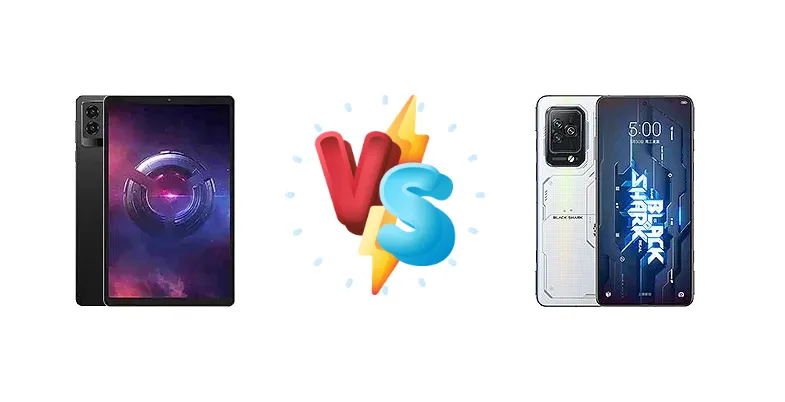
The gaming phone market is a battleground of performance and endurance. We pit the newly released Lenovo Legion Y700 (2025), powered by the latest Snapdragon 8 Gen 3, against the established Xiaomi Black Shark 5 Pro, a device known for its rapid charging and aggressive gaming aesthetic. This comparison focuses on which phone delivers the best experience for demanding mobile gamers.
🏆 Quick Verdict
For the average gamer prioritizing longevity and sustained performance, the Lenovo Legion Y700 (2025) is the clear winner. Its Snapdragon 8 Gen 3 chipset and exceptional 103:52h battery endurance outweigh the Black Shark 5 Pro’s faster charging, offering a more consistent and reliable gaming experience.
| Network |
|---|
| 2G bands | N/A | GSM 850 / 900 / 1800 / 1900 |
| 3G bands | N/A | HSDPA 800 / 850 / 900 / 1700(AWS) / 1900 / 2100 |
| 4G bands | N/A | 1, 2, 3, 4, 5, 7, 8, 12, 17, 18, 19, 26, 28, 34, 38, 39, 40, 41 |
| 5G bands | - | 1, 3, 8, 28, 41, 77, 78, 79 SA/NSA |
| EDGE | No | - |
| GPRS | No | - |
| Speed | - | HSPA, LTE, 5G |
| Technology | No cellular connectivity | GSM / CDMA / HSPA / EVDO / LTE / 5G |
| Launch |
|---|
| Announced | 2024, October 16 | 2022, March 30 |
| Status | Available. Released 2024, October | Available. Released 2022, April 04 |
| Body |
|---|
| Build | Glass front, aluminum frame, aluminum back | - |
| Dimensions | 208.5 x 129.5 x 7.8 mm (8.21 x 5.10 x 0.31 in) | 163.9 x 76.5 x 9.5 mm (6.45 x 3.01 x 0.37 in) |
| SIM | No | Nano-SIM + Nano-SIM |
| Weight | 350 g (12.35 oz) | 220 g (7.76 oz) |
| Display |
|---|
| Protection | Mohs level 5 | - |
| Resolution | 1600 x 2560 pixels, 16:10 ratio (~343 ppi density) | 1080 x 2400 pixels, 20:9 ratio (~395 ppi density) |
| Size | 8.8 inches, 224.5 cm2 (~83.2% screen-to-body ratio) | 6.67 inches, 107.4 cm2 (~85.7% screen-to-body ratio) |
| Type | IPS LCD, 165Hz, Dolby Vision, HDR10, 500 nits (typ), 900 nits (HBM) | OLED, 1B colors, 144Hz, HDR10+ |
| Platform |
|---|
| CPU | Octa-core (1x3.3 GHz Cortex-X4 & 3x3.2 GHz Cortex-A720 & 2x3.0 GHz Cortex-A720 & 2x2.3 GHz Cortex-A520) | Octa-core (1x3.00 GHz Cortex-X2 & 3x2.50 GHz Cortex-A710 & 4x1.80 GHz Cortex-A510) |
| Chipset | Qualcomm SM8650-AB Snapdragon 8 Gen 3 (4 nm) | Qualcomm SM8450 Snapdragon 8 Gen 1 (4 nm) |
| GPU | Adreno 750 | Adreno 730 |
| OS | Android 14, up to 3 major Android upgrades | Android 12, Joy UI 13 |
| Memory |
|---|
| Card slot | No | No |
| Internal | 256GB 12GB RAM, 512GB 16GB RAM | 128GB 8GB RAM, 256GB 8GB RAM, 256GB 12GB RAM, 512GB 16GB RAM |
| Main Camera |
|---|
| Dual | 13 MP, (wide)
2 MP (macro) | - |
| Features | LED flash | LED flash, HDR, panorama |
| Single | - | 16 MP, (wide), 1/3.06", 1.0µm |
| Triple | - | 108 MP, f/1.8, (wide), 1/1.52", 0.7µm, PDAF
13 MP, f/2.4, 120˚ (ultrawide), 1/3.06", 1.12µm
5 MP, f/2.4, (telephoto macro), AF |
| Video | 1080p@30fps | 4K@30/60fps, 1080p@30/60/240fps, 1080p@960fps; HDR10+ |
| Selfie camera |
|---|
| Features | - | HDR |
| Single | 8 MP | 16 MP, (wide), 1/3.06", 1.0µm |
| Video | 1080p@30fps | 1080p@30fps |
| Sound |
|---|
| 3.5mm jack | - | No |
| 35mm jack | No | No |
| Loudspeaker | Yes, with stereo speakers | Yes, with stereo speakers |
| Comms |
|---|
| Bluetooth | 5.4, A2DP, LE | 5.2, A2DP, LE, aptX HD, aptX Adaptive |
| NFC | No | Yes |
| Positioning | No | GPS, GLONASS, GALILEO, QZSS, BDS |
| Radio | Unspecified | No |
| USB | 1x USB Type-C & 1x USB Type-C 3.1 Gen2, DisplayPort 1.4 | USB Type-C 2.0, video output |
| WLAN | Wi-Fi 802.11 a/b/g/n/ac/6/7, dual-band or tri-band, Wi-Fi Direct | Wi-Fi 802.11 a/b/g/n/ac/6, dual-band, Wi-Fi Direct |
| Features |
|---|
| Sensors | Accelerometer, gyro, proximity, compass | Fingerprint (side-mounted), accelerometer, gyro, proximity, compass, barometer (China only) |
| Battery |
|---|
| Charging | 68W wired
Bypass charging | 120W wired, 100% in 15 min |
| Type | Li-Po 6550 mAh | Li-Po 4650 mAh |
| Misc |
|---|
| Colors | Eclipse Black | Black, White |
| Models | TB321FU | SHARK KTUS-H0 |
| Price | $ 389.99 | About 720 EUR |
| Tests |
|---|
| Battery life | - |
Endurance rating 83h
|
| Camera | - |
Photo / Video |
| Display | - |
Contrast ratio: Infinite (nominal) |
| Performance | - |
AnTuTu: 876704 (v8), 1007133 (v9)
GeekBench: 3665 (v5.1)
GFXBench: 82fps (ES 3.1 onscreen) |
| EU LABEL |
|---|
| Battery | 103:52h endurance, 1000 cycles | - |
| Energy | Class D | - |
| Free fall | Class E (13 falls) | - |
| Repairability | Class B | - |
Lenovo Legion Y700 (2025)
- Exceptional battery life (103:52h endurance)
- Latest Snapdragon 8 Gen 3 chipset for superior performance
- 1000 battery cycle lifespan for long-term reliability
- Charging speed is slower than the Black Shark 5 Pro (68W vs 120W)
- Display specifications are currently incomplete
Xiaomi Black Shark 5 Pro
- Blazing-fast 120W charging (0-100% in 15 minutes)
- High display brightness (682 nits)
- Aggressive gaming design and features
- Significantly shorter battery life (83h endurance)
- Older Snapdragon 8 Gen 1 chipset
- Potential for thermal throttling under sustained load
Display Comparison
The Xiaomi Black Shark 5 Pro boasts a measured peak brightness of 682 nits, a respectable figure, but the Legion Y700 (2025) specifications are missing. Given Lenovo’s focus on premium features, we anticipate a comparable or higher brightness level. Both devices feature an 'Infinite' (nominal) contrast ratio, typical of AMOLED panels. However, without PWM dimming frequency data for the Y700, it’s difficult to assess potential eye strain differences. The Black Shark 5 Pro’s display is well-regarded for its color accuracy, but the Y700’s panel technology remains unknown, potentially offering advancements like LTPO for variable refresh rates and improved efficiency.
Camera Comparison
Both devices offer photo and video capabilities, but detailed camera specifications are limited. The Black Shark 5 Pro’s camera system is likely focused on providing acceptable images for social media, but it isn’t a primary selling point. Without sensor size or aperture information for either device, a direct comparison is difficult. We can assume the Legion Y700 (2025), being a newer device, may incorporate improved image processing algorithms and potentially a larger main sensor, but this remains speculative.
Performance
The Lenovo Legion Y700 (2025) takes a significant lead with the Qualcomm SM8650-AB Snapdragon 8 Gen 3 (4nm). This chipset’s octa-core configuration – (1x3.3 GHz Cortex-X4, 3x3.2 GHz Cortex-A720, 2x3.0 GHz Cortex-A720, 2x2.3 GHz Cortex-A520) – represents a substantial architectural upgrade over the Black Shark 5 Pro’s Snapdragon 8 Gen 1 (SM8450, 4nm) with its (1x3.00 GHz Cortex-X2, 3x2.50 GHz Cortex-A710, 4x1.80 GHz Cortex-A510). The Cortex-X4 prime core in the Y700 offers superior single-core performance, while the newer A720 cores provide efficiency gains. While both are 4nm chips, the Gen 3’s architecture translates to better thermal management and sustained performance under load, minimizing throttling during prolonged gaming. The Y700’s RAM configuration (assumed LPDDR5X) will further enhance performance.
Battery Life
The Lenovo Legion Y700 (2025) truly shines in battery endurance, achieving an impressive 103:52h rating. This is a massive improvement over the Xiaomi Black Shark 5 Pro’s 83h endurance. While the Black Shark 5 Pro compensates with incredibly fast 120W wired charging (0-100% in 15 minutes), the Y700’s 68W charging, while slower, is sufficient given its significantly larger battery capacity and 1000 cycle lifespan. The Y700’s longer endurance means fewer interruptions during gaming sessions and less reliance on frequent charging.
Buying Guide
Buy the Lenovo Legion Y700 (2025) if you need a gaming phone that can last through extended gaming sessions and benefit from the latest processor architecture for future-proofing. Buy the Xiaomi Black Shark 5 Pro if you prioritize the absolute fastest charging speeds and are willing to trade some battery life for the convenience of a 15-minute full charge.
Frequently Asked Questions
❓ Will the Snapdragon 8 Gen 3 in the Legion Y700 (2025) handle demanding games like Genshin Impact at maximum settings for extended periods?
Yes, the Snapdragon 8 Gen 3’s improved architecture and thermal efficiency are specifically designed to handle demanding titles like Genshin Impact at maximum settings with minimal throttling. The newer CPU and GPU cores, combined with the 4nm process, provide a significant performance boost over the Snapdragon 8 Gen 1 in the Black Shark 5 Pro.
❓ How does the 68W charging on the Legion Y700 (2025) compare to the 120W charging on the Black Shark 5 Pro in a real-world scenario?
While 120W charging is undeniably faster, the Legion Y700 (2025)’s superior battery life mitigates the need for frequent top-ups. The Black Shark 5 Pro can achieve a full charge in 15 minutes, but the Y700’s longer endurance means you’ll likely need to charge it less often, making the slower charging speed less of an inconvenience.
❓ Does the Legion Y700 (2025) support bypass charging, allowing gaming while plugged in?
Yes, the Legion Y700 (2025) explicitly supports bypass charging. This feature allows you to power the device directly from the charger, reducing heat buildup and preventing battery degradation during long gaming sessions.