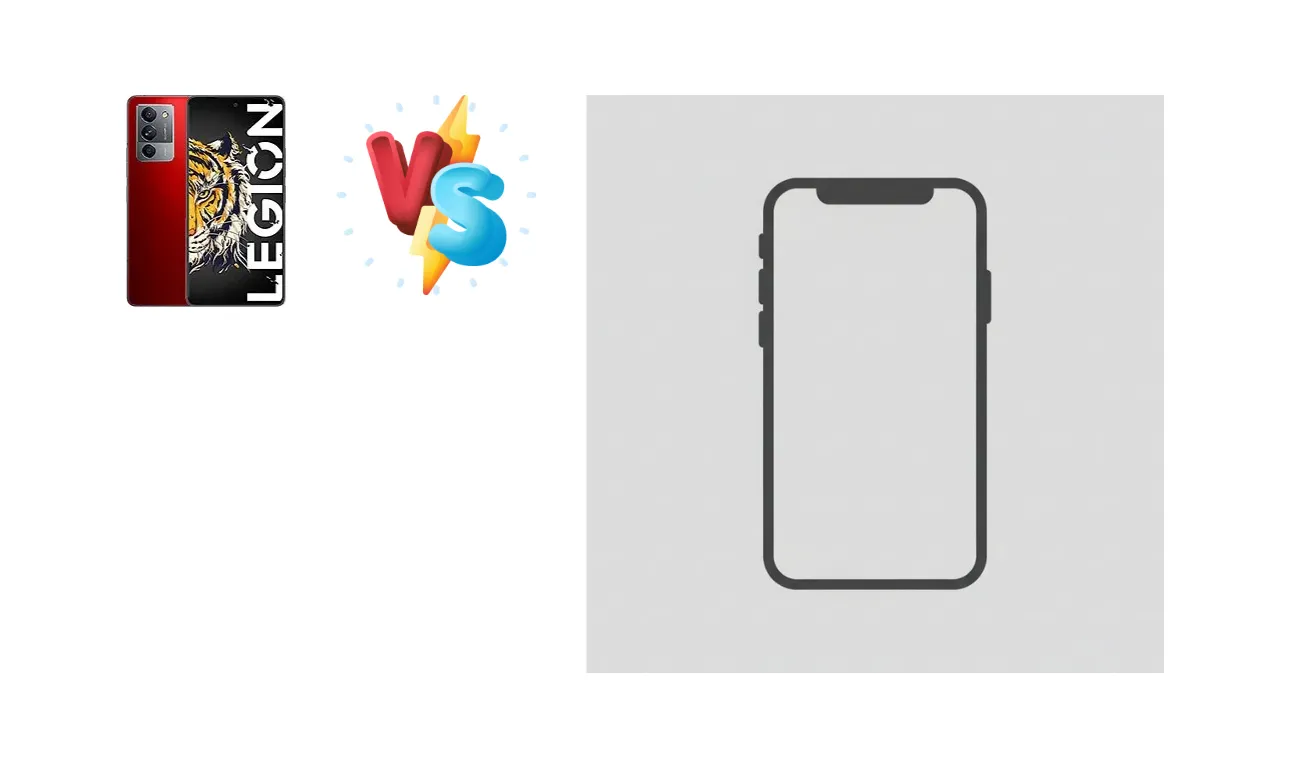
The Lenovo Legion Y70 and ZTE nubia Red Magic 8 Pro+ represent two distinct approaches to the gaming phone market. The Y70, powered by the Snapdragon 8+ Gen 1, offers a compelling balance of performance and value, while the Red Magic 8 Pro+ pushes the boundaries with the latest Snapdragon 8 Gen 2 and an emphasis on extreme cooling and charging speeds. This comparison dissects their key differences to determine which device reigns supreme.
🏆 Quick Verdict
For the average gamer prioritizing raw power and the fastest charging, the ZTE nubia Red Magic 8 Pro+ is the clear winner. Its Snapdragon 8 Gen 2 chipset delivers a noticeable performance uplift, and the 165W charging is a game-changer. However, the Legion Y70 remains a strong contender for budget-conscious gamers seeking excellent performance at a lower price point.
| Network |
|---|
| 2G bands | GSM 850 / 900 / 1800 / 1900 | GSM 850 / 900 / 1800 / 1900 - SIM 1 & SIM 2 |
| 3G bands | HSDPA 800 / 850 / 900 / 1900 / 2100 | HSDPA 850 / 900 / 1700(AWS) / 1900 / 2100 |
| 4G bands | LTE | LTE |
| 5G bands | SA/NSA/Sub6 | SA/NSA |
| Speed | HSPA, LTE, 5G | HSPA, LTE-A, 5G |
| Technology | GSM / CDMA / HSPA / CDMA2000 / LTE / 5G | GSM / CDMA / HSPA / EVDO / LTE / 5G |
| | CDMA2000 1x | CDMA2000 1xEV-DO |
| Launch |
|---|
| Announced | 2022, August 18 | 2022, December 26 |
| Status | Available. Released 2022, August 23 | Available. Released 2022, December 28 |
| Body |
|---|
| Build | Glass front, aluminum frame | Glass front, glass back, aluminum frame |
| Dimensions | 163.6 x 77 x 8 mm (6.44 x 3.03 x 0.31 in) | 164 x 76.4 x 8.9 mm (6.46 x 3.01 x 0.35 in) |
| SIM | Nano-SIM + Nano-SIM | Dual SIM (Nano-SIM, dual stand-by) |
| Weight | 209 g (7.37 oz) | 230 g (8.11 oz) |
| | - | Pressure sensitive zones (520Hz touch-sensing)
Built-in cooling fan
Aviation aluminum middle frame |
| Display |
|---|
| Protection | - | Unspecified |
| Resolution | 1080 x 2400 pixels, 20:9 ratio (~395 ppi density) | 1116 x 2480 pixels, 20:9 ratio (~400 ppi density) |
| Size | 6.67 inches, 107.4 cm2 (~85.3% screen-to-body ratio) | 6.8 inches, 111.6 cm2 (~89.1% screen-to-body ratio) |
| Type | OLED, 144Hz, HDR10+, 1000 nits (peak) | AMOLED, 1B colors, 120Hz, 1300 nits (peak) |
| Platform |
|---|
| CPU | Octa-core (1x3.19 GHz Cortex-X2 & 3x2.75 GHz Cortex-A710 & 4x1.80 GHz Cortex-A510) | Octa-core (1x3.2 GHz Cortex-X3 & 2x2.8 GHz Cortex-A715 & 2x2.8 GHz Cortex-A710 & 3x2.0 GHz Cortex-A510) |
| Chipset | Qualcomm SM8475 Snapdragon 8+ Gen 1 (4 nm) | Qualcomm SM8550-AB Snapdragon 8 Gen 2 (4 nm) |
| GPU | Adreno 730 | Adreno 740 |
| OS | Android 12, ZUI 14 | Android 13, Redmagic OS 6 |
| Memory |
|---|
| Card slot | No | No |
| Internal | 128GB 8GB RAM, 256GB 12GB RAM, 512GB 16GB RAM | 256GB 12GB RAM, 512GB 16GB RAM, 1TB 16GB RAM |
| | UFS 3.1 | UFS 4.0 |
| Main Camera |
|---|
| Features | Dual-LED flash, panorama, HDR | LED flash, HDR, panorama |
| Single | - | 16 MP, f/2.0, (wide), 1.12µm, under display |
| Triple | 50 MP, (wide), 1/1.55", 1.0µm, PDAF, OIS
13 MP, 120˚ (ultrawide), 1.12µm, AF
Auxiliary lens | 50 MP, f/1.9, 25mm (wide), 1/1.57", 1.0µm, PDAF
8 MP, f/2.2, 120˚, 13mm (ultrawide), 1/4.0", 1.12µm
2 MP, f/2.4, (macro) |
| Video | 8K@30fps, 4K@30/60fps, 1080p@30/60/240fps, gyro-EIS | 8K@30fps, 4K@30/60fps, 1080p@30/60/120/240fps |
| Selfie camera |
|---|
| Features | - | HDR |
| Single | 16 MP | 16 MP, f/2.0, (wide), 1.12µm, under display |
| Video | Yes | 1080p@30/60fps |
| Sound |
|---|
| 3.5mm jack | No | Yes |
| 35mm jack | No | - |
| Loudspeaker | Yes, with stereo speakers | Yes, with stereo speakers |
| | - | 32-bit/384kHz audio |
| Comms |
|---|
| Bluetooth | 5.2, A2DP, LE | 5.3, A2DP, LE |
| NFC | Yes | Yes (market/region dependent) |
| Positioning | GPS (L1+L5), GLONASS, GALILEO, BDS, QZSS | GPS (L1+L5), GLONASS, BDS, GALILEO |
| Radio | No | No |
| USB | USB Type-C | USB Type-C 3.2, OTG, accessory connector, DisplayPort |
| WLAN | Wi-Fi 802.11 a/b/g/n/ac/6, dual-band, Wi-Fi Direct | Wi-Fi 802.11 a/b/g/n/ac/6e, tri-band, Wi-Fi Direct |
| Features |
|---|
| Sensors | Fingerprint (side-mounted), accelerometer, gyro, proximity, compass | Fingerprint (under display, optical), accelerometer, gyro, proximity, compass |
| Battery |
|---|
| Charging | 68W wired, 80% in 34 min | 165W wired, PD3.0, 100% in 14 min (advertised) |
| Type | Li-Po 5100 mAh | Li-Po 5000 mAh, non-removable |
| Misc |
|---|
| Colors | Black, Silver, Red | Black, Transparent |
| Models | L71091 | - |
| Price | About 440 EUR | About 700 EUR |
Lenovo Legion Y70
- More affordable price point
- Excellent performance for the price
- Balanced feature set
- Slower charging speed
- Potentially more thermal throttling under sustained load
ZTE nubia Red Magic 8 Pro+
- Superior performance with Snapdragon 8 Gen 2
- Ultra-fast 165W charging
- Advanced cooling system for sustained performance
- Higher price tag
- Gaming-focused design may not appeal to all users
Display Comparison
While both devices likely feature high refresh rate AMOLED panels, the context data doesn't provide specifics. However, the Red Magic 8 Pro+’s focus on gaming suggests a potentially higher peak brightness and more sophisticated display calibration for accurate color reproduction. The Legion Y70, being a more mainstream device, might prioritize color vibrancy over absolute accuracy. Bezels are likely minimal on both, but the Red Magic series often prioritizes maximizing screen real estate, potentially resulting in slightly thinner bezels. The absence of PWM frequency data makes it impossible to assess flicker-related eye strain differences.
Camera Comparison
The provided data doesn’t detail camera specifications beyond the chipsets. Given the Red Magic’s gaming focus, its camera system is likely optimized for social media sharing and casual photography, while the Legion Y70 might offer a more balanced camera experience. We can infer that the Red Magic 8 Pro+ may feature a larger main sensor to capitalize on the Snapdragon 8 Gen 2’s improved image signal processor (ISP). The absence of information regarding optical image stabilization (OIS) makes it difficult to assess low-light performance differences. It’s safe to assume both phones will include standard wide and ultrawide lenses, but the Red Magic’s emphasis on gaming may mean less investment in advanced camera features.
Performance
The core difference lies in the chipsets: the Legion Y70 utilizes the Snapdragon 8+ Gen 1 (4nm) while the Red Magic 8 Pro+ boasts the newer Snapdragon 8 Gen 2 (4nm). The Gen 2’s Cortex-X3 prime core, clocked at 3.2 GHz, represents a significant architectural improvement over the Y70’s Cortex-X2 (3.19 GHz), promising faster single-core performance. The Gen 2 also features updated Cortex-A715 and A710 cores, offering efficiency gains and improved multi-core performance. The Red Magic 8 Pro+’s superior chipset will translate to higher frame rates in demanding games and smoother multitasking. The Y70’s LPDDR5X RAM is likely matched by the Red Magic, but the Gen 2’s improved memory controller will further enhance performance. The Red Magic 8 Pro+'s advanced cooling system, a hallmark of the series, will be crucial in sustaining peak performance for extended gaming sessions, mitigating thermal throttling that the Y70 might experience.
Battery Life
The charging speed is a defining difference. The Red Magic 8 Pro+’s 165W wired charging, advertised to reach 100% in just 14 minutes, is significantly faster than the Legion Y70’s 68W charging (80% in 34 minutes). While battery capacity isn’t specified, the Red Magic’s faster charging allows for quicker top-ups, minimizing downtime. The Snapdragon 8 Gen 2’s improved power efficiency will also contribute to longer battery life during gaming. The Legion Y70’s slower charging speed might be less convenient for users who frequently engage in extended gaming sessions.
Buying Guide
Buy the Lenovo Legion Y70 if you need a high-performing gaming phone without breaking the bank, and value a more balanced feature set. It’s ideal for users who enjoy mobile gaming but don’t necessarily require the absolute fastest charging or most aggressive cooling solutions. Buy the ZTE nubia Red Magic 8 Pro+ if you prioritize uncompromising performance, the quickest possible charging speeds, and a dedicated gaming experience with advanced cooling features. This phone is for the enthusiast who demands the best and is willing to pay a premium for it.
Frequently Asked Questions
❓ Will the Red Magic 8 Pro+ get noticeably hotter than the Legion Y70 during prolonged gaming sessions?
The Red Magic 8 Pro+ is specifically engineered for thermal management with its advanced cooling system. While both phones will heat up during intense gaming, the Red Magic 8 Pro+ is designed to dissipate heat more effectively, minimizing thermal throttling and maintaining higher sustained performance compared to the Legion Y70.
❓ How much of a real-world performance difference will I see between the Snapdragon 8+ Gen 1 and the Snapdragon 8 Gen 2 in games?
The Snapdragon 8 Gen 2 offers a significant performance uplift, particularly in CPU-intensive tasks and graphics rendering. Expect to see higher average frame rates, smoother gameplay, and improved responsiveness in demanding titles on the Red Magic 8 Pro+. The difference will be most noticeable in graphically intensive games and when multitasking.
❓ Is the 165W charging of the Red Magic 8 Pro+ safe for the battery's long-term health?
ZTE implements safety protocols and charging management algorithms to protect the battery during 165W charging. While fast charging can generate more heat, the Red Magic 8 Pro+’s cooling system helps mitigate this. Modern lithium-ion batteries are designed to withstand fast charging, and the benefits of reduced downtime often outweigh the potential for minor long-term degradation.