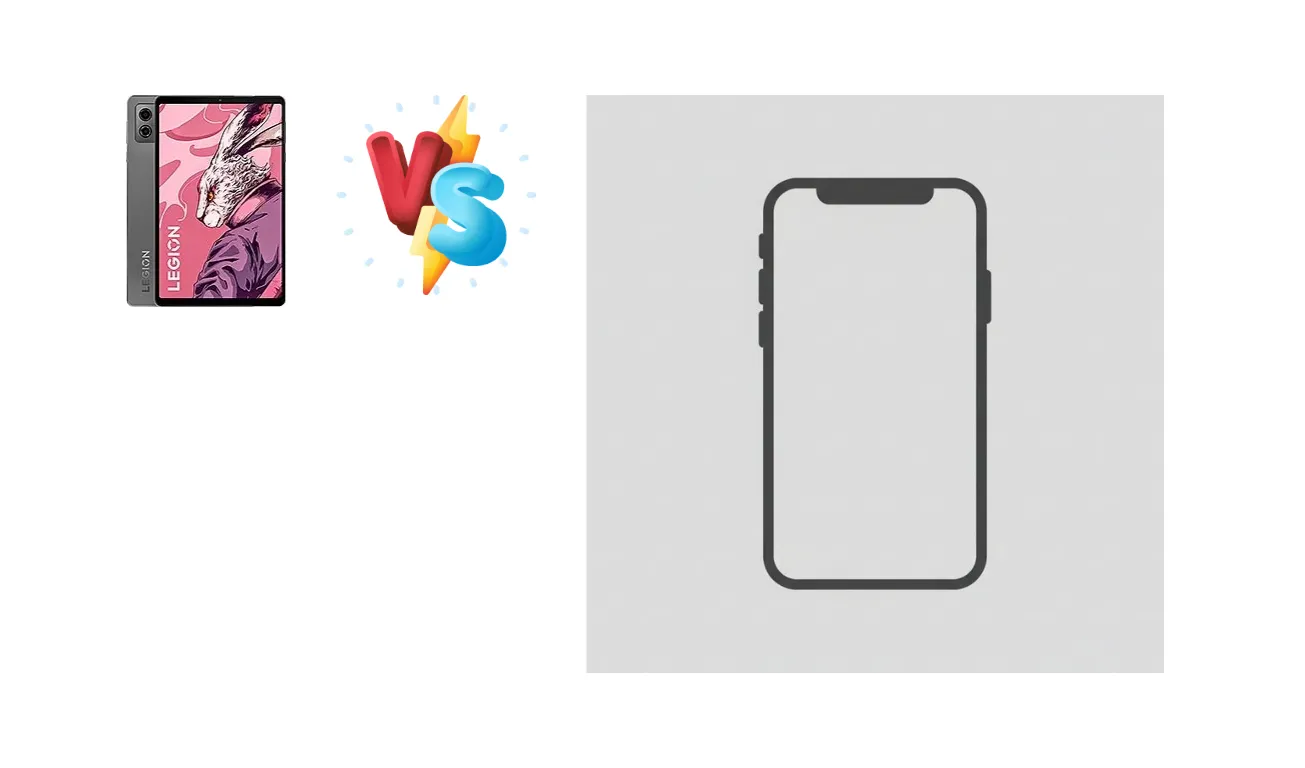
The mobile gaming landscape is diversifying. While phones remain dominant, tablets like the Lenovo Legion Tab are carving out a niche for immersive experiences. We pit the Legion Tab, powered by the Snapdragon 8+ Gen 1, against the ZTE nubia Red Magic 8 Pro+, boasting the newer Snapdragon 8 Gen 2, to determine which device delivers the ultimate gaming performance and value.
🏆 Quick Verdict
For dedicated mobile gamers prioritizing raw power and incredibly fast charging, the ZTE nubia Red Magic 8 Pro+ is the clear winner. Its Snapdragon 8 Gen 2 provides a noticeable performance uplift, and the 165W charging is a game-changer. However, the Lenovo Legion Tab offers a larger screen and tablet form factor, appealing to those who value immersion and portability.
| Network |
|---|
| 2G bands | N/A | GSM 850 / 900 / 1800 / 1900 - SIM 1 & SIM 2 |
| 3G bands | N/A | HSDPA 850 / 900 / 1700(AWS) / 1900 / 2100 |
| 4G bands | N/A | LTE |
| 5G bands | - | SA/NSA |
| EDGE | No | - |
| GPRS | No | - |
| Speed | - | HSPA, LTE-A, 5G |
| Technology | No cellular connectivity | GSM / CDMA / HSPA / EVDO / LTE / 5G |
| | - | CDMA2000 1xEV-DO |
| Launch |
|---|
| Announced | 2024, August 13 | 2022, December 26 |
| Status | Available. Released 2024, August 15 | Available. Released 2022, December 28 |
| Body |
|---|
| Build | - | Glass front, glass back, aluminum frame |
| Dimensions | 208.5 x 129.5 x 7.6 mm (8.21 x 5.10 x 0.30 in) | 164 x 76.4 x 8.9 mm (6.46 x 3.01 x 0.35 in) |
| SIM | No | Dual SIM (Nano-SIM, dual stand-by) |
| Weight | 350 g (12.35 oz) | 230 g (8.11 oz) |
| | - | Pressure sensitive zones (520Hz touch-sensing)
Built-in cooling fan
Aviation aluminum middle frame |
| Display |
|---|
| Protection | - | Unspecified |
| Resolution | 1600 x 2560 pixels, 16:10 ratio (~343 ppi density) | 1116 x 2480 pixels, 20:9 ratio (~400 ppi density) |
| Size | 8.8 inches, 224.5 cm2 (~83.2% screen-to-body ratio) | 6.8 inches, 111.6 cm2 (~89.1% screen-to-body ratio) |
| Type | IPS LCD, 144Hz, Dolby Vision, HDR10, 500 nits (typ) | AMOLED, 1B colors, 120Hz, 1300 nits (peak) |
| Platform |
|---|
| CPU | Octa-core (1x3.19 GHz Cortex-X2 & 3x2.75 GHz Cortex-A710 & 4x1.80 GHz Cortex-A510) | Octa-core (1x3.2 GHz Cortex-X3 & 2x2.8 GHz Cortex-A715 & 2x2.8 GHz Cortex-A710 & 3x2.0 GHz Cortex-A510) |
| Chipset | Qualcomm SM8475P Snapdragon 8+ Gen 1 (4 nm) | Qualcomm SM8550-AB Snapdragon 8 Gen 2 (4 nm) |
| GPU | Adreno 730 | Adreno 740 |
| OS | Android 13 | Android 13, Redmagic OS 6 |
| Memory |
|---|
| Card slot | microSDXC (dedicated slot) | No |
| Internal | 256GB 12GB RAM | 256GB 12GB RAM, 512GB 16GB RAM, 1TB 16GB RAM |
| | - | UFS 4.0 |
| Main Camera |
|---|
| Dual | 13 MP, (wide)
2 MP (macro) | - |
| Features | LED flash | LED flash, HDR, panorama |
| Single | - | 16 MP, f/2.0, (wide), 1.12µm, under display |
| Triple | - | 50 MP, f/1.9, 25mm (wide), 1/1.57", 1.0µm, PDAF
8 MP, f/2.2, 120˚, 13mm (ultrawide), 1/4.0", 1.12µm
2 MP, f/2.4, (macro) |
| Video | 1080p@30fps | 8K@30fps, 4K@30/60fps, 1080p@30/60/120/240fps |
| Selfie camera |
|---|
| Features | - | HDR |
| Single | 8 MP | 16 MP, f/2.0, (wide), 1.12µm, under display |
| Video | 1080p@30fps | 1080p@30/60fps |
| Sound |
|---|
| 3.5mm jack | - | Yes |
| 35mm jack | No | - |
| Loudspeaker | Yes, with stereo speakers | Yes, with stereo speakers |
| | - | 32-bit/384kHz audio |
| Comms |
|---|
| Bluetooth | 5.3, A2DP, LE | 5.3, A2DP, LE |
| NFC | No | Yes (market/region dependent) |
| Positioning | No | GPS (L1+L5), GLONASS, BDS, GALILEO |
| Radio | Unspecified | No |
| USB | 2x USB Type-C 3.1 Gen2, DisplayPort 1.4 | USB Type-C 3.2, OTG, accessory connector, DisplayPort |
| WLAN | Wi-Fi 802.11 a/b/g/n/ac/6e, dual-band, Wi-Fi Direct | Wi-Fi 802.11 a/b/g/n/ac/6e, tri-band, Wi-Fi Direct |
| Features |
|---|
| Sensors | Accelerometer, gyro, proximity, compass | Fingerprint (under display, optical), accelerometer, gyro, proximity, compass |
| Battery |
|---|
| Charging | 45W wired | 165W wired, PD3.0, 100% in 14 min (advertised) |
| Type | Li-Po 6550 mAh | Li-Po 5000 mAh, non-removable |
| Misc |
|---|
| Colors | Storm Grey | Black, Transparent |
| Models | ZACW0029IN | - |
| Price | About 380 EUR | About 700 EUR |
Lenovo Legion Tab
- Larger screen for immersive gaming
- Tablet form factor offers versatility
- Snapdragon 8+ Gen 1 still provides strong performance
- Slower charging speed (45W)
- Potentially lower sustained performance due to older chipset
- Less focused on gaming-specific features
ZTE nubia Red Magic 8 Pro+
- Snapdragon 8 Gen 2 delivers superior performance
- Incredibly fast 165W charging
- Compact form factor optimized for gaming
- Smaller screen compared to the Legion Tab
- May require more frequent charging despite fast speeds
- Potentially higher price point
Display Comparison
While specific display specs for the Legion Tab are unavailable, its tablet form factor inherently offers a larger viewing area than the Red Magic 8 Pro+. The Red Magic 8 Pro+ likely features a high refresh rate AMOLED panel, common for gaming phones. The Snapdragon 8 Gen 2’s improved ISP could translate to better image processing for display output. The Legion Tab’s larger screen will be advantageous for strategy games and titles benefiting from a wider field of view, but the Red Magic 8 Pro+ will likely have higher pixel density.
Camera Comparison
Given the gaming focus of both devices, camera performance isn't a primary concern. However, the Red Magic 8 Pro+ likely features a more sophisticated camera system, potentially including a larger main sensor and optical image stabilization (OIS). The Legion Tab’s camera is likely adequate for casual use, but will not compete with dedicated camera phones. The improved ISP within the Snapdragon 8 Gen 2 will also contribute to better image processing on the Red Magic 8 Pro+.
Performance
The ZTE nubia Red Magic 8 Pro+ holds a significant advantage with its Snapdragon 8 Gen 2 (4nm) chipset, featuring a Cortex-X3 prime core clocked at 3.2 GHz. This represents a generational leap over the Lenovo Legion Tab’s Snapdragon 8+ Gen 1 (4nm) and its Cortex-X2 core at 3.19 GHz. The Red Magic 8 Pro+ also benefits from newer Cortex-A715 cores alongside A710s, offering improved efficiency and performance. While both use a 4nm process, the architectural improvements in the Gen 2 chipset will result in higher sustained performance and reduced thermal throttling during extended gaming sessions. The Red Magic 8 Pro+ likely utilizes faster LPDDR5x RAM, further enhancing performance.
Battery Life
The Lenovo Legion Tab’s battery capacity is unknown, but tablets generally prioritize larger batteries due to their size. However, the ZTE nubia Red Magic 8 Pro+’s 165W wired charging is a massive advantage. Advertised 0-100% in 14 minutes drastically reduces downtime, allowing for quicker returns to gaming. While the Legion Tab’s 45W charging is respectable, it pales in comparison. The Red Magic 8 Pro+’s faster charging effectively mitigates any potential battery capacity disadvantage.
Buying Guide
Buy the Lenovo Legion Tab if you need a larger screen for a more immersive gaming experience, prefer the versatility of a tablet for media consumption and productivity, and don't mind slightly less raw processing power. Buy the ZTE nubia Red Magic 8 Pro+ if you prioritize maximum performance, lightning-fast charging, and a more compact form factor optimized for competitive gaming.
Frequently Asked Questions
❓ Will the Snapdragon 8+ Gen 1 in the Legion Tab struggle with demanding titles like Genshin Impact at max settings?
While the Snapdragon 8+ Gen 1 is a capable chip, it may exhibit some frame drops or require slightly reduced settings in extremely demanding titles like Genshin Impact, especially during prolonged gaming sessions. The Red Magic 8 Pro+'s Snapdragon 8 Gen 2 offers a more consistent high-framerate experience.
❓ How much of a real-world difference does the 165W charging make on the Red Magic 8 Pro+ compared to 45W on the Legion Tab?
The difference is substantial. 165W charging can take a phone from 0% to 100% in around 14 minutes, while 45W charging will likely take over an hour. This means significantly less downtime between gaming sessions, a crucial advantage for competitive players.
❓ Is the larger screen of the Legion Tab worth sacrificing portability for?
That depends on your priorities. If you primarily game at home or in a stationary location, the larger screen offers a more immersive experience. However, if you frequently game on the go, the Red Magic 8 Pro+'s more compact size is more convenient.
❓ Does the Red Magic 8 Pro+ have any built-in cooling solutions to prevent throttling?
Red Magic phones are renowned for their advanced cooling systems. The 8 Pro+ likely features a combination of vapor chamber cooling, multiple layers of graphite, and potentially even an external fan accessory to maintain optimal temperatures and prevent performance throttling during extended gaming.