
Lenovo Legion Duel vs. ZTE nubia Red Magic 5S: A Gamer's Detailed Comparison
| Phones Images | |||||
|---|---|---|---|---|---|
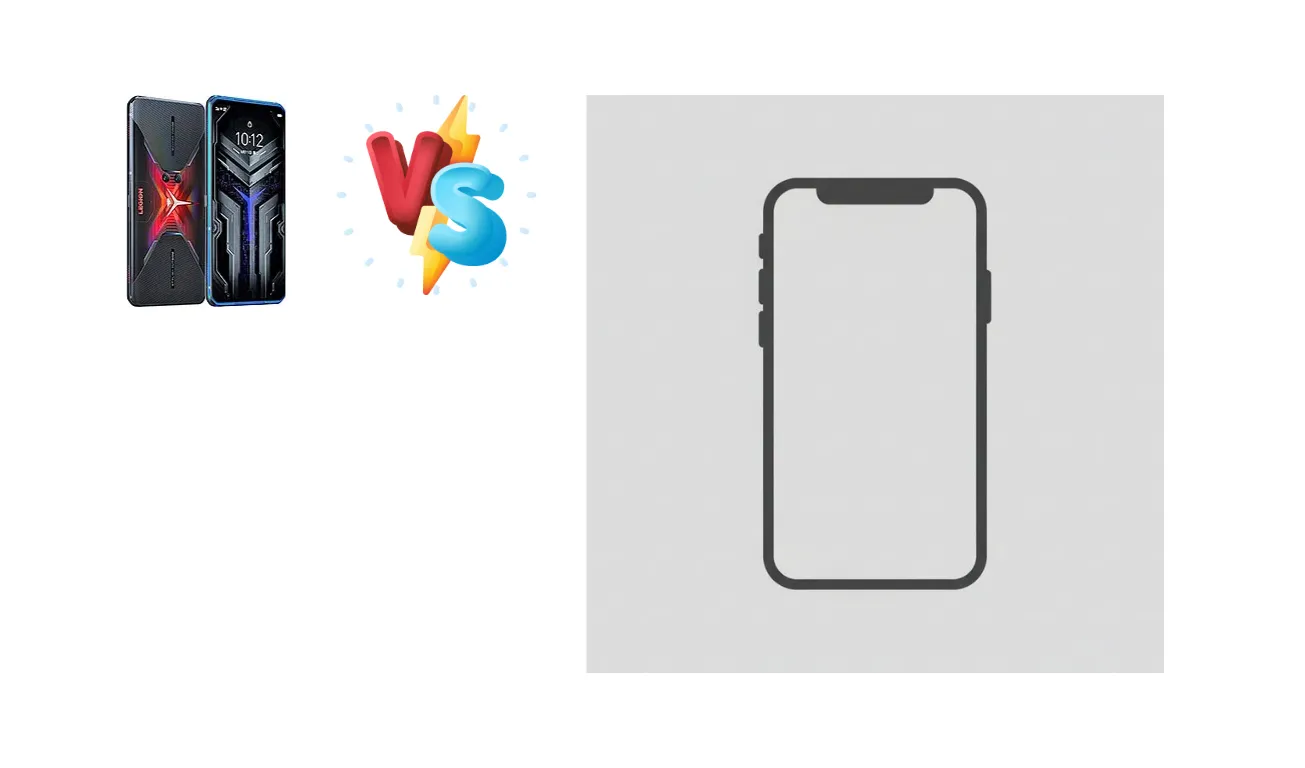
|
🏆 Quick Verdict
For the average gamer prioritizing sustained performance and rapid recharging, the Lenovo Legion Duel is the superior choice. Its 65W/90W charging significantly outperforms the Red Magic 5S’s 55W, and the dual-fan cooling system offers a tangible advantage during extended gaming sessions. However, the Red Magic 5S provides excellent battery endurance.
| PHONES | ||
|---|---|---|
| Phone Names | Lenovo Legion Duel | ZTE nubia Red Magic 5S |
| Network | ||
|---|---|---|
| 2G bands | GSM 850 / 900 / 1800 / 1900 | GSM 850 / 900 / 1800 / 1900 - SIM 1 & SIM 2 |
| 3G bands | HSDPA 850 / 900 / 1700(AWS) / 1900 / 2100 | HSDPA 850 / 900 / 1700(AWS) / 1900 / 2100 |
| 4G bands | 1, 2, 3, 4, 5, 7, 8, 12, 17, 18, 19, 20, 26, 28, 34, 38, 39, 40, 41, 42 - International | 1, 2, 3, 4, 5, 7, 8, 12, 17, 18, 19, 20, 26, 34, 38, 39, 40, 41 |
| 5G bands | 1, 3, 28, 38, 41, 77, 78, 79 SA/NSA | 41, 78, 79 SA/NSA |
| Speed | HSPA 42.2/5.76 Mbps, LTE (4CA) Cat15 800/210 Mbps, 5G 2.5 Gbps DL | HSPA, LTE-A, 5G 7.5 Gbps DL |
| Technology | GSM / HSPA / LTE / 5G | GSM / CDMA / HSPA / EVDO / LTE / 5G |
| - | CDMA2000 1xEV-DO | |
| Launch | ||
|---|---|---|
| Announced | 2020, July 22. Released 2020, October 15 | 2020, July 28 |
| Status | Discontinued | Available. Released 2020, August 01 |
| Body | ||
|---|---|---|
| Build | Glass front, glass back, aluminum frame | Glass front (Gorilla Glass), glass back (Gorilla Glass), aluminum frame |
| Dimensions | 169.2 x 78.5 x 9.9 mm (6.66 x 3.09 x 0.39 in) | 168.6 x 78 x 9.8 mm (6.64 x 3.07 x 0.39 in) |
| SIM | Nano-SIM + Nano-SIM | Dual SIM (Nano-SIM, dual stand-by) |
| Weight | 239 g (8.43 oz) | 220 g (7.76 oz) |
| Water-repellent coating | Pressure sensitive zones (300Hz touch-sensing) Built-in cooling fan | |
| Display | ||
|---|---|---|
| Protection | - | Corning Gorilla Glass |
| Resolution | 1080 x 2340 pixels, 19.5:9 ratio (~388 ppi density) | 1080 x 2340 pixels, 19.5:9 ratio (~388 ppi density) |
| Size | 6.65 inches, 108.6 cm2 (~81.7% screen-to-body ratio) | 6.65 inches, 108.6 cm2 (~82.5% screen-to-body ratio) |
| Type | AMOLED, 144Hz, HDR10+ | AMOLED, 144Hz |
| Platform | ||
|---|---|---|
| CPU | Octa-core (1x3.09 GHz Cortex-A77 & 3x2.42 GHz Cortex-A77 & 4x1.80 GHz Cortex-A55) | Octa-core (1x2.84 GHz Cortex-A77 & 3x2.42 GHz Cortex-A77 & 4x1.80 GHz Cortex-A55) |
| Chipset | Qualcomm SM8250 Snapdragon 865 5G+ (7 nm+) | Qualcomm SM8250 Snapdragon 865 5G (7 nm+) |
| GPU | Adreno 650 | Adreno 650 |
| OS | Android 10, Legion OS/ ZUI12 | Android 10, Redmagic 3.0 |
| Memory | ||
|---|---|---|
| Card slot | No | No |
| Internal | 256GB 12GB RAM, 512GB 16GB RAM | 128GB 8GB RAM, 256GB 12GB RAM, 256GB 16GB RAM |
| UFS 3.1 | UFS 3.1 | |
| Main Camera | ||
|---|---|---|
| Dual | 64 MP, f/1.9, 25mm (wide), 1/1.72", 0.8µm, PDAF 16 MP, f/2.2, 120˚, 16mm (ultrawide) | - |
| Features | Dual-LED flash, panorama, HDR | LED flash, HDR, panorama |
| Triple | - | 64 MP, f/1.8, 26mm (wide), 1/1.72", 0.8µm, PDAF 8 MP, f/2.0, 120˚, 13mm (ultrawide), 1.12µm 2 MP, (macro) |
| Video | 4K@30fps gyro-EIS | 8K@30fps, 4K@30/60fps, 1080p@30/60/120/240fps |
| Selfie camera | ||
|---|---|---|
| Features | LED flash, HDR | HDR |
| Single | Motorized pop-up 20 MP, f/2.2, 25mm (wide), 1/3.1", 0.9µm | 8 MP, f/2.0, (wide), 1.12µm |
| Video | 4K@30fps | 1080p@30fps |
| Sound | ||
|---|---|---|
| 3.5mm jack | No | Yes |
| 35mm jack | No | - |
| Loudspeaker | Yes, with stereo speakers | Yes, with stereo speakers |
| - | 32-bit/384kHz audio | |
| Comms | ||
|---|---|---|
| Bluetooth | 5.0, A2DP, LE, aptX HD, aptX Adaptive | 5.1, A2DP, aptX, LE |
| NFC | Yes | Yes |
| Positioning | GPS (L1+L5), GLONASS, GALILEO, BDS, QZSS | GPS (L1+L5), GLONASS, BDS, GALILEO |
| Radio | No | No |
| USB | USB Type-C 3.1 (side), USB Type-C 2.0 (bottom), OTG | USB Type-C 3.0, OTG, accessory connector |
| WLAN | Wi-Fi 802.11 a/b/g/n/ac/6, dual-band, Wi-Fi Direct | Wi-Fi 802.11 a/b/g/n/ac/6, dual-band, Wi-Fi Direct |
| Features | ||
|---|---|---|
| Sensors | Fingerprint (under display, optical), accelerometer, gyro, proximity, compass | Fingerprint (under display, optical), accelerometer, gyro, proximity, compass |
| Battery | ||
|---|---|---|
| Charging | 65W wired, (128GB 12GB RAM, 256GB 12GB RAM models) 90W wired, 50% in 10 min, 100% in 30 min (512GB 16GB RAM model) | 55W wired, 56% in 15 min, 100% in 40 min (advertised) |
| Type | Li-Po 5000 mAh | Li-Po 4500 mAh, non-removable |
| Misc | ||
|---|---|---|
| Colors | Vengeance Red, Blazing Blue | Silver, Pulse |
| Price | About 510 EUR | About 540 EUR |
| Tests | ||
|---|---|---|
| Battery life | - | Endurance rating 83h |
| Camera | - | Photo / Video |
| Display | - | Contrast ratio: Infinite (nominal) |
| Loudspeaker | - | -22.6 LUFS (Excellent) |
| Performance | - | AnTuTu: 557056 (v8) GeekBench: 13400 (v4.4), 3386 (v5.1) GFXBench: 46fps (ES 3.1 onscreen) |
Lenovo Legion Duel
- Faster charging speeds (especially 512GB model)
- Superior thermal management with dual-fan cooling
- Slightly higher CPU clock speed for potential performance gains
- Likely bulkier and heavier design
- Missing detailed display specifications
ZTE nubia Red Magic 5S
- Excellent battery endurance (83h rating)
- Potentially better contrast ratio based on 'infinite' specification
- More streamlined and potentially more portable design
- Slower charging speeds
- Less effective thermal management
Display Comparison
Both devices utilize the Qualcomm Snapdragon 865 5G chipset built on a 7nm+ process, meaning core performance is largely comparable. However, the Red Magic 5S explicitly states an infinite (nominal) contrast ratio, suggesting a focus on deep blacks and vibrant colors, potentially utilizing an AMOLED panel. While the Legion Duel’s display specs are not provided, its gaming focus implies a high refresh rate and low latency are present. The absence of detailed display specs for the Legion Duel is a notable omission, making a direct comparison difficult beyond assuming a high-quality panel.
Camera Comparison
Camera details are sparse for both devices. The context data for the Red Magic 5S simply states 'Photo / Video' without specifics. This suggests the camera is not a primary selling point. The Legion Duel’s camera specs are also missing, but given its gaming focus, we can infer a competent but not class-leading camera system. Without sensor size, aperture, or OIS information, a meaningful comparison is impossible. It's safe to assume neither phone prioritizes camera capabilities over gaming performance.
Performance
The Lenovo Legion Duel and ZTE nubia Red Magic 5S both employ the Snapdragon 865 5G chipset, but the Legion Duel boasts a slightly higher peak CPU clock speed (3.09 GHz vs 2.84 GHz). While this difference is unlikely to be dramatically noticeable in most games, it could provide a marginal advantage in CPU-bound tasks. Both phones feature the same CPU core configuration (1x Cortex-A77 at higher clock, 3x Cortex-A77, 4x Cortex-A55). The Legion Duel’s dual-fan cooling system is a key differentiator, promising significantly better thermal management and reduced throttling during prolonged gaming sessions compared to the Red Magic 5S, which likely relies on more conventional passive cooling.
Battery Life
The ZTE nubia Red Magic 5S boasts an endurance rating of 83 hours, indicating excellent battery life. Its 55W wired charging can reach 56% in 15 minutes and 100% in 40 minutes (advertised). The Lenovo Legion Duel offers 65W charging for the 12GB/128GB and 12GB/256GB models, and a faster 90W charging for the 16GB/512GB model, reaching 50% in 10 minutes and 100% in 30 minutes (512GB model). This significantly faster charging speed gives the Legion Duel a clear advantage for users who need to quickly top up their battery.
Buying Guide
Buy the Lenovo Legion Duel if you demand the absolute highest sustained gaming performance and value the fastest possible charging speeds, even if it means a bulkier device. You're willing to trade portability for raw power. Buy the ZTE nubia Red Magic 5S if you prioritize all-day battery life, a more subtle design, and a slightly lower price point, accepting a trade-off in peak sustained performance and charging speed.