
Lenovo Legion Duel vs. Sony Xperia 1: A Clash of Priorities
| Phones Images | |||||
|---|---|---|---|---|---|
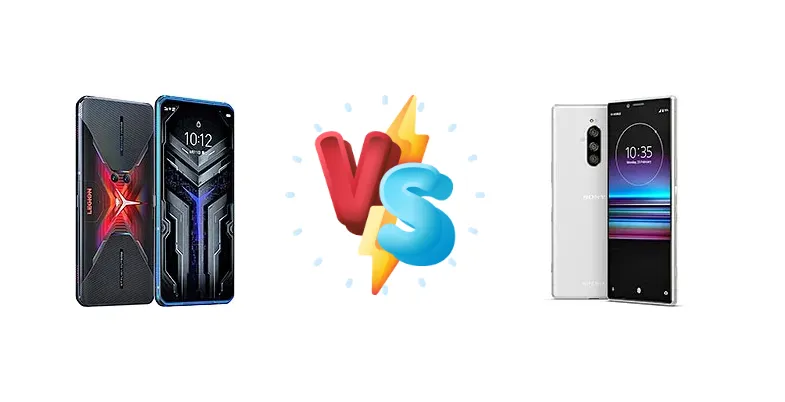
|
🏆 Quick Verdict
For the dedicated mobile gamer, the Lenovo Legion Duel is the clear winner. Its Snapdragon 865+ and aggressive cooling solution provide sustained performance the Xperia 1’s older Snapdragon 855 simply can’t match. However, the Sony Xperia 1 excels for content creators and those prioritizing a stunning display and refined multimedia experience.
| PHONES | ||
|---|---|---|
| Phone Names | Lenovo Legion Duel | Sony Xperia 1 |
| Network | ||
|---|---|---|
| 2G bands | GSM 850 / 900 / 1800 / 1900 | GSM 850 / 900 / 1800 / 1900 |
| 3G bands | HSDPA 850 / 900 / 1700(AWS) / 1900 / 2100 | HSDPA 800 / 850 / 900 / 1700(AWS) / 1900 / 2100 |
| 4G bands | 1, 2, 3, 4, 5, 7, 8, 12, 17, 18, 19, 20, 26, 28, 34, 38, 39, 40, 41, 42 - International | 1, 2, 3, 4, 5, 7, 8, 12, 13, 17, 19, 20, 26, 28, 29, 32, 38, 39, 40, 41, 46, 66 |
| 5G bands | 1, 3, 28, 38, 41, 77, 78, 79 SA/NSA | - |
| Speed | HSPA 42.2/5.76 Mbps, LTE (4CA) Cat15 800/210 Mbps, 5G 2.5 Gbps DL | HSPA 42.2/5.76 Mbps, LTE Cat19 1600/150 Mbps |
| Technology | GSM / HSPA / LTE / 5G | GSM / HSPA / LTE |
| Launch | ||
|---|---|---|
| Announced | 2020, July 22. Released 2020, October 15 | 2019, February 25. Released 2019, May 30 |
| Status | Discontinued | Discontinued |
| Body | ||
|---|---|---|
| Build | Glass front, glass back, aluminum frame | Glass front (Gorilla Glass 6), glass back (Gorilla Glass 6), aluminum frame |
| Dimensions | 169.2 x 78.5 x 9.9 mm (6.66 x 3.09 x 0.39 in) | 167 x 72 x 8.2 mm (6.57 x 2.83 x 0.32 in) |
| SIM | Nano-SIM + Nano-SIM | · Nano-SIM· Nano-SIM + Nano-SIM |
| Weight | 239 g (8.43 oz) | 178 g (6.28 oz) |
| Water-repellent coating | IP65/IP68 dust/water resistant (up to 1.5m for 30 mins) | |
| Display | ||
|---|---|---|
| Protection | - | Corning Gorilla Glass 6 |
| Resolution | 1080 x 2340 pixels, 19.5:9 ratio (~388 ppi density) | 1644 x 3840 pixels, 21:9 ratio (~643 ppi density) |
| Size | 6.65 inches, 108.6 cm2 (~81.7% screen-to-body ratio) | 6.5 inches, 98.6 cm2 (~82.0% screen-to-body ratio) |
| Type | AMOLED, 144Hz, HDR10+ | OLED, HDR BT.2020 |
| - | Runs at 1096 x 2560 pixels except for select use cases Triluminos display X-Reality Engine | |
| Platform | ||
|---|---|---|
| CPU | Octa-core (1x3.09 GHz Cortex-A77 & 3x2.42 GHz Cortex-A77 & 4x1.80 GHz Cortex-A55) | Octa-core (1x2.84 GHz Kryo 485 & 3x2.42 GHz Kryo 485 & 4x1.78 GHz Kryo 485) |
| Chipset | Qualcomm SM8250 Snapdragon 865 5G+ (7 nm+) | Qualcomm SM8150 Snapdragon 855 (7 nm) |
| GPU | Adreno 650 | Adreno 640 |
| OS | Android 10, Legion OS/ ZUI12 | Android 9.0 (Pie), upgradable to Android 11 |
| Memory | ||
|---|---|---|
| Card slot | No | microSDXC (uses shared SIM slot) - dual SIM model only |
| Internal | 256GB 12GB RAM, 512GB 16GB RAM | 64GB 6GB RAM, 128GB 6GB RAM |
| UFS 3.1 | UFS 2.1 | |
| Main Camera | ||
|---|---|---|
| Dual | 64 MP, f/1.9, 25mm (wide), 1/1.72", 0.8µm, PDAF 16 MP, f/2.2, 120˚, 16mm (ultrawide) | - |
| Features | Dual-LED flash, panorama, HDR | Color spectrum sensor, LED flash, panorama, HDR, eye tracking |
| Triple | - | 12 MP, f/1.6, 26mm (wide), 1/2.55", 1.4µm, predictive dual pixel PDAF, 5-axis OIS 12 MP, f/2.4, 52mm (telephoto), 1/3.4", 1.0µm, predictive PDAF, 2x optical zoom, 5-axis OIS 12 MP, f/2.4, 16mm (ultrawide), 1/3.4", 1.0µm |
| Video | 4K@30fps gyro-EIS | 4K@24/25/30fps HDR, 1080p@60fps, 1080p@30fps (5-axis gyro-EIS), 1080p@960fps |
| Selfie camera | ||
|---|---|---|
| Features | LED flash, HDR | HDR |
| Single | Motorized pop-up 20 MP, f/2.2, 25mm (wide), 1/3.1", 0.9µm | 8 MP, f/2.0, 24mm (wide), 1/4.0", 1.12µm |
| Video | 4K@30fps | 1080p@30fps (5-axis gyro-EIS) |
| Sound | ||
|---|---|---|
| 3.5mm jack | No | No |
| 35mm jack | No | No |
| Loudspeaker | Yes, with stereo speakers | Yes, with stereo speakers |
| - | 24-bit/192kHz audio Dynamic vibration system | |
| Comms | ||
|---|---|---|
| Bluetooth | 5.0, A2DP, LE, aptX HD, aptX Adaptive | 5.0, A2DP, aptX HD, LE |
| NFC | Yes | Yes |
| Positioning | GPS (L1+L5), GLONASS, GALILEO, BDS, QZSS | GPS, GLONASS, BDS, GALILEO |
| Radio | No | No |
| USB | USB Type-C 3.1 (side), USB Type-C 2.0 (bottom), OTG | USB Type-C 3.1, OTG |
| WLAN | Wi-Fi 802.11 a/b/g/n/ac/6, dual-band, Wi-Fi Direct | Wi-Fi 802.11 a/b/g/n/ac, dual-band, Wi-Fi Direct, DLNA |
| Features | ||
|---|---|---|
| Sensors | Fingerprint (under display, optical), accelerometer, gyro, proximity, compass | Fingerprint (side-mounted), accelerometer, gyro, proximity, barometer, compass |
| Battery | ||
|---|---|---|
| Charging | 65W wired, (128GB 12GB RAM, 256GB 12GB RAM models) 90W wired, 50% in 10 min, 100% in 30 min (512GB 16GB RAM model) | 18W wired, PD2.0 |
| Type | Li-Po 5000 mAh | Li-Ion 3330 mAh, non-removable |
| Misc | ||
|---|---|---|
| Colors | Vengeance Red, Blazing Blue | Black, Gray, Purple, White |
| Models | - | J8110, J8170, J9110, J9150, SOV40, SO-03L |
| Price | About 510 EUR | About 500 EUR |
| Tests | ||
|---|---|---|
| Audio quality | - | Noise -93.6dB / Crosstalk -85.2dB |
| Battery life | - | Endurance rating 79h |
| Camera | - | Photo / Video |
| Display | - | Contrast ratio: Infinite (nominal) |
| Loudspeaker | - | -26.7 LUFS (Good) |
| Performance | - | AnTuTu: 356734 (v7), 418206 (v8) GeekBench: 10985 (v4.4), 2753 (v5.1) GFXBench: 33fps (ES 3.1 onscreen) |
Lenovo Legion Duel
- Superior gaming performance with Snapdragon 865+
- Significantly faster charging speeds (65W/90W)
- Likely more effective cooling system for sustained performance
- Bulkier design geared towards gaming
- Camera likely less refined than Xperia 1
- Less emphasis on display color accuracy
Sony Xperia 1
- Excellent display quality with high brightness and contrast
- Sophisticated camera system for content creation
- More compact and refined design
- Older Snapdragon 855 chipset with lower performance
- Slower charging speeds (18W)
- May experience throttling during extended gaming sessions
Display Comparison
The Sony Xperia 1 boasts a 6.5-inch display capable of 665 nits of peak brightness, offering excellent visibility in bright conditions. While the Legion Duel’s display specs aren’t explicitly provided, its gaming focus suggests a high refresh rate panel, likely prioritizing responsiveness over absolute color accuracy. The Xperia 1’s ‘Infinite’ contrast ratio (nominal) indicates a true black level, typical of OLED technology, which is likely shared by the Legion Duel. However, the Xperia 1’s strength lies in its color calibration, catering to professionals. The Legion Duel likely prioritizes refresh rate and response time for competitive gaming.
Camera Comparison
Both devices offer photo and video capabilities, but their approaches differ. The Xperia 1, historically, focuses on delivering a natural, cinematic image with accurate color reproduction. Its camera system is geared towards professional videographers, offering manual controls and advanced features. The Legion Duel’s camera specs are not detailed, but its gaming-centric design suggests a less emphasized camera experience. While the Legion Duel may offer a respectable camera, it’s unlikely to match the Xperia 1’s image quality or feature set, particularly in video recording. The absence of specific sensor details for the Legion Duel makes a direct comparison difficult, but the Xperia 1’s emphasis on image quality is a clear advantage.
Performance
The Lenovo Legion Duel’s Qualcomm SM8250 Snapdragon 865 5G+ chipset represents a significant generational leap over the Sony Xperia 1’s Snapdragon 855. The 865+ features a faster prime core (3.09 GHz Cortex-A77 vs 2.84 GHz Kryo 485) and improved efficiency. This translates to higher sustained performance in demanding games. The Legion Duel’s 12GB/16GB of RAM, coupled with potentially faster LPDDR5 memory (implied by the chipset), further enhances multitasking and gaming responsiveness. The Xperia 1’s Snapdragon 855, while capable, will exhibit more noticeable throttling under prolonged load. The Legion Duel’s active cooling system (not detailed in the provided data, but a key feature) is crucial for maintaining peak performance.
Battery Life
Both phones achieved an endurance rating of 79 hours, suggesting similar overall battery life despite differing capacities. However, the Lenovo Legion Duel’s charging capabilities are vastly superior. With 65W/90W wired charging, it can achieve a full charge in as little as 30 minutes (512GB model), a significant advantage over the Xperia 1’s 18W PD2.0 charging. This faster charging is critical for gamers who need to quickly return to their sessions. While the Xperia 1’s battery life is respectable, the Legion Duel’s charging speed provides a more convenient user experience.
Buying Guide
Buy the Lenovo Legion Duel if you need uncompromising gaming performance, long play sessions without throttling, and are willing to accept a bulkier design. Buy the Sony Xperia 1 if you prefer a more compact flagship, prioritize display accuracy for photo and video editing, and value a sophisticated camera system geared towards professional-level content creation.