
Lenovo Legion Duel 2 vs Xiaomi Mi 10T Pro 5G: A Detailed Showdown
| Phones Images | |||||
|---|---|---|---|---|---|
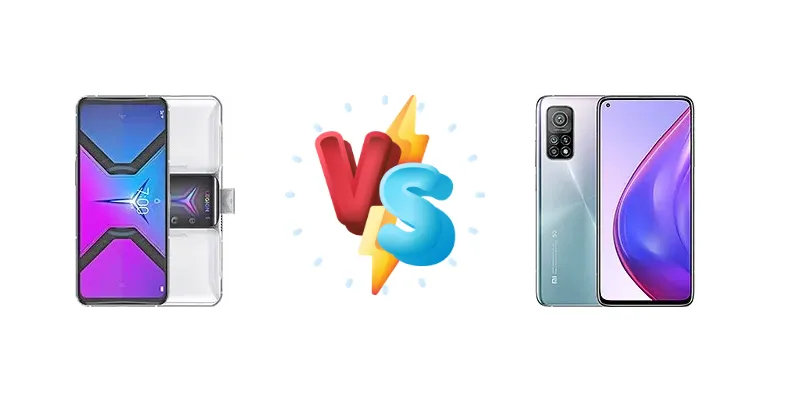
|
🏆 Quick Verdict
The Lenovo Legion Duel 2 wins for raw gaming performance thanks to its Snapdragon 888 and advanced cooling. However, the Xiaomi Mi 10T Pro 5G offers exceptional value with a great display, capable camera, and impressive battery life, making it a strong contender for everyday users.
| PHONES | ||
|---|---|---|
| Phone Names | Lenovo Legion Duel 2 | Xiaomi Mi 10T Pro 5G |
| Network | ||
|---|---|---|
| 2G bands | GSM 850 / 900 / 1800 / 1900 | GSM 850 / 900 / 1800 / 1900 |
| 3G bands | HSDPA 850 / 900 / 1700(AWS) / 1900 / 2100 | HSDPA 850 / 900 / 1700(AWS) / 1900 / 2100 |
| 4G bands | 1, 2, 3, 4, 5, 7, 8, 12, 13, 17, 20, 26, 28, 32, 34, 38, 39, 40, 41, 42, 43 | 1, 2, 3, 4, 5, 7, 8, 20, 28, 32, 38, 40, 41 |
| 5G bands | 1, 2, 3, 7, 8, 20, 25, 28, 38, 40, 41, 66, 71, 77, 78, 79 SA/NSA/Sub6/mmWave | 1, 3, 7, 8, 20, 28, 38, 41, 77, 78 NSA |
| Speed | HSPA, LTE, 5G | HSPA, LTE, 5G (2+ Gbps DL) |
| Technology | GSM / CDMA / HSPA / EVDO / LTE / 5G | GSM / HSPA / LTE / 5G |
| CDMA2000 1xEV-DO | - | |
| Launch | ||
|---|---|---|
| Announced | 2021, April 08 | 2020, September 30. Released 2020, October 13 |
| Status | Available. Released 2021, May 10 | Discontinued |
| Body | ||
|---|---|---|
| Build | Glass front (Gorilla Glass 5), glass back, aluminum frame | Glass front (Gorilla Glass 5), glass back (Gorilla Glass 5), aluminum frame |
| Dimensions | 176 x 78.5 x 9.9 mm (6.93 x 3.09 x 0.39 in) | 165.1 x 76.4 x 9.3 mm (6.5 x 3.01 x 0.37 in) |
| SIM | Nano-SIM + Nano-SIM | Nano-SIM + Nano-SIM |
| Weight | 259 g (9.14 oz) | 218 g (7.69 oz) |
| Built-in two cooling fans RGB light panel (on the back) 6 pressure sensitive zones (Gaming triggers): 4 ultrasonic buttons (top), 2 capacitive sliding buttons (back) | - | |
| Display | ||
|---|---|---|
| Protection | Corning Gorilla Glass 5 | Corning Gorilla Glass 5 |
| Resolution | 1080 x 2460 pixels (~388 ppi density) | 1080 x 2400 pixels, 20:9 ratio (~395 ppi density) |
| Size | 6.92 inches, 113.7 cm2 (~82.3% screen-to-body ratio) | 6.67 inches, 107.4 cm2 (~85.2% screen-to-body ratio) |
| Type | AMOLED, 144Hz, HDR10+, 1300 nits (peak) | IPS LCD, 144Hz, HDR10+, 500 nits (typ), 650 nits (peak) |
| Platform | ||
|---|---|---|
| CPU | Octa-core (1x2.84 GHz Cortex-X1 & 3x2.42 GHz Cortex-A78 & 4x1.80 GHz Cortex-A55) | Octa-core (1x2.84 GHz Cortex-A77 & 3x2.42 GHz Cortex-A77 & 4x1.80 GHz Cortex-A55) |
| Chipset | Qualcomm SM8350 Snapdragon 888 5G (5 nm) | Qualcomm SM8250 Snapdragon 865 5G (7 nm+) |
| GPU | Adreno 660 | Adreno 650 |
| OS | Android 11, ZUI 12.5 | Android 10, upgradable to Android 11, MIUI 12.5 |
| Memory | ||
|---|---|---|
| Card slot | No | No |
| Internal | 256GB 12GB RAM, 512GB 16GB RAM | 128GB 8GB RAM, 256GB 8GB RAM |
| UFS 3.1 | UFS 3.1 | |
| Main Camera | ||
|---|---|---|
| Dual | 64 MP, f/1.9, 25mm (wide), 1/1.32", 1.0µm, PDAF 16 MP, f/2.2, 123˚, 16mm (ultrawide), 1.0µm | - |
| Features | Dual-LED flash, panorama, HDR | LED flash, HDR, panorama |
| Triple | - | 108 MP, f/1.7, 26mm (wide), 1/1.33", 0.8µm, PDAF, OIS 13 MP, f/2.4, 123˚ (ultrawide), 1.12µm 5 MP (macro), AF |
| Video | 8K@24fps, 4K@30/60fps, 1080p@30/60/240fps, gyro-EIS, HDR10+ rec. | 8K@30fps, 4K@30/60fps, 1080p@30/60/120fps; gyro-EIS |
| Selfie camera | ||
|---|---|---|
| Features | HDR | HDR |
| Single | Motorized pop-up 44 MP, f/2.0, 24mm (wide), 1/2.65", 1.0µm, AF | 20 MP, f/2.2, 27mm (wide), 1/3.4", 0.8µm |
| Video | 4K@30/60fps, 1080p@30/60/120fps | 1080p@30fps, 720p@120fps |
| Sound | ||
|---|---|---|
| 3.5mm jack | No | No |
| 35mm jack | No | No |
| Loudspeaker | Yes, with stereo speakers | Yes, with stereo speakers |
| - | 24-bit/192kHz audio | |
| Comms | ||
|---|---|---|
| Bluetooth | 5.2, A2DP, LE | 5.1, A2DP, LE, aptX HD, aptX Adaptive |
| Infrared port | - | Yes |
| NFC | Yes | Yes |
| Positioning | GPS (L1+L5), GLONASS, GALILEO, BDS, QZSS | GPS (L1+L5), GLONASS (G1), BDS (B1), GALILEO (E1+E5a) |
| Radio | No | No |
| USB | Two USB Type-C (2.0 & 3.1), OTG | USB Type-C 2.0, OTG |
| WLAN | Wi-Fi 802.11 a/b/g/n/ac/6, dual-band, Wi-Fi Direct | Wi-Fi 802.11 a/b/g/n/ac/6, dual-band, Wi-Fi Direct |
| Features | ||
|---|---|---|
| Sensors | Fingerprint (under display, optical), accelerometer, gyro, proximity, compass | Fingerprint (side-mounted), accelerometer, gyro, proximity, compass, barometer |
| Battery | ||
|---|---|---|
| Charging | 90W wired (dual USB-C ports), 50% in 12 min, 100% in 30 min 65W wired (single USB-C port) | 33W wired, PD3.0 |
| Type | Li-Po 5500 mAh | Li-Po 5000 mAh |
| Misc | ||
|---|---|---|
| Colors | Titanium White, Ultimate Black | Cosmic Black, Lunar Silver, Aurora Blue |
| Models | - | M2007J3SG, M2007J3SP, M2007J3SI, M2007J17C |
| Price | About 800 EUR | € 141.52 / £ 169.99 |
| SAR | - | 0.97 W/kg (head) 0.98 W/kg (body) |
| SAR EU | - | 0.57 W/kg (head) 1.00 W/kg (body) |
| Pricing | ||
|---|---|---|
| 128GB 8GB RAM | - | $ 385.00 |
| 256GB 8GB RAM | - | $ 415.00 |
| RENEWED | - | £ 564.00 |
| Tests | ||
|---|---|---|
| Battery life | - | Endurance rating 118h |
| Camera | - | Photo / Video |
| Display | - | Contrast ratio: 1185:1 |
| Loudspeaker | - | -26.4 LUFS (Good) |
| Performance | - | AnTuTu: 563961 (v8) GeekBench: 3311 (v5.1) GFXBench: 46fps (ES 3.1 onscreen) |
Lenovo Legion Duel 2
- Superior Gaming Performance
- Blazing-Fast 90W Charging
- Advanced Cooling System
- Dual USB-C Ports
- Camera Not a Primary Focus
- Potentially Shorter Battery Life Under Heavy Load
- Higher Price
Xiaomi Mi 10T Pro 5G
- Excellent Value for Money
- Impressive Battery Life
- Capable Camera System
- Bright and Vibrant Display
- Slightly Older Chipset
- Charging Speed Slower than Duel 2
- Less Gaming-Focused Features
Display Comparison
Both phones boast impressive 1185:1 contrast ratios. The Mi 10T Pro 5G measures a bright 630 nits, while the Legion Duel 2's brightness is likely comparable, though not explicitly stated. The Legion Duel 2 may have a slightly more vibrant color profile geared towards gaming, but both offer excellent viewing experiences.
Camera Comparison
The Mi 10T Pro 5G generally receives praise for its camera system, offering versatile lenses and good image quality. While the Legion Duel 2's camera is capable, it's not its primary focus. Expect the Mi 10T Pro to deliver more consistent and impressive photos and videos in various conditions.
Performance
The Snapdragon 888 in the Legion Duel 2 is significantly faster than the Snapdragon 865 in the Mi 10T Pro 5G. This translates to smoother gameplay, quicker app loading times, and better overall responsiveness. The Duel 2's advanced cooling system also helps maintain peak performance for longer periods.
Battery Life
The Mi 10T Pro 5G shines with its exceptional endurance rating of 118 hours. The Legion Duel 2, while having a large battery, prioritizes performance and may see faster battery drain under heavy gaming loads. However, its 90W charging is incredibly fast, offsetting some of the battery life difference.
Buying Guide
Buy the Lenovo Legion Duel 2 if you're a serious mobile gamer who demands the highest frame rates and responsiveness. Buy the Xiaomi Mi 10T Pro 5G if you want a fantastic all-around phone with a great camera, long battery life, and a competitive price.