
Lenovo Legion Duel 2 vs. Duel: Which Gaming Phone Reigns Supreme?
| Phones Images | |||||
|---|---|---|---|---|---|
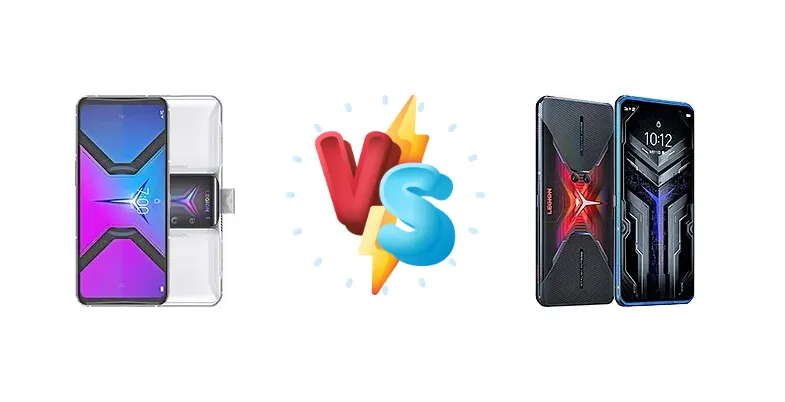
|
🏆 Quick Verdict
For most gamers, the Lenovo Legion Duel 2 is the superior choice. The Snapdragon 888 provides a noticeable performance uplift over the 865+, and the faster 90W charging (with both USB-C ports) significantly reduces downtime. However, the original Duel remains a viable option if found at a substantial discount.
| PHONES | ||
|---|---|---|
| Phone Names | Lenovo Legion Duel 2 | Lenovo Legion Duel |
| Network | ||
|---|---|---|
| 2G bands | GSM 850 / 900 / 1800 / 1900 | GSM 850 / 900 / 1800 / 1900 |
| 3G bands | HSDPA 850 / 900 / 1700(AWS) / 1900 / 2100 | HSDPA 850 / 900 / 1700(AWS) / 1900 / 2100 |
| 4G bands | 1, 2, 3, 4, 5, 7, 8, 12, 13, 17, 20, 26, 28, 32, 34, 38, 39, 40, 41, 42, 43 | 1, 2, 3, 4, 5, 7, 8, 12, 17, 18, 19, 20, 26, 28, 34, 38, 39, 40, 41, 42 - International |
| 5G bands | 1, 2, 3, 7, 8, 20, 25, 28, 38, 40, 41, 66, 71, 77, 78, 79 SA/NSA/Sub6/mmWave | 1, 3, 28, 38, 41, 77, 78, 79 SA/NSA |
| Speed | HSPA, LTE, 5G | HSPA 42.2/5.76 Mbps, LTE (4CA) Cat15 800/210 Mbps, 5G 2.5 Gbps DL |
| Technology | GSM / CDMA / HSPA / EVDO / LTE / 5G | GSM / HSPA / LTE / 5G |
| CDMA2000 1xEV-DO | - | |
| Launch | ||
|---|---|---|
| Announced | 2021, April 08 | 2020, July 22. Released 2020, October 15 |
| Status | Available. Released 2021, May 10 | Discontinued |
| Body | ||
|---|---|---|
| Build | Glass front (Gorilla Glass 5), glass back, aluminum frame | Glass front, glass back, aluminum frame |
| Dimensions | 176 x 78.5 x 9.9 mm (6.93 x 3.09 x 0.39 in) | 169.2 x 78.5 x 9.9 mm (6.66 x 3.09 x 0.39 in) |
| SIM | Nano-SIM + Nano-SIM | Nano-SIM + Nano-SIM |
| Weight | 259 g (9.14 oz) | 239 g (8.43 oz) |
| Built-in two cooling fans RGB light panel (on the back) 6 pressure sensitive zones (Gaming triggers): 4 ultrasonic buttons (top), 2 capacitive sliding buttons (back) | Water-repellent coating | |
| Display | ||
|---|---|---|
| Protection | Corning Gorilla Glass 5 | - |
| Resolution | 1080 x 2460 pixels (~388 ppi density) | 1080 x 2340 pixels, 19.5:9 ratio (~388 ppi density) |
| Size | 6.92 inches, 113.7 cm2 (~82.3% screen-to-body ratio) | 6.65 inches, 108.6 cm2 (~81.7% screen-to-body ratio) |
| Type | AMOLED, 144Hz, HDR10+, 1300 nits (peak) | AMOLED, 144Hz, HDR10+ |
| Platform | ||
|---|---|---|
| CPU | Octa-core (1x2.84 GHz Cortex-X1 & 3x2.42 GHz Cortex-A78 & 4x1.80 GHz Cortex-A55) | Octa-core (1x3.09 GHz Cortex-A77 & 3x2.42 GHz Cortex-A77 & 4x1.80 GHz Cortex-A55) |
| Chipset | Qualcomm SM8350 Snapdragon 888 5G (5 nm) | Qualcomm SM8250 Snapdragon 865 5G+ (7 nm+) |
| GPU | Adreno 660 | Adreno 650 |
| OS | Android 11, ZUI 12.5 | Android 10, Legion OS/ ZUI12 |
| Memory | ||
|---|---|---|
| Card slot | No | No |
| Internal | 256GB 12GB RAM, 512GB 16GB RAM | 256GB 12GB RAM, 512GB 16GB RAM |
| UFS 3.1 | UFS 3.1 | |
| Main Camera | ||
|---|---|---|
| Dual | 64 MP, f/1.9, 25mm (wide), 1/1.32", 1.0µm, PDAF 16 MP, f/2.2, 123˚, 16mm (ultrawide), 1.0µm | 64 MP, f/1.9, 25mm (wide), 1/1.72", 0.8µm, PDAF 16 MP, f/2.2, 120˚, 16mm (ultrawide) |
| Features | Dual-LED flash, panorama, HDR | Dual-LED flash, panorama, HDR |
| Video | 8K@24fps, 4K@30/60fps, 1080p@30/60/240fps, gyro-EIS, HDR10+ rec. | 4K@30fps gyro-EIS |
| Selfie camera | ||
|---|---|---|
| Features | HDR | LED flash, HDR |
| Single | Motorized pop-up 44 MP, f/2.0, 24mm (wide), 1/2.65", 1.0µm, AF | Motorized pop-up 20 MP, f/2.2, 25mm (wide), 1/3.1", 0.9µm |
| Video | 4K@30/60fps, 1080p@30/60/120fps | 4K@30fps |
| Sound | ||
|---|---|---|
| 3.5mm jack | No | No |
| 35mm jack | No | No |
| Loudspeaker | Yes, with stereo speakers | Yes, with stereo speakers |
| Comms | ||
|---|---|---|
| Bluetooth | 5.2, A2DP, LE | 5.0, A2DP, LE, aptX HD, aptX Adaptive |
| NFC | Yes | Yes |
| Positioning | GPS (L1+L5), GLONASS, GALILEO, BDS, QZSS | GPS (L1+L5), GLONASS, GALILEO, BDS, QZSS |
| Radio | No | No |
| USB | Two USB Type-C (2.0 & 3.1), OTG | USB Type-C 3.1 (side), USB Type-C 2.0 (bottom), OTG |
| WLAN | Wi-Fi 802.11 a/b/g/n/ac/6, dual-band, Wi-Fi Direct | Wi-Fi 802.11 a/b/g/n/ac/6, dual-band, Wi-Fi Direct |
| Features | ||
|---|---|---|
| Sensors | Fingerprint (under display, optical), accelerometer, gyro, proximity, compass | Fingerprint (under display, optical), accelerometer, gyro, proximity, compass |
| Battery | ||
|---|---|---|
| Charging | 90W wired (dual USB-C ports), 50% in 12 min, 100% in 30 min 65W wired (single USB-C port) | 65W wired, (128GB 12GB RAM, 256GB 12GB RAM models) 90W wired, 50% in 10 min, 100% in 30 min (512GB 16GB RAM model) |
| Type | Li-Po 5500 mAh | Li-Po 5000 mAh |
| Misc | ||
|---|---|---|
| Colors | Titanium White, Ultimate Black | Vengeance Red, Blazing Blue |
| Price | About 800 EUR | About 510 EUR |
Lenovo Legion Duel 2
- Superior Snapdragon 888 performance
- Faster and more versatile 90W dual USB-C charging
- Improved thermal efficiency due to 5nm process
- Potentially higher price
- Detailed display specs unavailable
Lenovo Legion Duel
- Strong Snapdragon 865+ performance
- 90W charging (512GB model)
- Potentially lower price point
- Older chipset with less efficient architecture
- Limited 90W charging to higher storage model
Display Comparison
Both the Legion Duel and Duel 2 feature large displays optimized for gaming, but detailed specifications are missing. However, given the market positioning, we can assume both utilize high refresh rate AMOLED panels. The Duel 2’s Snapdragon 888 likely benefits from improved display driver support, potentially leading to smoother visuals. The Duel 2’s chipset also allows for more efficient display power management, potentially extending battery life during prolonged gaming sessions. Bezels are likely similar, focusing on maximizing screen real estate.
Camera Comparison
Camera details are sparse for both devices. Given their gaming focus, camera performance is likely secondary. We can assume both feature capable main sensors, but detailed specifications like megapixel count and aperture are unavailable. The Duel 2’s improved ISP (Image Signal Processor) within the Snapdragon 888 should offer slightly better image processing, particularly in low-light conditions. However, the difference is unlikely to be substantial for the average user.
Performance
The core difference lies in the chipset: the Legion Duel 2 boasts the Qualcomm SM8350 Snapdragon 888 5G (5nm) versus the Duel’s SM8250 Snapdragon 865 5G+ (7nm+). The 888’s Cortex-X1 prime core, clocked at 2.84 GHz, represents a significant architectural improvement over the Duel’s 3.09 GHz Cortex-A77. While the clock speed is slightly lower, the X1’s superior IPC (Instructions Per Clock) delivers better single-core performance. The 5nm process node of the 888 also offers improved thermal efficiency, reducing the likelihood of throttling during extended gaming. The Duel 2’s LPDDR5 RAM, while the capacity is not specified, is likely faster than the Duel’s LPDDR5, further enhancing performance.
Battery Life
The Legion Duel 2 introduces a more versatile charging system. While both support 90W wired charging, the Duel 2 uniquely offers 90W via *dual* USB-C ports, while the Duel’s 90W is limited to the 512GB/16GB RAM model. The Duel 2 also supports 65W charging via a single USB-C port, providing flexibility. Both claim 100% charge in 30 minutes (for the 90W models), but the Duel 2 achieves 50% in 12 minutes compared to the Duel’s 10 minutes (512GB model). This suggests a slightly more aggressive charging curve on the Duel, but the Duel 2’s dual-port option offers convenience.
Buying Guide
Buy the Lenovo Legion Duel 2 if you demand the highest possible Android gaming performance and value faster charging speeds for uninterrupted play. Buy the Lenovo Legion Duel if you're on a tighter budget and can find it at a significantly lower price point, as the core gaming experience remains strong, albeit with slightly less processing power.