
Lenovo K14 Plus vs. Google Pixel 6a: A Detailed Comparison for Budget-Conscious Buyers
| Phones Images | |||||
|---|---|---|---|---|---|
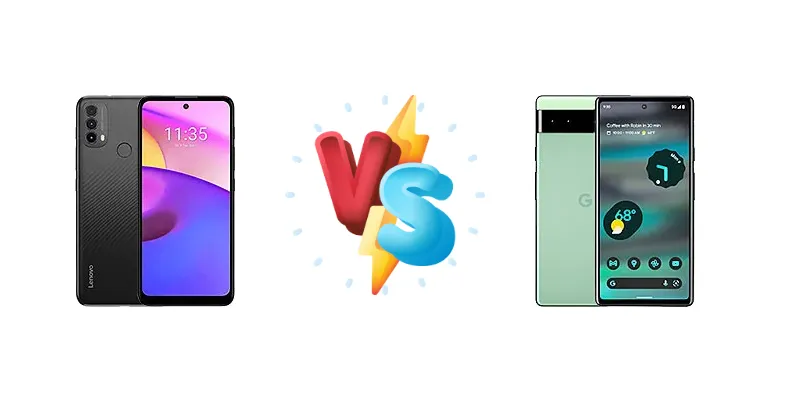
|
🏆 Quick Verdict
For the average user prioritizing a smooth, feature-rich experience and excellent camera capabilities, the Google Pixel 6a is the clear winner. While the Lenovo K14 Plus offers a compelling price point, its significantly weaker chipset and slower charging are substantial compromises.
| PHONES | ||
|---|---|---|
| Phone Names | Lenovo K14 Plus | Google Pixel 6a |
| Network | ||
|---|---|---|
| 2G bands | GSM 850 / 900 / 1800 / 1900 | GSM 850 / 900 / 1800 / 1900 |
| 3G bands | HSDPA 850 / 900 / 1700(AWS) / 1900 / 2100 | HSDPA 800 / 850 / 900 / 1700(AWS) / 1900 / 2100 |
| 4G bands | LTE | 1, 2, 3, 4, 5, 7, 8, 12, 13, 14, 17, 18, 19, 20, 25, 26, 28, 29, 30, 38, 39, 40, 41, 42, 48, 66, 71 - GX7AS, GB62Z (USA/Canada) |
| 5G bands | - | 1, 2, 3, 5, 7, 8, 12, 20, 25, 28, 30, 38, 40, 41, 48, 66, 71, 77, 78 SA/NSA/Sub6 - GX7AS (USA/Canada) |
| Speed | HSPA, LTE | HSPA, LTE, 5G |
| Technology | GSM / HSPA / LTE | GSM / HSPA / LTE / 5G |
| - | 1, 2, 3, 5, 7, 8, 12, 20, 25, 28, 30, 40, 48, 66, 71, 77, 78 SA/NSA/Sub6 - G1AZG (International) | |
| Launch | ||
|---|---|---|
| Announced | 2022, February 15 | 2022, May 11 |
| Status | Available. Released 2022, March | Available. Released 2022, July 21 |
| Body | ||
|---|---|---|
| Build | Glass front, plastic frame, plastic back | Glass front (Gorilla Glass 3), aluminum frame, plastic back |
| Dimensions | 165.1 x 75.7 x 9.1 mm (6.5 x 2.98 x 0.36 in) | 152.2 x 71.8 x 8.9 mm (5.99 x 2.83 x 0.35 in) |
| SIM | · Nano-SIM· Nano-SIM + Nano-SIM | Nano-SIM + eSIM |
| Weight | 198 g (6.98 oz) | 178 g (6.28 oz) |
| - | IP67 dust/water resistant (up to 1m for 30 min) | |
| Display | ||
|---|---|---|
| Protection | - | Corning Gorilla Glass 3 |
| Resolution | 720 x 1600 pixels, 20:9 ratio (~270 ppi density) | 1080 x 2400 pixels, 20:9 ratio (~429 ppi density) |
| Size | 6.5 inches, 102.0 cm2 (~81.6% screen-to-body ratio) | 6.1 inches, 90.7 cm2 (~83.0% screen-to-body ratio) |
| Type | IPS LCD, 90Hz | OLED, HDR |
| - | Always-on display | |
| Platform | ||
|---|---|---|
| CPU | Octa-core 1.8 GHz | Octa-core (2x2.80 GHz Cortex-X1 & 2x2.25 GHz Cortex-A76 & 4x1.80 GHz Cortex-A55) |
| Chipset | Unisoc T700 | Google Tensor (5 nm) |
| GPU | Mali G52 | Mali-G78 MP20 |
| OS | Android 11 | Android 12, upgradable to Android 15, up to 5 major Android upgrades |
| Memory | ||
|---|---|---|
| Card slot | microSDXC (dedicated slot) | No |
| Internal | 64GB 4GB RAM | 128GB 6GB RAM |
| UFS 2.1 | UFS 3.1 | |
| Main Camera | ||
|---|---|---|
| Dual | - | 12.2 MP, f/1.7, 27mm, (wide), 1/2.55", 1.4µm, dual pixel PDAF, OIS 12 MP, f/2.2, 17mm, 114˚ (ultrawide), 1.25µm |
| Features | LED flash, HDR, panorama | Dual-LED flash, Pixel Shift, Auto-HDR, panorama |
| Single | - | 8 MP, f/2.0, 24mm (wide), 1.12µm |
| Triple | 48 MP, f/1.8, (wide), PDAF 2 MP (macro) Auxiliary lens | - |
| Video | 1080p@30fps | 4K@30/60fps, 1080p@30/60/120/240fps; gyro-EIS, OIS |
| Selfie camera | ||
|---|---|---|
| Features | - | HDR, panorama |
| Single | 8 MP, f/2.0 | 8 MP, f/2.0, 24mm (wide), 1.12µm |
| Video | 1080p@30fps | 1080p@30fps |
| Sound | ||
|---|---|---|
| 3.5mm jack | Yes | No |
| 35mm jack | Yes | No |
| Loudspeaker | Yes | Yes, with stereo speakers |
| Comms | ||
|---|---|---|
| Bluetooth | 5.0, A2DP, LE | 5.2, A2DP, LE |
| NFC | No | Yes |
| Positioning | GPS, GLONASS, GALILEO | GPS, GLONASS, GALILEO, QZSS |
| Radio | FM radio | No |
| USB | USB Type-C 2.0 | USB Type-C 3.1 |
| WLAN | Wi-Fi 802.11 b/g/n | Wi-Fi 802.11 a/b/g/n/ac/6e, dual-band, Wi-Fi Direct |
| Features | ||
|---|---|---|
| Sensors | Fingerprint (rear-mounted), accelerometer, proximity | Fingerprint (under display, optical), accelerometer, gyro, proximity, compass, barometer |
| Battery | ||
|---|---|---|
| Charging | 10W wired | 18W wired, PD3.0 |
| Type | Li-Po 5000 mAh | Li-Po 4410 mAh |
| Misc | ||
|---|---|---|
| Colors | Black, Gold | Chalk, Charcoal, Sage |
| Models | - | GX7AS, GB62Z, G1AZG, GB17L |
| Price | About 200 EUR | $ 138.99 / C$ 228.74 / ₹ 23,999 |
| Tests | ||
|---|---|---|
| Battery life | - | Endurance rating 94h |
| Display | - | Contrast ratio: Infinite (nominal) |
Lenovo K14 Plus
- Extremely affordable price point
- Decent battery endurance (94h)
- Functional for basic smartphone tasks
- Weak Unisoc T700 chipset
- Slow 10W charging
- Likely inferior display quality
Google Pixel 6a
- Powerful Google Tensor chipset
- Excellent camera performance
- Fast 18W charging with PD3.0
- Higher price than the K14 Plus
- May not be the best choice for extreme budget constraints
- No expandable storage
Display Comparison
The Pixel 6a boasts a significantly brighter display, reaching a measured 876 nits, compared to an unspecified brightness for the K14 Plus. This translates to superior visibility outdoors. While both phones offer an 'infinite' (nominal) contrast ratio, the Pixel 6a’s OLED panel will deliver deeper blacks and more vibrant colors. The K14 Plus likely utilizes an LCD, which, while cost-effective, lacks the dynamic range of OLED. Bezels are also likely to be more pronounced on the K14 Plus, contributing to a less immersive viewing experience.
Camera Comparison
While detailed camera specs for the K14 Plus are unavailable, the Pixel 6a is renowned for its computational photography prowess. The Pixel 6a’s image processing, powered by the Tensor chip, excels in dynamic range, detail, and low-light performance. The K14 Plus will likely rely on simpler image processing algorithms, resulting in less refined images. The absence of OIS on the K14 Plus (assumed based on market segment) will further disadvantage it in low-light scenarios. Ignoring potential 2MP macro lenses on either device, the Pixel 6a’s main sensor and image pipeline are expected to deliver consistently superior results.
Performance
The performance gap between these devices is substantial. The Google Pixel 6a’s Google Tensor (5nm) chipset, with its Cortex-X1 prime core clocked at 2.80 GHz, is in a different league than the Lenovo K14 Plus’s Unisoc T700 (octa-core 1.8 GHz). The Tensor’s more advanced architecture and smaller 5nm process node deliver significantly faster processing speeds and improved power efficiency. This difference will be most noticeable in demanding tasks like gaming, video editing, and multitasking. The Pixel 6a’s likely use of faster LPDDR5 RAM further enhances performance, while the K14 Plus likely uses slower LPDDR4X.
Battery Life
Both phones achieve an endurance rating of 94 hours, suggesting comparable battery life under similar usage patterns. However, the Pixel 6a’s 18W wired charging with PD3.0 support is significantly faster than the K14 Plus’s 10W charging. This means the Pixel 6a can be topped up much more quickly, minimizing downtime. While the K14 Plus might offer slightly longer screen-on time due to its less powerful chipset, the convenience of faster charging on the Pixel 6a is a significant advantage.
Buying Guide
Buy the Lenovo K14 Plus if you need a functional smartphone for basic tasks like calls, messaging, and light web browsing, and your budget is extremely limited. You're willing to accept slower performance and a less polished experience to save money. Buy the Google Pixel 6a if you prioritize a responsive user interface, a capable camera system, and guaranteed software updates, even if it means spending more upfront. You value a premium experience and long-term support.