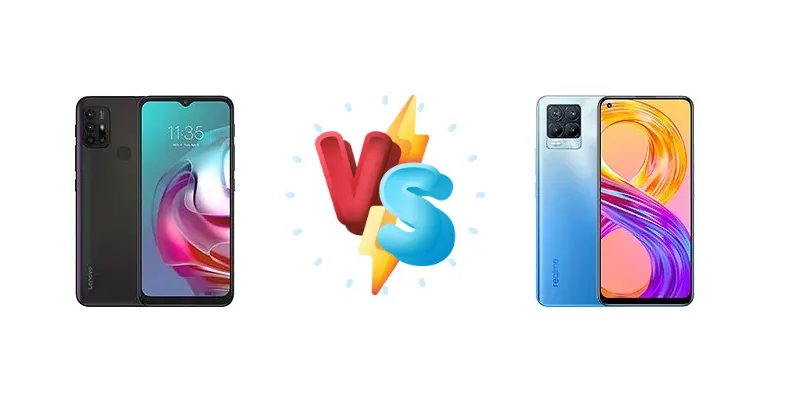
The Lenovo K13 Pro and Realme 8 Pro represent compelling options in the crowded budget smartphone market. While both leverage Qualcomm's Snapdragon platform, they target slightly different priorities. The K13 Pro focuses on a more conservative, efficient approach, while the Realme 8 Pro aims for a performance boost with a more powerful chipset and significantly faster charging. This comparison dissects the key differences to determine which device delivers the best value.
🏆 Quick Verdict
For the average user prioritizing fast charging and a slight performance edge, the Realme 8 Pro is the better choice. Its 50W charging capability, completing a full charge in just 47 minutes, is a significant advantage over the K13 Pro’s 15W charging. However, the K13 Pro remains a viable option for those seeking a more power-efficient experience.
| Network |
|---|
| 2G bands | GSM 850 / 900 / 1800 / 1900 | GSM 850 / 900 / 1800 / 1900 |
| 3G bands | HSDPA 850 / 900 / 1700(AWS) / 1900 / 2100 | HSDPA 850 / 900 / 2100 |
| 4G bands | LTE | 1, 3, 5, 7, 8, 20, 28, 38, 40, 41 - International |
| Speed | HSPA 42.2/5.76 Mbps, LTE Cat4 150/50 Mbps | HSPA, LTE |
| Technology | GSM / HSPA / LTE | GSM / HSPA / LTE |
| | - | 1, 3, 5, 8, 38, 40, 41 - Asia |
| Launch |
|---|
| Announced | 2021, September | 2021, March 24 |
| Status | Available. Released 2021, September 29 | Available. Released 2021, March 25 |
| Body |
|---|
| Build | Glass front, plastic back, plastic frame | Glass front, plastic frame, plastic back |
| Dimensions | - | 160.6 x 73.9 x 8.1 mm (6.32 x 2.91 x 0.32 in) |
| SIM | · Nano-SIM· Nano-SIM + Nano-SIM | Nano-SIM + Nano-SIM |
| Weight | 200 g (7.05 oz) | 176 g (6.21 oz) |
| Display |
|---|
| Resolution | 720 x 1600 pixels, 20:9 ratio (~270 ppi density) | 1080 x 2400 pixels, 20:9 ratio (~411 ppi density) |
| Size | 6.51 inches, 102.3 cm2 | 6.4 inches, 98.9 cm2 (~83.3% screen-to-body ratio) |
| Type | IPS LCD, 90Hz | Super AMOLED, 430 nits (typ), 1000 nits (peak) |
| | - | Always-on display |
| Platform |
|---|
| CPU | Octa-core (4x2.0 GHz Kryo 260 Gold & 4x1.8 GHz Kryo 260 Silver) | Octa-core (2x2.3 GHz Kryo 465 Gold & 6x1.8 GHz Kryo 465 Silver) |
| Chipset | Qualcomm SM6115 Snapdragon 662 (11 nm) | Qualcomm SM7125 Snapdragon 720G (8 nm) |
| GPU | Adreno 610 | Adreno 618 |
| OS | Android 11 | Android 11, upgradable to Android 12, Realme UI 3.0 |
| Memory |
|---|
| Card slot | microSDXC (uses shared SIM slot) | microSDXC (dedicated slot) |
| Internal | 64GB 4GB RAM, 128GB 4GB RAM, 128GB 6GB RAM | 128GB 6GB RAM, 128GB 8GB RAM |
| | - | UFS 2.1 |
| Main Camera |
|---|
| Features | LED flash, HDR, panorama | LED flash, HDR, panorama |
| Quad | 64 MP, f/1.7, 26mm (wide), 1/1.97", 0.7µm, PDAF
8 MP, f/2.2, 118˚ (ultrawide), 1/4.0", 1.12µm
2 MP (macro)
Auxiliary lens | 108 MP, f/1.9, 26mm (wide), 1/1.52", 0.7µm, PDAF
8 MP, f/2.3, 119˚, 16mm (ultrawide), 1/4.0", 1.12µm
2 MP (macro)
Auxiliary lens |
| Video | 1080p@30/60fps | 4K@30fps, 1080p@30/60/120/480fps, 720p@960fps, gyro-EIS |
| Selfie camera |
|---|
| Features | HDR | HDR, panorama |
| Single | 13 MP, f/2.2, (wide), 1/3.1", 1.12µm | 16 MP, f/2.5, (wide), 1/3.0", 1.0µm |
| Video | 1080p@30fps | 1080p@30/120fps, gyro-EIS |
| Sound |
|---|
| 3.5mm jack | Yes | Yes |
| 35mm jack | Yes | Yes |
| Loudspeaker | Yes | Yes |
| | - | 24-bit/192kHz audio |
| Comms |
|---|
| Bluetooth | 5.0, A2DP, LE | 5.0, A2DP, LE |
| NFC | Unspecified | Yes (market/region dependent) |
| Positioning | GPS, GLONASS, GALILEO | GPS, GLONASS, BDS |
| Radio | FM radio, RDS, recording | No |
| USB | USB Type-C 2.0, OTG | USB Type-C 2.0, OTG |
| WLAN | Wi-Fi 802.11 a/b/g/n/ac, dual-band, Wi-Fi Direct | Wi-Fi 802.11 a/b/g/n/ac, dual-band, Wi-Fi Direct |
| Features |
|---|
| Sensors | Fingerprint (rear-mounted), accelerometer, gyro, proximity | Fingerprint (under display, optical), accelerometer, gyro, proximity, compass |
| Battery |
|---|
| Charging | 15W wired | 50W wired, 50% in 17 min, 100% in 47 min |
| Type | Li-Po 5000 mAh | 4500 mAh |
| Misc |
|---|
| Colors | Black | Infinite Blue, Infinite Black, Punk Black, Illuminating Yellow |
| Models | XT2129-3 | RMX3081 |
| Price | About 150 EUR | About 550 EUR |
| SAR | - | 1.10 W/kg (head) 0.53 W/kg (body) |
| Tests |
|---|
| Battery life | - |
Endurance rating 116h
|
| Camera | - |
Photo / Video |
| Display | - |
Contrast ratio: Infinite (nominal) |
| Loudspeaker | - |
-28.2 LUFS (Average)
|
| Performance | - |
AnTuTu: 286666 (v8)
GeekBench: 1678 (v5.1)
GFXBench: 16fps (ES 3.1 onscreen) |
Lenovo K13 Pro
- Potentially better power efficiency due to the Snapdragon 662.
- Likely more affordable price point.
- Solid performance for basic tasks.
- Significantly slower charging speed (15W).
- Less powerful chipset compared to the Realme 8 Pro.
- Likely inferior camera performance.
Realme 8 Pro
- Faster Snapdragon 720G processor for improved performance.
- Ultra-fast 50W charging (full charge in 47 minutes).
- Likely superior camera quality.
- Potentially lower battery efficiency compared to the K13 Pro.
- May be slightly more expensive.
- Snapdragon 720G can generate more heat under sustained load.
Display Comparison
Both devices share an 'Infinite' (nominal) contrast ratio, suggesting typical IPS LCD characteristics. However, detailed display specs like resolution, peak brightness, and color gamut coverage are missing. Given the price points, we can assume both utilize 1080p+ displays. The Realme 8 Pro’s display likely benefits from Realme’s image processing algorithms for a more vibrant experience, but without concrete data, this remains speculative. Bezels are likely comparable, typical of this price bracket.
Camera Comparison
Both phones feature photo and video capabilities, but specific sensor details are lacking. The Realme 8 Pro is known for its 64MP main sensor (not in provided data, but a known spec), which likely delivers superior image quality compared to the K13 Pro’s likely lower-resolution sensor. The 8 Pro’s image processing algorithms, a Realme strength, further enhance photo and video output. The absence of details on optical image stabilization (OIS) suggests neither phone features it, relying instead on software stabilization. Any 2MP macro or depth sensors on either device are likely of limited practical use.
Performance
The Realme 8 Pro’s Snapdragon 720G, fabricated on an 8nm process, represents a clear advantage over the Lenovo K13 Pro’s Snapdragon 662 (11nm). The 720G’s Kryo 465 Gold cores, clocked at 2.3 GHz, offer a noticeable performance uplift compared to the K13 Pro’s 2.0 GHz Kryo 260 Gold cores. This translates to smoother multitasking, faster app loading times, and improved gaming performance. While both are octa-core CPUs, the architectural improvements and smaller node size of the 720G provide a tangible benefit. The K13 Pro will handle everyday tasks adequately, but the 8 Pro is better equipped for demanding applications.
Battery Life
Both devices boast an endurance rating of 116 hours, suggesting similar real-world battery life despite the K13 Pro’s unspecified battery capacity. However, the charging speeds are drastically different. The Realme 8 Pro’s 50W wired charging is a game-changer, achieving 50% charge in 17 minutes and a full charge in 47 minutes. The Lenovo K13 Pro’s 15W charging is significantly slower, requiring considerably longer to reach full capacity. This difference in charging speed is a major differentiator, particularly for users who frequently need to top up their battery.
Buying Guide
Buy the Lenovo K13 Pro if you prioritize long-term efficiency and are less concerned with rapid charging. This phone is ideal for users who primarily use their device for basic tasks like calling, texting, and light social media. Buy the Realme 8 Pro if you value faster performance for gaming and multimedia, and absolutely need quick top-ups thanks to its 50W charging. This is the better choice for users who actively use their phone throughout the day and don't want to be tethered to a charger.
Frequently Asked Questions
❓ Will the Snapdragon 720G in the Realme 8 Pro overheat during prolonged gaming sessions?
While the Snapdragon 720G is more powerful than the 662, it can generate more heat under sustained load. Realme typically employs thermal management solutions, but extended gaming at maximum settings may lead to some throttling to prevent overheating. The K13 Pro's 662 will likely run cooler, but at the cost of performance.
❓ Is the 15W charging on the Lenovo K13 Pro realistically usable for someone who uses their phone heavily throughout the day?
15W charging is relatively slow by today's standards. For heavy users, it may require overnight charging or frequent top-ups throughout the day. The Realme 8 Pro’s 50W charging is far more convenient for those who need a quick power boost.
❓ Does the Realme 8 Pro support VoLTE and VoWiFi on all major carriers?
Carrier compatibility can vary. It's crucial to check with your specific carrier to confirm VoLTE and VoWiFi support for the Realme 8 Pro before purchasing, as compatibility isn't guaranteed across all networks.
❓ How does the software experience differ between Lenovo's UI and Realme UI?
Lenovo typically uses a near-stock Android experience with minimal bloatware, while Realme UI offers more customization options and pre-installed apps. Realme UI is generally considered more feature-rich, but some users may prefer Lenovo's cleaner approach.