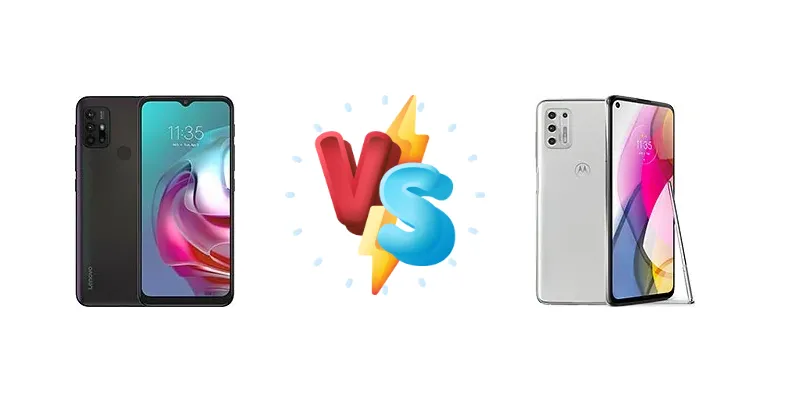
Both the Lenovo K13 Pro and the Motorola Moto G Stylus (2021) occupy the competitive sub-$200 smartphone segment. While both aim to deliver essential features at an accessible price, they diverge in their core processing power and charging capabilities, making the choice dependent on user priorities. This comparison dissects these differences to determine which device offers the best value.
🏆 Quick Verdict
For the average user prioritizing slightly smoother performance and potentially better long-term software support, the Lenovo K13 Pro emerges as the better choice. Its Snapdragon 662, while not a massive leap, offers a modest performance advantage over the Moto G Stylus's Snapdragon 678, and the difference in charging speed, though not huge, is noticeable.
| Network |
|---|
| 2G bands | GSM 850 / 900 / 1800 / 1900 | GSM 850 / 900 / 1800 / 1900 |
| 3G bands | HSDPA 850 / 900 / 1700(AWS) / 1900 / 2100 | HSDPA 850 / 900 / 1700(AWS) / 1900 / 2100 |
| 4G bands | LTE | 1, 2, 3, 4, 5, 7, 8, 12, 13, 14, 17, 20, 25, 26, 29, 38, 40, 41, 66, 71 |
| Speed | HSPA 42.2/5.76 Mbps, LTE Cat4 150/50 Mbps | HSPA, LTE |
| Technology | GSM / HSPA / LTE | GSM / CDMA / HSPA / LTE |
| | - | CDMA 800 / 1900 |
| Launch |
|---|
| Announced | 2021, September | 2021, January 08 |
| Status | Available. Released 2021, September 29 | Available. Released 2021, January 14 |
| Body |
|---|
| Build | Glass front, plastic back, plastic frame | Glass front, plastic frame, plastic back |
| Dimensions | - | 169.8 x 77.9 x 9 mm (6.69 x 3.07 x 0.35 in) |
| SIM | · Nano-SIM· Nano-SIM + Nano-SIM | Nano-SIM |
| Weight | 200 g (7.05 oz) | 213 g (7.51 oz) |
| | - | Stylus
Water-repellent coating |
| Display |
|---|
| Resolution | 720 x 1600 pixels, 20:9 ratio (~270 ppi density) | 1080 x 2400 pixels, 20:9 ratio (~386 ppi density) |
| Size | 6.51 inches, 102.3 cm2 | 6.8 inches, 112.2 cm2 (~84.8% screen-to-body ratio) |
| Type | IPS LCD, 90Hz | IPS LCD |
| Platform |
|---|
| CPU | Octa-core (4x2.0 GHz Kryo 260 Gold & 4x1.8 GHz Kryo 260 Silver) | Octa-core (2x2.2 GHz Kryo 460 Gold & 6x1.7 GHz Kryo 460 Silver) |
| Chipset | Qualcomm SM6115 Snapdragon 662 (11 nm) | Qualcomm SDM678 Snapdragon 678 (11 nm) |
| GPU | Adreno 610 | Adreno 612 |
| OS | Android 11 | Android 10 |
| Memory |
|---|
| Card slot | microSDXC (uses shared SIM slot) | microSDXC (dedicated slot) |
| Internal | 64GB 4GB RAM, 128GB 4GB RAM, 128GB 6GB RAM | 128GB 4GB RAM |
| Main Camera |
|---|
| Features | LED flash, HDR, panorama | LED flash, HDR, panorama |
| Quad | 64 MP, f/1.7, 26mm (wide), 1/1.97", 0.7µm, PDAF
8 MP, f/2.2, 118˚ (ultrawide), 1/4.0", 1.12µm
2 MP (macro)
Auxiliary lens | 48 MP, f/1.7, 26mm (wide), 1/2.0", 0.8µm, PDAF
8 MP, f/2.2, 118˚ (ultrawide), 1/4.0, 1.12µm
2 MP (macro)
Auxiliary lens |
| Video | 1080p@30/60fps | 4K@30fps, 1080p@30/60fps; gyro-EIS |
| Selfie camera |
|---|
| Features | HDR | HDR |
| Single | 13 MP, f/2.2, (wide), 1/3.1", 1.12µm | 16 MP, f/2.0, (wide), 1/3.06", 1.0µm |
| Video | 1080p@30fps | 1080p@30fps, gyro-EIS |
| Sound |
|---|
| 3.5mm jack | Yes | Yes |
| 35mm jack | Yes | Yes |
| Loudspeaker | Yes | Yes |
| Comms |
|---|
| Bluetooth | 5.0, A2DP, LE | 5.0, A2DP, LE |
| NFC | Unspecified | No |
| Positioning | GPS, GLONASS, GALILEO | GPS, GLONASS, BDS, GALILEO |
| Radio | FM radio, RDS, recording | Unspecified |
| USB | USB Type-C 2.0, OTG | USB Type-C 2.0 |
| WLAN | Wi-Fi 802.11 a/b/g/n/ac, dual-band, Wi-Fi Direct | Wi-Fi 802.11 a/b/g/n/ac, dual-band, Wi-Fi Direct |
| Features |
|---|
| Sensors | Fingerprint (rear-mounted), accelerometer, gyro, proximity | Fingerprint (side-mounted), accelerometer, gyro, proximity |
| Battery |
|---|
| Charging | 15W wired | 10W wired |
| Type | Li-Po 5000 mAh | Li-Po 4000 mAh |
| Misc |
|---|
| Colors | Black | Aurora Black, Aurora White |
| Models | XT2129-3 | XT2115, XT2115-1 |
| Price | About 150 EUR | About 90 EUR |
Lenovo K13 Pro
- Faster 15W charging for quicker top-ups.
- Slightly more efficient Snapdragon 662 chipset.
- Potential for better software optimization from Lenovo.
- Stylus functionality is absent.
- Camera performance is likely comparable to the Moto G Stylus.
Motorola Moto G Stylus (2021)
- Integrated stylus for note-taking and creative tasks.
- Near-stock Android experience with Motorola's software.
- Potentially more natural color reproduction in photos.
- Slower 10W charging.
- Snapdragon 678 offers a marginal performance advantage.
Display Comparison
Neither device boasts a standout display. Both likely utilize LCD panels, common in this price bracket. The focus here isn't on visual fidelity, but on usability. Without specific display specs, we can assume similar resolutions and brightness levels. The real difference lies in software optimization for color accuracy and viewing angles, an area where Motorola often excels with its color profiles.
Camera Comparison
Without detailed camera specifications, a direct comparison is difficult. However, both devices likely feature a primary camera sensor paired with supporting lenses of limited resolution. The image processing algorithms will be the key differentiator. Motorola typically leans towards a more natural color profile, while Lenovo's processing might be more saturated. The absence of Optical Image Stabilization (OIS) on either device suggests image quality will suffer in low-light conditions, relying heavily on software-based noise reduction.
Performance
The core difference lies in the chipsets. The Motorola Moto G Stylus (2021) features the Snapdragon 678, with a CPU configuration of 2x2.2 GHz Kryo 460 Gold and 6x1.7 GHz Kryo 460 Silver cores. The Lenovo K13 Pro utilizes the Snapdragon 662, employing 4x2.0 GHz Kryo 260 Gold and 4x1.8 GHz Kryo 260 Silver cores. While the 678 has a higher peak clock speed on its prime cores, the 662's architecture is slightly newer, potentially offering better efficiency. This translates to a marginal performance advantage for the K13 Pro in sustained workloads. Both phones will handle basic tasks like browsing and social media without issue, but the K13 Pro may exhibit less stuttering during multitasking.
Battery Life
Battery life will be heavily influenced by usage patterns, but the charging speeds are a clear differentiator. The Lenovo K13 Pro supports 15W wired charging, while the Motorola Moto G Stylus (2021) is limited to 10W. This means the K13 Pro will reach a full charge significantly faster, a crucial advantage for users who frequently need to top up their battery. While battery capacity isn't specified, the faster charging of the K13 Pro mitigates any potential disadvantage from a slightly smaller battery.
Buying Guide
Buy the Lenovo K13 Pro if you need a phone that handles everyday tasks with a bit more responsiveness and potentially benefits from Lenovo's software optimization. Buy the Motorola Moto G Stylus (2021) if you prioritize the integrated stylus functionality and prefer Motorola's near-stock Android experience, accepting a slight performance trade-off and slower charging.
Frequently Asked Questions
❓ Will the Snapdragon 678 in the Moto G Stylus (2021) handle demanding games like PUBG Mobile?
The Snapdragon 678 can run PUBG Mobile, but likely at medium graphics settings and potentially with occasional frame drops. The 662 in the K13 Pro will offer a similar experience. Neither chipset is designed for high-end gaming.
❓ How much faster is the 15W charging on the Lenovo K13 Pro compared to the 10W charging on the Moto G Stylus (2021)?
While exact times depend on battery level and usage, the 15W charging on the K13 Pro will likely reduce a 0-100% charge time by approximately 30-45 minutes compared to the Moto G Stylus (2021). This is a significant difference for users who need a quick power boost.
❓ Does the Motorola Moto G Stylus (2021) receive regular software updates?
Motorola's update schedule is generally slower than other manufacturers. While the Moto G Stylus (2021) will likely receive at least one major Android update, ongoing security patches may be less frequent compared to Lenovo's offerings.