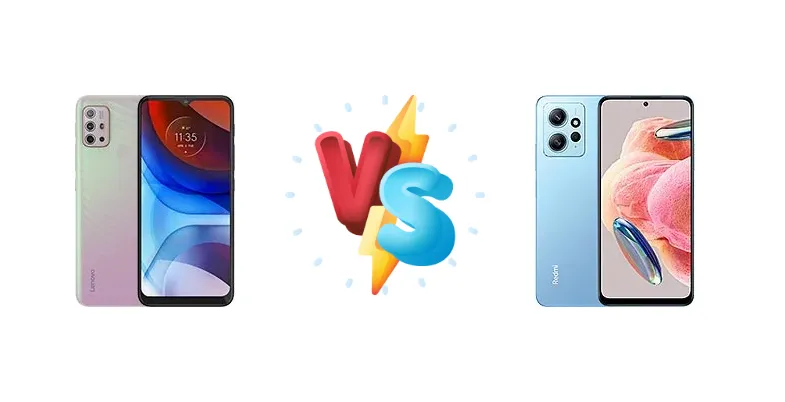
The Lenovo K13 Note and Xiaomi Redmi Note 12 4G represent compelling options in the crowded budget smartphone market. Both aim to deliver essential features at an accessible price point, but they diverge significantly in their core hardware. This comparison dissects those differences, focusing on performance, display quality, battery life, and charging speed to determine which device offers the best value.
🏆 Quick Verdict
For the average user prioritizing responsiveness and faster charging, the Xiaomi Redmi Note 12 4G is the better choice. Its Snapdragon 685 chipset, built on a more efficient 6nm process, provides a noticeable performance uplift over the K13 Note’s Snapdragon 460, and the 33W charging significantly reduces downtime. However, the K13 Note remains a viable option for those on a very tight budget.
| Network |
|---|
| 2G bands | GSM 850 / 900 / 1800 / 1900 | GSM 850 / 900 / 1800 / 1900 |
| 3G bands | HSDPA 850 / 900 / 1900 / 2100 | HSDPA 850 / 900 / 2100 |
| 4G bands | LTE | 1, 3, 5, 7, 8, 20, 28, 38, 40, 41 |
| Speed | HSPA 42.2/5.76 Mbps, LTE Cat4 150/50 Mbps | HSPA, LTE, 5G |
| Technology | GSM / HSPA / LTE | GSM / HSPA / LTE |
| Launch |
|---|
| Announced | 2021, June 22 | 2023, March 23 |
| Status | Available. Released 2021, June 22 | Available. Released 2023, March 30 |
| Body |
|---|
| Build | Glass front, plastic frame, plastic back | Glass front (Gorilla Glass 3), plastic frame, plastic back |
| Dimensions | 165.2 x 75.7 x 9.1 mm (6.50 x 2.98 x 0.36 in) | 165.7 x 76 x 7.9 mm (6.52 x 2.99 x 0.31 in) |
| SIM | Nano-SIM + Nano-SIM | Nano-SIM + Nano-SIM |
| Weight | 200 g (7.05 oz) | 183.5 g (6.49 oz) |
| | - | IP53, dust and splash resistant |
| Display |
|---|
| Protection | - | Corning Gorilla Glass 3 |
| Resolution | 720 x 1600 pixels, 20:9 ratio (~270 ppi density) | 1080 x 2400 pixels, 20:9 ratio (~395 ppi density) |
| Size | 6.5 inches, 102.0 cm2 (~81.6% screen-to-body ratio) | 6.67 inches, 107.4 cm2 (~85.3% screen-to-body ratio) |
| Type | IPS LCD | AMOLED, 120Hz, 450 nits (typ), 700 nits (HBM), 1200 nits (peak) |
| Platform |
|---|
| CPU | Octa-core (4x1.8 GHz Kryo 240 & 4x1.6 GHz Kryo 240) | Octa-core (4x2.8 GHz Cortex-A73 & 4x1.9 GHz Cortex-A53) |
| Chipset | Qualcomm SM4250 Snapdragon 460 (11 nm) | Qualcomm SM6225 Snapdragon 685 (6 nm) |
| GPU | Adreno 610 | Adreno 610 |
| OS | Android 11 | Android 13, upgradable to Android 14, HyperOS |
| Memory |
|---|
| Card slot | microSDXC (uses shared SIM slot) | microSDXC (dedicated slot) |
| Internal | 128GB 4GB RAM | 64GB 4GB RAM, 64GB 6GB RAM, 128GB 4GB RAM, 128GB 6GB RAM, 128GB 8GB RAM, 256GB 8GB RAM |
| | - | UFS 2.2 |
| Main Camera |
|---|
| Features | LED flash, HDR, panorama | LED flash, HDR, panorama |
| Quad | 48 MP, f/1.7, (wide), 1/2.0", 0.8µm, PDAF
8 MP, f/2.2, 118˚ (ultrawide), 1/4.0", 1.12µm
2 MP (macro)
Auxiliary lens | - |
| Triple | - | 50 MP, f/1.8, (wide), 1/2.76", 0.64µm, PDAF
8 MP, f/2.2, 120˚ (ultrawide), 1/4.0", 1.12µm
2 MP (macro) |
| Video | 1080p@30fps | 1080p@30fps |
| Selfie camera |
|---|
| Features | HDR | HDR |
| Single | 8 MP, f/2.2, (wide), 1/4.0", 1.12µm | 13 MP, f/2.5, (wide), 1/3.0" |
| Video | 1080p@30fps | 1080p@30fps |
| Sound |
|---|
| 3.5mm jack | Yes | Yes |
| 35mm jack | Yes | Yes |
| Loudspeaker | Yes | Yes |
| Comms |
|---|
| Bluetooth | 5.0, A2DP, LE | 5.0, A2DP, LE |
| Infrared port | - | Yes |
| NFC | Yes | Yes (market/region dependent) |
| Positioning | GPS, GLONASS, GALILEO | GPS, GLONASS, GALILEO |
| Radio | FM radio | Unspecified |
| USB | USB Type-C 2.0 | USB Type-C 2.0, OTG |
| WLAN | Wi-Fi 802.11 a/b/g/n/ac, dual-band, Wi-Fi Direct | Wi-Fi 802.11 a/b/g/n/ac, dual-band |
| Features |
|---|
| Sensors | Fingerprint (rear-mounted), accelerometer, gyro, proximity | Fingerprint (side-mounted), accelerometer, gyro, proximity, compass |
| Battery |
|---|
| Charging | 10W wired | 33W wired |
| Type | Li-Po 5000 mAh | Li-Po 5000 mAh |
| Misc |
|---|
| Colors | Aurora Gray, Pearl Sakura | Onyx Gray, Mint Green, Ice Blue |
| Models | - | 23021RAAEG, 23021RAA2Y, 23027RAD4I, 23028RA60L |
| Price | About 120 EUR | £ 189.99 / € 107.98 / ₹ 9,998 |
| SAR | - | 1.09 W/kg (head) 0.89 W/kg (body) |
| SAR EU | - | 0.90 W/kg (head) 0.99 W/kg (body) |
| Tests |
|---|
| Battery life | - |
Endurance rating 117h
|
| Camera | - |
Photo / Video |
| Display | - |
Contrast ratio: Infinite (nominal) |
| Loudspeaker | - |
-27.9 LUFS (Good)
|
| Performance | - |
AnTuTu: 319219 (v9)
GeekBench: 1797 (v5.1), 1341 (v6)
GFXBench: 7.5fps (ES 3.1 onscreen) |
Lenovo K13 Note
- Potentially lower price point
- Acceptable battery life for basic use
- Functional for essential smartphone tasks
- Significantly slower processor
- Slow 10W charging
- Likely inferior display brightness
Xiaomi Redmi Note 12 4G
- Faster and more efficient Snapdragon 685
- 33W fast charging for quick top-ups
- Brighter display for better outdoor visibility
- May be slightly more expensive
- Standard 60Hz display refresh rate
- Camera details are limited
Display Comparison
The Xiaomi Redmi Note 12 4G boasts a significantly brighter display, reaching a measured peak brightness of 744 nits. This is crucial for outdoor visibility, a common pain point for budget phones. While the K13 Note’s display specifications are not provided, it’s reasonable to assume it falls short of this figure. The Redmi Note 12 4G’s ‘Infinite’ contrast ratio (nominal) suggests a typical IPS panel, offering good color reproduction, but lacking the dynamic range of OLED displays. The absence of refresh rate information for both devices suggests standard 60Hz panels, which is typical for this price bracket.
Camera Comparison
Both devices are listed as having Photo/Video capabilities, but detailed camera specifications are lacking. Without sensor size, aperture, or image processing details, a direct comparison is difficult. However, given the Redmi Note 12 4G’s overall positioning, it’s likely to offer a more refined camera experience, potentially with better low-light performance and image stabilization. The prevalence of 2MP macro lenses on both devices suggests they are largely marketing features and offer limited practical value.
Performance
The core difference lies in the chipsets. The Redmi Note 12 4G’s Snapdragon 685 (6nm) is a clear upgrade over the K13 Note’s Snapdragon 460 (11nm). The 6nm process node translates to improved power efficiency and thermal performance, allowing the Snapdragon 685 to sustain higher clock speeds for longer periods. The CPU architecture also favors the Redmi Note 12 4G; its Cortex-A73 cores (2.8 GHz) are significantly more powerful than the Kryo 240 cores (1.8 GHz) found in the K13 Note. This difference will be most noticeable in demanding tasks like gaming and multitasking. The K13 Note will handle basic tasks adequately, but will struggle with more intensive applications.
Battery Life
Both phones share an endurance rating of 117 hours, indicating similar overall battery life. However, the Redmi Note 12 4G’s 33W wired charging is a game-changer. This allows for significantly faster top-ups compared to the K13 Note’s sluggish 10W charging. While the K13 Note might last a similar amount of time on a single charge, the Redmi Note 12 4G’s ability to quickly replenish its battery offers a more convenient user experience, especially for those who frequently use their phones throughout the day.
Buying Guide
Buy the Lenovo K13 Note if you need a functional smartphone for basic tasks like calls, messaging, and light social media use, and are willing to accept slower performance and charging. Buy the Xiaomi Redmi Note 12 4G if you prefer a smoother user experience, faster app loading times, a brighter display for outdoor visibility, and the convenience of significantly quicker charging – even if it means spending a little more.
Frequently Asked Questions
❓ Will the Snapdragon 685 in the Redmi Note 12 4G handle demanding games like PUBG Mobile?
The Snapdragon 685 is capable of running PUBG Mobile, but you'll likely need to lower the graphics settings to achieve a smooth frame rate. While not a gaming powerhouse, it offers a significantly better gaming experience than the Snapdragon 460 in the K13 Note.
❓ How long will it take to fully charge the Redmi Note 12 4G with the 33W charger?
While the exact 0-100% charge time isn't specified, 33W charging typically takes around 60-90 minutes for a battery of similar capacity. This is a substantial improvement over the K13 Note's 10W charging, which could take several hours.
❓ Is the difference in chipset performance noticeable for everyday tasks like browsing and social media?
Yes, the Snapdragon 685's faster CPU and more efficient architecture will result in snappier app loading times, smoother scrolling, and a more responsive overall user experience, even with everyday tasks. The K13 Note will function, but may exhibit occasional lag.