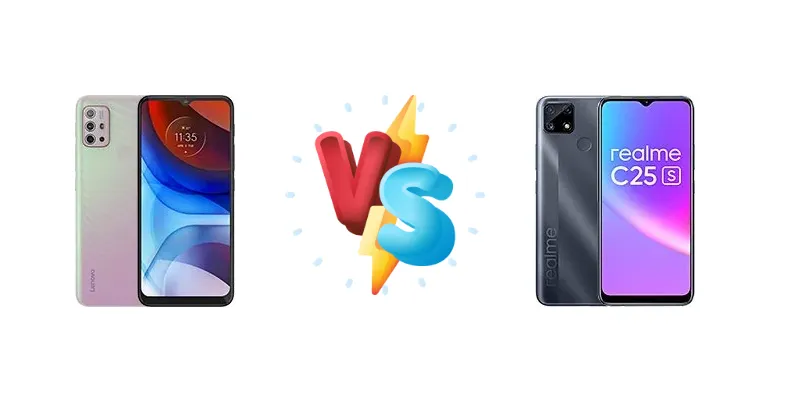
The sub-$150 smartphone market is fiercely competitive. Both the Lenovo K13 Note and Realme C25s aim to deliver essential features at an accessible price. However, they take different approaches: the K13 Note prioritizes a Qualcomm chipset, while the C25s opts for MediaTek’s Helio G85. This comparison dissects their key differences to determine which phone offers the best value.
🏆 Quick Verdict
For most users, the Realme C25s emerges as the better choice. Its Helio G85 chipset provides a noticeable performance edge over the Snapdragon 460 in the K13 Note, and the 18W charging significantly reduces downtime. While the K13 Note is a capable device, the C25s offers a more responsive experience.
| Network |
|---|
| 2G bands | GSM 850 / 900 / 1800 / 1900 | GSM 850 / 900 / 1800 / 1900 |
| 3G bands | HSDPA 850 / 900 / 1900 / 2100 | HSDPA 850 / 900 / 2100 |
| 4G bands | LTE | 1, 3, 5, 7, 8, 20, 28, 38, 40, 41 |
| Speed | HSPA 42.2/5.76 Mbps, LTE Cat4 150/50 Mbps | HSPA, LTE |
| Technology | GSM / HSPA / LTE | GSM / HSPA / LTE |
| Launch |
|---|
| Announced | 2021, June 22 | 2021, June 08 |
| Status | Available. Released 2021, June 22 | Available. Released 2021, June 09 |
| Body |
|---|
| Build | Glass front, plastic frame, plastic back | Glass front, plastic back, plastic frame |
| Dimensions | 165.2 x 75.7 x 9.1 mm (6.50 x 2.98 x 0.36 in) | 164.5 x 75.9 x 9.6 mm (6.48 x 2.99 x 0.38 in) |
| SIM | Nano-SIM + Nano-SIM | Nano-SIM + Nano-SIM |
| Weight | 200 g (7.05 oz) | 209 g (7.37 oz) |
| Display |
|---|
| Resolution | 720 x 1600 pixels, 20:9 ratio (~270 ppi density) | 720 x 1600 pixels, 20:9 ratio (~270 ppi density) |
| Size | 6.5 inches, 102.0 cm2 (~81.6% screen-to-body ratio) | 6.5 inches, 102.0 cm2 (~81.7% screen-to-body ratio) |
| Type | IPS LCD | IPS LCD, 480 nits (typ), 570 nits (peak) |
| Platform |
|---|
| CPU | Octa-core (4x1.8 GHz Kryo 240 & 4x1.6 GHz Kryo 240) | Octa-core (2x2.0 GHz Cortex-A75 & 6x1.8 GHz Cortex-A55) |
| Chipset | Qualcomm SM4250 Snapdragon 460 (11 nm) | Mediatek MT6769Z Helio G85 (12 nm) |
| GPU | Adreno 610 | Mali-G52 MC2 |
| OS | Android 11 | Android 11, Realme UI 2.0 |
| Memory |
|---|
| Card slot | microSDXC (uses shared SIM slot) | microSDXC (dedicated slot) |
| Internal | 128GB 4GB RAM | 64GB 4GB RAM, 128GB 4GB RAM |
| | - | eMMC 5.1 |
| Main Camera |
|---|
| Features | LED flash, HDR, panorama | LED flash, HDR, panorama |
| Quad | 48 MP, f/1.7, (wide), 1/2.0", 0.8µm, PDAF
8 MP, f/2.2, 118˚ (ultrawide), 1/4.0", 1.12µm
2 MP (macro)
Auxiliary lens | - |
| Single | - | 8 MP, f/2.0, 26mm (wide), 1/4.0", 1.12µm |
| Triple | - | 48 MP, f/1.8, 26mm (wide), PDAF (International model)
or
13 MP, f/2.2, 26mm (wide), 1/3.06", 1.12µm, PDAF (India model)
2 MP (macro)
Auxiliary lens |
| Video | 1080p@30fps | 1080p@30/60fps |
| Selfie camera |
|---|
| Features | HDR | HDR, panorama |
| Single | 8 MP, f/2.2, (wide), 1/4.0", 1.12µm | 8 MP, f/2.0, 26mm (wide), 1/4.0", 1.12µm |
| Video | 1080p@30fps | 1080p@30fps |
| Sound |
|---|
| 3.5mm jack | Yes | Yes |
| 35mm jack | Yes | Yes |
| Loudspeaker | Yes | Yes |
| Comms |
|---|
| Bluetooth | 5.0, A2DP, LE | 5.0, A2DP, LE |
| NFC | Yes | No |
| Positioning | GPS, GLONASS, GALILEO | GPS, GLONASS, BDS |
| Radio | FM radio | Unspecified |
| USB | USB Type-C 2.0 | USB Type-C 2.0, OTG |
| WLAN | Wi-Fi 802.11 a/b/g/n/ac, dual-band, Wi-Fi Direct | Wi-Fi 802.11 a/b/g/n/ac, dual-band, Wi-Fi Direct |
| Features |
|---|
| Sensors | Fingerprint (rear-mounted), accelerometer, gyro, proximity | Fingerprint (rear-mounted), accelerometer, proximity, compass |
| Battery |
|---|
| Charging | 10W wired | 18W wired
5W reverse wired |
| Type | Li-Po 5000 mAh | 6000 mAh |
| Misc |
|---|
| Colors | Aurora Gray, Pearl Sakura | Water Blue, Water Gray |
| Models | - | RMX3195, RMX3197 |
| Price | About 120 EUR | About 180 EUR |
Lenovo K13 Note
- Qualcomm Snapdragon 460 chipset offers a stable, reliable experience.
- Potentially better software optimization due to Qualcomm’s established ecosystem.
- May be more readily available in certain regions.
- Significantly slower 10W charging.
- Less powerful chipset compared to the Helio G85.
- Likely to struggle with demanding games.
Realme C25s
- Faster 18W charging with 5W reverse charging.
- More powerful MediaTek Helio G85 chipset for gaming and multitasking.
- Potentially better image processing capabilities.
- MediaTek chipsets sometimes receive less frequent software updates.
- May have more pre-installed bloatware (typical of Realme).
- 12nm process node might theoretically consume slightly more power.
Display Comparison
Neither device boasts a standout display. Both likely feature LCD panels, typical for this price bracket. The absence of detailed display specs (resolution, brightness) suggests a focus on cost reduction. However, the Realme C25s’s potential for higher peak brightness, given the G85’s processing power, could translate to better outdoor visibility. Bezels are expected to be substantial on both, impacting the overall screen-to-body ratio.
Camera Comparison
Camera performance is likely to be similar, relying heavily on software processing. Both phones likely feature a primary camera and multiple secondary sensors (depth, macro). Without specific sensor size or aperture information, it’s difficult to declare a clear winner. However, the G85’s image signal processor (ISP) in the C25s may offer slightly better image processing capabilities, potentially resulting in more detailed and vibrant photos. The inclusion of a 2MP macro camera on both is largely a marketing feature with limited real-world utility.
Performance
The core difference lies in the chipsets. The Realme C25s’s MediaTek Helio G85 (12nm) is architecturally superior to the Lenovo K13 Note’s Qualcomm Snapdragon 460 (11nm). The G85 features two Cortex-A75 performance cores clocked at 2.0 GHz, alongside six Cortex-A55 efficiency cores, offering a more potent combination for gaming and multitasking compared to the Snapdragon 460’s four Kryo 240 cores at 1.8 GHz and another four at 1.6 GHz. The 12nm process node of the G85, while slightly larger, doesn’t necessarily equate to lower efficiency given the architectural advantages. Users engaging in mobile gaming will see a tangible benefit with the C25s.
Battery Life
Both phones likely have similar battery capacities (around 5000mAh, based on market trends). However, the Realme C25s’s 18W wired charging is a significant advantage over the Lenovo K13 Note’s slow 10W charging. This translates to a much faster 0-100% charge time, reducing downtime. The C25s also includes 5W reverse wired charging, allowing it to top up accessories like earbuds or smartwatches – a feature absent on the K13 Note.
Buying Guide
Buy the Lenovo K13 Note if you prioritize a known Qualcomm chipset and are less concerned with demanding gaming or fast charging. It’s a solid option for basic smartphone tasks and users who prefer a more conservative approach to software. Buy the Realme C25s if you want a more responsive experience for gaming and multimedia, and value the convenience of faster 18W charging, including 5W reverse charging for accessories.
Frequently Asked Questions
❓ Will the Realme C25s overheat during prolonged gaming sessions?
The Helio G85 is known for its decent thermal management, but sustained gaming will inevitably generate heat. Realme typically implements thermal throttling to prevent overheating, which may slightly reduce performance over extended periods. However, the C25s is better equipped to handle gaming than the K13 Note, so throttling will likely be less severe.
❓ Does the Lenovo K13 Note support VoLTE and VoWiFi for improved call quality?
Support for VoLTE (Voice over LTE) and VoWiFi (Voice over Wi-Fi) varies by region and carrier. It's crucial to check with your mobile carrier to confirm compatibility with the Lenovo K13 Note before purchasing, as these features significantly enhance call quality and network connectivity.
❓ Is the 5W reverse charging on the Realme C25s useful for everyday accessories?
Yes, the 5W reverse charging is a convenient feature for topping up accessories like Bluetooth earbuds, smartwatches, or portable speakers. While it's not a fast charging solution, it can provide a significant boost to these devices when you're away from a power outlet.