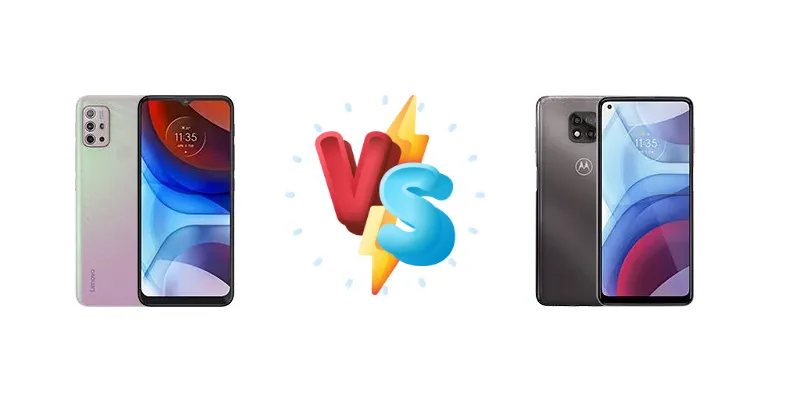
The Lenovo K13 Note and Motorola Moto G Power (2021) represent a sweet spot in the budget smartphone market, offering essential features at accessible price points. However, their core performance differs significantly due to the chipsets they employ. This comparison dissects the Snapdragon 460 in the K13 Note against the Snapdragon 662 in the Moto G Power, revealing which device delivers a smoother experience for everyday tasks and light gaming.
🏆 Quick Verdict
For most users, the Motorola Moto G Power (2021) is the better choice. Its Snapdragon 662 chipset provides a noticeable performance uplift over the K13 Note’s Snapdragon 460, translating to snappier app loading and smoother multitasking. While the K13 Note is more affordable, the G Power’s extra processing power justifies the price difference.
| Network |
|---|
| 2G bands | GSM 850 / 900 / 1800 / 1900 | GSM 850 / 900 / 1800 / 1900 |
| 3G bands | HSDPA 850 / 900 / 1900 / 2100 | HSDPA 850 / 900 / 1700(AWS) / 1900 / 2100 |
| 4G bands | LTE | 1, 2, 3, 4, 5, 7, 8, 12, 13, 14, 17, 25, 26, 29, 30, 38, 41, 66, 71 |
| Speed | HSPA 42.2/5.76 Mbps, LTE Cat4 150/50 Mbps | HSPA, LTE |
| Technology | GSM / HSPA / LTE | GSM / CDMA / HSPA / EVDO / LTE |
| | - | CDMA2000 1xEV-DO |
| Launch |
|---|
| Announced | 2021, June 22 | 2021, January 08 |
| Status | Available. Released 2021, June 22 | Available. Released 2021, January 14 |
| Body |
|---|
| Build | Glass front, plastic frame, plastic back | Glass front, plastic back, plastic frame |
| Dimensions | 165.2 x 75.7 x 9.1 mm (6.50 x 2.98 x 0.36 in) | 165.3 x 75.9 x 9.5 mm (6.51 x 2.99 x 0.37 in) |
| SIM | Nano-SIM + Nano-SIM | Nano-SIM |
| Weight | 200 g (7.05 oz) | 206.5 g (7.30 oz) |
| | - | Water-repellent coating |
| Display |
|---|
| Resolution | 720 x 1600 pixels, 20:9 ratio (~270 ppi density) | 720 x 1600 pixels, 20:9 ratio (~266 ppi density) |
| Size | 6.5 inches, 102.0 cm2 (~81.6% screen-to-body ratio) | 6.6 inches, 105.2 cm2 (~83.8% screen-to-body ratio) |
| Type | IPS LCD | IPS LCD |
| Platform |
|---|
| CPU | Octa-core (4x1.8 GHz Kryo 240 & 4x1.6 GHz Kryo 240) | Octa-core (4x2.0 GHz Kryo 260 Gold & 4x1.8 GHz Kryo 260 Silver) |
| Chipset | Qualcomm SM4250 Snapdragon 460 (11 nm) | Qualcomm SM6115 Snapdragon 662 (11 nm) |
| GPU | Adreno 610 | Adreno 610 |
| OS | Android 11 | Android 10 |
| Memory |
|---|
| Card slot | microSDXC (uses shared SIM slot) | microSDXC (dedicated slot) |
| Internal | 128GB 4GB RAM | 32GB 3GB RAM, 64GB 4GB RAM |
| | - | eMMC 5.1 |
| Main Camera |
|---|
| Features | LED flash, HDR, panorama | LED flash, HDR, panorama |
| Quad | 48 MP, f/1.7, (wide), 1/2.0", 0.8µm, PDAF
8 MP, f/2.2, 118˚ (ultrawide), 1/4.0", 1.12µm
2 MP (macro)
Auxiliary lens | - |
| Triple | - | 48 MP, f/1.7, (wide), 1/2.0", 0.8µm, PDAF
2 MP (macro)
Auxiliary lens |
| Video | 1080p@30fps | 1080p@30/60fps, gyro-EIS |
| Selfie camera |
|---|
| Features | HDR | HDR |
| Single | 8 MP, f/2.2, (wide), 1/4.0", 1.12µm | 8 MP, f/2.0, 1.12µm |
| Video | 1080p@30fps | 1080p@30fps, gyro-EIS |
| Sound |
|---|
| 3.5mm jack | Yes | Yes |
| 35mm jack | Yes | Yes |
| Loudspeaker | Yes | Yes |
| Comms |
|---|
| Bluetooth | 5.0, A2DP, LE | 5.0, A2DP, LE |
| NFC | Yes | No |
| Positioning | GPS, GLONASS, GALILEO | GPS, GLONASS, GALILEO |
| Radio | FM radio | FM radio |
| USB | USB Type-C 2.0 | USB Type-C 2.0 |
| WLAN | Wi-Fi 802.11 a/b/g/n/ac, dual-band, Wi-Fi Direct | Wi-Fi 802.11 a/b/g/n/ac, dual-band, Wi-Fi Direct |
| Features |
|---|
| Sensors | Fingerprint (rear-mounted), accelerometer, gyro, proximity | Fingerprint (side-mounted), accelerometer, gyro, proximity, compass, barometer |
| Battery |
|---|
| Charging | 10W wired | 15W wired |
| Type | Li-Po 5000 mAh | Li-Po 5000 mAh |
| Misc |
|---|
| Colors | Aurora Gray, Pearl Sakura | Flash Gray, Polar Silver |
| Price | About 120 EUR | About 60 EUR |
Lenovo K13 Note
- Lower price point makes it highly accessible.
- Likely offers comparable battery life due to large capacity.
- Functional for basic smartphone tasks.
- Significantly slower performance compared to the Moto G Power.
- Slower 10W charging.
- Less responsive user experience.
Motorola Moto G Power (2021)
- Faster Snapdragon 662 chipset delivers smoother performance.
- 15W fast charging reduces charging times.
- More responsive multitasking and app loading.
- Slightly higher price compared to the Lenovo K13 Note.
- May not offer a significantly better camera experience.
- Still a budget device with inherent limitations.
Display Comparison
Neither device boasts a standout display. Both likely utilize LCD panels, common in this price bracket. The focus here isn't on visual fidelity, but on chipset performance impacting UI smoothness. We can assume both have similar resolutions (likely 720p+), but specific details like peak brightness and color gamut coverage are unavailable. The display experience will be largely comparable, dictated more by software optimization than panel quality.
Camera Comparison
Without detailed camera specs, a direct comparison is difficult. However, it’s safe to assume both phones feature a multi-camera setup with a primary sensor and supporting lenses (likely depth or macro). The image processing capabilities of the Snapdragon 662 in the Moto G Power likely offer better noise reduction and dynamic range compared to the 460 in the K13 Note. The difference won't be dramatic, but the 662’s ISP (Image Signal Processor) is more capable. The presence of a 2MP macro lens on either device is largely a marketing gimmick and shouldn't be a deciding factor.
Performance
The core difference lies in the chipsets. The Motorola Moto G Power (2021) features the Qualcomm SM6115 Snapdragon 662 (11 nm), utilizing Kryo 260 cores clocked up to 2.0 GHz. This represents a significant step up from the Lenovo K13 Note’s Qualcomm SM4250 Snapdragon 460 (11 nm) with its Kryo 240 cores peaking at 1.8 GHz. The 662’s architecture, with its Gold and Silver core configuration, allows for more efficient task allocation, resulting in faster app launches and smoother multitasking. While both are 11nm chips, the 662’s superior core design and higher clock speeds provide a tangible performance advantage, particularly noticeable in demanding applications.
Battery Life
The Motorola Moto G Power (2021) offers 15W wired charging, a clear advantage over the Lenovo K13 Note’s slower 10W charging. While both likely house large batteries (5000mAh is typical for the G Power series), the faster charging speed significantly reduces the time spent tethered to an outlet. A full charge on the Moto G Power will be noticeably quicker, providing more usable time throughout the day. The difference in charging speed is a practical benefit for users who rely heavily on their phones.
Buying Guide
Buy the Lenovo K13 Note if your primary needs are basic communication – calls, texts, and light social media – and you prioritize absolute affordability. It’s a functional device for users on a very tight budget. Buy the Motorola Moto G Power (2021) if you want a more responsive experience for everyday tasks, enjoy occasional gaming, and value faster charging. The G Power offers a better balance of performance and features for a slightly higher investment.
Frequently Asked Questions
❓ Will the Snapdragon 460 in the Lenovo K13 Note struggle with popular apps like Facebook or WhatsApp?
While the K13 Note can run these apps, you may experience noticeable lag when switching between them or loading content. The Snapdragon 460 is designed for basic tasks, and these apps can become resource-intensive with frequent updates and features.
❓ Is the 15W charging on the Moto G Power significantly faster than the 10W charging on the K13 Note in real-world use?
Yes, the difference is substantial. Expect the Moto G Power to charge from 0-100% in approximately 2-2.5 hours, while the K13 Note will likely take 3+ hours. This faster charging is particularly beneficial for users who need to quickly top up their battery throughout the day.
❓ Can either of these phones handle light gaming, like casual puzzle games or older titles?
The Moto G Power (2021) is better suited for light gaming due to its more powerful Snapdragon 662 chipset. While neither phone is a gaming powerhouse, the 662 will provide a smoother experience with fewer frame drops in less demanding games. The K13 Note may struggle with even basic 3D games.