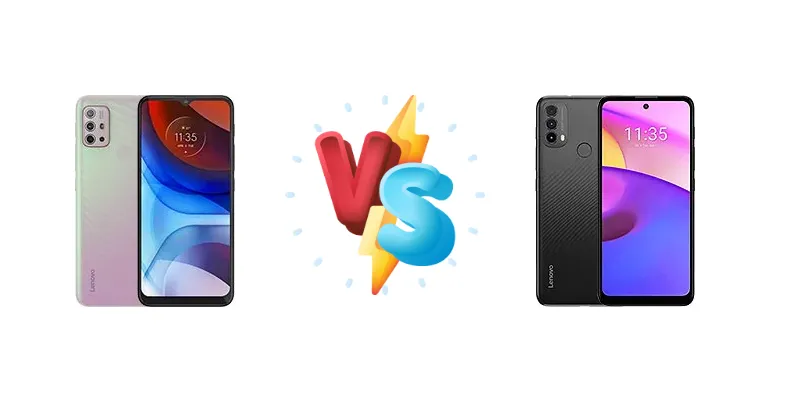
Lenovo's K-series consistently targets the value-conscious smartphone user. The K13 Note and K14 Plus represent recent iterations, but diverge in their core processing power. The K13 Note relies on Qualcomm's Snapdragon 460, while the K14 Plus opts for the Unisoc T700. This comparison dissects these chipset choices and their impact on the overall user experience, helping you determine which device delivers the best bang for your buck.
🏆 Quick Verdict
For most users, the Lenovo K14 Plus offers a slight edge due to the Unisoc T700's more modern architecture, potentially leading to smoother multitasking and app loading. However, the Snapdragon 460 in the K13 Note is a proven performer and may offer better software optimization in some regions. Both phones are extremely similar in other areas, making the chipset the key differentiator.
| Network |
|---|
| 2G bands | GSM 850 / 900 / 1800 / 1900 | GSM 850 / 900 / 1800 / 1900 |
| 3G bands | HSDPA 850 / 900 / 1900 / 2100 | HSDPA 850 / 900 / 1700(AWS) / 1900 / 2100 |
| 4G bands | LTE | LTE |
| Speed | HSPA 42.2/5.76 Mbps, LTE Cat4 150/50 Mbps | HSPA, LTE |
| Technology | GSM / HSPA / LTE | GSM / HSPA / LTE |
| Launch |
|---|
| Announced | 2021, June 22 | 2022, February 15 |
| Status | Available. Released 2021, June 22 | Available. Released 2022, March |
| Body |
|---|
| Build | Glass front, plastic frame, plastic back | Glass front, plastic frame, plastic back |
| Dimensions | 165.2 x 75.7 x 9.1 mm (6.50 x 2.98 x 0.36 in) | 165.1 x 75.7 x 9.1 mm (6.5 x 2.98 x 0.36 in) |
| SIM | Nano-SIM + Nano-SIM | · Nano-SIM· Nano-SIM + Nano-SIM |
| Weight | 200 g (7.05 oz) | 198 g (6.98 oz) |
| Display |
|---|
| Resolution | 720 x 1600 pixels, 20:9 ratio (~270 ppi density) | 720 x 1600 pixels, 20:9 ratio (~270 ppi density) |
| Size | 6.5 inches, 102.0 cm2 (~81.6% screen-to-body ratio) | 6.5 inches, 102.0 cm2 (~81.6% screen-to-body ratio) |
| Type | IPS LCD | IPS LCD, 90Hz |
| Platform |
|---|
| CPU | Octa-core (4x1.8 GHz Kryo 240 & 4x1.6 GHz Kryo 240) | Octa-core 1.8 GHz |
| Chipset | Qualcomm SM4250 Snapdragon 460 (11 nm) | Unisoc T700 |
| GPU | Adreno 610 | Mali G52 |
| OS | Android 11 | Android 11 |
| Memory |
|---|
| Card slot | microSDXC (uses shared SIM slot) | microSDXC (dedicated slot) |
| Internal | 128GB 4GB RAM | 64GB 4GB RAM |
| | - | UFS 2.1 |
| Main Camera |
|---|
| Features | LED flash, HDR, panorama | LED flash, HDR, panorama |
| Quad | 48 MP, f/1.7, (wide), 1/2.0", 0.8µm, PDAF
8 MP, f/2.2, 118˚ (ultrawide), 1/4.0", 1.12µm
2 MP (macro)
Auxiliary lens | - |
| Triple | - | 48 MP, f/1.8, (wide), PDAF
2 MP (macro)
Auxiliary lens |
| Video | 1080p@30fps | 1080p@30fps |
| Selfie camera |
|---|
| Features | HDR | - |
| Single | 8 MP, f/2.2, (wide), 1/4.0", 1.12µm | 8 MP, f/2.0 |
| Video | 1080p@30fps | 1080p@30fps |
| Sound |
|---|
| 3.5mm jack | Yes | Yes |
| 35mm jack | Yes | Yes |
| Loudspeaker | Yes | Yes |
| Comms |
|---|
| Bluetooth | 5.0, A2DP, LE | 5.0, A2DP, LE |
| NFC | Yes | No |
| Positioning | GPS, GLONASS, GALILEO | GPS, GLONASS, GALILEO |
| Radio | FM radio | FM radio |
| USB | USB Type-C 2.0 | USB Type-C 2.0 |
| WLAN | Wi-Fi 802.11 a/b/g/n/ac, dual-band, Wi-Fi Direct | Wi-Fi 802.11 b/g/n |
| Features |
|---|
| Sensors | Fingerprint (rear-mounted), accelerometer, gyro, proximity | Fingerprint (rear-mounted), accelerometer, proximity |
| Battery |
|---|
| Charging | 10W wired | 10W wired |
| Type | Li-Po 5000 mAh | Li-Po 5000 mAh |
| Misc |
|---|
| Colors | Aurora Gray, Pearl Sakura | Black, Gold |
| Price | About 120 EUR | About 200 EUR |
Lenovo K13 Note
- Proven Qualcomm Snapdragon 460 chipset
- Potentially better software optimization
- Established Qualcomm ISP for image processing
- Older chipset architecture
- 10W charging is slow
- Limited performance headroom for demanding tasks
Lenovo K14 Plus
- More modern Unisoc T700 chipset
- Potentially improved IPC for smoother multitasking
- Competitive price point
- Unisoc chipset may have less software support
- 10W charging is slow
- Performance gains over Snapdragon 460 may be marginal
Display Comparison
Neither Lenovo provides display specifications beyond resolution in their marketing materials. Assuming both utilize standard IPS LCD panels common in this price bracket, the display experience will likely be similar. Bezels are expected to be moderate, and color accuracy will be adequate for casual use. The absence of high refresh rates or advanced panel technologies like LTPO is standard for this segment.
Camera Comparison
Detailed camera specifications are unavailable. Given the price point, both devices likely feature a primary camera paired with depth and macro sensors. The image processing capabilities will be crucial, and Qualcomm’s ISP (Image Signal Processor) in the K13 Note has a strong reputation. However, Unisoc has been improving its image processing algorithms. Without detailed sensor information, it’s difficult to definitively declare a winner; image quality will likely be comparable, with differences stemming from software tuning rather than hardware capabilities.
Performance
The core difference lies in the chipsets. The Lenovo K13 Note’s Qualcomm Snapdragon 460, built on an 11nm process, features an octa-core CPU with Kryo 240 cores clocked up to 1.8 GHz. The K14 Plus utilizes the Unisoc T700, also an octa-core CPU clocked at 1.8 GHz. While clock speeds are identical, the Unisoc T700 represents a newer architecture, potentially offering improved instructions per clock (IPC) and therefore better performance in tasks that aren't solely reliant on raw clock speed. The Snapdragon 460 benefits from Qualcomm’s established optimizations and wider software support, but the T700 is closing the gap. Both phones will handle basic tasks like calling, texting, and social media without issue, but demanding games will likely require significant graphical settings reductions.
Battery Life
Both the Lenovo K13 Note and K14 Plus feature 10W wired charging. This is a significant limitation, meaning a full charge will take a considerable amount of time. Battery capacity is not specified, but typical capacities for phones in this segment range from 4000mAh to 5000mAh. The 10W charging rate will be a bottleneck regardless of battery size, resulting in similar 0-100% charge times for both devices – likely exceeding 3 hours.
Buying Guide
Buy the Lenovo K13 Note if you prioritize a chipset with a longer track record of software support and optimization, and are comfortable with a slightly older architecture. Buy the Lenovo K14 Plus if you prefer a more recent chipset design that *may* offer improved responsiveness in everyday tasks, and are willing to potentially navigate a less mature software ecosystem. Both are excellent choices for basic smartphone functionality.
Frequently Asked Questions
❓ Will the Unisoc T700 in the K14 Plus struggle with popular apps like TikTok or Instagram?
The Unisoc T700 should handle apps like TikTok and Instagram without significant issues. However, expect some loading times and occasional stutters when multitasking or using the apps extensively. The chipset is designed for basic to moderate usage, and these apps are generally well-optimized.
❓ Is the 10W charging speed on either phone acceptable for daily use?
10W charging is quite slow by modern standards. It's best to charge the phone overnight to ensure it's fully powered for the day. Expect a full charge to take over 3 hours, making it inconvenient for quick top-ups.
❓ Which phone is likely to receive more software updates and security patches?
The Lenovo K13 Note, with its Qualcomm Snapdragon 460 chipset, is more likely to receive consistent software updates and security patches. Qualcomm generally provides better long-term support for its chipsets compared to Unisoc.
❓ Can either of these phones handle basic mobile gaming like PUBG Mobile or Call of Duty Mobile?
Both phones can *run* PUBG Mobile and Call of Duty Mobile, but you'll need to significantly lower the graphics settings to achieve playable frame rates. Expect a compromised gaming experience, with noticeable lag and stuttering even on the lowest settings. These phones are not designed for serious mobile gaming.