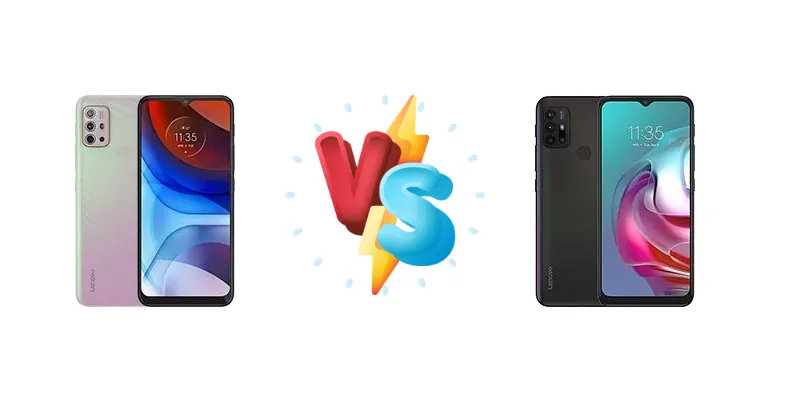
The Lenovo K13 Note and K13 Pro represent Lenovo's continued push into the affordable smartphone market. While both devices share a similar aesthetic, the internal differences – specifically the chipset and charging capabilities – dictate vastly different user experiences. This comparison dissects those differences to determine which K13 model offers the best value.
🏆 Quick Verdict
For most users, the Lenovo K13 Pro is the superior choice. Its Snapdragon 662 chipset delivers noticeably smoother performance for everyday tasks and light gaming, and the 15W charging, while not fast, is a significant improvement over the K13 Note’s 10W charging. The price difference is typically small enough to justify the upgrade.
| Network |
|---|
| 2G bands | GSM 850 / 900 / 1800 / 1900 | GSM 850 / 900 / 1800 / 1900 |
| 3G bands | HSDPA 850 / 900 / 1900 / 2100 | HSDPA 850 / 900 / 1700(AWS) / 1900 / 2100 |
| 4G bands | LTE | LTE |
| Speed | HSPA 42.2/5.76 Mbps, LTE Cat4 150/50 Mbps | HSPA 42.2/5.76 Mbps, LTE Cat4 150/50 Mbps |
| Technology | GSM / HSPA / LTE | GSM / HSPA / LTE |
| Launch |
|---|
| Announced | 2021, June 22 | 2021, September |
| Status | Available. Released 2021, June 22 | Available. Released 2021, September 29 |
| Body |
|---|
| Build | Glass front, plastic frame, plastic back | Glass front, plastic back, plastic frame |
| Dimensions | 165.2 x 75.7 x 9.1 mm (6.50 x 2.98 x 0.36 in) | - |
| SIM | Nano-SIM + Nano-SIM | · Nano-SIM· Nano-SIM + Nano-SIM |
| Weight | 200 g (7.05 oz) | 200 g (7.05 oz) |
| Display |
|---|
| Resolution | 720 x 1600 pixels, 20:9 ratio (~270 ppi density) | 720 x 1600 pixels, 20:9 ratio (~270 ppi density) |
| Size | 6.5 inches, 102.0 cm2 (~81.6% screen-to-body ratio) | 6.51 inches, 102.3 cm2 |
| Type | IPS LCD | IPS LCD, 90Hz |
| Platform |
|---|
| CPU | Octa-core (4x1.8 GHz Kryo 240 & 4x1.6 GHz Kryo 240) | Octa-core (4x2.0 GHz Kryo 260 Gold & 4x1.8 GHz Kryo 260 Silver) |
| Chipset | Qualcomm SM4250 Snapdragon 460 (11 nm) | Qualcomm SM6115 Snapdragon 662 (11 nm) |
| GPU | Adreno 610 | Adreno 610 |
| OS | Android 11 | Android 11 |
| Memory |
|---|
| Card slot | microSDXC (uses shared SIM slot) | microSDXC (uses shared SIM slot) |
| Internal | 128GB 4GB RAM | 64GB 4GB RAM, 128GB 4GB RAM, 128GB 6GB RAM |
| Main Camera |
|---|
| Features | LED flash, HDR, panorama | LED flash, HDR, panorama |
| Quad | 48 MP, f/1.7, (wide), 1/2.0", 0.8µm, PDAF
8 MP, f/2.2, 118˚ (ultrawide), 1/4.0", 1.12µm
2 MP (macro)
Auxiliary lens | 64 MP, f/1.7, 26mm (wide), 1/1.97", 0.7µm, PDAF
8 MP, f/2.2, 118˚ (ultrawide), 1/4.0", 1.12µm
2 MP (macro)
Auxiliary lens |
| Video | 1080p@30fps | 1080p@30/60fps |
| Selfie camera |
|---|
| Features | HDR | HDR |
| Single | 8 MP, f/2.2, (wide), 1/4.0", 1.12µm | 13 MP, f/2.2, (wide), 1/3.1", 1.12µm |
| Video | 1080p@30fps | 1080p@30fps |
| Sound |
|---|
| 3.5mm jack | Yes | Yes |
| 35mm jack | Yes | Yes |
| Loudspeaker | Yes | Yes |
| Comms |
|---|
| Bluetooth | 5.0, A2DP, LE | 5.0, A2DP, LE |
| NFC | Yes | Unspecified |
| Positioning | GPS, GLONASS, GALILEO | GPS, GLONASS, GALILEO |
| Radio | FM radio | FM radio, RDS, recording |
| USB | USB Type-C 2.0 | USB Type-C 2.0, OTG |
| WLAN | Wi-Fi 802.11 a/b/g/n/ac, dual-band, Wi-Fi Direct | Wi-Fi 802.11 a/b/g/n/ac, dual-band, Wi-Fi Direct |
| Features |
|---|
| Sensors | Fingerprint (rear-mounted), accelerometer, gyro, proximity | Fingerprint (rear-mounted), accelerometer, gyro, proximity |
| Battery |
|---|
| Charging | 10W wired | 15W wired |
| Type | Li-Po 5000 mAh | Li-Po 5000 mAh |
| Misc |
|---|
| Colors | Aurora Gray, Pearl Sakura | Black |
| Models | - | XT2129-3 |
| Price | About 120 EUR | About 150 EUR |
Lenovo K13 Note
- Lower price point
- Sufficient for basic tasks
- Potentially longer battery life due to less powerful processor
- Sluggish performance
- Slow 10W charging
- Less responsive user experience
Lenovo K13 Pro
- Faster Snapdragon 662 processor
- 15W faster charging
- Smoother multitasking and app launches
- Slightly higher price
- May have marginally shorter battery life under heavy load
- Still not a high-end gaming device
Display Comparison
Both the K13 Note and K13 Pro likely feature similar LCD panels, given their market positioning. However, detailed display specs like resolution and peak brightness are not provided. The focus here is on performance, not visual fidelity. Expect standard 60Hz refresh rates on both. Bezels are likely comparable, prioritizing cost-effectiveness over premium aesthetics.
Camera Comparison
Without detailed camera specifications, a direct comparison is limited. Both phones likely feature a multi-camera setup, but the quality will heavily depend on the main sensor and image processing. It’s reasonable to assume the K13 Pro benefits from the more capable ISP (Image Signal Processor) within the Snapdragon 662, potentially resulting in better image quality, especially in low-light conditions. The presence of a 2MP macro camera on either device is largely a marketing tactic and offers minimal practical benefit.
Performance
The core difference lies in the chipsets. The K13 Note utilizes the Qualcomm SM4250 Snapdragon 460, an 11nm processor with an octa-core configuration split between 1.8 GHz and 1.6 GHz Kryo 240 cores. The K13 Pro steps up to the Qualcomm SM6115 Snapdragon 662, also 11nm, but with a more refined octa-core setup featuring 2.0 GHz Kryo 260 Gold and 1.8 GHz Kryo 260 Silver cores. This translates to a tangible performance boost for the K13 Pro, particularly in app launch times and multitasking. The Snapdragon 662’s architecture is more efficient, leading to a smoother overall experience. While neither phone is a gaming powerhouse, the K13 Pro will handle less demanding titles with greater ease.
Battery Life
Battery capacity is not specified, but both phones likely house batteries in the 4000-5000 mAh range, typical for this price segment. The K13 Pro’s 15W wired charging is a clear advantage over the K13 Note’s 10W charging. While neither is fast charging by modern standards, the K13 Pro will reach a full charge approximately 30-50% faster, reducing downtime. The more efficient Snapdragon 662 in the K13 Pro may also contribute to slightly better battery life during typical usage.
Buying Guide
Buy the Lenovo K13 Note if your primary need is a basic, functional smartphone for essential communication and light use – think calls, texts, and occasional social media. It’s ideal for users on a very tight budget who prioritize longevity over speed. Buy the Lenovo K13 Pro if you prefer a more responsive experience, enjoy occasional mobile gaming, or simply want a device that feels less sluggish during daily use. The faster charging is also a boon for those who dislike long charging times.
Frequently Asked Questions
❓ Will the Snapdragon 460 in the K13 Note struggle with popular apps like Facebook and WhatsApp?
While the Snapdragon 460 can run these apps, you may experience noticeable lag when switching between them or loading content. The K13 Pro’s Snapdragon 662 offers a much smoother experience for multitasking and app responsiveness.
❓ How long will it take to fully charge the Lenovo K13 Note with its 10W charger?
Expect a full charge from 0% to 100% to take approximately 3-4 hours with the included 10W charger. This is significantly slower than the K13 Pro’s 15W charging, which will reduce that time to around 2-2.5 hours.
❓ Can the Lenovo K13 Pro handle games like PUBG Mobile or Call of Duty Mobile?
The K13 Pro can run these games, but you’ll likely need to lower the graphics settings to medium or low to achieve playable frame rates. Don’t expect a high-end gaming experience, but it’s a viable option for casual gaming.
❓ Is the difference in performance between the two phones noticeable in everyday use?
Yes, the difference is quite noticeable. The K13 Pro feels significantly snappier when opening apps, browsing the web, and switching between tasks. The K13 Note can feel sluggish in comparison.