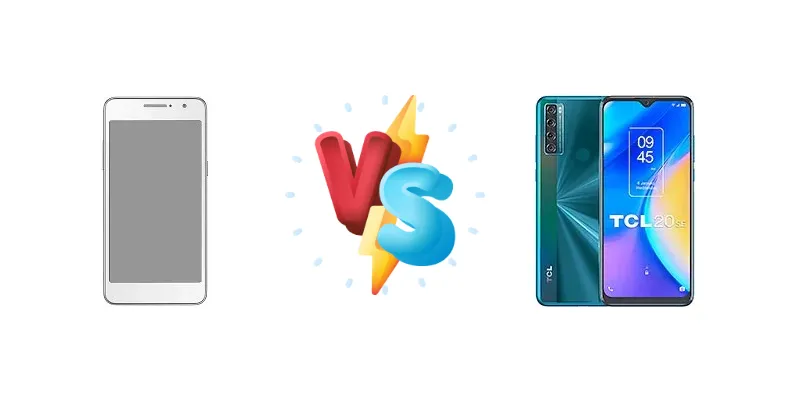
The Lenovo K12 and TCL 20 SE represent the fiercely competitive sub-$150 smartphone market. Both aim to deliver essential functionality at an accessible price, but they take different approaches to achieving this. The K12 relies on MediaTek’s Helio G25, while the 20 SE opts for Qualcomm’s Snapdragon 460. This comparison dissects these choices, revealing which phone offers the best value for everyday users.
🏆 Quick Verdict
For most users, the TCL 20 SE emerges as the better choice. Its Snapdragon 460, fabricated on an 11nm process, provides a noticeable performance edge over the K12’s 12nm Helio G25. The 18W charging is a significant advantage, mitigating the impact of a potentially smaller battery (spec not provided).
| Network |
|---|
| 2G bands | GSM 850 / 900 / 1800 / 1900 | GSM 850 / 900 / 1800 / 1900 |
| 3G bands | HSDPA 850 / 900 / 1900 / 2100 | HSDPA 850 / 900 / 1900 / 2100 - EMEA, SEA, APAC |
| 4G bands | LTE | 1, 3, 5, 7, 8, 20, 28, 38, 40, 41 - EMEA, SEA, APAC |
| Speed | HSPA 42.2/5.76 Mbps, LTE Cat4 150/50 Mbps | HSPA, LTE |
| Technology | GSM / HSPA / LTE | GSM / HSPA / LTE |
| | - | 1, 2, 3, 4, 5, 7, 8, 12, 13, 17, 26, 28, 66 - LATAM |
| Launch |
|---|
| Announced | Not announced yet | 2021, January 11 |
| Status | Cancelled | Available. Released 2021, April 26 |
| Body |
|---|
| Build | Glass front, plastic frame, plastic back | - |
| Dimensions | 164.9 x 75.7 x 8.9 mm (6.49 x 2.98 x 0.35 in) | 172.1 x 77.1 x 9.1 mm (6.78 x 3.04 x 0.36 in) |
| SIM | Nano-SIM + Nano-SIM | · Nano-SIM· Nano-SIM + Nano-SIM |
| Weight | 180 g (6.35 oz) | 206 g (7.27 oz) |
| | Water-repellent coating | - |
| Display |
|---|
| Resolution | 720 x 1600 pixels, 20:9 ratio (~270 ppi density) | 720 x 1640 pixels (~263 ppi density) |
| Size | 6.5 inches, 102.0 cm2 (~81.7% screen-to-body ratio) | 6.82 inches, 110.5 cm2 (~83.2% screen-to-body ratio) |
| Type | IPS LCD | IPS LCD, 450 nits (typ) |
| Platform |
|---|
| CPU | Octa-core (4x2.0 GHz Cortex-A53 & 4x1.5 GHz Cortex-A53) | Octa-core (4x1.8 GHz Kryo 240 & 4x1.6 GHz Kryo 240) |
| Chipset | Mediatek MT6762G Helio G25 (12 nm) | Qualcomm SM4250 Snapdragon 460 (11 nm) |
| GPU | PowerVR GE8320 | Adreno 610 |
| OS | Android 10 | Android 11, upgradable to Android 12, TCL UI |
| Memory |
|---|
| Card slot | microSDXC (uses shared SIM slot) | microSDXC (uses shared SIM slot) |
| Internal | 32GB 2GB RAM | 64GB 4GB RAM, 128GB 4GB RAM |
| | eMMC 5.1 | UFS 2.1 (128GB only) |
| Main Camera |
|---|
| Dual | 48 MP, f/1.7, 26mm (wide), 1/2.0", 0.8µm, PDAF
2 MP (macro) | - |
| Features | LED flash, HDR, panorama | Dual-LED flash, HDR, panorama |
| Quad | - | 16 MP, f/1.8, 27mm (wide), 1/2.0", 1.12µm, PDAF
5 MP, f/2.2, 14mm, 115˚ (ultrawide), 1/5.0", 1.12µm
Auxiliary lens
2 MP (macro)
or
48 MP, f/2.0, 27mm (wide), 1/2.0", 0.8µm, PDAF
5 MP, f/2.2, 14mm, 115˚ (ultrawide), 1/5.0", 1.12µm
Auxiliary lens
2 MP (macro) |
| Video | 1080p@30fps | 1080p@30fps |
| Selfie camera |
|---|
| Features | HDR | HDR |
| Single | 5 MP, f/2.2 | 8 MP, f/2.0, 26mm (wide), 1/4.0", 1.12µm
or
13 MP, f/2.2, 26mm (wide), 1/3.0", 1.12µm |
| Video | 1080p@30fps | 1080p@30fps |
| Sound |
|---|
| 3.5mm jack | Yes | Yes |
| 35mm jack | Yes | Yes |
| Loudspeaker | Yes | Yes, with dual speakers |
| | - | 24-bit/192kHz audio |
| Comms |
|---|
| Bluetooth | 5.0, A2DP, LE | 5.0, A2DP, LE, aptX |
| NFC | No | Yes |
| Positioning | GPS, GLONASS, GALILEO | GPS, GLONASS, GALILEO, BDS |
| Radio | FM radio | FM radio |
| USB | USB Type-C 2.0 | USB Type-C 2.0, OTG |
| WLAN | Wi-Fi 802.11 b/g/n | Wi-Fi 802.11 b/g/n, Wi-Fi Direct |
| Features |
|---|
| Sensors | Fingerprint (rear-mounted), accelerometer, proximity | Fingerprint (rear-mounted), accelerometer, proximity, compass |
| Battery |
|---|
| Charging | 10W wired | 18W wired |
| Type | Li-Po 4000 mAh | Li-Po 5000 mAh |
| Misc |
|---|
| Colors | Mineral Gray, Aqua Blue | Aurora Green, Nuit Black |
| Models | XT2095-4 | T671H, T671F, T671O, T671E |
| Price | - | About 150 EUR |
Lenovo K12
- Potentially lower price point
- Adequate for basic smartphone tasks
- MediaTek chipset is widely supported
- Slower processor compared to Snapdragon 460
- Slower 10W charging
- Less efficient 12nm process
TCL 20 SE
- More powerful Snapdragon 460 chipset
- Faster 18W charging
- More efficient 11nm process
- May be slightly more expensive
- Qualcomm chipsets can sometimes have driver update delays
- Potential for bloatware (TCL's history)
Display Comparison
Neither device’s display specifications are provided, so a direct comparison is limited. However, given their price points, both likely utilize LCD panels with 720p+ resolutions. The TCL 20 SE’s potential for better image processing, stemming from the more capable Snapdragon chipset, *could* translate to slightly more vibrant colors and better contrast, but this is speculative. Bezels are likely comparable, focusing on cost reduction rather than premium aesthetics.
Camera Comparison
Without detailed camera specifications, a definitive comparison is difficult. Both phones likely feature a multi-camera setup, but the quality will heavily depend on sensor size and image processing. It’s reasonable to assume the TCL 20 SE benefits from Qualcomm’s image signal processor (ISP), potentially leading to better dynamic range and noise reduction, especially in low-light conditions. The presence of a dedicated ISP in the Snapdragon 460 is a key advantage. We can expect both phones to include a standard macro lens, but its utility will be limited by the low resolution.
Performance
The core difference lies in the chipsets. The TCL 20 SE’s Qualcomm Snapdragon 460 (11nm) offers a clear architectural advantage over the Lenovo K12’s MediaTek Helio G25 (12nm). The smaller 11nm node generally translates to improved power efficiency and thermal performance. While both CPUs feature octa-core configurations, the Snapdragon 460’s Kryo 240 cores, clocked at up to 1.8 GHz, are generally more efficient than the K12’s Cortex-A53 cores, peaking at 2.0 GHz. This means the TCL 20 SE will likely handle multitasking and app loading with greater responsiveness. The Helio G25 is adequate for basic tasks, but may exhibit more noticeable lag under heavier loads.
Battery Life
Battery capacity isn’t specified for either device. However, the TCL 20 SE’s 18W wired charging is a significant advantage over the Lenovo K12’s 10W charging. This faster charging speed will dramatically reduce the time spent tethered to a wall outlet, a crucial benefit for users who rely heavily on their phones throughout the day. Even if the K12 has a slightly larger battery, the 20 SE’s faster charging will likely result in a more convenient user experience.
Buying Guide
Buy the Lenovo K12 if your primary need is a basic, functional smartphone for essential tasks like calls, texts, and light social media, and you prioritize minimizing upfront cost. Buy the TCL 20 SE if you value smoother multitasking, slightly better gaming performance, and significantly faster charging speeds, even if it means spending a little more.
Frequently Asked Questions
❓ Will the TCL 20 SE handle popular games like PUBG Mobile or Call of Duty?
While the Snapdragon 460 isn't a gaming powerhouse, it's capable of running PUBG Mobile and Call of Duty at lower settings. Expect playable frame rates with reduced graphics quality. The Helio G25 in the Lenovo K12 will struggle more with these titles, requiring even lower settings and potentially experiencing more lag.
❓ How long will it take to fully charge the TCL 20 SE with the 18W charger?
Assuming a typical battery capacity for this class of phone (around 4000-5000 mAh), the TCL 20 SE should fully charge from 0% to 100% in approximately 2 to 2.5 hours with the included 18W charger. This is significantly faster than the Lenovo K12’s estimated 4+ hours with its 10W charger.
❓ Does the Lenovo K12 support software updates?
Lenovo's update track record for budget devices is inconsistent. While it may receive security patches, major Android version updates are unlikely. The TCL 20 SE may offer a slightly better chance of receiving updates, but expectations should remain tempered.