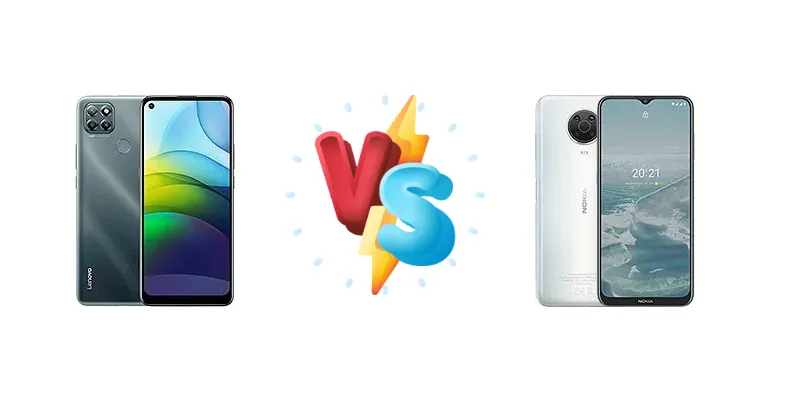
The Lenovo K12 Pro and Nokia G20 represent two distinct approaches to the ultra-budget smartphone market. The K12 Pro prioritizes processing power with a Qualcomm Snapdragon 662, while the Nokia G20 aims for longevity and a clean Android experience with a MediaTek Helio G35. This comparison dissects their key differences to determine which device delivers the best value.
🏆 Quick Verdict
For users prioritizing responsiveness and occasional gaming, the Lenovo K12 Pro is the clear winner. Its Snapdragon 662 chipset offers a noticeable performance advantage over the Nokia G20’s Helio G35. However, the Nokia G20’s focus on software and potential for longer software support may appeal to those seeking a simpler, more reliable experience.
| Network |
|---|
| 2G bands | GSM 850 / 900 / 1800 / 1900 | GSM 850 / 900 / 1800 / 1900 |
| 3G bands | HSDPA 850 / 900 / 1700(AWS) / 1900 / 2100 | HSDPA 850 / 900 / 1900 / 2100 - International |
| 4G bands | 1, 3, 4, 5, 7, 8, 18, 19, 20, 26, 28, 38, 39, 40, 41 | 1, 3, 5, 7, 8, 20, 28, 38, 40, 41 - International |
| Speed | HSPA, LTE | HSPA 42.2/5.76 Mbps, LTE Cat4 150/50 Mbps |
| Technology | GSM / HSPA / LTE | GSM / HSPA / LTE |
| | - | 1, 2, 3, 4, 5, 7, 8, 12, 17, 28, 66 - LATAM |
| Launch |
|---|
| Announced | 2020, December 09. Released 2020, December 12 | 2021, April 08 |
| Status | Discontinued | Available. Released 2021, May 17 |
| Body |
|---|
| Dimensions | 172.1 x 76.8 x 9.7 mm (6.78 x 3.02 x 0.38 in) | 164.9 x 76 x 9.2 mm (6.49 x 2.99 x 0.36 in) |
| SIM | · Nano-SIM· Nano-SIM + Nano-SIM | · Nano-SIM· Nano-SIM + Nano-SIM |
| Weight | 221 g (7.80 oz) | 197 g (6.95 oz) |
| | Water-repellent coating | Splash protection |
| Display |
|---|
| Resolution | 720 x 1640 pixels (~263 ppi density) | 720 x 1600 pixels, 20:9 ratio (~269 ppi density) |
| Size | 6.8 inches, 109.8 cm2 (~83.1% screen-to-body ratio) | 6.52 inches, 102.6 cm2 (~81.9% screen-to-body ratio) |
| Type | IPS LCD | IPS LCD |
| Platform |
|---|
| CPU | Octa-core (4x2.0 GHz Kryo 260 Gold & 4x1.8 GHz Kryo 260 Silver) | Octa-core (4x2.3 GHz Cortex-A53 & 4x1.8 GHz Cortex-A53) |
| Chipset | Qualcomm SM6115 Snapdragon 662 (11 nm) | Mediatek MT6765G Helio G35 (12 nm) |
| GPU | Adreno 610 | PowerVR GE8320 |
| OS | Android 10 | Android 11, upgradable to Android 13 |
| Memory |
|---|
| Card slot | microSDXC (uses shared SIM slot) | microSDXC (dedicated slot) |
| Internal | 64GB 4GB RAM, 128GB 4GB RAM | 64GB 4GB RAM, 128GB 4GB RAM |
| Main Camera |
|---|
| Features | LED flash, HDR, panorama | LED flash, HDR, panorama |
| Quad | - | 48 MP, f/1.8, (wide), PDAF
5 MP, (ultrawide)
2 MP (macro)
Auxiliary lens |
| Single | - | 8 MP, (wide) |
| Triple | 64 MP, f/1.8, 26mm (wide), 1/1.97", 0.7µm, PDAF
2 MP (macro)
Auxiliary lens | - |
| Video | 1080p@30/60fps | 1080p@30fps |
| Selfie camera |
|---|
| Features | HDR | - |
| Single | 16 MP, f/2.2, 1.0µm | 8 MP, (wide) |
| Video | 1080p@30fps | 1080p@30fps |
| Sound |
|---|
| 3.5mm jack | Yes | Yes |
| 35mm jack | Yes | Yes |
| Loudspeaker | Yes | Yes |
| Comms |
|---|
| Bluetooth | 5.0, A2DP, LE | 5.0, A2DP, LE |
| NFC | Yes | Yes (market/region dependent) |
| Positioning | GPS, GLONASS, GALILEO | GPS, GLONASS, BDS |
| Radio | FM radio | FM radio |
| USB | USB Type-C 2.0, OTG | USB Type-C 2.0, OTG |
| WLAN | Wi-Fi 802.11 a/b/g/n/ac, dual-band, Wi-Fi Direct | Wi-Fi 802.11 b/g/n |
| Features |
|---|
| Sensors | Fingerprint (rear-mounted), accelerometer, proximity | Fingerprint (side-mounted), accelerometer, gyro, proximity |
| Battery |
|---|
| Charging | 20W wired
2.5W reverse wired | 10W wired |
| Type | Li-Po 6000 mAh | Li-Po 5050 mAh |
| Misc |
|---|
| Colors | Electric Violet, Metallic Sage | Glacier, Night |
| Models | XT2091-8, XT2091-7 | TA-1336, TA-1343, TA-1347, TA-1372, TA-1365 |
| Price | About 130 EUR | About 90 EUR |
| SAR | - | 1.01 W/kg (head) 1.02 W/kg (body) |
| SAR EU | - | 0.49 W/kg (head) 1.13 W/kg (body) |
Lenovo K12 Pro
- Faster processor for smoother performance
- 20W fast charging for quicker top-ups
- Potentially better image processing
- May have shorter battery life under heavy load
- Software update support may be less consistent than Nokia
Nokia G20
- Potentially longer battery life with light use
- Clean Android experience with potential for longer software support
- More affordable price point (likely)
- Slower processor for noticeable lag in demanding tasks
- 10W charging is significantly slower
Display Comparison
Neither device boasts a standout display. Both likely utilize LCD panels, a common trait in this price bracket. However, the lack of detailed display specs necessitates focusing on performance. The display quality will likely be similar, with the chipset impacting the smoothness of scrolling and animations more than panel characteristics.
Camera Comparison
Without detailed camera specifications beyond the chipsets, a direct comparison is limited. Both phones likely feature basic camera setups geared towards casual photography. The absence of information regarding sensor size and aperture makes it difficult to assess image quality. However, the Snapdragon 662’s image signal processor (ISP) generally offers superior image processing capabilities compared to the Helio G35’s ISP, potentially resulting in better dynamic range and noise reduction in photos taken with the K12 Pro. The inclusion of a 2MP macro lens on either device is unlikely to significantly impact overall camera performance.
Performance
The Lenovo K12 Pro’s Qualcomm Snapdragon 662 (11nm) significantly outperforms the Nokia G20’s MediaTek Helio G35 (12nm). The Snapdragon 662’s Kryo 260 cores, with a 2.0 GHz clock speed for the performance cores, provide a substantial advantage in CPU-intensive tasks compared to the Helio G35’s Cortex-A53 cores peaking at 2.3 GHz. While the G35’s clock speed is higher, the older Cortex-A53 architecture is less efficient. The 11nm process node of the Snapdragon 662 also contributes to better power efficiency, potentially leading to longer sustained performance. This translates to faster app loading times, smoother multitasking, and a more responsive user experience on the K12 Pro.
Battery Life
The Nokia G20’s advantage lies in its potential for longer battery life due to the less power-hungry Helio G35 chipset. However, the Lenovo K12 Pro compensates with significantly faster 20W wired charging compared to the Nokia G20’s 10W charging. This means the K12 Pro can replenish its battery much quicker, minimizing downtime. While the Nokia G20 might last longer on a single charge with minimal use, the K12 Pro’s faster charging is a practical benefit for users who frequently use their phones throughout the day.
Buying Guide
Buy the Lenovo K12 Pro if you need a phone capable of handling multitasking, streaming, and light gaming without significant lag. It’s ideal for users who frequently switch between apps or enjoy mobile games. Buy the Nokia G20 if you prefer a streamlined Android experience, prioritize software updates, and primarily use your phone for basic tasks like calls, messaging, and social media. It’s a good choice for those who value simplicity and longevity over raw power.
Frequently Asked Questions
❓ Will the Lenovo K12 Pro handle popular games like PUBG Mobile or Call of Duty?
The Snapdragon 662 in the K12 Pro can run PUBG Mobile and Call of Duty, but expect to play on medium or low settings to maintain a stable frame rate. The Helio G35 in the Nokia G20 will struggle with these titles, likely requiring very low settings and potentially experiencing significant lag.
❓ How important is the 20W charging on the Lenovo K12 Pro compared to the 10W charging on the Nokia G20?
The difference is substantial. 20W charging can significantly reduce charging times, getting you from 0% to 50% in around 30-45 minutes, while the Nokia G20’s 10W charging will take considerably longer – potentially over 2 hours for a full charge. This is a key advantage for users who need to quickly top up their battery.
❓ Does the Nokia G20 receive regular Android updates and security patches?
Nokia is known for providing relatively consistent software updates and security patches, even for its budget devices. This is a significant advantage over some other brands in this price range, offering a more secure and up-to-date user experience. Lenovo's update schedule is less predictable.