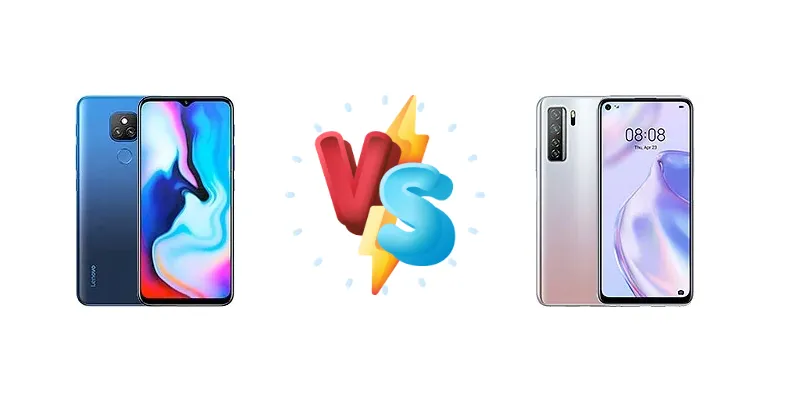
The Lenovo K12 (China) and Huawei nova 7 SE 5G Youth represent distinct approaches to the budget 5G smartphone market. The K12 prioritizes affordability, while the nova 7 SE 5G Youth aims for a balance of performance and features. This comparison dissects their core components to determine which device delivers the best experience for your needs.
🏆 Quick Verdict
For the average user prioritizing responsiveness and faster charging, the Huawei nova 7 SE 5G Youth is the clear winner. Its Dimensity 800U chipset offers significantly better performance than the Snapdragon 460 in the Lenovo K12, and the 40W charging is a game-changer. However, the K12 remains a viable option for those on an extremely tight budget.
| Network |
|---|
| 2G bands | GSM 850 / 900 / 1800 / 1900 | GSM 850 / 900 / 1800 / 1900 |
| 3G bands | HSDPA 850 / 900 / 1900 / 2100 | HSDPA 800 / 850 / 900 / 1700(AWS) / 1900 / 2100 |
| 4G bands | 1, 3, 5, 7, 8, 20, 28, 38, 39, 40, 41 | 1, 2, 3, 4, 5, 8, 18, 19, 26, 34, 38, 39, 40, 41 |
| 5G bands | - | 1, 41, 77, 78 SA/NSA |
| Speed | HSPA, LTE | HSPA, LTE, 5G |
| Technology | GSM / HSPA / LTE | GSM / CDMA / HSPA / LTE / 5G |
| | - | CDMA 800 & TD-SCDMA |
| Launch |
|---|
| Announced | 2020, December 09. Released 2020, December 12 | 2020, October 16. Released 2020, October 16 |
| Status | Discontinued | Discontinued |
| Body |
|---|
| Dimensions | 165.2 x 75.7 x 9.2 mm (6.50 x 2.98 x 0.36 in) | 162.3 x 75 x 8.6 mm (6.39 x 2.95 x 0.34 in) |
| SIM | Nano-SIM + Nano-SIM | Nano-SIM + Nano-SIM |
| Weight | 200 g (7.05 oz) | 189 g (6.67 oz) |
| Display |
|---|
| Resolution | 720 x 1600 pixels, 20:9 ratio (~270 ppi density) | 1080 x 2400 pixels, 20:9 ratio (~405 ppi density) |
| Size | 6.5 inches, 102.0 cm2 (~81.6% screen-to-body ratio) | 6.5 inches, 102.0 cm2 (~83.8% screen-to-body ratio) |
| Type | IPS LCD | IPS LCD, HDR10 |
| Platform |
|---|
| CPU | Octa-core (4x1.8 GHz Kryo 240 & 4x1.6 GHz Kryo 240) | Octa-core (2x2.4 GHz Cortex-A76 & 6x2.0 GHz Cortex-A55) |
| Chipset | Qualcomm SM4250 Snapdragon 460 (11 nm) | Mediatek Dimensity 800U (7 nm) |
| GPU | Adreno 610 | Mali-G57 MC3 |
| OS | Android 10 | Android 10, EMUI 10.1, no Google Play Services |
| Memory |
|---|
| Card slot | microSDXC (uses shared SIM slot) | No |
| Internal | 64GB 4GB RAM | 128GB 8GB RAM |
| | eMMC 5.1 | - |
| Main Camera |
|---|
| Dual | 48 MP, f/1.7, 26mm (wide), 1/2.0", 0.8µm, PDAF
Auxiliary lens | - |
| Features | LED flash, HDR, panorama | LED flash, Panorama, HDR |
| Quad | - | 64 MP, f/1.8, 26mm (wide), PDAF
8 MP, f/2.4, 17mm (ultrawide)
2 MP (macro)
Auxiliary lens |
| Video | 1080p@30/60fps | 4K@30fps, 1080p@30fps |
| Selfie camera |
|---|
| Features | HDR | HDR |
| Single | 8 MP, f/2.2, 26mm (wide), 1/4.0", 1.12µm | 16 MP, f/2.0, (wide) |
| Video | 1080p@30fps | 1080p@30fps |
| Sound |
|---|
| 3.5mm jack | Yes | Yes |
| 35mm jack | Yes | Yes |
| Loudspeaker | Yes | Yes |
| Comms |
|---|
| Bluetooth | 5.0, A2DP, LE | 5.1, A2DP, LE |
| NFC | No | No |
| Positioning | GPS, GLONASS, GALILEO | GPS, GLONASS, GALILEO, BDS, QZSS |
| Radio | FM radio | No |
| USB | microUSB 2.0, OTG | USB Type-C 2.0, OTG |
| WLAN | Wi-Fi 802.11 b/g/n | Wi-Fi 802.11 a/b/g/n/ac, dual-band, Wi-Fi Direct |
| Features |
|---|
| Sensors | Fingerprint (rear-mounted), accelerometer, proximity | Fingerprint (side-mounted), accelerometer, proximity, compass |
| Battery |
|---|
| Charging | 10W wired
2.5W reverse wired | 40W wired, 70% in 30 min
5W reverse wired |
| Type | Li-Po 5000 mAh | Li-Po 4000 mAh |
| Misc |
|---|
| Colors | Navy Blue, Gray | Crush Green, Space Silver, Midnight Black, Purple |
| Models | - | CND-AN00 |
| Price | About 100 EUR | About 290 EUR |
Lenovo K12 (China)
- Lowest possible price point for 5G connectivity.
- Reverse wired charging (albeit slow).
- Functional for basic smartphone tasks.
- Significantly slower performance compared to the competition.
- Extremely slow 10W charging.
- Limited long-term software support likely.
Huawei nova 7 SE 5G Youth
- Much faster Dimensity 800U processor.
- Rapid 40W wired charging.
- Superior image processing capabilities.
- Higher price than the Lenovo K12.
- Reverse charging is still relatively slow.
- Software experience may be limited by Huawei's restrictions.
Display Comparison
Neither device boasts a standout display. While specific panel details (like peak brightness or color gamut coverage) are unavailable, the focus here is on the internal hardware. The display quality will likely be similar, geared towards cost-effectiveness. Bezels are expected to be moderate on both, typical for this price bracket. The absence of high refresh rates on either device suggests a focus on power efficiency rather than visual fluidity.
Camera Comparison
Without detailed camera specs beyond the chipsets, a direct comparison is limited. However, the processing capabilities of the Dimensity 800U in the nova 7 SE 5G Youth suggest superior image processing, potentially leading to better dynamic range and noise reduction. The Snapdragon 460’s ISP is less capable, likely resulting in less refined images. The presence of a dedicated ISP within the Dimensity 800U allows for more complex computational photography features. It's reasonable to assume the nova 7 SE 5G Youth will offer a more versatile and higher-quality camera experience, even if the sensor sizes are similar.
Performance
The performance gap is the most significant differentiator. The Huawei nova 7 SE 5G Youth’s Mediatek Dimensity 800U (7nm) is a substantial upgrade over the Lenovo K12’s Qualcomm Snapdragon 460 (11nm). The Dimensity 800U features a more modern CPU architecture – Cortex-A76 cores versus the Kryo 240 in the Snapdragon 460 – resulting in noticeably faster processing speeds (2.4 GHz vs 1.8 GHz peak). This translates to snappier app launches, smoother multitasking, and a better gaming experience. The 7nm process node of the Dimensity 800U also contributes to improved thermal efficiency, reducing the likelihood of throttling during sustained workloads. The K12 will handle basic tasks, but the nova 7 SE 5G Youth is the better choice for demanding users.
Battery Life
The Lenovo K12’s 10W charging is a significant drawback compared to the Huawei nova 7 SE 5G Youth’s 40W charging. While battery capacity isn’t specified, the faster charging of the nova 7 SE 5G Youth – capable of reaching 70% charge in just 30 minutes – offers a substantial convenience advantage. The K12 will require considerably longer to fully charge. The 2.5W reverse wired charging on the K12 is a niche feature, while the 5W reverse charging on the nova 7 SE 5G Youth is slightly more useful, though still limited. The Dimensity 800U’s efficiency may also contribute to slightly better battery life in real-world usage, offsetting any potential capacity differences.
Buying Guide
Buy the Lenovo K12 (China) if you need a functional 5G smartphone at the absolute lowest possible price point and are willing to compromise on performance and charging speed. Buy the Huawei nova 7 SE 5G Youth if you prefer a smoother user experience, faster app loading times, and the convenience of rapid 40W charging, even if it means spending a bit more.
Frequently Asked Questions
❓ Will the Snapdragon 460 in the Lenovo K12 struggle with popular games like PUBG Mobile?
Yes, the Snapdragon 460 is a budget chipset and will likely require significantly reduced graphics settings and frame rates to achieve playable performance in demanding games like PUBG Mobile. Expect noticeable lag and stuttering, especially in intense scenes. The Dimensity 800U in the nova 7 SE 5G Youth will provide a much smoother gaming experience.
❓ How much faster is the 40W charging on the Huawei nova 7 SE 5G Youth compared to the Lenovo K12's 10W charging in real-world use?
The difference is substantial. The nova 7 SE 5G Youth can reach 70% charge in 30 minutes, while the Lenovo K12 will take several hours to fully charge. This means you can quickly top up the nova 7 SE 5G Youth during a short break, whereas the K12 requires overnight charging for a full battery.
❓ Does the Huawei nova 7 SE 5G Youth support Google Mobile Services (GMS)?
Due to ongoing restrictions, the Huawei nova 7 SE 5G Youth does *not* natively support Google Mobile Services (GMS). It uses Huawei Mobile Services (HMS) instead, which has its own app ecosystem (AppGallery) and alternative solutions for Google apps. This may require some adaptation for users accustomed to GMS.