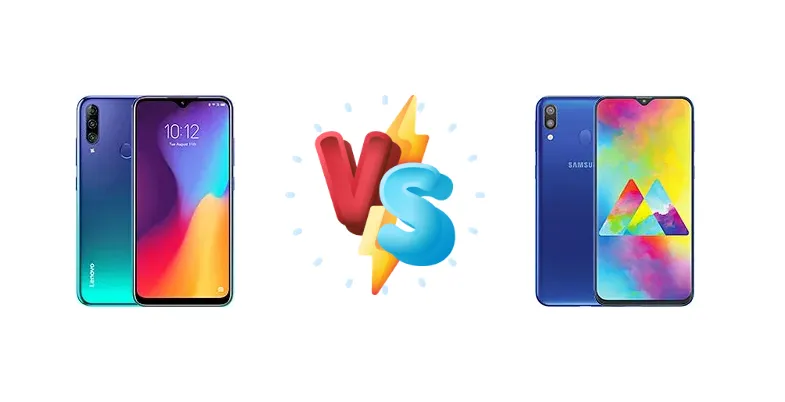
The Lenovo K10 Plus and Samsung Galaxy M20 were popular budget contenders. Both offer compelling features for their price point, but which one reigns supreme? This in-depth comparison will analyze their key aspects to help you make an informed decision.
🏆 Quick Verdict
The Samsung Galaxy M20 edges out the Lenovo K10 Plus thanks to its superior battery life and slightly better display contrast. While the K10 Plus offers a decent Snapdragon 632, the M20's endurance and Samsung's brand recognition give it a slight advantage for most users.
| Network |
|---|
| 2G bands | GSM 850 / 900 / 1800 / 1900 | GSM 850 / 900 / 1800 / 1900 |
| 3G bands | HSDPA 850 / 900 / 1700(AWS) / 1900 / 2100 | HSDPA 850 / 900 / 1900 / 2100 |
| 4G bands | 1, 2, 3, 4, 5, 7, 8, 20, 28, 38, 40, 41 | 1, 3, 5, 7, 8, 20, 38, 40, 41 |
| Speed | HSPA, LTE | HSPA 42.2/5.76 Mbps, LTE (2CA) Cat12 600/50 Mbps |
| Technology | GSM / CDMA / HSPA / LTE | GSM / HSPA / LTE |
| | CDMA 800 & TD-SCDMA | - |
| Launch |
|---|
| Announced | 2019, September 23. Released 2019, September 30 | 2019, January 28. Released 2019, February |
| Status | Discontinued | Discontinued |
| Body |
|---|
| Build | Glass front, plastic back, plastic frame | Glass front, plastic back, plastic frame |
| Dimensions | 158.3 x 75.8 x 8.3 mm (6.23 x 2.98 x 0.33 in) | 156.4 x 74.5 x 8.8 mm (6.16 x 2.93 x 0.35 in) |
| SIM | Nano-SIM + Nano-SIM | Nano-SIM + Nano-SIM |
| Weight | 172 g (6.07 oz) | 186 g (6.56 oz) |
| Display |
|---|
| Resolution | 720 x 1520 pixels, 19:9 ratio (~270 ppi density) | 1080 x 2340 pixels, 19.5:9 ratio (~409 ppi density) |
| Size | 6.22 inches, 96.6 cm2 (~80.5% screen-to-body ratio) | 6.3 inches, 97.4 cm2 (~83.6% screen-to-body ratio) |
| Type | IPS LCD | PLS LCD |
| Platform |
|---|
| CPU | Octa-core (4x1.8 GHz Kryo 250 Gold & 4x1.8 GHz Kryo 250 Silver) | Octa-core (2x1.8 GHz Cortex-A73 & 6x1.6 GHz Cortex-A53) |
| Chipset | Qualcomm SDM632 Snapdragon 632 (14 nm) | Exynos 7904 (14 nm) |
| GPU | Adreno 506 | Mali-G71 MP2 |
| OS | Android 9.0 (Pie), ZUI 11 | Android 8.1 (Oreo), upgradable to Android 10, One UI 2 |
| Memory |
|---|
| Card slot | microSDXC (dedicated slot) | microSDXC (dedicated slot) |
| Internal | 64GB 4GB RAM | 32GB 3GB RAM, 64GB 4GB RAM |
| | eMMC 5.1 | - |
| Main Camera |
|---|
| Dual | - | 13 MP, f/1.9, 1/3.1", 1.12µm, PDAF
5 MP, f/2.2, 12mm (ultrawide) |
| Features | LED flash, panorama, HDR | LED flash, panorama, HDR |
| Triple | 13 MP, f/2.0, (wide), 1/3.1", 1.12µm, PDAF
8 MP, 13mm (ultrawide), 1/4.0", 1.12µm
Auxiliary lens | - |
| Video | 1080p@30fps | 1080p@30fps |
| Selfie camera |
|---|
| Features | HDR | HDR |
| Single | 16 MP, f/2.0, 13mm (ultrawide), 1/2.8", 1.12µm | 8 MP, f/2.0, 25mm (wide) |
| Video | 1080p@30fps | 1080p@30fps |
| Sound |
|---|
| 3.5mm jack | Yes | Yes |
| 35mm jack | Yes | Yes |
| Loudspeaker | Yes | Yes |
| Comms |
|---|
| Bluetooth | 5.0, A2DP, LE | 5.0, A2DP, LE |
| NFC | No | Yes (market/region dependent) |
| Positioning | GPS, GLONASS | GPS, GLONASS, BDS |
| Radio | FM radio, recording | FM radio, RDS, recording |
| USB | USB Type-C 2.0, OTG | USB Type-C 2.0 |
| WLAN | Wi-Fi 802.11 a/b/g/n/ac, dual-band, Wi-Fi Direct | Wi-Fi 802.11 b/g/n, Wi-Fi Direct |
| Features |
|---|
| Sensors | Fingerprint (rear-mounted), accelerometer, proximity | Fingerprint (rear-mounted), accelerometer, gyro, proximity, compass |
| Battery |
|---|
| Charging | 10W wired | 15W wired |
| Type | Li-Po 4050 mAh, non-removable | Li-Po 5000 mAh, non-removable |
| Misc |
|---|
| Colors | Black, Sprite | Ocean Blue, Charcoal Black |
| Models | PAGW0015IN, L39051 | SM-M205F, SM-M205FN, SM-M205G, SM-M205M, SM-M205N |
| Price | - | About 400 EUR |
| SAR | 0.34 W/kg (head) 0.90 W/kg (body) | - |
| SAR EU | - | 0.25 W/kg (head) 1.59 W/kg (body) |
| Tests |
|---|
| Audio quality | - |
Noise -90.5dB / Crosstalk -91.7dB |
| Battery life | - | Endurance rating 103h |
| Camera | - |
Photo / Video |
| Display | - |
Contrast ratio: 1333:1 (nominal), 2.960 (sunlight) |
| Loudspeaker | - |
Voice 67dB / Noise 66dB / Ring 68dB |
| Performance | - |
AnTuTu: 108658 (v7)
GeekBench: 4160 (v4.4)
GFXBench: 4.4fps (ES 3.1 onscreen) |
Lenovo K10 Plus
- Slightly more modern chipset (Snapdragon 632)
- Compact design
- Generally good value
- Shorter battery life
- Less vibrant display
- Less polished software
Samsung Galaxy M20
- Exceptional battery life (5000mAh)
- Better display contrast
- Samsung's One UI software
- Reliable brand reputation
- Older chipset (Exynos 7904)
- Design can feel a bit dated
- HD+ resolution may appear less sharp on a larger screen
Display Comparison
Both phones feature a 6.26-inch HD+ display. The Galaxy M20 boasts a slightly better contrast ratio (1333:1 nominal, 2.960 sunlight) which translates to more vibrant colors and deeper blacks, especially in bright conditions. The K10 Plus display is adequate but lacks the same visual pop.
Camera Comparison
Camera performance is fairly similar. Both offer decent image quality in good lighting conditions. The Galaxy M20's camera app might offer slightly more features and processing enhancements. Low-light performance is average on both devices.
Performance
The Lenovo K10 Plus utilizes a Qualcomm Snapdragon 632, known for its efficiency. The Samsung Galaxy M20 uses an Exynos 7904. While both are octa-core, the Exynos 7904's Cortex-A73 cores offer a slight edge in single-core performance, but the Snapdragon 632 is generally more efficient. Day-to-day performance is comparable for most tasks.
Battery Life
This is where the Galaxy M20 truly shines. Its massive 5000mAh battery delivers exceptional endurance, consistently achieving an endurance rating of 103 hours. The Lenovo K10 Plus has a smaller battery and, consequently, significantly shorter battery life.
Buying Guide
The Lenovo K10 Plus is a good choice for users prioritizing a slightly more modern chipset and a compact design. The Samsung Galaxy M20 is ideal for those who need exceptional battery life and appreciate Samsung's software experience and display quality.
Frequently Asked Questions
❓ Which phone is better for gaming?
The Lenovo K10 Plus's Snapdragon 632 might offer slightly smoother performance in some games due to its more modern architecture, but both phones are primarily suited for casual gaming.
❓ Is the Samsung Galaxy M20 still worth buying?
While older, the Galaxy M20's exceptional battery life and Samsung's software support make it a viable option, especially if you can find it at a very low price. However, newer budget phones offer more features and performance.