
Lenovo Idea Tab vs. Tab M10 Plus (3rd Gen): A Deep Dive Comparison
| Phones Images | |||||
|---|---|---|---|---|---|
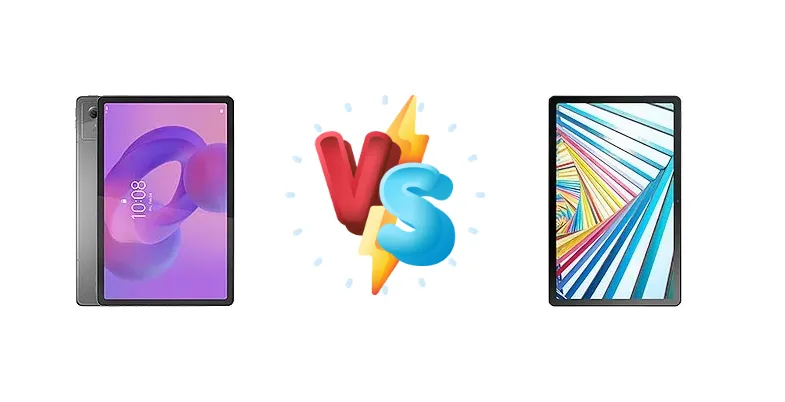
|
🏆 Quick Verdict
For the average user prioritizing sustained performance and exceptional battery life, the Lenovo Idea Tab emerges as the winner. Its Dimensity 6300 chipset, built on a 6nm process, offers a more efficient and powerful experience than the Snapdragon 680 or Helio G80 found in the Tab M10 Plus, despite both tablets sharing a 20W charging rate.
| PHONES | ||
|---|---|---|
| Phone Names | Lenovo Idea Tab | Lenovo Tab M10 Plus (3rd Gen) |
| Network | ||
|---|---|---|
| 2G bands | GSM 850 / 900 / 1800 / 1900 - cellular model only | GSM 850 / 900 / 1800 / 1900 |
| 3G bands | HSDPA 850 / 900 / 1700(AWS) / 1900 / 2100 / 1800 - cellular model only | HSDPA 800 / 850 / 900 / 1900 / 2100 |
| 4G bands | 1, 2, 3, 4, 5, 7, 8, 12, 13, 18, 19, 20, 25, 26, 28, 38, 40, 41, 66 - cellular model only | 1, 2, 3, 4, 5, 7, 8, 19, 20, 26, 28, 28, 38, 40, 41 |
| 5G bands | 1, 2, 3, 5, 7, 8, 20, 26, 28, 38, 40, 41, 66, 71, 77, 78 SA/NSA/Sub6 - cellular model only | - |
| Speed | HSPA, LTE, 5G - cellular model only | HSPA 42.2/5.76 Mbps, LTE Cat13 390/75 Mbps - cellular model only |
| Technology | GSM / HSPA / LTE / 5G | GSM / HSPA / LTE |
| Launch | ||
|---|---|---|
| Announced | 2025, September 07 | 2022, May |
| Status | Available. Released 2025, October | Available. Released 2022, May |
| Body | ||
|---|---|---|
| Build | Glass front, aluminum frame, aluminum back | - |
| Dimensions | 254.6 x 166.2 x 7 mm (10.02 x 6.54 x 0.28 in) | 251.2 x 158.8 x 7.5 mm (9.89 x 6.25 x 0.30 in) |
| SIM | Nano-SIM - cellular model only | Nano-SIM (cellular model only) |
| Weight | 480 g (1.06 lb) | 465 g (1.03 lb) |
| - | Stylus support | |
| Display | ||
|---|---|---|
| Protection | Mohs level 5 | - |
| Resolution | 2560 x 1600 pixels, 16:10 ratio (~274 ppi density) | 1200 x 2000 pixels, 5:3 ratio (~220 ppi density) |
| Size | 11.0 inches, 350.9 cm2 (~82.9% screen-to-body ratio) | 10.61 inches, 320.4 cm2 (~80.3% screen-to-body ratio) |
| Type | IPS LCD, 90Hz, 500 nits | IPS LCD, 400 nits (typ) |
| Platform | ||
|---|---|---|
| CPU | Octa-core (2x2.4 GHz Cortex-A76 & 6x2.0 GHz Cortex-A55) | Octa-core (4x2.4 GHz Kryo 265 Gold & 4x1.9 GHz Kryo 265 Silver) - LTE model Octa-core (2x2.0 GHz Cortex-A75 & 6x1.8 GHz Cortex-A55) - Wi-Fi only model |
| Chipset | Mediatek Dimensity 6300 (6 nm) | Qualcomm SM6225 Snapdragon 680 4G (6 nm) - LTE model Mediatek MT6769V/CU Helio G80 (12 nm) - Wi-Fi only model |
| GPU | Mali-G57 MC2 | Adreno 610 - LTE model Mali-G52 MC2 - Wi-Fi only model |
| OS | Android 15, up to 2 major Android upgrades | Android 12 |
| Memory | ||
|---|---|---|
| Card slot | microSDXC | microSDXC (dedicated slot) |
| Internal | 128GB 4GB RAM, 256GB 4GB RAM, 256GB 8GB RAM | 32GB 3GB RAM, 64GB 4GB RAM, 128GB 4GB RAM, 128GB 6GB RAM |
| - | eMCP/uMCP | |
| Main Camera | ||
|---|---|---|
| Single | 8 MP, (wide), AF | 8 MP, AF |
| Video | Yes | 1080p |
| Selfie camera | ||
|---|---|---|
| Single | 5 MP | 8 MP |
| Video | Yes | - |
| Sound | ||
|---|---|---|
| 3.5mm jack | - | Yes |
| 35mm jack | Yes | Yes |
| Loudspeaker | Yes, with stereo speakers, Dolby Atmos (4 speakers) | Yes, with stereo speakers (4 speakers) |
| Comms | ||
|---|---|---|
| Bluetooth | 5.2, A2DP, LE | 5.0, A2DP, LE |
| NFC | No | No |
| Positioning | GPS, GALILEO, GLONASS | GPS, GLONASS, BDS - cellular model only |
| Radio | No | FM Radio |
| USB | USB Type-C 2.0, accessory connector pins | USB Type-C 2.0 |
| WLAN | Wi-Fi 802.11 a/b/g/n/ac, Wi-Fi Direct | Wi-Fi 802.11 a/b/g/n/ac, dual-band, Wi-Fi Direct |
| Features | ||
|---|---|---|
| Sensors | Accelerometer, proximity (accessories only) | Accelerometer, proximity, gyro |
| Battery | ||
|---|---|---|
| Charging | 20W wired | 20W wired |
| Type | Li-Ion 7040 mAh | Li-Po 7700 mAh |
| Misc | ||
|---|---|---|
| Colors | Luna grey, Polar blue | Storm Grey, Frost Blue |
| Models | TB336FU, TB336ZU | - |
| Price | $ 119.99 | About 260 EUR |
| EU LABEL | ||
|---|---|---|
| Battery | 94:01h endurance, 1000 cycles | - |
| Energy | Class E | - |
| Free fall | Class E (9 falls) | - |
| Repairability | Class A | - |
Lenovo Idea Tab
- Superior performance with the Dimensity 6300 chipset.
- Exceptional battery life (94:01h endurance).
- Longer battery lifespan (1000 charge cycles).
- May be slightly more expensive than the base M10 Plus model.
- Lacks LTE connectivity in some configurations (needs to be verified).
Lenovo Tab M10 Plus (3rd Gen)
- Available with LTE connectivity (Snapdragon variant).
- Potentially lower price point.
- Suitable for basic tasks like browsing and streaming.
- Significantly lower performance with the Helio G80 variant.
- Shorter battery life compared to the Idea Tab.
- Less efficient chipset (especially Helio G80).
Display Comparison
Both tablets are assumed to feature similar LCD panels, given their market positioning. However, the internal differences matter more. We lack specific display specs, but the chipset's ability to drive the display efficiently is where the Idea Tab gains an edge. The Dimensity 6300's integrated GPU is more capable, potentially leading to smoother animations and faster rendering of graphics-intensive content. The M10 Plus's Helio G80 variant, with its 12nm process, will likely exhibit lower graphical performance.
Camera Comparison
Given the target market, camera performance isn't a primary focus. We can assume both tablets feature modest camera setups. Without specific sensor details, it's difficult to make a definitive comparison. However, the more powerful ISP (Image Signal Processor) within the Dimensity 6300 could potentially offer slightly better image processing capabilities, even with similar sensors. The M10 Plus's camera performance will vary significantly between the LTE (Snapdragon) and Wi-Fi (Helio) models, with the Snapdragon version likely offering superior image quality.
Performance
The core of the difference lies in the chipsets. The Lenovo Idea Tab’s Mediatek Dimensity 6300 (6nm) boasts a more modern architecture – 2x2.4 GHz Cortex-A76 and 6x2.0 GHz Cortex-A55 cores – compared to the Tab M10 Plus’s Qualcomm Snapdragon 680 (6nm) with 4x2.4 GHz Kryo 265 Gold & 4x1.9 GHz Kryo 265 Silver cores. The Dimensity 6300’s Cortex-A76 cores are generally faster than the Kryo 265 Gold cores. The Wi-Fi only M10 Plus variant uses the Mediatek MT6769V/CU Helio G80 (12nm), which is significantly less efficient and powerful than either the Dimensity 6300 or Snapdragon 680. This translates to faster app loading times, smoother multitasking, and a more responsive user experience on the Idea Tab. The 6nm process of the Dimensity 6300 and Snapdragon 680 also contributes to better thermal management, reducing the likelihood of performance throttling during extended use.
Battery Life
The Lenovo Idea Tab truly shines with its exceptional 94:01h endurance and 1000 charge cycles. While both tablets support 20W wired charging, the Dimensity 6300’s superior power efficiency means the Idea Tab will last significantly longer on a single charge. The Snapdragon 680 in the M10 Plus is also efficient, but the Helio G80 variant will drain the battery faster due to its less refined 12nm process. The Idea Tab’s 1000 charge cycle rating also suggests a longer lifespan for the battery itself.
Buying Guide
Buy the Lenovo Idea Tab if you need a tablet capable of handling demanding tasks like light gaming, video editing, or multitasking without significant slowdowns, and if long battery life is paramount. Buy the Lenovo Tab M10 Plus (3rd Gen) if you prioritize cellular connectivity (LTE model) and are primarily focused on basic tasks like web browsing, streaming, and light productivity, and are willing to trade some performance for potential cost savings.