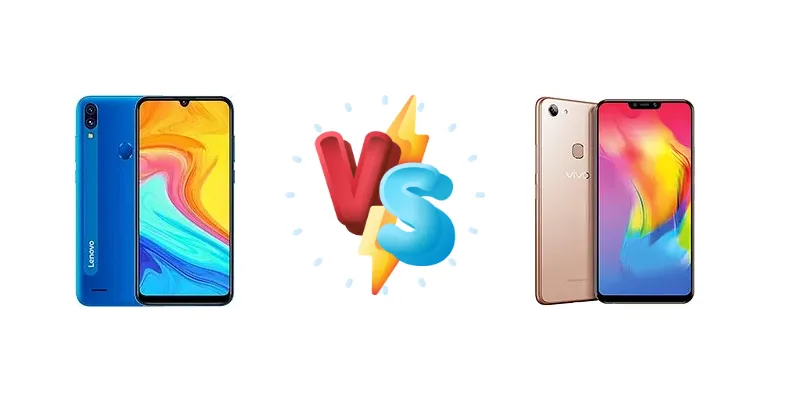
The Lenovo A7 and vivo Y83 represent a common dilemma for budget-conscious smartphone buyers. Both aim to deliver essential functionality at an accessible price point, but they take different approaches to achieving this. The A7 prioritizes power efficiency with its Unisoc chipset, while the Y83 opts for a higher clock speed with MediaTek's Helio P22. This comparison dissects these choices to determine which phone offers the best overall experience.
🏆 Quick Verdict
For the average user prioritizing sustained performance and a slightly more modern architecture, the vivo Y83 is the better choice. Its Helio P22, despite being older, offers a noticeable performance uplift over the A7’s Unisoc SC9863A. However, users heavily focused on maximizing battery life may find the A7’s efficiency appealing.
| Network |
|---|
| 2G bands | GSM 850 / 900 / 1800 / 1900 | GSM 850 / 900 / 1800 / 1900 |
| 3G bands | HSDPA 850 / 900 / 2100 | HSDPA 850 / 900 / 2100 |
| 4G bands | 1, 3, 5, 8, 38, 40, 41 | 1, 3, 5, 8, 34, 38, 39, 40, 41 |
| Speed | HSPA, LTE | HSPA, LTE |
| Technology | GSM / HSPA / LTE | GSM / CDMA / HSPA / LTE |
| | - | CDMA 800 & TD-SCDMA |
| Launch |
|---|
| Announced | 2019, April 13. Released 2019, April 13 | 2018, May. Released 2018, May |
| Status | Discontinued | Discontinued |
| Body |
|---|
| Build | Glass front, plastic back, plastic frame | - |
| Dimensions | 155 x 75 x 12 mm (6.10 x 2.95 x 0.47 in) | 155.2 x 75.2 x 7.7 mm (6.11 x 2.96 x 0.30 in) |
| SIM | Nano-SIM + Nano-SIM | Nano-SIM + Nano-SIM |
| Weight | - | 150 g (5.29 oz) |
| Display |
|---|
| Resolution | 720 x 1560 pixels, 19.5:9 ratio (~282 ppi density) | 720 x 1520 pixels, 19:9 ratio (~270 ppi density) |
| Size | 6.09 inches, 91.0 cm2 (~78.3% screen-to-body ratio) | 6.22 inches, 96.6 cm2 (~82.7% screen-to-body ratio) |
| Type | IPS LCD | IPS LCD |
| Platform |
|---|
| CPU | Octa-core (4x1.6 GHz Cortex-A55 & 4x1.2 GHz Cortex-A55) | Octa-core 2.0 GHz Cortex-A53 |
| Chipset | Unisoc SC9863A (28 nm) | Mediatek MT6762 Helio P22 (12 nm) |
| GPU | IMG8322 | PowerVR GE8320 |
| OS | Android 9.0 (Pie) | Android 8.1 (Oreo), Funtouch 4 |
| Memory |
|---|
| Card slot | microSDXC (dedicated slot) | microSDXC (dedicated slot) |
| Internal | 64GB 4GB RAM | 32GB 4GB RAM, 64GB 4GB RAM |
| | eMMC 5.1 | eMMC 5.1 |
| Main Camera |
|---|
| Dual | 13 MP, (wide), 1/3.1", 1.12µm, PDAF
Auxiliary lens | - |
| Features | LED flash | LED flash, HDR, panorama |
| Single | - | 13 MP, f/2.2, PDAF |
| Video | 1080p@30fps | 1080p@30fps |
| Selfie camera |
|---|
| Single | 5 MP | 8 MP, f/2.2 |
| Video | - | 1080p@30fps |
| Sound |
|---|
| 3.5mm jack | Yes | Yes |
| 35mm jack | Yes | Yes |
| Loudspeaker | Yes | Yes |
| Comms |
|---|
| Bluetooth | Yes | 4.2, A2DP, LE |
| NFC | No | No |
| Positioning | GPS | GPS, GLONASS, BDS |
| Radio | FM radio | FM radio |
| USB | microUSB 2.0 | microUSB 2.0, OTG |
| WLAN | Wi-Fi 802.11 b/g/n | Wi-Fi 802.11 b/g/n, Wi-Fi Direct |
| Features |
|---|
| Sensors | Fingerprint (rear-mounted), accelerometer, proximity | Fingerprint (rear-mounted), accelerometer, proximity |
| Battery |
|---|
| Type | Li-Po 4000 mAh | Li-Ion 3260 mAh, non-removable |
| Misc |
|---|
| Colors | Black, Blue | Black, Aurora White, Red, Gold |
| Models | L19111 | 1802 |
| Price | About 100 EUR | About 250 EUR |
Lenovo A7
- Potentially longer battery life during light usage due to efficient cores.
- Lower cost of production may translate to a lower retail price.
- Unisoc chipsets are becoming increasingly common, offering wider support.
- Older 28nm process node leads to higher power consumption under load.
- Slower CPU performance compared to the Helio P22.
- Likely less advanced ISP for camera processing.
vivo Y83
- Faster CPU performance thanks to the Helio P22 and higher clock speeds.
- More efficient 12nm process node.
- Potentially better camera image processing.
- May experience shorter battery life under heavy usage.
- Helio P22 is an older chipset, potentially limiting future software updates.
- MediaTek chipsets sometimes have less consistent driver support.
Display Comparison
Neither device boasts a standout display. Both likely feature LCD panels, typical for this price bracket. However, the lack of detailed display specifications necessitates a focus on the chipset's impact on UI smoothness. A more powerful chipset, like the Y83's Helio P22, can mitigate the perception of a lower-resolution or less-color-accurate display by rendering the UI more fluidly.
Camera Comparison
Without detailed camera specifications, a direct comparison is difficult. However, it’s safe to assume both phones feature basic camera setups geared towards casual photography. The image signal processor (ISP) within the Helio P22 is likely more advanced than the one in the SC9863A, potentially leading to better image processing, particularly in low-light conditions. The Y83’s chipset may also support more advanced camera features, even if the sensor itself isn’t significantly better.
Performance
The core difference lies in the chipsets. The vivo Y83’s MediaTek Helio P22 (12nm) utilizes Cortex-A53 cores clocked at 2.0 GHz. This contrasts with the Lenovo A7’s Unisoc SC9863A (28nm) which combines Cortex-A55 cores at 1.6 GHz and 1.2 GHz. The 12nm process node of the Helio P22 is significantly more efficient than the 28nm node of the SC9863A, but the A53 architecture is older and less efficient *per clock cycle* than the A55. The higher clock speed of the Helio P22, combined with its newer architecture, should translate to faster app loading times and a more responsive user experience. The A7’s A55 cores will offer better efficiency at lower loads, but will struggle to keep pace with the Y83 under sustained demand.
Battery Life
Battery capacity isn't provided, making a direct mAh comparison impossible. However, the Unisoc SC9863A’s 28nm process is inherently less power-efficient than the Helio P22’s 12nm process. This means the Lenovo A7 will likely drain its battery faster under similar usage scenarios, despite potentially having a larger battery capacity. The Y83’s more efficient chipset could offset a smaller battery, resulting in comparable or even better real-world battery life.
Buying Guide
Buy the Lenovo A7 if you need a phone primarily for basic tasks like calling, texting, and light social media use, and battery life is your absolute top priority. Its Unisoc chipset is designed for efficiency. Buy the vivo Y83 if you prefer a smoother experience with slightly more demanding apps, occasional gaming, and don't mind potentially sacrificing some battery life for increased processing power.
Frequently Asked Questions
❓ Will the Helio P22 in the vivo Y83 struggle with multitasking compared to the Lenovo A7?
While the A7 has more cores, the Helio P22’s newer architecture and higher clock speed provide a significant advantage in multitasking. The A53 cores in the P22 are more capable of handling multiple tasks simultaneously without significant slowdown, even if the A7 has a higher core count.
❓ Is the difference in chipset manufacturing process (28nm vs 12nm) noticeable in everyday use?
Yes, the difference is noticeable. The 12nm process of the Helio P22 results in lower power consumption for the same level of performance. This translates to less heat generation, potentially reducing thermal throttling and improving sustained performance, and ultimately better battery life.
❓ Given the age of both phones, should I be concerned about software updates?
Both phones are likely nearing the end of their software update lifecycle. Expect limited or no major Android version updates. Security patches may also be infrequent. This is a common trade-off for ultra-budget smartphones.