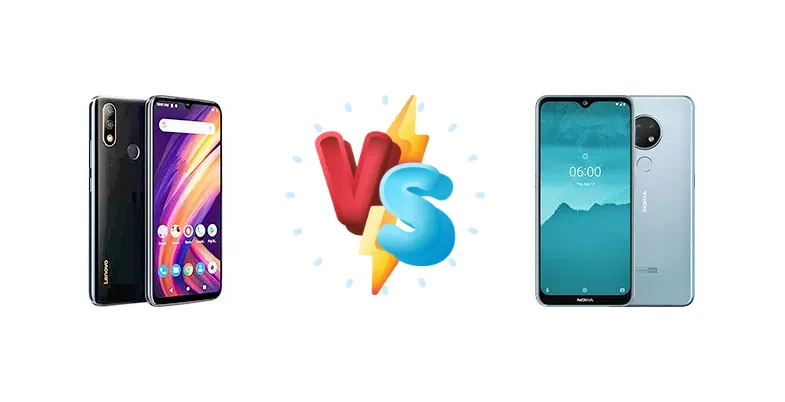
The Lenovo A6 Note and Nokia 6.2 represent compelling options in the ultra-budget smartphone segment. While both aim to deliver essential smartphone functionality at a low price point, they take different approaches to achieving this. The Nokia 6.2 leverages Qualcomm’s Snapdragon 636, while the Lenovo A6 Note opts for MediaTek’s Helio P22. This comparison will dissect the key differences to help you determine which device best suits your needs.
🏆 Quick Verdict
For most users, the Nokia 6.2 emerges as the superior choice. Its Snapdragon 636 chipset provides a noticeable performance advantage over the Helio P22 in the Lenovo A6 Note, translating to smoother multitasking and a more responsive user experience. While both offer similar battery endurance and charging speeds, the Nokia 6.2’s brighter display adds to its overall value.
| Network |
|---|
| 2G bands | GSM 850 / 900 / 1800 / 1900 | GSM 850 / 900 / 1800 / 1900 |
| 3G bands | HSDPA 850 / 900 / 1900 / 2100 | HSDPA 850 / 900 / 2100 - ROW |
| 4G bands | 1, 2, 3, 5, 7, 8, 20, 38, 40, 41 | 1, 3, 5, 7, 8, 20, 28, 38, 40, 41 - ROW |
| Speed | HSPA, LTE | HSPA 42.2/5.76 Mbps, LTE Cat4 150/50 Mbps |
| Technology | GSM / HSPA / LTE | GSM / HSPA / LTE |
| | - | 1, 3, 5, 8, 40, 41 - IN |
| Launch |
|---|
| Announced | 2019, September. Released 2019, September | 2019, September 05. Released 2019, October 17 |
| Status | Discontinued | Discontinued |
| Body |
|---|
| Build | - | Glass front (Gorilla Glass 3), glass back (Gorilla Glass 3), plastic frame |
| Dimensions | 154.7 x 72.9 x 9.2 mm (6.09 x 2.87 x 0.36 in) | 159.9 x 75.1 x 8.3 mm (6.30 x 2.96 x 0.33 in) |
| SIM | Nano-SIM + Nano-SIM | · Nano-SIM· Nano-SIM + Nano-SIM |
| Weight | 172 g (6.07 oz) | 180 g (6.35 oz) |
| Display |
|---|
| Protection | - | Corning Gorilla Glass 3 |
| Resolution | 720 x 1560 pixels, 19.5:9 ratio (~282 ppi density) | 1080 x 2280 pixels, 19:9 ratio (~400 ppi density) |
| Size | 6.09 inches, 91.0 cm2 (~80.7% screen-to-body ratio) | 6.3 inches, 99.1 cm2 (~82.5% screen-to-body ratio) |
| Type | IPS LCD | IPS LCD, HDR10 |
| | - | Always-on display |
| Platform |
|---|
| CPU | Octa-core 2.0 GHz Cortex-A53 | Octa-core (4x1.8 GHz Kryo 260 Gold & 4x1.6 GHz Kryo 260 Silver) |
| Chipset | Mediatek MT6762 Helio P22 (12 nm) | Qualcomm SDM636 Snapdragon 636 (14 nm) |
| GPU | PowerVR GE8320 | Adreno 509 |
| OS | Android 9.0 (Pie) | Android 9.0 (Pie), upgradable to Android 10, Android One |
| Memory |
|---|
| Card slot | microSDXC (dedicated slot) | microSDXC (dedicated slot) |
| Internal | 16GB 2GB RAM, 32GB 3GB RAM | 32GB 3GB RAM, 64GB 3GB RAM, 64GB 4GB RAM, 128GB 4GB RAM |
| | eMMC 5.1 | eMMC 5.1 |
| Main Camera |
|---|
| Dual | 13 MP, f/2.0, 1/3.1", 1.12µm, AF
Auxiliary lens | - |
| Features | LED flash, panorama, HDR | LED flash, panorama, HDR |
| Triple | - | 16 MP, f/1.8, 27mm (wide), 1.0µm, PDAF
8 MP, f/2.2, 13mm (ultrawide), 1/4.0", 1.12µm
Auxiliary lens |
| Video | 1080p@30fps | 4K@30fps, 1080p@30fps |
| Selfie camera |
|---|
| Features | - | HDR |
| Single | 5 MP, 1/5.0", 1.12µm | 8 MP, f/2.0, 1/4.0", 1.12µm |
| Video | - | 1080p@30fps |
| Sound |
|---|
| 3.5mm jack | Yes | Yes |
| 35mm jack | Yes | Yes |
| Loudspeaker | Yes | Yes |
| Comms |
|---|
| Bluetooth | 5.0, A2DP, LE | 5.0, A2DP, EDR, LE, aptX |
| NFC | No | Yes (excl. India) |
| Positioning | GPS, GLONASS, GALILEO | GPS, GLONASS, GALILEO, BDS |
| Radio | FM radio | FM radio |
| USB | microUSB 2.0 | USB Type-C 2.0, OTG |
| WLAN | Wi-Fi 802.11 b/g/n | Wi-Fi 802.11 b/g/n/ac, dual-band, Wi-Fi Direct |
| Features |
|---|
| Sensors | Fingerprint (rear-mounted), accelerometer, proximity | Fingerprint (rear-mounted), accelerometer, gyro, proximity, compass |
| Battery |
|---|
| Charging | 10W wired | 10W wired |
| Type | Li-Po 4000 mAh, non-removable | Li-Po 3500 mAh, non-removable |
| Misc |
|---|
| Colors | Black, Blue | Ceramic Black, Ice |
| Models | PAGK0027IN, PAGK0027, L19041 | TA-1200, TA-1198, TA-1201, TA-1187 |
| Price | About 100 EUR | About 180 EUR |
| SAR | - | 1.04 W/kg (head) 1.05 W/kg (body) |
| SAR EU | - | 0.97 W/kg (head) 1.42 W/kg (body) |
| Tests |
|---|
| Audio quality | - |
Noise -91.0dB / Crosstalk -94.8dB |
| Battery life | - |
Endurance rating 73h
|
| Camera | - |
Photo / Video |
| Display | - |
Contrast ratio: 1525:1 (nominal) |
| Loudspeaker | - |
Voice 65dB / Noise 70dB / Ring 79dB
|
| Performance | - |
AnTuTu: 114947 (v7), 140736 (v8)
GeekBench: 4882 (v4.4)
GFXBench: 5.7fps (ES 3.1 onscreen) |
Lenovo A6 Note
- Lower price point makes it very accessible.
- Decent battery endurance for basic usage.
- Lightweight and potentially more pocketable.
- Significantly weaker performance compared to the Nokia 6.2.
- Display likely lacks brightness and vibrancy.
- Camera performance is expected to be basic.
Nokia 6.2
- Superior performance thanks to the Snapdragon 636.
- Brighter display for better outdoor visibility.
- Potentially better camera image processing.
- Slightly higher price compared to the Lenovo A6 Note.
- 10W charging is relatively slow.
- May be slightly larger and heavier.
Display Comparison
The Nokia 6.2 boasts a significantly brighter display, reaching a measured 580 nits, compared to the Lenovo A6 Note’s unspecified brightness. This difference is crucial for outdoor visibility. Both displays share a 1525:1 contrast ratio, suggesting similar color reproduction quality. However, the Nokia 6.2’s higher peak brightness provides a more vibrant and usable experience in bright sunlight, making it preferable for users who frequently use their phones outdoors. The lack of detailed display specs for the A6 Note suggests a more basic panel.
Camera Comparison
Both devices are listed as having 'Photo / Video' capabilities, but lack specific details. Given the price point, expectations should be tempered. The Nokia 6.2 likely benefits from Qualcomm’s image signal processor (ISP) within the Snapdragon 636, potentially offering better image processing and noise reduction. Without sensor size or aperture information, it’s difficult to make a definitive judgment, but Qualcomm’s ISP generally provides a more polished camera experience. The Lenovo A6 Note’s camera performance is likely more basic, relying heavily on software processing.
Performance
The core difference lies in the chipsets. The Nokia 6.2’s Qualcomm Snapdragon 636 (14nm) utilizes a Kryo CPU architecture with a combination of performance (1.8 GHz) and efficiency (1.6 GHz) cores. This contrasts with the Lenovo A6 Note’s MediaTek Helio P22 (12nm) which relies solely on Cortex-A53 cores clocked at 2.0 GHz. While the A6 Note’s clock speed is higher, the Snapdragon 636’s architecture is more efficient and delivers superior overall performance, particularly in multi-threaded tasks and gaming. The 14nm process node on the Snapdragon 636, while older, is well-optimized, and the Kryo cores offer a more refined experience than the A53 cores in the Helio P22.
Battery Life
Both the Lenovo A6 Note and Nokia 6.2 share a 10W wired charging capability, indicating similar charging speeds. Both also have an endurance rating of 73 hours. This suggests comparable battery life despite potentially different battery capacities (which are not specified). The efficiency gains of the Snapdragon 636 in the Nokia 6.2 might slightly offset any capacity differences, but realistically, users can expect similar all-day battery life with moderate usage on both devices. The 10W charging will result in relatively slow 0-100% charge times, likely exceeding 2.5 hours.
Buying Guide
Buy the Lenovo A6 Note if you prioritize absolute affordability and only need a phone for basic tasks like calls, texts, and light social media. Its lower price point makes it ideal for first-time smartphone users or as a secondary device. Buy the Nokia 6.2 if you value a smoother, more responsive experience, a brighter display for outdoor visibility, and the potential for light gaming or more demanding applications. The Snapdragon 636 offers a significant performance uplift for a relatively small price premium.
Frequently Asked Questions
❓ Will the Nokia 6.2 handle popular games like PUBG Mobile or Call of Duty Mobile?
The Snapdragon 636 in the Nokia 6.2 can handle PUBG Mobile and Call of Duty Mobile, but you’ll likely need to play at medium settings to maintain a stable frame rate. Don't expect high-end graphics or consistently smooth performance, but it's playable. The Lenovo A6 Note’s Helio P22 will struggle with these titles, offering a significantly less enjoyable gaming experience.
❓ Is the 10W charging speed a major drawback on either phone?
Yes, 10W charging is relatively slow by today’s standards. Expect a full charge to take over 2.5 hours. This isn’t a deal-breaker for overnight charging, but it’s inconvenient if you need a quick top-up. Neither phone offers fast charging capabilities.
❓ How does the software experience differ between the Lenovo A6 Note and Nokia 6.2?
The Nokia 6.2, as part of the Android One program, offers a clean, near-stock Android experience with guaranteed software updates. The Lenovo A6 Note likely features a heavily customized Android skin, which may include bloatware and slower update cycles. This is a significant advantage for the Nokia 6.2 in terms of usability and long-term support.