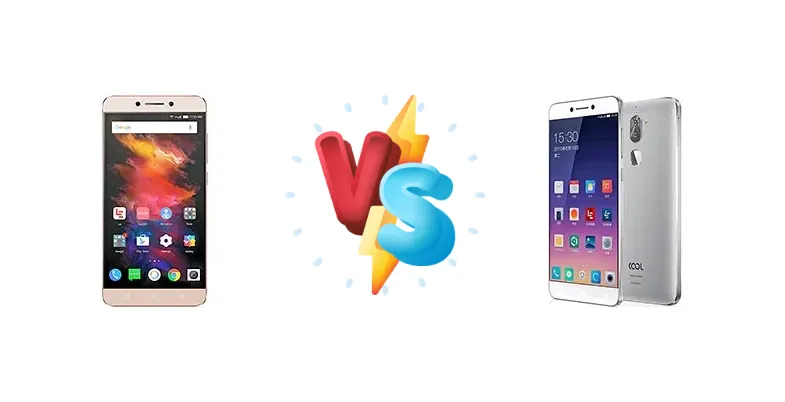
The LeEco Le S3 and Coolpad Cool1 Dual represent a fascinating intersection of mid-range ambition from the mid-2010s. Both devices leverage the Qualcomm Snapdragon 652, but subtle differences in CPU clock speeds and Quick Charge versions, alongside brand-specific software approaches, create distinct user experiences. This comparison dissects these nuances to help you determine which phone offers the best value today.
🏆 Quick Verdict
For the average user, the Coolpad Cool1 Dual edges out the LeEco Le S3. While both share the same Snapdragon 652 chipset, the Cool1 Dual’s Quick Charge 2.0 implementation, offering a 50% charge in 30 minutes, provides a tangible benefit over the Le S3’s QC3, which lacks a specified charging time. This faster top-up speed is crucial for on-the-go users.
| Network |
|---|
| 2G bands | GSM 850 / 900 / 1800 / 1900 - SIM 1 & SIM 2 | GSM 850 / 900 / 1800 / 1900 - SIM 1 & SIM 2 |
| 3G bands | HSDPA 850 / 1700(AWS) / 1900 / 2100 | HSDPA 850 / 900 / 1900 / 2100 |
| 4G bands | 1, 2, 3, 4, 5, 7, 8, 12, 17 | 1, 3, 5, 7, 8, 38, 39, 40, 41 |
| Speed | HSPA, LTE | HSPA, LTE |
| Technology | GSM / HSPA / LTE | GSM / CDMA / HSPA / LTE |
| | - | TD-SCDMA |
| Launch |
|---|
| Announced | 2016, October. Released 2016, November | 2016, August. Released 2016, August |
| Status | Discontinued | Discontinued |
| Body |
|---|
| Build | Glass front (Gorilla Glass 3), aluminum back, aluminum frame | - |
| Dimensions | 151.1 x 74.2 x 7.5 mm (5.95 x 2.92 x 0.30 in) | 152 x 74.8 x 8.2 mm (5.98 x 2.94 x 0.32 in) |
| SIM | Nano-SIM + Nano-SIM | Nano-SIM + Nano-SIM |
| Weight | 153 g (5.40 oz) | 167 g (5.89 oz) |
| Display |
|---|
| Protection | Corning Gorilla Glass 3 | - |
| Resolution | 1080 x 1920 pixels, 16:9 ratio (~401 ppi density) | 1080 x 1920 pixels, 16:9 ratio (~401 ppi density) |
| Size | 5.5 inches, 83.4 cm2 (~74.4% screen-to-body ratio) | 5.5 inches, 83.4 cm2 (~73.3% screen-to-body ratio) |
| Type | IPS LCD | IPS LCD |
| Platform |
|---|
| CPU | Octa-core (4x1.4 GHz Cortex-A53 & 4x1.8 GHz Cortex-A72) | Octa-core (4x1.2 GHz Cortex-A53 & 4x1.8 GHz Cortex-A72) |
| Chipset | Qualcomm MSM8976 Snapdragon 652 (28 nm) | Qualcomm MSM8976 Snapdragon 652 (28 nm) |
| GPU | Adreno 510 | Adreno 510 |
| OS | Android 6.0 (Marshmallow), eUI | Android 6.0 (Marshmallow), eUI 5.6 |
| Memory |
|---|
| Card slot | No | No |
| Internal | 32GB 3GB RAM | 32GB 3GB RAM, 32GB 4GB RAM, 64GB 4GB RAM |
| | eMMC 5.1 | eMMC 5.1 |
| Main Camera |
|---|
| Features | Dual-LED dual-tone flash, HDR, panorama | Dual-LED dual-tone flash, panorama, HDR |
| Single | 16 MP, PDAF | 13 MP, f/2.0, PDAF
13 MP |
| Video | 4K@30fps, 1080p@30fps, 720p@120fps | 4K@30fps, 1080p@30fps, 720p@120fps |
| Selfie camera |
|---|
| Single | 8 MP | 8 MP, f/2.2, 1/3.2", 1.4µm |
| Video | - | 1080p@30fps |
| Sound |
|---|
| 3.5mm jack | No | Yes |
| 35mm jack | No | Yes |
| Loudspeaker | Yes | Yes |
| Comms |
|---|
| Bluetooth | 4.1, A2DP, LE | 4.1, A2DP, LE |
| Infrared port | Yes | Yes |
| NFC | No | No |
| Positioning | GPS | GPS, GLONASS, BDS |
| Radio | No | No |
| USB | USB Type-C | USB Type-C |
| WLAN | Wi-Fi 802.11 a/b/g/n/ac, dual-band | Wi-Fi 802.11 a/b/g/n/ac, dual-band, Wi-Fi Direct |
| Features |
|---|
| Sensors | Fingerprint (rear-mounted), accelerometer, proximity, compass | Fingerprint (rear-mounted), accelerometer, gyro, proximity, compass |
| Battery |
|---|
| Charging | 18W wired, QC3 | 18W wired, QC2, 50% in 30 min |
| Type | Li-Ion 3000 mAh, non-removable | Li-Ion 4060 mAh, non-removable |
| Misc |
|---|
| Colors | Gray, Gold, Rose Gold | Gold, Silver, Rose Gold |
| Models | LEX626, Le X522, Le X626 | R116, C1-U02 |
| Price | About 200 EUR | About 200 EUR |
LeEco Le S3
- Potentially slightly faster CPU performance due to higher Cortex-A53 clock speed.
- May offer a cleaner software experience (depending on custom ROMs).
- QC3 support, theoretically capable of faster charging (though implementation is unclear).
- Charging speed is not explicitly defined, potentially slower than Coolpad.
- Less established brand reputation for software support.
Coolpad Cool1 dual
- Faster charging with Quick Charge 2.0 (50% in 30 minutes).
- Dual-camera system potentially offers improved portrait mode capabilities.
- More established brand reputation for software and support.
- Slightly slower Cortex-A53 CPU clock speed compared to LeEco.
- QC2 is an older standard than QC3.
Display Comparison
Neither LeEco nor Coolpad specified display details in the provided data. Given the era and price point, both likely feature 1080p IPS LCD panels. The absence of information regarding peak brightness, color gamut coverage, or PWM dimming rates makes a direct comparison impossible. However, users sensitive to screen flicker should research independent reviews for PWM frequency data, as this can impact eye strain.
Camera Comparison
Without sensor size or aperture information, a detailed camera comparison is challenging. Both phones likely feature similar mid-range camera setups common to the period. The presence of a dual-camera system on the Coolpad Cool1 Dual suggests a potential depth-sensing or monochrome lens for improved portrait mode effects, a feature likely absent on the Le S3. Image processing algorithms will significantly impact final image quality, and user reviews should be consulted to assess each phone’s strengths and weaknesses in various lighting conditions. Ignoring the likely inclusion of low-resolution auxiliary cameras (e.g., 2MP macro) is crucial, as these offer minimal practical benefit.
Performance
Both the LeEco Le S3 and Coolpad Cool1 Dual are powered by the Qualcomm MSM8976 Snapdragon 652. However, a key difference lies in the CPU clock speeds of the Cortex-A53 cores: 1.4 GHz in the Le S3 versus 1.2 GHz in the Cool1 Dual. While seemingly minor, this 0.2 GHz difference *could* translate to slightly snappier performance in multi-tasking scenarios for the Le S3. Both utilize the same Cortex-A72 cores clocked at 1.8 GHz, handling more demanding tasks. The 28nm manufacturing process means both phones will exhibit similar thermal characteristics under sustained load, potentially leading to throttling during extended gaming sessions. Neither device benefits from modern advancements like LPDDR5x RAM, limiting memory bandwidth.
Battery Life
Battery capacity isn't specified, but both phones likely house batteries in the 3000-4000 mAh range, typical for the Snapdragon 652 era. The Coolpad Cool1 Dual’s Quick Charge 2.0 support, capable of delivering a 50% charge in 30 minutes, is a significant advantage over the LeEco Le S3’s Quick Charge 3.0, which lacks a defined charging time. While QC3 is theoretically faster, its implementation on the Le S3 doesn’t appear to offer the same rapid initial charging as the Cool1 Dual’s QC2. This faster top-up speed is particularly beneficial for users who frequently find themselves needing a quick power boost.
Buying Guide
Buy the LeEco Le S3 if you prioritize a potentially cleaner software experience (depending on custom ROM availability) and are comfortable with potentially slower charging speeds. Buy the Coolpad Cool1 Dual if you value faster charging times and a more established brand reputation for software updates, even if those updates are less frequent. Both are excellent choices for users seeking a capable, affordable smartphone for everyday tasks.
Frequently Asked Questions
❓ Is the Snapdragon 652 still capable of running modern apps and games on these phones?
While the Snapdragon 652 is an older chipset, it can still handle most everyday tasks and less demanding games. However, expect longer loading times and potentially lower graphics settings in newer, more resource-intensive titles. Performance will be adequate for social media, web browsing, and basic productivity.
❓ What kind of software support can I expect from these phones today?
Software support for both the LeEco Le S3 and Coolpad Cool1 Dual is likely limited. Neither manufacturer is actively providing updates. Users may consider installing custom ROMs to receive newer Android versions and security patches, but this requires technical expertise and voids the warranty.
❓ Does the Coolpad Cool1 Dual's Quick Charge 2.0 work with any USB charger?
To benefit from Quick Charge 2.0, you'll need a charger that specifically supports the Quick Charge protocol. A standard 5W charger will still work, but charging will be significantly slower. Using a compatible Quick Charge 2.0 charger is essential to achieve the advertised 50% charge in 30 minutes.