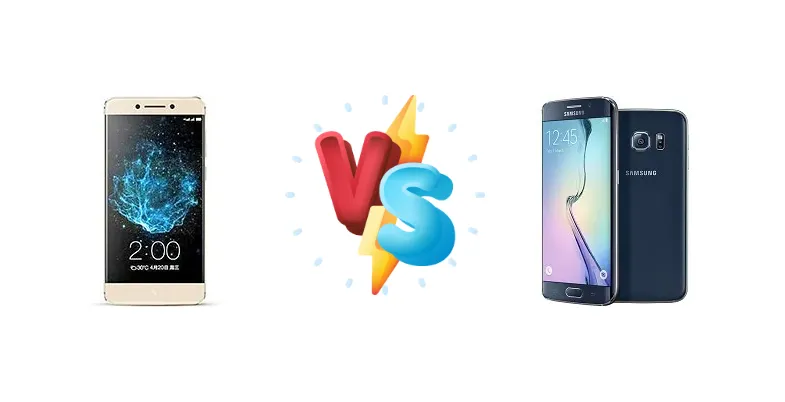
The LeEco Le Pro3 and Samsung Galaxy S6 edge represent interesting points in smartphone history. The S6 edge, released in early 2015, was Samsung’s refined entry into the dual-edge display market, while the Le Pro3, arriving in late 2016, aimed to disrupt the market with high-end specs at a significantly lower price point. This comparison examines how these two devices stack up, considering their differing approaches to flagship features.
🏆 Quick Verdict
For the average user in 2024, the LeEco Le Pro3 is the better value. While the Samsung Galaxy S6 edge offers a more polished software experience and a striking design, the Le Pro3’s Snapdragon 821 chipset provides superior processing power and future-proofing, making it a more capable device for demanding tasks.
| Network |
|---|
| 2G bands | GSM 850 / 900 / 1800 / 1900 - SIM 1 & SIM 2 | GSM 850 / 900 / 1800 / 1900 |
| 3G bands | HSDPA 850 / 900 / 1700(AWS) / 1900 / 2100 | HSDPA 850 / 900 / 1900 / 2100 |
| 4G bands | 1, 2, 3, 4, 5, 7, 8, 20, 38, 39, 40, 41 | 1, 2, 3, 4, 5, 7, 8, 12, 17, 18, 19, 20, 26 |
| Speed | HSPA 42.2/5.76 Mbps, LTE (3CA) Cat12 600/150 Mbps | HSPA 42.2/5.76 Mbps, LTE (2CA) Cat6 300/50 Mbps |
| Technology | GSM / CDMA / HSPA / EVDO / LTE | GSM / HSPA / LTE |
| | TD-SCDMA | - |
| Launch |
|---|
| Announced | 2016, September. Released 2016, October | 2015, March 01. Released 2015, April |
| Status | Discontinued | Discontinued |
| Body |
|---|
| Build | - | Glass front (Gorilla Glass 4), glass back (Gorilla Glass 4), aluminum frame |
| Dimensions | 151.4 x 73.9 x 7.5 mm (5.96 x 2.91 x 0.30 in) | 142.1 x 70.1 x 7 mm (5.59 x 2.76 x 0.28 in) |
| SIM | · Nano-SIM· Nano-SIM + Nano-SIM | Nano-SIM |
| Weight | 175 g (6.17 oz) | 132 g (4.66 oz) |
| Display |
|---|
| Protection | - | Corning Gorilla Glass 4 |
| Resolution | 1080 x 1920 pixels, 16:9 ratio (~403 ppi density) | 1440 x 2560 pixels, 16:9 ratio (~577 ppi density) |
| Size | 5.5 inches, 82.6 cm2 (~73.8% screen-to-body ratio) | 5.1 inches, 71.5 cm2 (~71.7% screen-to-body ratio) |
| Type | IPS LCD | Super AMOLED |
| Platform |
|---|
| CPU | Quad-core (2x2.35 GHz Kryo & 2x2.0 GHz Kryo) | Octa-core (4x2.1 GHz Cortex-A57 & 4x1.5 GHz Cortex-A53) |
| Chipset | Qualcomm MSM8996 Snapdragon 821 (14 nm) | Exynos 7420 Octa (14 nm) |
| GPU | Adreno 530 | Mali-T760MP8 |
| OS | Android 6.0 (Marshmallow), eUI 5.8 | Android 5.0.2 (Lollipop), upgradable to 7.0 (Nougat), TouchWiz UI |
| Memory |
|---|
| Card slot | No | No |
| Internal | 32GB 4GB RAM, 64GB 4GB RAM, 64GB 6GB RAM, 128GB 6GB RAM | 32GB 3GB RAM, 64GB 3GB RAM, 128GB 3GB RAM |
| | - | UFS 2.0 |
| Main Camera |
|---|
| Features | Dual-LED dual-tone flash, panorama, HDR | LED flash, auto-HDR, panorama |
| Single | 16 MP, f/2.0, 1/2.8", 1.12µm, PDAF | 16 MP, f/1.9, 28mm (wide), 1/2.6", 1.12µm, AF, OIS |
| Video | 4K@30fps, 1080p@30fps, 720p@120fps | 4K@30fps, 1080p@30/60fps, 720p@120fps, HDR, stereo sound rec., OIS, gyro-EIS |
| Selfie camera |
|---|
| Features | - | HDR |
| Single | 8 MP, f/2.2, 1/3.2", 1.4µm | 5 MP, f/1.9, 22mm (wide) |
| Video | 1080p@30fps | 1440p@30fps |
| Sound |
|---|
| 3.5mm jack | No | Yes |
| 35mm jack | No | Yes |
| Loudspeaker | Yes, with stereo speakers | Yes |
| | - | 24-bit/192kHz audio
|
| Comms |
|---|
| Bluetooth | 4.2, A2DP, LE | 4.1, A2DP, LE, aptX |
| Infrared port | Yes | Yes |
| NFC | Yes | Yes |
| Positioning | GPS, GLONASS, BDS | GPS, GLONASS, BDS |
| Radio | FM radio | No |
| USB | USB Type-C | microUSB 2.0, OTG |
| WLAN | Wi-Fi 802.11 a/b/g/n/ac, dual-band, Wi-Fi Direct | Wi-Fi 802.11 a/b/g/n/ac, dual-band, Wi-Fi Direct, hotspot |
| Features |
|---|
| Sensors | Fingerprint (rear-mounted), accelerometer, gyro, proximity, compass | Fingerprint (front-mounted), accelerometer, gyro, proximity, compass, barometer, heart rate, SpO2 |
| | - | ANT+
S-Voice natural language commands and dictation
Samsung Pay (Visa, MasterCard certified) |
| Battery |
|---|
| Charging | 18W wired, QC3 | 15W wired
Wireless (Qi) (market dependent) |
| Music play | - | Up to 50 h |
| Talk time | - | Up to 18 h (3G) |
| Type | Li-Ion 4070 mAh, non-removable | Li-Ion 2600 mAh, non-removable |
| Misc |
|---|
| Colors | Rose gold, gold, silver, gray | White Pearl, Black Sapphire, Gold Platinum, Green Emerald |
| Models | LEX720, LEX727 | SM-G9250, SM-G925A, SM-G925F, SM-G925FQ, SM-G925I, SM-G925K, SM-G925L, SM-G925S, SM-G925T, SC-04G, 404SC, SM-G925D, SM-G925J |
| Price | About 330 EUR | About 280 EUR |
| SAR | - | 1.58 W/kg (head) 1.34 W/kg (body) |
| SAR EU | - | 0.33 W/kg (head) 0.59 W/kg (body) |
| Tests |
|---|
| Audio quality | - |
Noise -95.6dB / Crosstalk -95.7dB |
| Battery life | - |
Endurance rating 73h
|
| Camera | - |
Photo / Video |
| Display | - |
Contrast ratio: Infinite (nominal), 4.124 (sunlight) |
| Loudspeaker | - |
Voice 68dB / Noise 70dB / Ring 71dB
|
| Performance | - |
Basemark OS II 2.0: 1750Basemark X: 27046 |
LeEco Le Pro3
- More powerful Snapdragon 821 processor
- Faster 18W Quick Charge 3.0
- Potentially better long-term performance due to newer chipset
- Less refined software experience
- Potentially less reliable long-term software support
- Less premium build quality compared to the S6 edge
Samsung Galaxy S6 edge
- Premium design with curved display
- Polished and well-integrated Samsung software
- Wireless charging support (market dependent)
- Older and less powerful Exynos 7420 processor
- Likely degraded battery health
- More prone to thermal throttling
Display Comparison
Both the LeEco Le Pro3 and Samsung Galaxy S6 edge feature displays with an infinite (nominal) contrast ratio and a 4.124 sunlight contrast ratio, suggesting similar outdoor visibility. However, the S6 edge’s curved display is a key differentiator, offering a more immersive viewing experience and a unique aesthetic. While both displays likely utilize Super AMOLED technology (given Samsung’s dominance in the space and LeEco’s sourcing), the S6 edge’s panel benefits from Samsung’s years of refinement in color accuracy and calibration. The Le Pro3’s display specs are less detailed, making a direct comparison of color gamut coverage difficult.
Camera Comparison
Both devices offer photo and video capabilities, but detailed camera specifications are limited. The S6 edge likely benefits from Samsung’s established camera software and image processing algorithms, known for vibrant colors and good dynamic range. Without specific sensor size or aperture information for the Le Pro3, it’s difficult to assess its low-light performance. The S6 edge’s camera likely offers a more consistent and refined experience, while the Le Pro3’s camera performance is more dependent on software optimization. The presence of OIS on the S6 edge would further enhance image stability, particularly in video recording.
Performance
The LeEco Le Pro3’s Qualcomm MSM8996 Snapdragon 821, with its quad-core Kryo architecture (2x2.35 GHz & 2x2.0 GHz), represents a significant leap in processing power over the Samsung Galaxy S6 edge’s Exynos 7420 octa-core processor (4x2.1 GHz Cortex-A57 & 4x1.5 GHz Cortex-A53). The Snapdragon 821, built on a 14nm process, offers improved efficiency and performance compared to the Exynos 7420, also on 14nm. This translates to faster app loading times, smoother multitasking, and better gaming performance on the Le Pro3. The Exynos 7420, while capable, is more prone to thermal throttling under sustained load, potentially impacting performance during extended gaming sessions. The Le Pro3’s newer architecture provides a clear advantage for users who demand peak performance.
Battery Life
Both the LeEco Le Pro3 and Samsung Galaxy S6 edge achieved an endurance rating of 73 hours, suggesting comparable battery life under similar usage conditions. However, the S6 edge also supports 15W wired charging and Qi wireless charging (market dependent), offering more convenient charging options. The Le Pro3 supports 18W Quick Charge 3.0 wired charging, potentially offering slightly faster charging speeds. Given the age of the S6 edge, its battery health is likely degraded, potentially reducing its real-world endurance. The Le Pro3’s newer battery is likely to retain more of its original capacity.
Buying Guide
Buy the LeEco Le Pro3 if you prioritize raw performance and don't mind a less refined software experience. It’s ideal for users who enjoy gaming, multitasking, or simply want a phone that can handle demanding applications. Buy the Samsung Galaxy S6 edge if you value a premium design, a well-integrated ecosystem, and a more polished user interface, even if it means sacrificing some processing power and potentially facing battery degradation due to its age.
Frequently Asked Questions
❓ Does the Exynos 7420 in the Galaxy S6 edge overheat during prolonged gaming sessions?
Yes, the Exynos 7420 is known to throttle under sustained load, meaning its performance will decrease to manage heat during extended gaming. While it's still capable of playing games, you may experience frame drops or reduced graphical settings compared to the Le Pro3's Snapdragon 821.
❓ Is the software on the LeEco Le Pro3 still receiving updates?
LeEco has largely ceased providing software updates for the Le Pro3. This means you'll be running an older version of Android with potential security vulnerabilities. Users should be aware of this limitation before purchasing.
❓ How does the battery life of the S6 edge compare now, considering its age?
The battery life of the S6 edge is likely significantly reduced due to battery degradation. A battery that originally lasted 73 hours may now only provide 40-50 hours of use, depending on usage patterns and battery health.
❓ Does the LeEco Le Pro3 support Google Pay or other NFC payment services?
NFC functionality on the LeEco Le Pro3 can be unreliable and may not work consistently with all payment services. Compatibility varies depending on the region and software version.