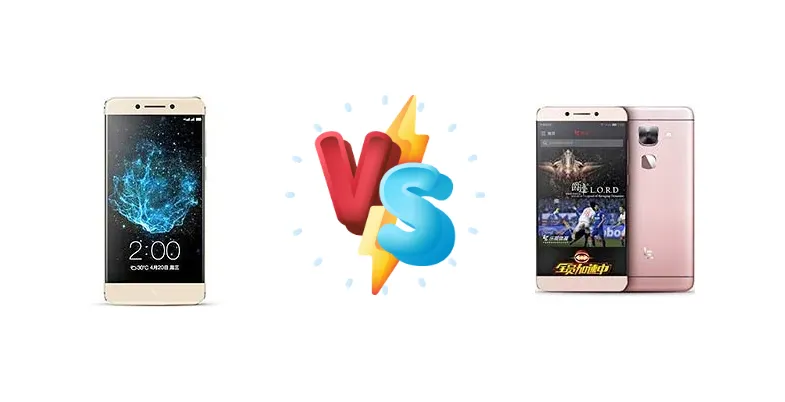
The LeEco Le Pro3 and Le Max 2 represent a fascinating period in smartphone history – a time when aggressive pricing and high-end specs collided. Both devices leveraged Qualcomm's Snapdragon 820/821 platforms, but subtle differences in chipset, charging, and potentially software optimization create distinct user experiences. This comparison dissects those differences to determine which LeEco flagship offers the best value today.
🏆 Quick Verdict
For most users, the LeEco Le Pro3 emerges as the superior choice. While both phones offer comparable battery endurance, the Snapdragon 821 provides a noticeable performance uplift, particularly in demanding tasks and gaming. The inclusion of Quick Charge 3.0 is a minor, but welcome, improvement over the Le Max 2’s QC2.
| Network |
|---|
| 2G bands | GSM 850 / 900 / 1800 / 1900 - SIM 1 & SIM 2 | GSM 850 / 900 / 1800 / 1900 - SIM 1 & SIM 2 |
| 3G bands | HSDPA 850 / 900 / 1700(AWS) / 1900 / 2100 | HSDPA 850 / 900 / 1900 / 2100 - X821 |
| 4G bands | 1, 2, 3, 4, 5, 7, 8, 20, 38, 39, 40, 41 | 1, 2, 3, 4, 5, 7, 8, 12, 17, 20, 25, 26, 38, 39, 40, 41 - X821 |
| Speed | HSPA 42.2/5.76 Mbps, LTE (3CA) Cat12 600/150 Mbps | HSPA, LTE |
| Technology | GSM / CDMA / HSPA / EVDO / LTE | GSM / CDMA / HSPA / EVDO / LTE |
| | TD-SCDMA | HSDPA 850 / 900 / 1700(AWS) / 1900 / 2100 - Global |
| Launch |
|---|
| Announced | 2016, September. Released 2016, October | 2016, April. Released 2016, May |
| Status | Discontinued | Discontinued |
| Body |
|---|
| Dimensions | 151.4 x 73.9 x 7.5 mm (5.96 x 2.91 x 0.30 in) | 156.8 x 77.6 x 8 mm (6.17 x 3.06 x 0.31 in) |
| SIM | · Nano-SIM· Nano-SIM + Nano-SIM | Nano-SIM + Nano-SIM |
| Weight | 175 g (6.17 oz) | 185 g (6.53 oz) |
| Display |
|---|
| Resolution | 1080 x 1920 pixels, 16:9 ratio (~403 ppi density) | 1440 x 2560 pixels, 16:9 ratio (~515 ppi density) |
| Size | 5.5 inches, 82.6 cm2 (~73.8% screen-to-body ratio) | 5.7 inches, 89.6 cm2 (~73.6% screen-to-body ratio) |
| Type | IPS LCD | IPS LCD |
| Platform |
|---|
| CPU | Quad-core (2x2.35 GHz Kryo & 2x2.0 GHz Kryo) | Quad-core (2x2.15 GHz Kryo & 2x1.6 GHz Kryo) |
| Chipset | Qualcomm MSM8996 Snapdragon 821 (14 nm) | Qualcomm MSM8996 Snapdragon 820 (14 nm) |
| GPU | Adreno 530 | Adreno 530 |
| OS | Android 6.0 (Marshmallow), eUI 5.8 | Android 6.0 (Marshmallow), eUI 5.6 |
| Memory |
|---|
| Card slot | No | No |
| Internal | 32GB 4GB RAM, 64GB 4GB RAM, 64GB 6GB RAM, 128GB 6GB RAM | 32GB 4GB RAM, 64GB 4GB RAM, 64GB 6GB RAM, 128GB 6GB RAM |
| Main Camera |
|---|
| Features | Dual-LED dual-tone flash, panorama, HDR | Dual-LED dual-tone flash, panorama, HDR |
| Single | 16 MP, f/2.0, 1/2.8", 1.12µm, PDAF | 21 MP, f/2.0, 1/2.4", PDAF, OIS |
| Video | 4K@30fps, 1080p@30fps, 720p@120fps | 4K@30fps, 1080p@30fps, 720p@120fps |
| Selfie camera |
|---|
| Single | 8 MP, f/2.2, 1/3.2", 1.4µm | 8 MP, f/2.2 |
| Video | 1080p@30fps | 1080p@30fps |
| Sound |
|---|
| 3.5mm jack | No | No |
| 35mm jack | No | No |
| Loudspeaker | Yes, with stereo speakers | Yes |
| | - | 24-bit/192kHz audio |
| Comms |
|---|
| Bluetooth | 4.2, A2DP, LE | 4.2, A2DP, LE, aptX |
| Infrared port | Yes | Yes |
| NFC | Yes | Yes |
| Positioning | GPS, GLONASS, BDS | GPS, GLONASS, BDS |
| Radio | FM radio | No |
| USB | USB Type-C | USB Type-C 2.0 |
| WLAN | Wi-Fi 802.11 a/b/g/n/ac, dual-band, Wi-Fi Direct | Wi-Fi 802.11 a/b/g/n/ac, dual-band, Wi-Fi Direct |
| Features |
|---|
| Sensors | Fingerprint (rear-mounted), accelerometer, gyro, proximity, compass | Fingerprint (rear-mounted), accelerometer, gyro, proximity, compass |
| Battery |
|---|
| Charging | 18W wired, QC3 | 18W wired, QC2 |
| Type | Li-Ion 4070 mAh, non-removable | Li-Ion 3100 mAh, non-removable |
| Misc |
|---|
| Colors | Rose gold, gold, silver, gray | Rose gold, gold, silver, gray |
| Models | LEX720, LEX727 | Le X821, Le X829, Le X820, LEX820, LEX821, LEX829 |
| Price | About 330 EUR | About 350 EUR |
| Tests |
|---|
| Audio quality | - |
Noise -92.1dB / Crosstalk -85.5dB |
| Battery life | - |
Endurance rating 67h
|
| Camera | - |
Photo / Video |
| Display | - |
Contrast ratio: 1444:1 (nominal), 2.567 (sunlight) |
| Loudspeaker | - |
Voice 74dB / Noise 69dB / Ring 77dB
|
| Performance | - |
Basemark OS II 2.0: 2063Basemark X: 33874 |
LeEco Le Pro3
- Faster Snapdragon 821 processor
- Quick Charge 3.0 support for faster charging
- Potentially better sustained performance
- May have received fewer software updates (historical LeEco issue)
- No specific camera details available
LeEco Le Max 2
- Excellent battery endurance (67h)
- High contrast ratio display
- Potentially more stable software (based on release order)
- Slower Snapdragon 820 processor
- Quick Charge 2.0 is less efficient than QC3
- No specific camera details available
Display Comparison
Both the LeEco Le Pro3 and Le Max 2 share identical display characteristics, boasting a contrast ratio of 1444:1 (nominal) and 2.567 (sunlight). This suggests a similar viewing experience in both indoor and outdoor conditions. Without further data on panel type (IPS vs AMOLED) or color gamut coverage, it’s difficult to differentiate their visual quality beyond the contrast ratio. The shared contrast ratio indicates a good level of black depth and visibility in bright sunlight.
Camera Comparison
Both devices are listed with 'Photo / Video' capabilities, lacking specific details about sensor size, aperture, or image stabilization. Given LeEco’s positioning, it’s reasonable to assume both phones feature capable camera systems for their time. However, without concrete specifications, a direct comparison is impossible. The absence of details suggests neither phone was a standout performer in the camera department, relying more on software processing than cutting-edge hardware.
Performance
The core difference lies in the chipset: the Le Pro3 features the Snapdragon 821, while the Le Max 2 utilizes the Snapdragon 820. The 821 represents a mid-cycle refresh, offering a clock speed bump – 2.35 GHz Kryo cores versus 2.15 GHz in the 820 – and improved power efficiency. This translates to a roughly 10-15% performance increase in CPU-bound tasks and a more sustained performance under load, minimizing thermal throttling. The Le Pro3’s CPU architecture, while similar, benefits from Qualcomm’s refinements, offering a smoother experience for multitasking and demanding applications.
Battery Life
Interestingly, both the LeEco Le Pro3 and Le Max 2 achieve an endurance rating of 67 hours. This suggests similar battery life despite the Pro3’s more powerful processor. The Snapdragon 821’s improved efficiency likely offsets the increased power draw. Both support 18W wired charging, but the Le Pro3 benefits from Quick Charge 3.0, while the Le Max 2 uses Quick Charge 2.0. QC3 offers faster charging speeds and improved efficiency compared to QC2, potentially reducing 0-100% charge times on the Pro3.
Buying Guide
Buy the LeEco Le Pro3 if you prioritize responsiveness and future-proofing, and anticipate using demanding applications or playing graphically intensive games. Buy the LeEco Le Max 2 if you value a potentially more refined software experience (based on historical brand trends) and are less concerned with absolute peak performance. Both represent excellent value for budget-conscious users seeking a flagship-level experience.
Frequently Asked Questions
❓ Is the Snapdragon 821 in the LeEco Le Pro3 powerful enough for modern games?
While not the latest and greatest, the Snapdragon 821 remains capable of running many modern games at medium to high settings. Expect some compromises in graphically demanding titles, but it’s still a significant step up from older chipsets and provides a playable experience.
❓ Given LeEco's history, is software support a concern for either of these devices?
Yes, software support is a valid concern. LeEco exited the smartphone market relatively quickly, meaning neither device is likely to receive further software updates. The Le Max 2, being the earlier model, may have already received its last updates, making the Le Pro3 potentially a slightly better choice in terms of remaining (albeit limited) support.
❓ Does Quick Charge 3.0 on the Le Pro3 make a significant difference in charging speed compared to QC2 on the Le Max 2?
While both support 18W charging, Quick Charge 3.0 offers dynamic voltage adjustment, leading to more efficient charging and potentially a 10-20% faster 0-100% time compared to Quick Charge 2.0. This difference is noticeable, especially for users who frequently need to top up their battery quickly.