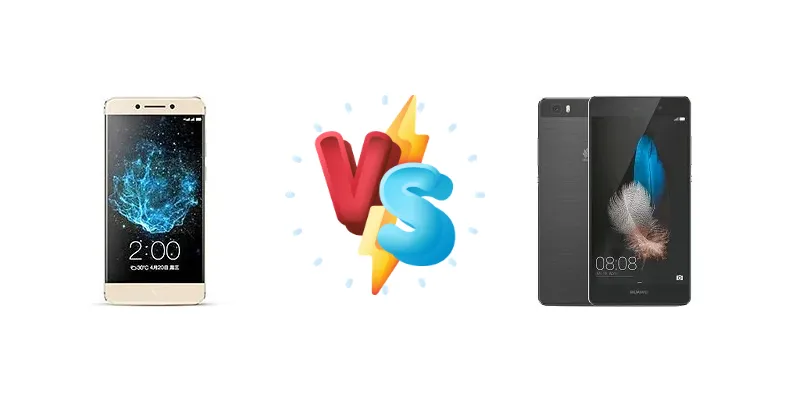
Released in different eras, the LeEco Le Pro3 and Huawei P8lite represent contrasting approaches to the mid-range smartphone market. The Le Pro3, with its flagship Snapdragon 821, aimed for performance, while the P8lite focused on affordability and a balanced user experience. This comparison dissects their key differences to determine which device holds up better today.
🏆 Quick Verdict
For the average user prioritizing responsiveness and future-proofing, the LeEco Le Pro3 is the clear winner. Its Snapdragon 821 chipset delivers significantly superior performance compared to the Huawei P8lite’s Kirin 620. While the P8lite boasts comparable battery endurance, the Le Pro3’s faster charging and processing power offer a more compelling overall package.
| Network |
|---|
| 2G bands | GSM 850 / 900 / 1800 / 1900 - SIM 1 & SIM 2 | GSM 850 / 900 / 1800 / 1900 - SIM 1 & SIM 2 |
| 3G bands | HSDPA 850 / 900 / 1700(AWS) / 1900 / 2100 | HSDPA 900 / 1900 / 2100 |
| 4G bands | 1, 2, 3, 4, 5, 7, 8, 20, 38, 39, 40, 41 | 3, 7, 8, 20 |
| Speed | HSPA 42.2/5.76 Mbps, LTE (3CA) Cat12 600/150 Mbps | HSPA 42.2/5.76 Mbps, LTE Cat4 150/50 Mbps |
| Technology | GSM / CDMA / HSPA / EVDO / LTE | GSM / HSPA / LTE |
| | TD-SCDMA | - |
| Launch |
|---|
| Announced | 2016, September. Released 2016, October | 2015, April. Released 2015, May |
| Status | Discontinued | Discontinued |
| Body |
|---|
| Build | - | Glass front (Gorilla Glass 3), plastic back, plastic frame |
| Dimensions | 151.4 x 73.9 x 7.5 mm (5.96 x 2.91 x 0.30 in) | 143 x 70.6 x 7.7 mm (5.63 x 2.78 x 0.30 in) |
| SIM | · Nano-SIM· Nano-SIM + Nano-SIM | Nano-SIM + Micro-SIM |
| Weight | 175 g (6.17 oz) | 131 g (4.62 oz) |
| Display |
|---|
| Protection | - | Corning Gorilla Glass 3 |
| Resolution | 1080 x 1920 pixels, 16:9 ratio (~403 ppi density) | 720 x 1280 pixels, 16:9 ratio (~294 ppi density) |
| Size | 5.5 inches, 82.6 cm2 (~73.8% screen-to-body ratio) | 5.0 inches, 68.9 cm2 (~68.3% screen-to-body ratio) |
| Type | IPS LCD | IPS LCD |
| Platform |
|---|
| CPU | Quad-core (2x2.35 GHz Kryo & 2x2.0 GHz Kryo) | Octa-core 1.2 GHz Cortex-A53 |
| Chipset | Qualcomm MSM8996 Snapdragon 821 (14 nm) | Kirin 620 (28 nm) |
| GPU | Adreno 530 | Mali-450MP4 |
| OS | Android 6.0 (Marshmallow), eUI 5.8 | Android 5.0.2 (Lollipop), upgradable to 6.0 (Marshmallow), EMUI 3.1 |
| Memory |
|---|
| Card slot | No | microSDXC (uses shared SIM slot) |
| Internal | 32GB 4GB RAM, 64GB 4GB RAM, 64GB 6GB RAM, 128GB 6GB RAM | 16GB 2GB RAM |
| Main Camera |
|---|
| Features | Dual-LED dual-tone flash, panorama, HDR | Dual-LED flash, panorama, HDR |
| Single | 16 MP, f/2.0, 1/2.8", 1.12µm, PDAF | 13 MP, f/2.0, 27mm (wide), AF |
| Video | 4K@30fps, 1080p@30fps, 720p@120fps | 1080p@30fps |
| Selfie camera |
|---|
| Single | 8 MP, f/2.2, 1/3.2", 1.4µm | 5 MP |
| Video | 1080p@30fps | 720p |
| Sound |
|---|
| 3.5mm jack | No | Yes |
| 35mm jack | No | Yes |
| Loudspeaker | Yes, with stereo speakers | Yes |
| Comms |
|---|
| Bluetooth | 4.2, A2DP, LE | 4.0, A2DP, EDR, LE |
| Infrared port | Yes | Yes |
| NFC | Yes | Yes |
| Positioning | GPS, GLONASS, BDS | GPS, GLONASS |
| Radio | FM radio | FM radio |
| USB | USB Type-C | microUSB 2.0 |
| WLAN | Wi-Fi 802.11 a/b/g/n/ac, dual-band, Wi-Fi Direct | Wi-Fi 802.11 b/g/n, Wi-Fi Direct |
| Features |
|---|
| Sensors | Fingerprint (rear-mounted), accelerometer, gyro, proximity, compass | Accelerometer, proximity, compass |
| Battery |
|---|
| Charging | 18W wired, QC3 | 10W wired
Reverse wired |
| Stand-by | - | Up to 380 h (3G) |
| Talk time | - | Up to 11 h (3G) |
| Type | Li-Ion 4070 mAh, non-removable | Li-Ion 2200 mAh, non-removable |
| Misc |
|---|
| Colors | Rose gold, gold, silver, gray | Black, White, Gold |
| Models | LEX720, LEX727 | ALE-L21, ALE-L02, hi6210sft, ALE-L23, ALE-UL00, ALE-21, ALE-CL00 |
| Price | About 330 EUR | About 170 EUR |
| SAR EU | - | 0.39 W/kg (head) 1.02 W/kg (body) |
| Tests |
|---|
| Audio quality | - |
Noise-89.0dB / Crosstalk -74.2dB |
| Battery life | - |
Endurance rating 53h
|
| Camera | - |
Photo / Video |
| Display | - |
Contrast ratio: 802 (nominal), 2.078 (sunlight) |
| Loudspeaker | - |
Voice 66dB / Noise 66dB / Ring 75dB
|
| Performance | - |
Basemark OS II 2.0: 691Basemark X: 3648 |
LeEco Le Pro3
- Significantly faster processor (Snapdragon 821)
- Faster charging (18W with QC3)
- Potentially better camera performance (due to ISP)
- Battery capacity unknown
- Long-term software support questionable (LeEco's history)
Huawei P8lite
- Good battery endurance (53h rating)
- Reverse wired charging
- Affordable price point
- Slow processor (Kirin 620)
- Slower charging (10W)
- Limited performance for demanding tasks
Display Comparison
Both devices share a similar contrast ratio of 802 (nominal) and 2.078 (sunlight), suggesting comparable outdoor visibility. However, the Le Pro3’s display specifications are not provided, making a detailed comparison impossible. The P8lite’s display, while adequate, was not known for exceptional color accuracy or brightness. The lack of information on the Le Pro3’s panel type (IPS, AMOLED) prevents a definitive judgment, but its higher-tier positioning suggests a potentially superior display experience.
Camera Comparison
Both phones feature photo and video capabilities, but detailed camera specifications are lacking for both. Given the P8lite’s market positioning, its camera likely focused on providing acceptable results in good lighting conditions. The Le Pro3, positioned as a more premium device, likely had a more capable camera system, though specifics are unavailable. Without sensor size, aperture, or image processing details, a meaningful comparison is impossible. We can assume the Le Pro3 would have benefitted from the Snapdragon 821’s superior image signal processor (ISP).
Performance
The performance gap between these two devices is substantial. The LeEco Le Pro3’s Qualcomm MSM8996 Snapdragon 821, built on a 14nm process, features a quad-core CPU with Kryo cores clocked up to 2.35 GHz. This is a significant leap over the Huawei P8lite’s Kirin 620 (28nm), an octa-core processor clocked at 1.2 GHz using Cortex-A53 cores. The Snapdragon 821’s architecture and higher clock speeds translate to dramatically faster app loading times, smoother multitasking, and a far more capable gaming experience. The 28nm process of the Kirin 620 is less efficient, potentially leading to more heat generation and throttling under sustained load.
Battery Life
The Huawei P8lite boasts an endurance rating of 53 hours, indicating good battery life for its time. The LeEco Le Pro3’s battery capacity is unknown, but it supports 18W wired charging with Quick Charge 3.0, significantly faster than the P8lite’s 10W charging. While the P8lite’s endurance is respectable, the Le Pro3’s faster charging allows for quicker top-ups, mitigating any potential capacity disadvantage. The P8lite also offers reverse wired charging, a feature absent on the Le Pro3.
Buying Guide
Buy the LeEco Le Pro3 if you need a phone capable of handling demanding apps, gaming, and multitasking without slowdowns. It’s ideal for users who value performance above all else. Buy the Huawei P8lite if you prioritize a simple, reliable experience with good battery life and are on a very tight budget. It’s a solid choice for basic communication and light usage.
Frequently Asked Questions
❓ Is the LeEco Le Pro3 still a viable option in 2024, considering LeEco's current status?
While the Le Pro3 offers excellent performance for its age, LeEco's lack of ongoing software support is a significant concern. Users should be comfortable with potentially using custom ROMs to maintain security updates and access newer Android features. The hardware is capable, but the software situation is a risk.
❓ Does the Kirin 620 in the Huawei P8lite struggle with modern app requirements?
Yes, the Kirin 620 is a relatively weak processor by today's standards. Expect noticeable slowdowns and lag when running demanding apps or multitasking. It's best suited for basic tasks like calling, texting, and light web browsing. Modern social media apps may also exhibit performance issues.
❓ How does the 28nm process of the Kirin 620 affect battery life and heat?
The 28nm process is less efficient than the 14nm process used in the Snapdragon 821. This means the Kirin 620 consumes more power for the same level of performance, potentially reducing battery life. It also generates more heat, which can lead to thermal throttling and reduced performance during prolonged use.