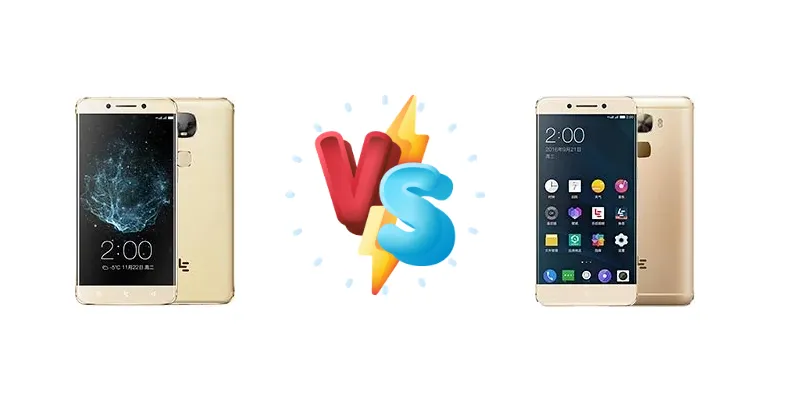
The LeEco Le Pro 3 series represented an ambitious attempt to disrupt the flagship market with aggressive pricing. Today, both the AI Edition and the Elite model offer compelling value on the used market. However, their core differences – a Mediatek deca-core versus a Qualcomm quad-core – dictate vastly different user experiences. This comparison dissects those differences to determine which LeEco phone best suits your needs.
🏆 Quick Verdict
For the average user prioritizing consistent performance and efficient power management, the LeEco Le Pro3 Elite with its Snapdragon 820 is the superior choice. While the Le Pro 3 AI Edition boasts a higher core count, the Snapdragon 820’s architectural advantages and 14nm process deliver a smoother, more reliable experience.
| Network |
|---|
| 2G bands | GSM 850 / 900 / 1800 / 1900 - SIM 1 & SIM 2 | GSM 850 / 900 / 1800 / 1900 - SIM 1 & SIM 2 |
| 3G bands | HSDPA 850 / 900 / 1900 / 2100 | HSDPA 850 / 900 / 1700(AWS) / 1900 / 2100 |
| 4G bands | 1, 3, 7, 38, 39, 40, 41 | 1, 2, 3, 4, 5, 7, 8, 20, 38, 39, 40, 41 |
| Speed | HSPA, LTE | HSPA 42.2/5.76 Mbps, LTE (3CA) Cat12 600/150 Mbps |
| Technology | GSM / HSPA / LTE | GSM / CDMA / HSPA / EVDO / LTE |
| | - | TD-SCDMA |
| Launch |
|---|
| Announced | 2017, April. Released 2017, April | 2017, March. Released 2017, March |
| Status | Discontinued | Discontinued |
| Body |
|---|
| Dimensions | 152.4 x 75.1 x 7.5 mm (6.00 x 2.96 x 0.30 in) | 151.4 x 73.9 x 7.5 mm (5.96 x 2.91 x 0.30 in) |
| SIM | Nano-SIM + Nano-SIM | Nano-SIM + Nano-SIM |
| Weight | 168 g (5.93 oz) | 175 g (6.17 oz) |
| Display |
|---|
| Resolution | 1080 x 1920 pixels, 16:9 ratio (~401 ppi density) | 1080 x 1920 pixels, 16:9 ratio (~401 ppi density) |
| Size | 5.5 inches, 83.4 cm2 (~72.9% screen-to-body ratio) | 5.5 inches, 83.4 cm2 (~74.5% screen-to-body ratio) |
| Type | IPS LCD | IPS LCD |
| Platform |
|---|
| CPU | Deca-core x2.3 GHz - StandardDeca-core x2.6 GHz - Eco Edition | Quad-core (2x2.15 GHz Kryo & 2x1.6 GHz Kryo) |
| Chipset | Mediatek MT6797D Helio X23 (20 nm) - StandardMediatek MT6797X Helio X27 (20 nm) - Eco Edition | Qualcomm MSM8996 Snapdragon 820 (14 nm) |
| GPU | Mali-T880 MP4 | Adreno 530 |
| OS | Android 6.0 (Marshmallow), eUI 5.9 | Android 6.0 (Marshmallow), eUI 5.8 |
| Memory |
|---|
| Card slot | No | No |
| Internal | 32GB 4GB RAM (Standard), 64GB 4GB RAM (Eco) | 32GB 4GB RAM, 64GB 6GB RAM, 128GB 6GB RAM |
| Main Camera |
|---|
| Features | Laser AF, Dual-LED dual-tone flash, panorama, HDR | Dual-LED dual-tone flash, panorama, HDR |
| Single | 13 MP, f/2.0, PDAF | 16 MP, f/2.0, 1/2.8", 1.12µm, PDAF |
| Video | 4K@30fps, 1080p@30fps, 720p@120fps | 4K@30fps, 1080p@30fps, 720p@120fps |
| Selfie camera |
|---|
| Single | 8 MP, f/2.2, 1/3.2", 1.4µm | 8 MP, f/2.2, 1/3.2", 1.4µm |
| Video | 1080p@30fps | - |
| Sound |
|---|
| 3.5mm jack | No | No |
| 35mm jack | No | No |
| Loudspeaker | Yes | Yes, with stereo speakers |
| Comms |
|---|
| Bluetooth | 4.2, A2DP, LE | 4.2, A2DP, LE |
| Infrared port | Yes | Yes |
| NFC | Yes | No |
| Positioning | GPS, GLONASS, BDS | GPS, GLONASS, BDS |
| Radio | No | FM radio |
| USB | USB Type-C | USB Type-C |
| WLAN | Wi-Fi 802.11 a/b/g/n/ac, dual-band, Wi-Fi Direct | Wi-Fi 802.11 a/b/g/n/ac, dual-band, Wi-Fi Direct |
| Features |
|---|
| Sensors | Fingerprint (rear-mounted), accelerometer, gyro, proximity, compass | Fingerprint (rear-mounted), accelerometer, gyro, proximity, compass |
| Battery |
|---|
| Charging | 18W wired | 18W wired, QC3 |
| Type | Li-Ion 4000 mAh, non-removable | Li-Ion 4070 mAh, non-removable |
| Misc |
|---|
| Colors | Rose gold, gold, black | Rose gold, gold, silver, gray |
| Models | LEX653, LEX651, LEX650, LEX657 | LEX722 |
| Price | About 280 EUR | About 280 EUR |
LeEco Le Pro 3 AI Edition
- Potentially higher multi-core performance for specific tasks.
- Aggressive pricing on the used market.
- Deca-core novelty for tech enthusiasts.
- Higher power consumption and heat generation.
- Potential for thermal throttling.
- Less efficient processor architecture.
LeEco Le Pro3 Elite
- Superior power efficiency and battery life.
- Qualcomm Quick Charge 3.0 support for faster charging.
- Smoother and more consistent performance.
- More refined image processing.
- Fewer cores than the AI Edition.
- May be slightly more expensive on the used market.
- Older chipset technology.
Display Comparison
Both devices share a similar 5.5-inch display, but the underlying technology isn't specified in the provided data. However, the focus here is on the chipset, which impacts the display's responsiveness. The Snapdragon 820's Adreno 510 GPU will likely provide a smoother experience with graphically intensive content. The Elite's Quick Charge support indirectly benefits display usage by minimizing downtime.
Camera Comparison
The provided data doesn't detail camera specifications beyond the chipsets. Given LeEco's market positioning, both phones likely featured similar camera hardware. However, the Snapdragon 820’s image signal processor (ISP) is generally regarded as superior to Mediatek’s offerings at this time, potentially leading to better image quality, faster processing, and improved low-light performance on the Elite model. The ISP's efficiency also contributes to lower power consumption during camera use.
Performance
The core difference lies in the chipsets. The Le Pro 3 AI Edition utilizes the Mediatek MT6797D Helio X23 (or X27 in the Eco Edition), a deca-core processor built on a 20nm process. This means more cores, clocked up to 2.3 GHz (2.6 GHz for Eco), but also higher power consumption and heat generation. The Le Pro3 Elite, conversely, features the Qualcomm MSM8996 Snapdragon 820, a quad-core processor fabricated on a more efficient 14nm process. While fewer cores, the Snapdragon 820’s Kryo cores offer superior single-core performance and better overall efficiency. This translates to snappier app launches and smoother multitasking. The 20nm process of the Helio X23 will likely result in more noticeable thermal throttling under sustained load, impacting long gaming sessions or video encoding.
Battery Life
Both devices support 18W wired charging. However, the Le Pro3 Elite benefits from Qualcomm Quick Charge 3.0 compatibility, allowing for faster charging speeds with a compatible charger. While both likely have similar battery capacities (not specified), the Snapdragon 820’s superior power efficiency will result in longer battery life during typical usage. The Helio X23’s 20nm process will drain the battery faster, especially under heavy load.
Buying Guide
Buy the LeEco Le Pro 3 AI Edition if you are a tinkerer who enjoys optimizing software and doesn't mind potential thermal throttling during sustained heavy loads. Its deca-core processor *might* offer a slight edge in heavily multi-threaded tasks, but requires careful management. Buy the LeEco Le Pro3 Elite if you prioritize a stable, responsive user experience, efficient battery life, and compatibility with Qualcomm’s Quick Charge 3.0 technology. It’s the more refined and practical option for daily use.
Frequently Asked Questions
❓ Will the Le Pro 3 AI Edition overheat during extended gaming sessions?
Due to the Helio X23’s 20nm process and high core count, the Le Pro 3 AI Edition is more prone to thermal throttling during prolonged gaming or other demanding tasks. Expect performance to decrease as the phone heats up, potentially leading to dropped frames and a less enjoyable experience.
❓ Does the LeEco Le Pro3 Elite support VoLTE on all carriers?
VoLTE support on the LeEco Le Pro3 Elite is carrier-dependent. While the Snapdragon 820 supports VoLTE, compatibility varies based on your specific carrier and region. It's crucial to check with your carrier to confirm VoLTE support before purchasing.
❓ Is the difference in CPU core count between the two phones noticeable in everyday use?
Not significantly. While the Le Pro 3 AI Edition has ten cores compared to the Elite’s four, the Snapdragon 820’s more efficient architecture and higher single-core performance result in a smoother and more responsive experience for typical tasks like browsing, social media, and app usage. The extra cores on the Helio X23 are most beneficial in heavily multi-threaded applications, which are less common.