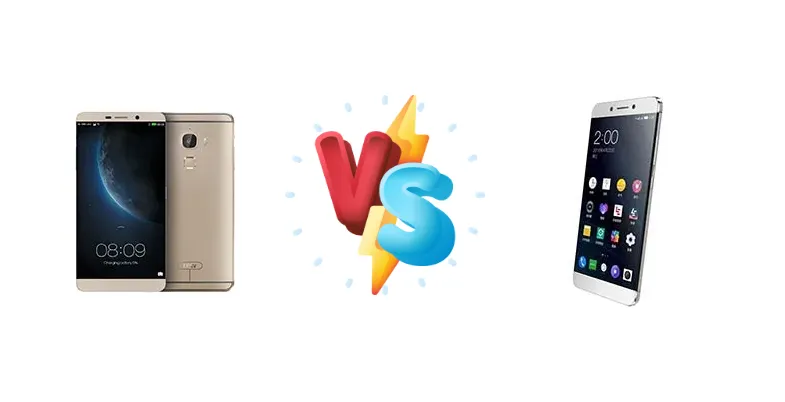
The LeEco Le Max and LeEco Le 2 represent a fascinating period in smartphone history – ambitious hardware at disruptive prices. While both aimed to undercut the established players, they took different approaches. The Le Max focused on flagship-level processing power with the Snapdragon 810, while the Le 2 opted for MediaTek’s deca-core Helio X20, aiming for a balance of performance and efficiency. This comparison dissects their strengths and weaknesses to determine which LeEco device holds up better today.
🏆 Quick Verdict
For the average user seeking a functional, affordable smartphone, the LeEco Le 2 is the better choice. While the Le Max boasts a more powerful chipset on paper, the Le 2’s Helio X20 offers a more consistent experience, coupled with Quick Charge 2.0 support for faster top-ups, making it more practical for daily use.
| Network |
|---|
| 2G bands | GSM 850 / 900 / 1800 / 1900 - SIM 1 & SIM 2 | GSM 850 / 900 / 1800 / 1900 - SIM 1 & SIM 2 |
| 3G bands | HSDPA 850 / 900 / 1900 / 2100 | HSDPA 850 / 1700(AWS) / 1900 / 2100 |
| 4G bands | 1, 3, 7, 38, 40 | 1, 2, 3, 4, 5, 7, 8, 20, 38, 40, 41 |
| Speed | HSPA, LTE | Yes, 384 kbps |
| Technology | GSM / HSPA / LTE | GSM / HSPA / LTE |
| Launch |
|---|
| Announced | 2016, January. Released 2016, January | 2016, April. Released 2016, April |
| Status | Discontinued | Discontinued |
| Body |
|---|
| Dimensions | 167.1 x 83.5 x 9 mm (6.58 x 3.29 x 0.35 in) | 151.1 x 74.2 x 7.5 mm (5.95 x 2.92 x 0.30 in) |
| SIM | Nano-SIM + Micro-SIM | Nano-SIM + Nano-SIM |
| Weight | 204 g (7.20 oz) | 153 g (5.40 oz) |
| Display |
|---|
| Protection | Corning Gorilla Glass 3 | - |
| Resolution | 1440 x 2560 pixels, 16:9 ratio (~464 ppi density) | 1080 x 1920 pixels, 16:9 ratio (~401 ppi density) |
| Size | 6.33 inches, 110.5 cm2 (~79.2% screen-to-body ratio) | 5.5 inches, 83.4 cm2 (~74.4% screen-to-body ratio) |
| Type | IPS LCD | IPS LCD |
| Platform |
|---|
| CPU | Octa-core (4x1.5 GHz Cortex-A53 & 4x2.0 GHz Cortex-A57) | Deca-core (2x2.3 GHz Cortex-A72, 4x2 GHz Cortex-A53, 4x1.4 GHz Cortex-A53)Octa-core (4x1.4 GHz Cortex-A53 & 4x1.8 GHz Cortex-A72) |
| Chipset | Qualcomm MSM8994 Snapdragon 810 (20 nm) | Mediatek MT6797 Helio X20 (20 nm)Qualcomm MSM8976 Snapdragon 652 (28 nm) |
| GPU | Adreno 430 | Mali-T880 MP4Adreno 510 |
| OS | Android 5.1 (Lollipop) | Android 6.0 (Marshmallow), EUI 5.6 |
| Memory |
|---|
| Card slot | No | No |
| Internal | 64GB 4GB RAM, 128GB 4GB RAM | 32GB 3GB RAM, 64GB 3GB RAM |
| | eMMC 5.0 | eMMC 5.1 |
| Main Camera |
|---|
| Features | Dual-LED dual-tone flash, panorama, HDR | Dual-LED dual-tone flash, panorama, HDR |
| Single | 21 MP, f/2.0, 1/2.4", AF, OIS | 16 MP, f/2.0, PDAF |
| Video | 4K@30fps, 1080p@30fps | 4K@30fps, 1080p@30fps, 720p@120fps |
| Selfie camera |
|---|
| Single | 4 MP, f/2.0, 1/3", 2µm | 8 MP, f/2.2, 1/3.2", 1.4µm |
| Video | 1080p@30fps | 1080p@30fps |
| Sound |
|---|
| 3.5mm jack | Yes | No |
| 35mm jack | Yes | No |
| Loudspeaker | Yes | Yes |
| | 24-bit/192kHz audio | 24-bit/192kHz audio |
| Comms |
|---|
| Bluetooth | 4.1, A2DP, LE | 4.1, A2DP, LE |
| Infrared port | Yes | Yes |
| NFC | Yes | No |
| Positioning | GPS, GLONASS | GPS, GLONASS, BDS |
| Radio | No | No |
| USB | USB Type-C (MHL2 TV-out) | USB Type-C |
| WLAN | Wi-Fi 802.11 a/b/g/n/ac, dual-band, Wi-Fi Direct, DLNA, hotspot | Wi-Fi 802.11 a/b/g/n/ac, dual-band, Wi-Fi Direct |
| Features |
|---|
| Sensors | Fingerprint (rear-mounted), accelerometer, gyro, proximity, compass | Fingerprint (rear-mounted), accelerometer, gyro, proximity, compass |
| Battery |
|---|
| Charging | 18W wired | 18W wired, QC2, 50% in 30 min |
| Type | Li-Po 3400 mAh, non-removable | Li-Ion 3000 mAh, non-removable |
| Misc |
|---|
| Colors | Gold, Silver | Rose gold, gold, silver, grey |
| Models | - | Le X526, Le X620, Le X520, Le X527, X526 |
| Price | About 350 EUR | About 190 EUR |
LeEco Le Max
- Potentially higher peak CPU performance with Snapdragon 810
- Likely superior camera ISP for better image quality
- Flagship positioning suggests potentially better build quality
- Prone to thermal throttling under sustained load
- Lacks Quick Charge 2.0 support for slower charging
- Higher power consumption potentially leading to shorter battery life
LeEco Le 2
- Deca-core Helio X20 offers a balanced performance profile
- Quick Charge 2.0 support for faster charging
- Potentially better thermal management than the Snapdragon 810
- Lower peak CPU performance compared to the Snapdragon 810
- Camera performance likely inferior to the Le Max
- May feel less premium due to its mid-range positioning
Display Comparison
Unfortunately, display specifications are missing from the provided data. However, given the Le Max’s flagship positioning, it likely featured a higher resolution and potentially better color accuracy than the Le 2. Both devices were manufactured around the same time, so expect similar LCD panel technology, lacking the advancements of OLED or LTPO found in later models. Bezels were likely substantial on both, typical for the era.
Camera Comparison
Camera details are limited. Without sensor size or aperture information, a direct comparison is difficult. However, the Le Max, being the higher-end model, likely featured a larger sensor and a more sophisticated image signal processor (ISP) within the Snapdragon 810. This would translate to better low-light performance and dynamic range. The Le 2’s camera performance would likely be adequate for casual use, but would fall short of the Le Max in challenging conditions. The inclusion of a 2MP macro camera on either device is unlikely to significantly impact image quality.
Performance
The core difference lies in the chipsets. The Le Max’s Snapdragon 810, built on a 20nm process, features an octa-core configuration with a split design: four Cortex-A53 cores for efficiency and four Cortex-A57 cores for performance. The Le 2’s Helio X20, also on 20nm, takes a more aggressive approach with a deca-core setup – two Cortex-A72 cores for peak tasks, four Cortex-A53 cores for mid-range workloads, and four additional Cortex-A53 cores for background processes. While the Helio X20’s core count is higher, the Snapdragon 810’s Cortex-A57 cores offer higher single-core performance. However, the 810 is notorious for thermal throttling under sustained load, a problem the Helio X20, with its more segmented core design, potentially mitigates. The Le 2 also benefits from the Snapdragon 652 variant, which is a more efficient chip than the Helio X20.
Battery Life
Both devices support 18W wired charging. However, the Le 2 adds Quick Charge 2.0 (QC2) compatibility, allowing it to reach 50% charge in just 30 minutes. This is a significant advantage over the Le Max, which lacks QC2 and will take longer to charge. While battery capacity isn’t specified, the Le Max’s more power-hungry Snapdragon 810 likely necessitates a larger battery to achieve comparable battery life to the Le 2. The Helio X20’s segmented core design and potentially more efficient power management could contribute to longer real-world usage on the Le 2.
Buying Guide
Buy the LeEco Le Max if you prioritize raw processing power for demanding tasks like video editing or emulation, and are willing to accept potential thermal throttling. Buy the LeEco Le 2 if you prefer a more balanced device with a deca-core processor, faster charging capabilities via QC2, and a potentially more stable long-term experience, even if it means sacrificing some peak performance.
Frequently Asked Questions
❓ Is the Snapdragon 810 in the LeEco Le Max known to overheat during gaming?
Yes, the Snapdragon 810 is notorious for thermal throttling. While it offers strong initial performance, prolonged gaming or demanding tasks can cause it to overheat, leading to reduced clock speeds and stuttering. The LeEco Le Max may experience this issue, impacting long gaming sessions.
❓ Does the LeEco Le 2's Helio X20 deca-core processor actually provide a noticeable benefit in everyday use?
The Helio X20's deca-core design aims to optimize performance for various tasks. The two high-performance Cortex-A72 cores handle demanding apps, while the four Cortex-A53 clusters manage background processes efficiently. This results in a smoother multitasking experience and potentially better battery life compared to a traditional octa-core processor.
❓ Which phone is more likely to receive software updates, given LeEco's history?
Neither phone is likely to receive significant software updates at this point. LeEco exited the smartphone market, and official support has long ceased. Any updates would likely come from the custom ROM community, and availability will vary.
❓ How does the Quick Charge 2.0 support on the LeEco Le 2 impact its usability compared to the Le Max?
The LeEco Le 2's QC2 support is a significant advantage. Reaching 50% charge in 30 minutes is considerably faster than the Le Max, which lacks this feature. This makes the Le 2 more convenient for users who need a quick power boost throughout the day.