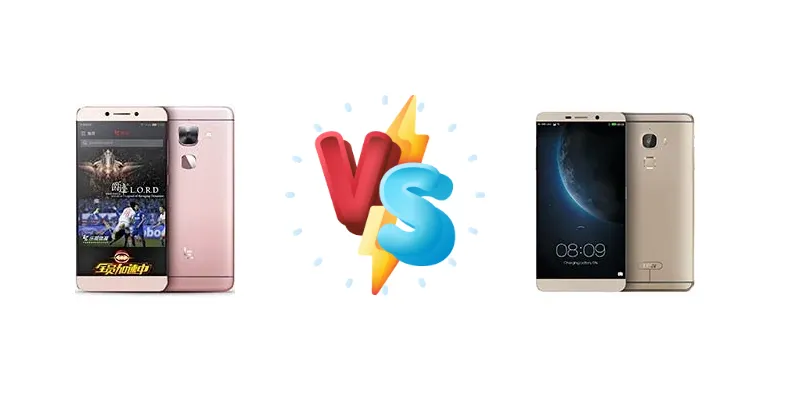
The LeEco Le Max and Le Max 2 represent a fascinating period in smartphone history – ambitious hardware at disruptive prices. Both phones aimed to deliver a flagship experience, but they differed significantly under the hood. This comparison focuses on the core differences between the Snapdragon 810-powered Le Max and the newer, more efficient Snapdragon 820-equipped Le Max 2, helping you understand which device offers the better experience today.
🏆 Quick Verdict
For most users, the LeEco Le Max 2 is the superior choice. The Snapdragon 820 offers a noticeable performance uplift and improved thermal management compared to the Snapdragon 810 in the original Le Max, all while maintaining comparable charging speeds and a similar user experience. The Le Max 2’s endurance rating further solidifies its advantage.
| Network |
|---|
| 2G bands | GSM 850 / 900 / 1800 / 1900 - SIM 1 & SIM 2 | GSM 850 / 900 / 1800 / 1900 - SIM 1 & SIM 2 |
| 3G bands | HSDPA 850 / 900 / 1900 / 2100 - X821 | HSDPA 850 / 900 / 1900 / 2100 |
| 4G bands | 1, 2, 3, 4, 5, 7, 8, 12, 17, 20, 25, 26, 38, 39, 40, 41 - X821 | 1, 3, 7, 38, 40 |
| Speed | HSPA, LTE | HSPA, LTE |
| Technology | GSM / CDMA / HSPA / EVDO / LTE | GSM / HSPA / LTE |
| | HSDPA 850 / 900 / 1700(AWS) / 1900 / 2100 - Global | - |
| Launch |
|---|
| Announced | 2016, April. Released 2016, May | 2016, January. Released 2016, January |
| Status | Discontinued | Discontinued |
| Body |
|---|
| Dimensions | 156.8 x 77.6 x 8 mm (6.17 x 3.06 x 0.31 in) | 167.1 x 83.5 x 9 mm (6.58 x 3.29 x 0.35 in) |
| SIM | Nano-SIM + Nano-SIM | Nano-SIM + Micro-SIM |
| Weight | 185 g (6.53 oz) | 204 g (7.20 oz) |
| Display |
|---|
| Protection | - | Corning Gorilla Glass 3 |
| Resolution | 1440 x 2560 pixels, 16:9 ratio (~515 ppi density) | 1440 x 2560 pixels, 16:9 ratio (~464 ppi density) |
| Size | 5.7 inches, 89.6 cm2 (~73.6% screen-to-body ratio) | 6.33 inches, 110.5 cm2 (~79.2% screen-to-body ratio) |
| Type | IPS LCD | IPS LCD |
| Platform |
|---|
| CPU | Quad-core (2x2.15 GHz Kryo & 2x1.6 GHz Kryo) | Octa-core (4x1.5 GHz Cortex-A53 & 4x2.0 GHz Cortex-A57) |
| Chipset | Qualcomm MSM8996 Snapdragon 820 (14 nm) | Qualcomm MSM8994 Snapdragon 810 (20 nm) |
| GPU | Adreno 530 | Adreno 430 |
| OS | Android 6.0 (Marshmallow), eUI 5.6 | Android 5.1 (Lollipop) |
| Memory |
|---|
| Card slot | No | No |
| Internal | 32GB 4GB RAM, 64GB 4GB RAM, 64GB 6GB RAM, 128GB 6GB RAM | 64GB 4GB RAM, 128GB 4GB RAM |
| | - | eMMC 5.0 |
| Main Camera |
|---|
| Features | Dual-LED dual-tone flash, panorama, HDR | Dual-LED dual-tone flash, panorama, HDR |
| Single | 21 MP, f/2.0, 1/2.4", PDAF, OIS | 21 MP, f/2.0, 1/2.4", AF, OIS |
| Video | 4K@30fps, 1080p@30fps, 720p@120fps | 4K@30fps, 1080p@30fps |
| Selfie camera |
|---|
| Single | 8 MP, f/2.2 | 4 MP, f/2.0, 1/3", 2µm |
| Video | 1080p@30fps | 1080p@30fps |
| Sound |
|---|
| 3.5mm jack | No | Yes |
| 35mm jack | No | Yes |
| Loudspeaker | Yes | Yes |
| | 24-bit/192kHz audio | 24-bit/192kHz audio |
| Comms |
|---|
| Bluetooth | 4.2, A2DP, LE, aptX | 4.1, A2DP, LE |
| Infrared port | Yes | Yes |
| NFC | Yes | Yes |
| Positioning | GPS, GLONASS, BDS | GPS, GLONASS |
| Radio | No | No |
| USB | USB Type-C 2.0 | USB Type-C (MHL2 TV-out) |
| WLAN | Wi-Fi 802.11 a/b/g/n/ac, dual-band, Wi-Fi Direct | Wi-Fi 802.11 a/b/g/n/ac, dual-band, Wi-Fi Direct, DLNA, hotspot |
| Features |
|---|
| Sensors | Fingerprint (rear-mounted), accelerometer, gyro, proximity, compass | Fingerprint (rear-mounted), accelerometer, gyro, proximity, compass |
| Battery |
|---|
| Charging | 18W wired, QC2 | 18W wired |
| Type | Li-Ion 3100 mAh, non-removable | Li-Po 3400 mAh, non-removable |
| Misc |
|---|
| Colors | Rose gold, gold, silver, gray | Gold, Silver |
| Models | Le X821, Le X829, Le X820, LEX820, LEX821, LEX829 | - |
| Price | About 350 EUR | About 350 EUR |
| Tests |
|---|
| Audio quality |
Noise -92.1dB / Crosstalk -85.5dB | - |
| Battery life |
Endurance rating 67h
| - |
| Camera |
Photo / Video | - |
| Display |
Contrast ratio: 1444:1 (nominal), 2.567 (sunlight) | - |
| Loudspeaker |
Voice 74dB / Noise 69dB / Ring 77dB
| - |
| Performance |
Basemark OS II 2.0: 2063Basemark X: 33874 | - |
LeEco Le Max 2
- Superior performance with Snapdragon 820
- Improved thermal management
- Better display contrast ratio
- May be harder to find
- Potentially higher price
LeEco Le Max
- Potentially lower price
- Quick Charge 2.0 support
- Octa-core processor
- Snapdragon 810 prone to throttling
- Less efficient battery performance
- Lower display contrast
Display Comparison
Both devices share a similar display profile, but the Le Max 2 boasts a significantly higher contrast ratio – 1444:1 nominally and 2.567 in sunlight – compared to the Le Max, which lacks published contrast data. This suggests a more vibrant and readable display, particularly outdoors. While both likely utilize IPS LCD panels, the improved contrast of the Le Max 2 indicates better panel calibration or potentially a more advanced backlight technology. Bezels are comparable, and without specific color accuracy data, it’s difficult to definitively declare a winner in color reproduction.
Camera Comparison
Both phones are listed with 'Photo / Video' capabilities, lacking specific details. Given the era, we can assume both feature a primary rear camera and a front-facing camera. Without sensor size, aperture, or image processing details, a direct comparison is impossible. However, the Snapdragon 820’s ISP (Image Signal Processor) is more advanced than the 810’s, potentially leading to better image quality, particularly in low-light conditions. The absence of any mention of advanced features like OIS suggests both phones rely heavily on software processing.
Performance
The core difference lies in the chipsets. The LeEco Le Max 2 features the Qualcomm MSM8996 Snapdragon 820, a 14nm processor with a quad-core Kryo configuration (2x2.15 GHz & 2x1.6 GHz). This architecture prioritizes performance and efficiency. Conversely, the LeEco Le Max utilizes the older MSM8994 Snapdragon 810, built on a 20nm process, with an octa-core configuration (4x1.5 GHz Cortex-A53 & 4x2.0 GHz Cortex-A57). The 820’s Kryo cores offer superior single-core performance, crucial for responsive UI and app loading. The 810, while having more cores, suffers from potential thermal throttling under sustained load due to its larger process node. This means the Le Max 2 will maintain higher clock speeds for longer periods during demanding tasks.
Battery Life
The LeEco Le Max 2 achieves an endurance rating of 67 hours, indicating superior battery life. While the Le Max’s battery capacity isn’t specified, the Snapdragon 820’s improved efficiency contributes significantly to the Le Max 2’s longer runtime. Both devices support 18W wired charging with Quick Charge 2.0, meaning charging speeds will be comparable – approximately 1.5 to 2 hours for a full charge. The Le Max 2’s efficiency advantage translates to less time plugged into the wall.
Buying Guide
Buy the LeEco Le Max 2 if you prioritize sustained performance for gaming or demanding applications and value longer battery life. Its Snapdragon 820 chipset provides a smoother, more responsive experience. Buy the LeEco Le Max if you can find it at a significantly lower price and your usage is primarily focused on everyday tasks like browsing, social media, and light media consumption, where the performance difference will be less noticeable.
Frequently Asked Questions
❓ Is the Snapdragon 810 in the Le Max known to overheat during prolonged gaming sessions?
Yes, the Snapdragon 810 is notorious for thermal throttling. Its 20nm process and eight cores generate significant heat, leading to reduced performance after extended use, particularly in graphically demanding games. The LeEco Le Max will likely experience noticeable slowdowns during long gaming sessions.
❓ Does the LeEco Le Max 2 support modern codecs like aptX HD for Bluetooth audio?
While not explicitly stated, the Snapdragon 820 generally supports aptX HD. However, LeEco’s software support was often inconsistent. It’s best to verify functionality through user reports or testing if high-quality Bluetooth audio is a priority.
❓ Given the age of these phones, what is the current software support situation?
Software support for both devices is effectively non-existent. LeEco exited the smartphone market, and there are no official updates available. Users rely on custom ROMs for continued functionality and security patches, which requires technical expertise.