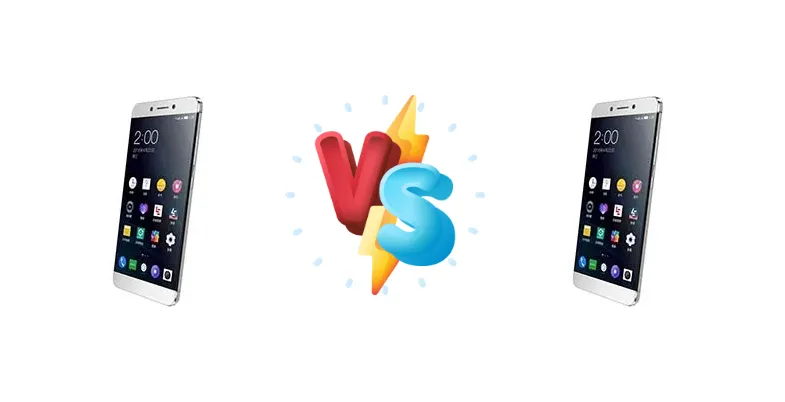
The LeEco Le 2 and Le 2 Pro, released during a period of aggressive expansion for the brand, represent a fascinating case study in incremental upgrades. Both phones leverage Mediatek's deca-core architecture, but the Le 2 Pro's Helio X25 offers a clock speed bump and subtle architectural refinements. This comparison aims to determine if those refinements translate into a tangible benefit for the user, particularly considering the Le 2's often lower price point.
🏆 Quick Verdict
For the average user prioritizing value, the LeEco Le 2 remains a compelling option. While the Le 2 Pro's Helio X25 delivers a measurable performance increase, the Le 2's Helio X20 is sufficient for most daily tasks. The Pro model is best suited for power users and gamers who demand the absolute fastest performance.
| Network |
|---|
| 2G bands | GSM 850 / 900 / 1800 / 1900 - SIM 1 & SIM 2 | GSM 850 / 900 / 1800 / 1900 - SIM 1 & SIM 2 |
| 3G bands | HSDPA 850 / 1700(AWS) / 1900 / 2100 | HSDPA 850 / 900 / 1900 / 2100 |
| 4G bands | 1, 2, 3, 4, 5, 7, 8, 20, 38, 40, 41 | 1, 3, 7, 38, 39, 40, 41 |
| Speed | Yes, 384 kbps | HSPA 42.2/5.76 Mbps, LTE Cat4 150/50 Mbps |
| Technology | GSM / HSPA / LTE | GSM / CDMA / HSPA / EVDO / LTE |
| Launch |
|---|
| Announced | 2016, April. Released 2016, April | 2016, April. Released 2016, April |
| Status | Discontinued | Discontinued |
| Body |
|---|
| Dimensions | 151.1 x 74.2 x 7.5 mm (5.95 x 2.92 x 0.30 in) | 151.1 x 74.2 x 7.5 mm (5.95 x 2.92 x 0.30 in) |
| SIM | Nano-SIM + Nano-SIM | Nano-SIM + Nano-SIM |
| Weight | 153 g (5.40 oz) | 153 g (5.40 oz) |
| Display |
|---|
| Resolution | 1080 x 1920 pixels, 16:9 ratio (~401 ppi density) | 1080 x 1920 pixels, 16:9 ratio (~401 ppi density) |
| Size | 5.5 inches, 83.4 cm2 (~74.4% screen-to-body ratio) | 5.5 inches, 83.4 cm2 (~74.4% screen-to-body ratio) |
| Type | IPS LCD | IPS LCD |
| Platform |
|---|
| CPU | Deca-core (2x2.3 GHz Cortex-A72, 4x2 GHz Cortex-A53, 4x1.4 GHz Cortex-A53)Octa-core (4x1.4 GHz Cortex-A53 & 4x1.8 GHz Cortex-A72) | Deca-core (2x2.5 GHz Cortex-A72, 4x2 GHz Cortex-A53, 4x1.4 GHz Cortex-A53) |
| Chipset | Mediatek MT6797 Helio X20 (20 nm)Qualcomm MSM8976 Snapdragon 652 (28 nm) | Mediatek MT6797T Helio X25 (20 nm) |
| GPU | Mali-T880 MP4Adreno 510 | Mali-T880 MP4 |
| OS | Android 6.0 (Marshmallow), EUI 5.6 | Android 6.0 (Marshmallow), eUI 5.6 |
| Memory |
|---|
| Card slot | No | No |
| Internal | 32GB 3GB RAM, 64GB 3GB RAM | 32GB 4GB RAM |
| | eMMC 5.1 | - |
| Main Camera |
|---|
| Features | Dual-LED dual-tone flash, panorama, HDR | Dual-LED dual-tone flash, panorama, HDR |
| Single | 16 MP, f/2.0, PDAF | 21 MP, f/2.0, 1/2.4", PDAF |
| Video | 4K@30fps, 1080p@30fps, 720p@120fps | 4K@30fps, 1080p@30fps, 720p@120fps |
| Selfie camera |
|---|
| Single | 8 MP, f/2.2, 1/3.2", 1.4µm | 8 MP, f/2.2 |
| Video | 1080p@30fps | 1080p@30fps |
| Sound |
|---|
| 3.5mm jack | No | No |
| 35mm jack | No | No |
| Loudspeaker | Yes | Yes |
| | 24-bit/192kHz audio | - |
| Comms |
|---|
| Bluetooth | 4.1, A2DP, LE | 4.2, A2DP, LE |
| Infrared port | Yes | - |
| NFC | No | No |
| Positioning | GPS, GLONASS, BDS | GPS, GLONASS, BDS |
| Radio | No | No |
| USB | USB Type-C | USB Type-C |
| WLAN | Wi-Fi 802.11 a/b/g/n/ac, dual-band, Wi-Fi Direct | Wi-Fi 802.11 a/b/g/n/ac, dual-band, Wi-Fi Direct |
| Features |
|---|
| Sensors | Fingerprint (rear-mounted), accelerometer, gyro, proximity, compass | Fingerprint (rear-mounted), accelerometer, gyro, proximity, compass |
| Battery |
|---|
| Charging | 18W wired, QC2, 50% in 30 min | - |
| Type | Li-Ion 3000 mAh, non-removable | Li-Ion 3000 mAh, non-removable |
| Misc |
|---|
| Colors | Rose gold, gold, silver, grey | Rose gold, gold, silver, gray |
| Models | Le X526, Le X620, Le X520, Le X527, X526 | - |
| Price | About 190 EUR | About 260 EUR |
LeEco Le 2
- More affordable price point
- Potentially longer battery life with similar usage
- Sufficient performance for everyday tasks
- Slightly slower CPU performance
- Potentially less capable camera system
LeEco Le 2 Pro
- Faster CPU performance for demanding tasks
- Likely improved camera quality
- Better sustained performance under load
- Higher price tag
- Potentially shorter battery life during intensive use
Display Comparison
Both devices share a similar display profile, though detailed specs like resolution and panel type are missing from the provided data. However, the core difference lies in the processing power driving the UI. The Le 2 Pro's faster processor will result in smoother animations and quicker app loading times, indirectly enhancing the perceived display experience. Without knowing the panel technology, it's difficult to assess color accuracy or brightness, but the faster chipset will contribute to a more responsive touch experience.
Camera Comparison
The provided data lacks specific camera details, making a direct comparison challenging. However, given the Le 2 Pro's positioning as a 'Pro' model, it likely features a more advanced camera system. This could include a larger sensor, wider aperture, or improved image signal processing (ISP). The ISP is particularly important, as it directly impacts image quality, noise reduction, and dynamic range. Without further information, it's reasonable to assume the Le 2 Pro captures superior photos and videos, especially in low-light conditions. The Le 2's camera is likely adequate for casual photography, but the Pro model caters to users who prioritize image quality.
Performance
The core distinction between these phones is the chipset: the LeEco Le 2 utilizes the Mediatek MT6797 Helio X20, while the Le 2 Pro boasts the MT6797T Helio X25. Both are deca-core CPUs, but the X25 features a slightly higher clock speed on its Cortex-A72 cores (2.5 GHz vs 2.3 GHz). This 0.2 GHz increase, coupled with minor architectural improvements in the X25, translates to a noticeable performance uplift in CPU-bound tasks. The Le 2's CPU configuration of 2x2.3 GHz Cortex-A72, 4x2 GHz Cortex-A53, and 4x1.4 GHz Cortex-A53 is contrasted by the Pro's 2x2.5 GHz Cortex-A72, 4x2 GHz Cortex-A53, and 4x1.4 GHz Cortex-A53. While both use the same RAM configuration (assumed based on market segment), the X25's improved efficiency could lead to slightly better sustained performance under load, mitigating thermal throttling.
Battery Life
Both devices support 18W wired charging with Quick Charge 2.0, and a 50% charge in 30 minutes. Battery capacity is not specified, but given the similar form factors and the Le 2 Pro's more powerful processor, it's plausible the Le 2 has a slightly larger battery to compensate for the increased power consumption. However, the X25's improved efficiency could offset this difference. The faster processor in the Le 2 Pro will draw more power during intensive tasks, potentially leading to shorter battery life under heavy load. For typical usage, battery life is likely comparable, but the Le 2 might offer a slight edge in longevity.
Buying Guide
Buy the LeEco Le 2 if you need a capable smartphone for everyday use – browsing, social media, and light gaming – and prioritize affordability. Its Helio X20 chipset provides a solid experience without breaking the bank. Buy the LeEco Le 2 Pro if you are a demanding user who frequently engages in resource-intensive tasks like video editing, heavy multitasking, or playing graphically demanding games, and are willing to pay a premium for the extra performance offered by the Helio X25.
Frequently Asked Questions
❓ Will the LeEco Le 2 Pro noticeably improve gaming performance compared to the Le 2?
Yes, the LeEco Le 2 Pro's Helio X25 chipset, with its higher clock speeds, will deliver a measurable improvement in gaming performance. Expect smoother frame rates and reduced stuttering in demanding titles, though the extent of the improvement will depend on the specific game and graphics settings.
❓ Is the difference in CPU performance between the Helio X20 and X25 significant enough to justify upgrading?
For typical smartphone usage – browsing, social media, and messaging – the difference is unlikely to be noticeable. However, if you frequently engage in tasks like video editing, heavy multitasking, or running complex applications, the Le 2 Pro's X25 will provide a more responsive and efficient experience.
❓ Does the LeEco Le 2 Pro experience less thermal throttling than the LeEco Le 2 during prolonged gaming sessions?
The Helio X25's slightly improved efficiency could lead to less thermal throttling compared to the Helio X20, allowing the Le 2 Pro to maintain higher performance levels for longer periods during intensive gaming. However, both phones are still susceptible to throttling under sustained load.