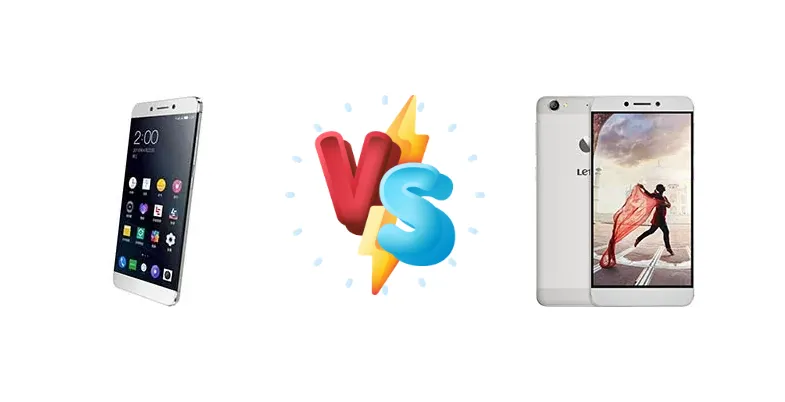
The LeEco Le 2 and Le 1s represent a fascinating period in smartphone history – a bold attempt to disrupt the market with aggressive pricing and ambitious specs. While both phones aimed to deliver a premium experience at a mid-range cost, they differed significantly in their core hardware. This comparison dissects those differences, focusing on the impact of the Le 2’s deca-core processor and faster charging on the user experience.
🏆 Quick Verdict
For most users, the LeEco Le 2 is the superior choice. Its Mediatek Helio X20 chipset, with its deca-core architecture, offers a noticeable performance boost over the Le 1s’ Helio X10, particularly in multitasking and demanding applications. While the Le 1s remains a capable device, the Le 2’s faster charging and improved processing power justify the price difference.
| Network |
|---|
| 2G bands | GSM 850 / 900 / 1800 / 1900 - SIM 1 & SIM 2 | GSM 850 / 900 / 1800 / 1900 - SIM 1 & SIM 2 |
| 3G bands | HSDPA 850 / 1700(AWS) / 1900 / 2100 | HSDPA 850 / 900 / 1900 / 2100 |
| 4G bands | 1, 2, 3, 4, 5, 7, 8, 20, 38, 40, 41 | 1, 3, 7, 38, 39, 40, 41 |
| Speed | Yes, 384 kbps | HSPA, LTE |
| Technology | GSM / HSPA / LTE | GSM / HSPA / LTE |
| Launch |
|---|
| Announced | 2016, April. Released 2016, April | 2016, February. Released 2016, February |
| Status | Discontinued | Discontinued |
| Body |
|---|
| Dimensions | 151.1 x 74.2 x 7.5 mm (5.95 x 2.92 x 0.30 in) | 151.1 x 74.2 x 7.6 mm (5.95 x 2.92 x 0.30 in) |
| SIM | Nano-SIM + Nano-SIM | Nano-SIM + Micro-SIM |
| Weight | 153 g (5.40 oz) | 169 g (5.96 oz) |
| Display |
|---|
| Resolution | 1080 x 1920 pixels, 16:9 ratio (~401 ppi density) | 1080 x 1920 pixels, 16:9 ratio (~401 ppi density) |
| Size | 5.5 inches, 83.4 cm2 (~74.4% screen-to-body ratio) | 5.5 inches, 83.4 cm2 (~74.4% screen-to-body ratio) |
| Type | IPS LCD | IPS LCD |
| Platform |
|---|
| CPU | Deca-core (2x2.3 GHz Cortex-A72, 4x2 GHz Cortex-A53, 4x1.4 GHz Cortex-A53)Octa-core (4x1.4 GHz Cortex-A53 & 4x1.8 GHz Cortex-A72) | Octa-core 2.2 GHz Cortex-A53 |
| Chipset | Mediatek MT6797 Helio X20 (20 nm)Qualcomm MSM8976 Snapdragon 652 (28 nm) | Mediatek MT6795 Helio X10 (28 nm) |
| GPU | Mali-T880 MP4Adreno 510 | PowerVR G6200 |
| OS | Android 6.0 (Marshmallow), EUI 5.6 | Android 5.0 (Lollipop) - LeEco Le 1sAndroid 6.0 (Marshmallow) - LeEco Le 1s Eco |
| Memory |
|---|
| Card slot | No | No |
| Internal | 32GB 3GB RAM, 64GB 3GB RAM | 32GB 3GB RAM |
| | eMMC 5.1 | eMMC 5.0 |
| Main Camera |
|---|
| Features | Dual-LED dual-tone flash, panorama, HDR | LED flash, panorama, HDR |
| Single | 16 MP, f/2.0, PDAF | 13 MP, AF |
| Video | 4K@30fps, 1080p@30fps, 720p@120fps | 4K@30fps |
| Selfie camera |
|---|
| Single | 8 MP, f/2.2, 1/3.2", 1.4µm | 5 MP |
| Video | 1080p@30fps | - |
| Sound |
|---|
| 3.5mm jack | No | Yes |
| 35mm jack | No | Yes |
| Loudspeaker | Yes | Yes |
| | 24-bit/192kHz audio | - |
| Comms |
|---|
| Bluetooth | 4.1, A2DP, LE | 4.1, A2DP, LE |
| Infrared port | Yes | Yes |
| NFC | No | No |
| Positioning | GPS, GLONASS, BDS | GPS, GLONASS |
| Radio | No | No |
| USB | USB Type-C | USB Type-C (MHL2 TV-out) |
| WLAN | Wi-Fi 802.11 a/b/g/n/ac, dual-band, Wi-Fi Direct | Wi-Fi 802.11 a/b/g/n/ac, dual-band, Wi-Fi Direct |
| Features |
|---|
| Sensors | Fingerprint (rear-mounted), accelerometer, gyro, proximity, compass | Fingerprint (rear-mounted), accelerometer, proximity, compass |
| Battery |
|---|
| Charging | 18W wired, QC2, 50% in 30 min | - |
| Type | Li-Ion 3000 mAh, non-removable | Li-Ion 3000 mAh, non-removable |
| Misc |
|---|
| Colors | Rose gold, gold, silver, grey | Gold, Silver, Gray |
| Models | Le X526, Le X620, Le X520, Le X527, X526 | Le X507, Le X509, Letv X500 |
| Price | About 190 EUR | About 210 EUR |
LeEco Le 2
- Significantly faster processor with deca-core architecture
- Faster charging with Quick Charge 2.0 support
- More efficient 20nm process potentially improving battery life
- Potentially higher price compared to the Le 1s
- Deca-core design may generate more heat under sustained load
LeEco Le 1s
- More affordable price point
- Functional for basic smartphone tasks
- Simpler processor design may result in lower heat output
- Slower processor limiting multitasking and app performance
- Slower charging speeds
- Less efficient 28nm process
Display Comparison
Both devices likely feature similar LCD panels, given their market positioning. However, detailed display specs (resolution, brightness, color gamut) are unavailable. The focus here is on processing power, not display fidelity. The Le 1s and Le 2 likely share similar bezel sizes, typical of phones from that era. Without specific data, a direct comparison of display quality is impossible.
Camera Comparison
Detailed camera specifications are lacking for both devices. However, given their price points, it’s reasonable to assume both phones feature similar camera sensors and image processing capabilities. Without knowing sensor sizes, apertures, or the presence of optical image stabilization (OIS), a definitive camera comparison is impossible. The focus on processing power suggests the Le 2 might offer slightly faster image processing speeds, but this is speculative.
Performance
The core difference lies in the chipsets. The LeEco Le 2’s Mediatek Helio X20 is a deca-core processor built on a 20nm process, featuring two Cortex-A72 cores for peak performance, four Cortex-A53 cores for balanced tasks, and four additional Cortex-A53 cores for efficiency. This contrasts sharply with the Le 1s’ Helio X10, an octa-core processor built on a 28nm process, utilizing only Cortex-A53 cores. The 20nm process of the Helio X20 offers improved power efficiency compared to the 28nm Helio X10, potentially leading to better battery life under sustained load. The architectural advantage of the A72 cores in the Le 2 translates to significantly faster single-core performance, impacting app launch times and responsiveness. The Le 2’s CPU configuration is designed for handling more complex workloads than the Le 1s.
Battery Life
While the battery capacities are not provided, the LeEco Le 2’s 18W charging with Quick Charge 2.0 support is a significant advantage. The Le 1s likely supports standard charging speeds. The faster charging on the Le 2 allows for a 50% charge in just 30 minutes, a substantial convenience factor. Even if the Le 2 has a slightly smaller battery capacity, the faster charging mitigates this disadvantage, providing quicker top-ups throughout the day. The Helio X20’s more efficient 20nm process also contributes to potentially better battery life during demanding tasks.
Buying Guide
Buy the LeEco Le 2 if you prioritize multitasking, demand smoother performance in apps, and value faster charging speeds. This phone is ideal for users who frequently switch between applications or enjoy light gaming. Buy the LeEco Le 1s if you are on a very tight budget and primarily need a phone for basic tasks like calling, texting, and browsing. It offers a functional smartphone experience at an extremely affordable price point, but compromises on processing power.
Frequently Asked Questions
❓ Will the LeEco Le 2 handle demanding games like PUBG Mobile smoothly?
The LeEco Le 2’s Helio X20, with its Cortex-A72 cores, offers a significant performance uplift over the Le 1s. While it won’t deliver flagship-level gaming performance, it should be capable of running PUBG Mobile at medium settings with acceptable frame rates. However, sustained gaming may lead to thermal throttling, reducing performance over time.
❓ Is the difference in processor architecture between the Helio X20 and Helio X10 noticeable in everyday use?
Yes, the difference is noticeable. The Helio X20’s deca-core design, particularly the inclusion of Cortex-A72 cores, results in faster app launch times, smoother multitasking, and a more responsive user interface compared to the Le 1s’ Helio X10. You’ll experience less lag when switching between apps or performing demanding tasks.
❓ Does the LeEco Le 2’s faster charging significantly impact the user experience?
Absolutely. The 18W Quick Charge 2.0 support on the LeEco Le 2 allows for a 50% charge in just 30 minutes. This is a substantial convenience, especially for users who frequently find themselves with low battery levels. The Le 1s’ slower charging speeds require significantly more time to reach a full charge.