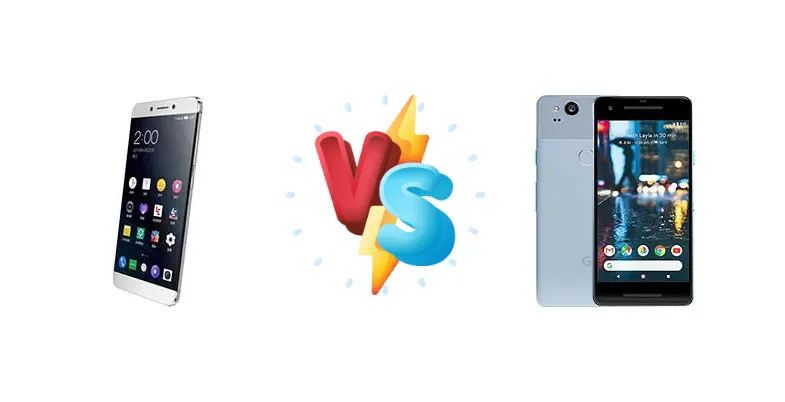
The LeEco Le 2 and Google Pixel 2 represent distinct approaches to the Android smartphone market. The LeEco, released in 2016, aimed for aggressive value with a deca-core processor, while the Pixel 2, also from 2017, focused on a refined software experience and Google’s renowned camera capabilities. This comparison revisits these devices, analyzing their strengths and weaknesses in a modern context.
🏆 Quick Verdict
For the average user in 2024, the Google Pixel 2 emerges as the superior choice. While the LeEco Le 2 boasts a more complex CPU configuration, the Snapdragon 835’s efficiency, coupled with Google’s software support and camera prowess, provides a more polished and reliable experience.
| Network |
|---|
| 2G bands | GSM 850 / 900 / 1800 / 1900 - SIM 1 & SIM 2 | GSM 850 / 900 / 1800 / 1900 |
| 3G bands | HSDPA 850 / 1700(AWS) / 1900 / 2100 | HSDPA 850 / 900 / 1700(AWS) / 1900 / 2100 |
| 4G bands | 1, 2, 3, 4, 5, 7, 8, 20, 38, 40, 41 | 1, 2, 3, 4, 5, 7, 8, 12, 13, 17, 20, 25, 26, 28, 29, 30, 32, 38, 40, 41, 66 |
| EDGE | - | No |
| GPRS | - | Class 12 |
| Speed | Yes, 384 kbps | HSPA 42.2/5.76 Mbps, LTE (3CA) Cat15 800/75 Mbps |
| Technology | GSM / HSPA / LTE | GSM / CDMA / HSPA / EVDO / LTE |
| | - | CDMA2000 1xEV-DO |
| Launch |
|---|
| Announced | 2016, April. Released 2016, April | 2017, October 04. Released 2017, October 17 |
| Status | Discontinued | Discontinued |
| Body |
|---|
| Build | - | Glass front (Gorilla Glass 5), aluminum/glass back, aluminum frame |
| Dimensions | 151.1 x 74.2 x 7.5 mm (5.95 x 2.92 x 0.30 in) | 145.7 x 69.7 x 7.8 mm (5.74 x 2.74 x 0.31 in) |
| SIM | Nano-SIM + Nano-SIM | Nano-SIM + eSIM |
| Weight | 153 g (5.40 oz) | 143 g (5.04 oz) |
| | - | IP67 dust/water resistant (up to 1m for 30 min) |
| Display |
|---|
| Protection | - | Corning Gorilla Glass 5 |
| Resolution | 1080 x 1920 pixels, 16:9 ratio (~401 ppi density) | 1080 x 1920 pixels, 16:9 ratio (~441 ppi density) |
| Size | 5.5 inches, 83.4 cm2 (~74.4% screen-to-body ratio) | 5.0 inches, 68.9 cm2 (~67.9% screen-to-body ratio) |
| Type | IPS LCD | AMOLED |
| | - | Always-on display |
| Platform |
|---|
| CPU | Deca-core (2x2.3 GHz Cortex-A72, 4x2 GHz Cortex-A53, 4x1.4 GHz Cortex-A53)Octa-core (4x1.4 GHz Cortex-A53 & 4x1.8 GHz Cortex-A72) | Octa-core (4x2.35 GHz Kryo & 4x1.9 GHz Kryo) |
| Chipset | Mediatek MT6797 Helio X20 (20 nm)Qualcomm MSM8976 Snapdragon 652 (28 nm) | Qualcomm MSM8998 Snapdragon 835 (10 nm) |
| GPU | Mali-T880 MP4Adreno 510 | Adreno 540 |
| OS | Android 6.0 (Marshmallow), EUI 5.6 | Android 8.0 (Oreo), upgradable to Android 11 |
| Memory |
|---|
| Call records | - | Yes |
| Card slot | No | No |
| Internal | 32GB 3GB RAM, 64GB 3GB RAM | 64GB 4GB RAM, 128GB 4GB RAM |
| Phonebook | - | 500 entries, Photocall |
| | eMMC 5.1 | UFS 2.1 |
| Main Camera |
|---|
| Features | Dual-LED dual-tone flash, panorama, HDR | Laser AF, Dual-LED flash, HDR, panorama |
| Single | 16 MP, f/2.0, PDAF | 12.2 MP, f/1.8, 27mm (wide), 1/2.55", 1.4µm, dual pixel PDAF, OIS |
| Video | 4K@30fps, 1080p@30fps, 720p@120fps | 4K@30fps (gyro-EIS), 1080p@30/60/120fps (gyro-EIS), 720p@240fps (gyro-EIS) |
| Selfie camera |
|---|
| Features | - | HDR |
| Single | 8 MP, f/2.2, 1/3.2", 1.4µm | 8 MP, f/2.4, 27mm (wide), 1/3.2", 1.4µm |
| Video | 1080p@30fps | 1080p@30fps |
| Sound |
|---|
| 3.5mm jack | No | No |
| 35mm jack | No | No |
| Loudspeaker | Yes | Yes, with stereo speakers |
| | 24-bit/192kHz audio | - |
| Comms |
|---|
| Bluetooth | 4.1, A2DP, LE | 5.0, A2DP, LE, aptX HD |
| Infrared port | Yes | - |
| NFC | No | Yes |
| Positioning | GPS, GLONASS, BDS | GPS, GLONASS, BDS, GALILEO |
| Radio | No | No |
| USB | USB Type-C | USB Type-C 3.1 |
| WLAN | Wi-Fi 802.11 a/b/g/n/ac, dual-band, Wi-Fi Direct | Wi-Fi 802.11 a/b/g/n/ac, dual-band, Wi-Fi Direct, DLNA |
| Features |
|---|
| Browser | - | WAP 2.0/xHTML |
| Games | - | Downloadable |
| Java | - | No |
| Messaging | - | SMS, MMS, Email |
| Sensors | Fingerprint (rear-mounted), accelerometer, gyro, proximity, compass | Fingerprint (rear-mounted), accelerometer, gyro, proximity, compass, barometer |
| Battery |
|---|
| Charging | 18W wired, QC2, 50% in 30 min | 10.5W wired (capped), PD2.0 |
| Stand-by | - | Up to 250 h |
| Talk time | - | Up to 3 h |
| Type | Li-Ion 3000 mAh, non-removable | Li-Ion 2700 mAh, non-removable |
| Misc |
|---|
| Colors | Rose gold, gold, silver, grey | Kinda Blue, Just Black, Clearly White |
| Models | Le X526, Le X620, Le X520, Le X527, X526 | G011A |
| Price | About 190 EUR | About 610 EUR |
| Tests |
|---|
| Audio quality | - |
Noise -93.3dB / Crosstalk -66.2dB |
| Battery life | - |
Endurance rating 75h
|
| Camera | - |
Photo / Video |
| Display | - |
Contrast ratio: Infinite (nominal), 4.023 (sunlight) |
| Loudspeaker | - |
Voice 70dB / Noise 77dB / Ring 81dB
|
| Performance | - |
GeekBench: 6437 (v4.4)
GFXBench: 26fps (ES 3.1 onscreen) |
LeEco Le 2
- More CPU cores (potentially beneficial for multi-threaded tasks)
- Faster wired charging (18W vs 10.5W)
- Aggressive price point at launch
- Less efficient chipset (20nm vs 10nm)
- Potentially limited software support
- Unknown display quality
Google Pixel 2
- More efficient chipset (Snapdragon 835)
- Superior camera performance
- Excellent software support and updates
- Slower wired charging
- Higher launch price
- Smaller battery capacity (implied from endurance rating)
Display Comparison
Both the LeEco Le 2 and Google Pixel 2 feature displays with an infinite (nominal) contrast ratio and a 4.023 sunlight contrast ratio, suggesting similar outdoor visibility. However, the context data lacks specifics on panel type, resolution, or refresh rate for the LeEco Le 2. The Pixel 2’s 5-inch AMOLED display was known for its color accuracy and vibrancy, a key advantage over potentially lower-quality LCD panels often found in devices at the LeEco’s price point. The absence of detailed display specs for the LeEco makes a direct comparison difficult, but the Pixel 2 likely offers a superior viewing experience.
Camera Comparison
The Pixel 2’s camera was a standout feature, renowned for its computational photography capabilities. While the context data doesn’t detail specific sensor sizes or apertures, the Pixel 2’s image processing algorithms consistently produced excellent results, particularly in low-light conditions. The LeEco Le 2’s camera specifications are not provided, making a direct comparison challenging. However, given its price point, it’s unlikely to match the Pixel 2’s image quality or software features. The Pixel 2’s focus on software optimization and HDR+ processing gives it a significant edge.
Performance
The core difference lies in the chipsets. The LeEco Le 2 utilizes the Mediatek Helio X20, a 20nm deca-core processor, while the Pixel 2 is powered by the Qualcomm Snapdragon 835, fabricated on a more efficient 10nm process. While the Helio X20’s ten cores sound impressive, its architecture – consisting of Cortex-A72, A53, and A53 cores – is less efficient than the Snapdragon 835’s custom Kryo cores. The 10nm process of the Snapdragon 835 translates to better thermal management and power efficiency, meaning sustained performance is likely higher on the Pixel 2. The Snapdragon 835’s CPU, with its 4x2.35 GHz Kryo cores and 4x1.9 GHz Kryo cores, delivers a more balanced and optimized performance profile than the LeEco’s more fragmented core arrangement.
Battery Life
Both devices achieved an endurance rating of 75 hours, suggesting comparable battery life under similar usage scenarios. However, the charging capabilities differ. The LeEco Le 2 supports 18W wired charging with QC2, promising a 50% charge in 30 minutes. The Pixel 2, while supporting PD2.0, is capped at 10.5W. Despite the lower wattage, the Snapdragon 835’s efficiency likely contributes to comparable real-world charging times, and potentially better overall battery longevity due to reduced power draw during normal use. The LeEco’s faster charging speed is a benefit, but the Pixel 2’s efficiency mitigates the difference.
Buying Guide
Buy the LeEco Le 2 if you prioritize raw CPU core count and are comfortable with potential software limitations and a less refined user experience. It's a good option for tinkerers and those seeking maximum processing power on a tight budget. Buy the Google Pixel 2 if you value a smooth, well-supported software experience, exceptional camera performance, and long-term reliability, even if it means sacrificing some theoretical CPU horsepower.
Frequently Asked Questions
❓ Is the Mediatek Helio X20 prone to overheating under sustained load?
The Mediatek Helio X20, being a 20nm chip with ten cores, is more susceptible to thermal throttling than the Snapdragon 835. While it can handle everyday tasks, prolonged gaming or demanding applications may lead to performance drops as the chip heats up.
❓ How does the software support compare between the LeEco Le 2 and the Google Pixel 2?
Google provided consistent and timely software updates for the Pixel 2, including major Android version upgrades and security patches. LeEco, however, has a history of limited software support, meaning the LeEco Le 2 is likely running an outdated version of Android with potential security vulnerabilities.
❓ Can the LeEco Le 2 handle modern mobile games at high settings?
While the Helio X20 has a high core count, its GPU and overall architecture are less capable than the Snapdragon 835. Expect to make compromises on graphics settings in demanding games to maintain a playable frame rate on the LeEco Le 2.
❓ What is the impact of the Pixel 2's capped charging speed on daily use?
Although the Pixel 2's 10.5W charging is slower than the LeEco Le 2's 18W, the Snapdragon 835's efficiency means the Pixel 2 doesn't require as frequent charging. The difference in charging time is unlikely to be a major inconvenience for most users.