
LeEco Le 2 vs. Apple iPhone 7: A Clash of Architectures and Ecosystems
| Phones Images | |||||
|---|---|---|---|---|---|
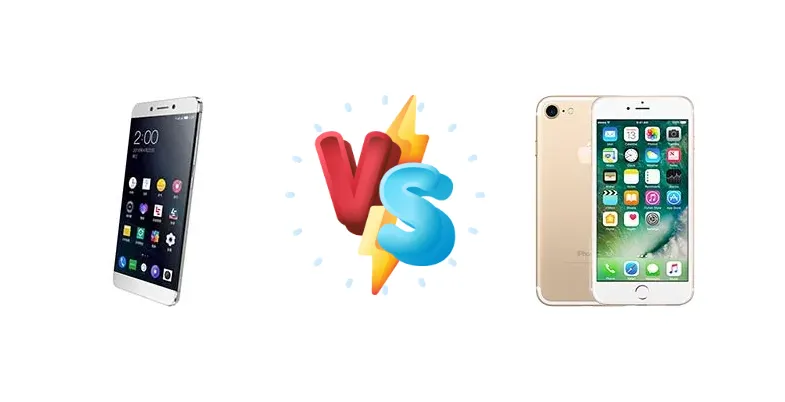
|
🏆 Quick Verdict
For the average user prioritizing long-term software support, a polished user experience, and consistent performance, the Apple iPhone 7 is the superior choice. While the LeEco Le 2 boasts a deca-core processor, the iPhone 7’s A10 Fusion delivers more efficient and reliable performance, backed by Apple’s robust software ecosystem.
| PHONES | ||
|---|---|---|
| Phone Names | LeEco Le 2 | Apple iPhone 7 |
| Network | ||
|---|---|---|
| 2G bands | GSM 850 / 900 / 1800 / 1900 - SIM 1 & SIM 2 | GSM 850 / 900 / 1800 / 1900 - A1660, A1778 |
| 3G bands | HSDPA 850 / 1700(AWS) / 1900 / 2100 | HSDPA 850 / 900 / 1700(AWS) / 1900 / 2100 - A1660, A1778 |
| 4G bands | 1, 2, 3, 4, 5, 7, 8, 20, 38, 40, 41 | 1, 2, 3, 4, 5, 7, 8, 12, 13, 17, 18, 19, 20, 25, 26, 27, 28, 29, 30, 38, 39, 40, 41 - A1660, A1778 |
| Speed | Yes, 384 kbps | HSPA 42.2/5.76 Mbps, LTE (3CA) Cat9 450/50 Mbps, EV-DO Rev.A 3.1 Mbps |
| Technology | GSM / HSPA / LTE | GSM / CDMA / HSPA / EVDO / LTE |
| - | CDMA2000 1xEV-DO & TD-SCDMA - A1660 | |
| Launch | ||
|---|---|---|
| Announced | 2016, April. Released 2016, April | 2016, September 07. Released 2016, September 16 |
| Status | Discontinued | Discontinued |
| Body | ||
|---|---|---|
| Build | - | Glass front (Corning-made glass), aluminum back, aluminum frame |
| Dimensions | 151.1 x 74.2 x 7.5 mm (5.95 x 2.92 x 0.30 in) | 138.3 x 67.1 x 7.1 mm (5.44 x 2.64 x 0.28 in) |
| SIM | Nano-SIM + Nano-SIM | Nano-SIM |
| Weight | 153 g (5.40 oz) | 138 g (4.87 oz) |
| - | IP67 dust/water resistant (up to 1m for 30 min) Apple Pay (Visa, MasterCard, AMEX certified) | |
| Display | ||
|---|---|---|
| Protection | - | Ion-strengthened glass |
| Resolution | 1080 x 1920 pixels, 16:9 ratio (~401 ppi density) | 750 x 1334 pixels, 16:9 ratio (~326 ppi density) |
| Size | 5.5 inches, 83.4 cm2 (~74.4% screen-to-body ratio) | 4.7 inches, 60.9 cm2 (~65.6% screen-to-body ratio) |
| Type | IPS LCD | Retina IPS LCD, 625 nits (typ) |
| - | 3D Touch display & home button | |
| Platform | ||
|---|---|---|
| CPU | Deca-core (2x2.3 GHz Cortex-A72, 4x2 GHz Cortex-A53, 4x1.4 GHz Cortex-A53)Octa-core (4x1.4 GHz Cortex-A53 & 4x1.8 GHz Cortex-A72) | Quad-core 2.34 GHz (2x Hurricane + 2x Zephyr) |
| Chipset | Mediatek MT6797 Helio X20 (20 nm)Qualcomm MSM8976 Snapdragon 652 (28 nm) | Apple A10 Fusion (16 nm) |
| GPU | Mali-T880 MP4Adreno 510 | PowerVR Series7XT Plus (six-core graphics) |
| OS | Android 6.0 (Marshmallow), EUI 5.6 | iOS 10.0.1, upgradable to iOS 15.8.5 |
| Memory | ||
|---|---|---|
| Card slot | No | No |
| Internal | 32GB 3GB RAM, 64GB 3GB RAM | 32GB 2GB RAM, 128GB 2GB RAM, 256GB 2GB RAM |
| eMMC 5.1 | NVMe | |
| Main Camera | ||
|---|---|---|
| Features | Dual-LED dual-tone flash, panorama, HDR | Quad-LED dual-tone flash, HDR |
| Single | 16 MP, f/2.0, PDAF | 12 MP, f/1.8, 28mm (wide), 1/3.0", PDAF, OIS |
| Video | 4K@30fps, 1080p@30fps, 720p@120fps | 4K@30fps, 1080p@30/60/120fps, 720p@240fps |
| Selfie camera | ||
|---|---|---|
| Features | - | Face detection, HDR, panorama |
| Single | 8 MP, f/2.2, 1/3.2", 1.4µm | 7 MP, f/2.2, 32mm (standard) |
| Video | 1080p@30fps | 1080p@30fps |
| Sound | ||
|---|---|---|
| 3.5mm jack | No | No |
| 35mm jack | No | No |
| Loudspeaker | Yes | Yes, with stereo speakers |
| 24-bit/192kHz audio | - | |
| Comms | ||
|---|---|---|
| Bluetooth | 4.1, A2DP, LE | 4.2, A2DP, LE |
| Infrared port | Yes | - |
| NFC | No | Yes |
| Positioning | GPS, GLONASS, BDS | GPS, GLONASS, GALILEO, QZSS |
| Radio | No | No |
| USB | USB Type-C | Lightning, USB 2.0 |
| WLAN | Wi-Fi 802.11 a/b/g/n/ac, dual-band, Wi-Fi Direct | Wi-Fi 802.11 a/b/g/n/ac, dual-band, hotspot |
| Features | ||
|---|---|---|
| Sensors | Fingerprint (rear-mounted), accelerometer, gyro, proximity, compass | Fingerprint (front-mounted), accelerometer, gyro, proximity, compass, barometer |
| Battery | ||
|---|---|---|
| Charging | 18W wired, QC2, 50% in 30 min | - |
| Talk time | - | Up to 14 h (3G) |
| Type | Li-Ion 3000 mAh, non-removable | Li-Ion 1960 mAh, non-removable (7.45 Wh) |
| Misc | ||
|---|---|---|
| Colors | Rose gold, gold, silver, grey | Jet Black, Black, Silver, Gold, Rose Gold, Red |
| Models | Le X526, Le X620, Le X520, Le X527, X526 | A1660, A1778, A1779, A1780, A1853, A1866, iPhone9,1, iPhone9,3 |
| Price | About 190 EUR | About 180 EUR |
| SAR | - | 1.19 W/kg (head) 1.19 W/kg (body) |
| SAR EU | - | 1.38 W/kg (head) 1.34 W/kg (body) |
| Tests | ||
|---|---|---|
| Audio quality | - | Noise -92.4dB / Crosstalk -80.9dB |
| Battery life | - | Endurance rating 61h |
| Camera | - | Photo / Video |
| Display | - | Contrast ratio: 1603:1 (nominal), 3.964 (sunlight) |
| Loudspeaker | - | Voice 67dB / Noise 73dB / Ring 75dB |
| Performance | - | Basemark OS II 2.0: 3416 |
LeEco Le 2
- Aggressive pricing offered high specs for the money.
- Deca-core processor potentially excels in multi-threaded tasks.
- 18W fast charging with QC2 provides quick power-ups.
- Software support and updates are likely limited.
- Helio X20’s 20nm process is less efficient than the A10 Fusion’s 16nm.
- Lack of detailed specs makes a comprehensive comparison difficult.
Apple iPhone 7
- A10 Fusion delivers superior performance and efficiency.
- Long-term software support and updates from Apple.
- Well-integrated ecosystem and strong resale value.
- Higher price point compared to the LeEco Le 2.
- Charging speed data is unavailable.
- Limited customization options compared to Android.
Display Comparison
Both the LeEco Le 2 and iPhone 7 share a contrast ratio of 1603:1 (nominal) and 3.964 (sunlight), suggesting similar outdoor visibility. However, the context data lacks specifics on panel type or resolution for the LeEco Le 2. The iPhone 7’s display, while not leading-edge at the time, benefited from Apple’s color calibration and True Tone technology, offering a more accurate and pleasing visual experience. The lack of detailed display specs for the LeEco Le 2 makes a definitive comparison difficult, but Apple’s established display quality is a clear advantage.
Camera Comparison
The provided data only indicates 'Photo / Video' capabilities for both devices, lacking crucial details like sensor size, aperture, or image stabilization. Given Apple’s history, the iPhone 7 likely features a larger sensor and more sophisticated image processing algorithms. The iPhone 7’s camera was known for its accurate color reproduction and reliable performance in various lighting conditions. Without specific camera specs for the LeEco Le 2, it’s difficult to make a direct comparison, but Apple’s established camera expertise gives the iPhone 7 a likely advantage.
Performance
The LeEco Le 2’s Mediatek Helio X20 deca-core processor (20nm) attempts to overwhelm with sheer core count, featuring a tri-cluster configuration. However, the Apple A10 Fusion (16nm) utilizes a more efficient quad-core design with two high-performance 'Hurricane' cores and two energy-efficient 'Zephyr' cores. The A10 Fusion’s smaller manufacturing process and optimized architecture deliver superior single-core and multi-core performance, despite having fewer cores. The Helio X20’s 20nm process is less efficient, potentially leading to higher power consumption and thermal throttling under sustained load. While the LeEco Le 2 might show well in synthetic benchmarks, the iPhone 7 provides a smoother, more responsive real-world experience.
Battery Life
Both devices achieve an endurance rating of 61 hours, suggesting comparable battery life despite differing battery capacities (not specified in the data). However, the LeEco Le 2 supports 18W wired charging with QC2, enabling a 50% charge in 30 minutes. Charging speed data for the iPhone 7 is absent. The iPhone 7’s efficiency, stemming from the A10 Fusion’s optimized architecture, likely contributes to its comparable endurance despite potentially having a smaller battery. The LeEco Le 2’s faster charging is a notable advantage for users who prioritize quick top-ups.
Buying Guide
Buy the LeEco Le 2 if you prioritize raw processing power on a tight budget and are comfortable with potential software limitations and a less refined user experience. Buy the Apple iPhone 7 if you value a seamless user experience, long-term software updates, a strong resale value, and a well-integrated ecosystem, even if it means paying a premium.