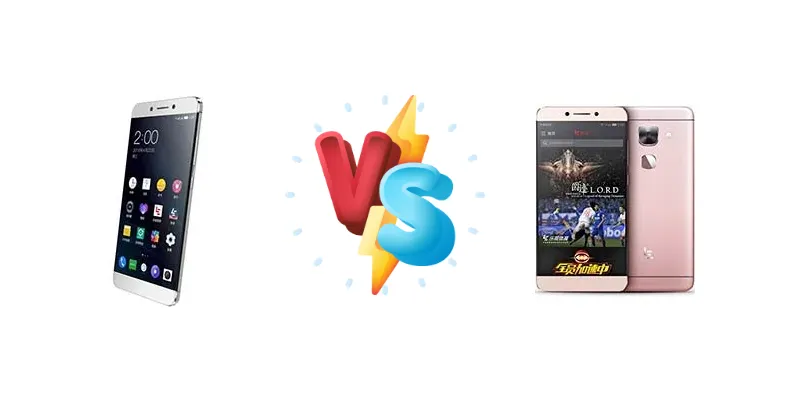
The LeEco Le 2 Pro and Le Max 2 represent a fascinating period in smartphone history – a time when ambitious companies challenged established brands with aggressive pricing and bold hardware choices. Both phones aimed for the flagship space, but took drastically different approaches to achieving it, primarily revolving around their chipset selections. This comparison dissects those choices, revealing which LeEco device delivers the best experience today.
🏆 Quick Verdict
For the average user prioritizing sustained performance and efficiency, the LeEco Le Max 2 with its Snapdragon 820 is the superior choice. While the Le 2 Pro’s Helio X25 boasts a higher core count, the Snapdragon 820’s more efficient 14nm process and Kryo cores translate to smoother multitasking and better long-term stability.
| Network |
|---|
| 2G bands | GSM 850 / 900 / 1800 / 1900 - SIM 1 & SIM 2 | GSM 850 / 900 / 1800 / 1900 - SIM 1 & SIM 2 |
| 3G bands | HSDPA 850 / 900 / 1900 / 2100 | HSDPA 850 / 900 / 1900 / 2100 - X821 |
| 4G bands | 1, 3, 7, 38, 39, 40, 41 | 1, 2, 3, 4, 5, 7, 8, 12, 17, 20, 25, 26, 38, 39, 40, 41 - X821 |
| Speed | HSPA 42.2/5.76 Mbps, LTE Cat4 150/50 Mbps | HSPA, LTE |
| Technology | GSM / CDMA / HSPA / EVDO / LTE | GSM / CDMA / HSPA / EVDO / LTE |
| | - | HSDPA 850 / 900 / 1700(AWS) / 1900 / 2100 - Global |
| Launch |
|---|
| Announced | 2016, April. Released 2016, April | 2016, April. Released 2016, May |
| Status | Discontinued | Discontinued |
| Body |
|---|
| Dimensions | 151.1 x 74.2 x 7.5 mm (5.95 x 2.92 x 0.30 in) | 156.8 x 77.6 x 8 mm (6.17 x 3.06 x 0.31 in) |
| SIM | Nano-SIM + Nano-SIM | Nano-SIM + Nano-SIM |
| Weight | 153 g (5.40 oz) | 185 g (6.53 oz) |
| Display |
|---|
| Resolution | 1080 x 1920 pixels, 16:9 ratio (~401 ppi density) | 1440 x 2560 pixels, 16:9 ratio (~515 ppi density) |
| Size | 5.5 inches, 83.4 cm2 (~74.4% screen-to-body ratio) | 5.7 inches, 89.6 cm2 (~73.6% screen-to-body ratio) |
| Type | IPS LCD | IPS LCD |
| Platform |
|---|
| CPU | Deca-core (2x2.5 GHz Cortex-A72, 4x2 GHz Cortex-A53, 4x1.4 GHz Cortex-A53) | Quad-core (2x2.15 GHz Kryo & 2x1.6 GHz Kryo) |
| Chipset | Mediatek MT6797T Helio X25 (20 nm) | Qualcomm MSM8996 Snapdragon 820 (14 nm) |
| GPU | Mali-T880 MP4 | Adreno 530 |
| OS | Android 6.0 (Marshmallow), eUI 5.6 | Android 6.0 (Marshmallow), eUI 5.6 |
| Memory |
|---|
| Card slot | No | No |
| Internal | 32GB 4GB RAM | 32GB 4GB RAM, 64GB 4GB RAM, 64GB 6GB RAM, 128GB 6GB RAM |
| Main Camera |
|---|
| Features | Dual-LED dual-tone flash, panorama, HDR | Dual-LED dual-tone flash, panorama, HDR |
| Single | 21 MP, f/2.0, 1/2.4", PDAF | 21 MP, f/2.0, 1/2.4", PDAF, OIS |
| Video | 4K@30fps, 1080p@30fps, 720p@120fps | 4K@30fps, 1080p@30fps, 720p@120fps |
| Selfie camera |
|---|
| Single | 8 MP, f/2.2 | 8 MP, f/2.2 |
| Video | 1080p@30fps | 1080p@30fps |
| Sound |
|---|
| 3.5mm jack | No | No |
| 35mm jack | No | No |
| Loudspeaker | Yes | Yes |
| | - | 24-bit/192kHz audio |
| Comms |
|---|
| Bluetooth | 4.2, A2DP, LE | 4.2, A2DP, LE, aptX |
| Infrared port | - | Yes |
| NFC | No | Yes |
| Positioning | GPS, GLONASS, BDS | GPS, GLONASS, BDS |
| Radio | No | No |
| USB | USB Type-C | USB Type-C 2.0 |
| WLAN | Wi-Fi 802.11 a/b/g/n/ac, dual-band, Wi-Fi Direct | Wi-Fi 802.11 a/b/g/n/ac, dual-band, Wi-Fi Direct |
| Features |
|---|
| Sensors | Fingerprint (rear-mounted), accelerometer, gyro, proximity, compass | Fingerprint (rear-mounted), accelerometer, gyro, proximity, compass |
| Battery |
|---|
| Charging | - | 18W wired, QC2 |
| Type | Li-Ion 3000 mAh, non-removable | Li-Ion 3100 mAh, non-removable |
| Misc |
|---|
| Colors | Rose gold, gold, silver, gray | Rose gold, gold, silver, gray |
| Models | - | Le X821, Le X829, Le X820, LEX820, LEX821, LEX829 |
| Price | About 260 EUR | About 350 EUR |
| Tests |
|---|
| Audio quality | - |
Noise -92.1dB / Crosstalk -85.5dB |
| Battery life | - |
Endurance rating 67h
|
| Camera | - |
Photo / Video |
| Display | - |
Contrast ratio: 1444:1 (nominal), 2.567 (sunlight) |
| Loudspeaker | - |
Voice 74dB / Noise 69dB / Ring 77dB
|
| Performance | - |
Basemark OS II 2.0: 2063Basemark X: 33874 |
LeEco Le 2 Pro
- Higher core count for potentially better multi-tasking.
- Aggressive pricing at launch.
- Decent endurance rating despite power-hungry chipset.
- 20nm process leads to higher heat generation and potential throttling.
- Helio X25 lacks the refinement of Snapdragon’s architecture.
- Charging specifications are unknown.
LeEco Le Max 2
- More efficient 14nm Snapdragon 820 processor.
- Quick Charge 2.0 support for faster charging.
- Better sustained performance and thermal management.
- Lower core count compared to the Le 2 Pro.
- May have been more expensive at launch.
- Camera specifications are unknown.
Display Comparison
Both the LeEco Le 2 Pro and Le Max 2 share identical display characteristics, boasting a contrast ratio of 1444:1 (nominal) and 2.567 (sunlight). This suggests a similar viewing experience in both indoor and outdoor conditions. However, the lack of information regarding panel type (IPS, AMOLED) or resolution prevents a deeper analysis of color accuracy and sharpness. The shared contrast ratio indicates a comparable level of black levels and overall image quality.
Camera Comparison
Both devices are listed with 'Photo / Video' capabilities, but lack specific details regarding sensor size, aperture, or image stabilization. Without this information, a meaningful camera comparison is impossible. However, given the Le Max 2’s positioning as the higher-end model, it’s reasonable to assume it may have received a slightly more advanced camera module, potentially with a larger sensor for improved low-light performance. The absence of details makes it difficult to assess the quality of image processing algorithms on either device.
Performance
The core difference lies in the chipsets. The LeEco Le 2 Pro utilizes the MediaTek MT6797T Helio X25, a deca-core processor built on a 20nm process. Its configuration – 2x2.5 GHz Cortex-A72, 4x2 GHz Cortex-A53, and 4x1.4 GHz Cortex-A53 – aims for raw processing power. Conversely, the LeEco Le Max 2 features the Qualcomm MSM8996 Snapdragon 820, a quad-core processor fabricated on a more efficient 14nm process, with 2x2.15 GHz Kryo and 2x1.6 GHz Kryo cores. While the Helio X25 has more cores, the Snapdragon 820’s architecture and smaller node size provide superior single-core performance and thermal management. This means the Le Max 2 will likely handle everyday tasks and demanding games with greater smoothness and less overheating.
Battery Life
Interestingly, both phones share an endurance rating of 67 hours, despite differing chipsets. The Le Max 2 benefits from 18W wired charging with Quick Charge 2.0, offering faster charging speeds. The Le 2 Pro’s charging capabilities are not specified. While the battery capacity isn’t mentioned, the Snapdragon 820’s superior power efficiency likely contributes to the similar endurance rating despite the Le 2 Pro’s more power-hungry chipset. The faster charging on the Le Max 2 is a significant convenience factor.
Buying Guide
Buy the LeEco Le 2 Pro if you need maximum theoretical multi-core performance for specific, heavily threaded tasks and are comfortable with potential thermal throttling. Buy the LeEco Le Max 2 if you prefer a more balanced experience with better sustained performance, efficient power consumption, and Qualcomm’s Quick Charge 2.0 support for faster charging. The Le Max 2 is the better all-rounder for daily use.
Frequently Asked Questions
❓ Will the LeEco Le 2 Pro overheat during extended gaming sessions?
The Helio X25’s 20nm process is known to generate significant heat under sustained load. While the Le 2 Pro may perform well initially, it’s highly likely to experience thermal throttling during prolonged gaming, leading to reduced performance. The Le Max 2’s Snapdragon 820, with its 14nm process, is much better equipped to handle heat.
❓ Does the LeEco Le Max 2 support VoLTE and carrier aggregation?
While not explicitly stated in the provided specifications, the Snapdragon 820 generally supports VoLTE and carrier aggregation, but compatibility depends on the specific carrier and region. It's crucial to verify compatibility with your mobile carrier before purchasing, as LeEco's software support has been limited since its exit from many markets.
❓ Is the lack of detailed camera specs a major concern?
Yes, the absence of sensor size, aperture, and OIS information makes it difficult to assess the camera performance of both devices. However, given the Le Max 2’s positioning as the flagship, it’s reasonable to expect a slightly better camera system, but without concrete details, it remains speculative.