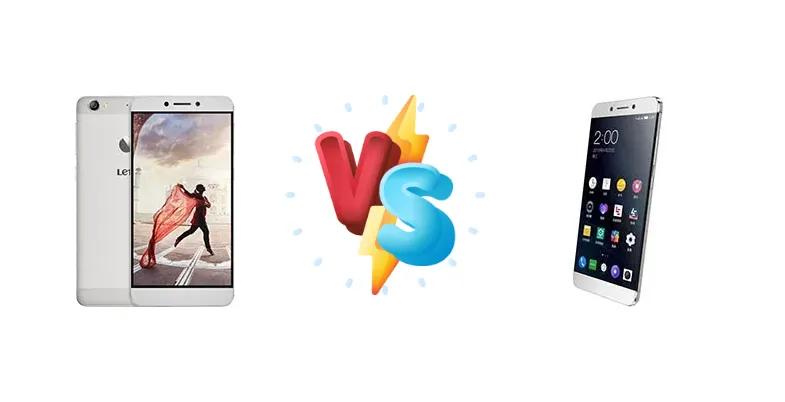
The LeEco Le 1s disrupted the budget smartphone market with its aggressive pricing and solid specs. The Le 2 aimed to build on that success, introducing a more powerful chipset and faster charging. But does the upgrade justify the cost, or are the differences marginal for the average user? This comparison breaks down the key distinctions between these two LeEco devices.
🏆 Quick Verdict
For most users, the LeEco Le 2 is the superior choice. Its Mediatek Helio X20 (or Snapdragon 652 variant) offers a significant performance boost over the Le 1s' Helio X10, particularly in multi-tasking and demanding applications. The addition of 18W fast charging is a welcome improvement, making the Le 2 a more convenient daily driver.
| Network |
|---|
| 2G bands | GSM 850 / 900 / 1800 / 1900 - SIM 1 & SIM 2 | GSM 850 / 900 / 1800 / 1900 - SIM 1 & SIM 2 |
| 3G bands | HSDPA 850 / 900 / 1900 / 2100 | HSDPA 850 / 1700(AWS) / 1900 / 2100 |
| 4G bands | 1, 3, 7, 38, 39, 40, 41 | 1, 2, 3, 4, 5, 7, 8, 20, 38, 40, 41 |
| Speed | HSPA, LTE | Yes, 384 kbps |
| Technology | GSM / HSPA / LTE | GSM / HSPA / LTE |
| Launch |
|---|
| Announced | 2016, February. Released 2016, February | 2016, April. Released 2016, April |
| Status | Discontinued | Discontinued |
| Body |
|---|
| Dimensions | 151.1 x 74.2 x 7.6 mm (5.95 x 2.92 x 0.30 in) | 151.1 x 74.2 x 7.5 mm (5.95 x 2.92 x 0.30 in) |
| SIM | Nano-SIM + Micro-SIM | Nano-SIM + Nano-SIM |
| Weight | 169 g (5.96 oz) | 153 g (5.40 oz) |
| Display |
|---|
| Resolution | 1080 x 1920 pixels, 16:9 ratio (~401 ppi density) | 1080 x 1920 pixels, 16:9 ratio (~401 ppi density) |
| Size | 5.5 inches, 83.4 cm2 (~74.4% screen-to-body ratio) | 5.5 inches, 83.4 cm2 (~74.4% screen-to-body ratio) |
| Type | IPS LCD | IPS LCD |
| Platform |
|---|
| CPU | Octa-core 2.2 GHz Cortex-A53 | Deca-core (2x2.3 GHz Cortex-A72, 4x2 GHz Cortex-A53, 4x1.4 GHz Cortex-A53)Octa-core (4x1.4 GHz Cortex-A53 & 4x1.8 GHz Cortex-A72) |
| Chipset | Mediatek MT6795 Helio X10 (28 nm) | Mediatek MT6797 Helio X20 (20 nm)Qualcomm MSM8976 Snapdragon 652 (28 nm) |
| GPU | PowerVR G6200 | Mali-T880 MP4Adreno 510 |
| OS | Android 5.0 (Lollipop) - LeEco Le 1sAndroid 6.0 (Marshmallow) - LeEco Le 1s Eco | Android 6.0 (Marshmallow), EUI 5.6 |
| Memory |
|---|
| Card slot | No | No |
| Internal | 32GB 3GB RAM | 32GB 3GB RAM, 64GB 3GB RAM |
| | eMMC 5.0 | eMMC 5.1 |
| Main Camera |
|---|
| Features | LED flash, panorama, HDR | Dual-LED dual-tone flash, panorama, HDR |
| Single | 13 MP, AF | 16 MP, f/2.0, PDAF |
| Video | 4K@30fps | 4K@30fps, 1080p@30fps, 720p@120fps |
| Selfie camera |
|---|
| Single | 5 MP | 8 MP, f/2.2, 1/3.2", 1.4µm |
| Video | - | 1080p@30fps |
| Sound |
|---|
| 3.5mm jack | Yes | No |
| 35mm jack | Yes | No |
| Loudspeaker | Yes | Yes |
| | - | 24-bit/192kHz audio |
| Comms |
|---|
| Bluetooth | 4.1, A2DP, LE | 4.1, A2DP, LE |
| Infrared port | Yes | Yes |
| NFC | No | No |
| Positioning | GPS, GLONASS | GPS, GLONASS, BDS |
| Radio | No | No |
| USB | USB Type-C (MHL2 TV-out) | USB Type-C |
| WLAN | Wi-Fi 802.11 a/b/g/n/ac, dual-band, Wi-Fi Direct | Wi-Fi 802.11 a/b/g/n/ac, dual-band, Wi-Fi Direct |
| Features |
|---|
| Sensors | Fingerprint (rear-mounted), accelerometer, proximity, compass | Fingerprint (rear-mounted), accelerometer, gyro, proximity, compass |
| Battery |
|---|
| Charging | - | 18W wired, QC2, 50% in 30 min |
| Type | Li-Ion 3000 mAh, non-removable | Li-Ion 3000 mAh, non-removable |
| Misc |
|---|
| Colors | Gold, Silver, Gray | Rose gold, gold, silver, grey |
| Models | Le X507, Le X509, Letv X500 | Le X526, Le X620, Le X520, Le X527, X526 |
| Price | About 210 EUR | About 190 EUR |
LeEco Le 1s
- More affordable price point.
- Functional for basic smartphone tasks.
- Simple and straightforward user experience.
- Significantly slower processor.
- Slower charging speeds.
- Less responsive multitasking.
LeEco Le 2
- Faster and more powerful processor (Helio X20 or Snapdragon 652).
- 18W fast charging with Quick Charge 2.0.
- Improved multitasking and app responsiveness.
- Higher price compared to the Le 1s.
- Potential for slightly higher power consumption.
- Software support may be limited due to LeEco's market exit.
Display Comparison
Both devices likely feature similar 5.5-inch Full HD IPS LCD panels, given LeEco's market positioning. However, detailed display specs like peak brightness and color gamut coverage are unavailable. The focus here is on processing power, not display fidelity. The absence of information on PWM dimming rates prevents a comparison regarding eye strain.
Camera Comparison
Detailed camera specifications are lacking. Given the price point, both devices likely feature similar camera setups, potentially with a 13MP main sensor. The Le 2's more powerful processor *could* translate to faster image processing and improved low-light performance, but this is speculative without detailed camera sensor and software information. Any 2MP or lower resolution secondary cameras are unlikely to offer significant value.
Performance
The core difference lies in the chipset. The Le 1s utilizes the Mediatek MT6795 Helio X10, an octa-core processor built on a 28nm process. The Le 2, however, offers two distinct configurations: the Mediatek MT6797 Helio X20 (20nm) and the Qualcomm MSM8976 Snapdragon 652 (28nm). The Helio X20's deca-core architecture – featuring two Cortex-A72 cores for peak performance, four Cortex-A53 cores for balanced tasks, and four additional Cortex-A53 cores for efficiency – provides a substantial advantage over the Le 1s' homogenous octa-core Cortex-A53 setup. The Snapdragon 652 variant, while still an upgrade, offers a more conventional octa-core configuration with Cortex-A72 and A53 cores. The 20nm process of the Helio X20 also contributes to improved thermal efficiency compared to the 28nm process of both the Helio X10 and the Snapdragon 652, potentially reducing throttling during sustained workloads.
Battery Life
Battery capacity is not specified for either device. However, the Le 2's inclusion of 18W wired charging with Quick Charge 2.0 support is a significant advantage. The Le 1s likely supports standard charging speeds. The 50% charge in 30 minutes claim for the Le 2 demonstrates a tangible benefit for users who need to quickly top up their battery. Even with similar battery capacities, the faster charging speed makes the Le 2 more convenient.
Buying Guide
Buy the LeEco Le 1s if you prioritize absolute affordability and only need a phone for basic tasks like calling, texting, and light social media. It remains a functional device for minimal smartphone usage. Buy the LeEco Le 2 if you value smoother performance, faster charging, and a more responsive user experience, even if it means spending a bit more. It's the better option for users who enjoy mobile gaming or frequently switch between apps.
Frequently Asked Questions
❓ Which LeEco device is better for playing demanding mobile games like PUBG or Call of Duty?
The LeEco Le 2, particularly the variant with the Mediatek Helio X20, is significantly better suited for gaming. Its deca-core processor and improved GPU provide a smoother and more consistent frame rate compared to the Le 1s' Helio X10. The Snapdragon 652 variant will also offer a noticeable improvement, though not as substantial as the Helio X20.
❓ Does the LeEco Le 2's faster charging significantly impact battery health over the long term?
While faster charging can theoretically contribute to slightly faster battery degradation, the impact is often minimal with modern battery management systems. The convenience of quickly topping up the battery on the LeEco Le 2 generally outweighs the potential for a small reduction in long-term battery health. Using optimized charging habits (avoiding overnight charging to 100%) can further mitigate any potential issues.
❓ Given LeEco's exit from many markets, is software support a concern for either of these devices?
Yes, software support is a significant concern for both devices. LeEco has largely ceased providing updates for its smartphones. This means you're unlikely to receive any further Android version updates or security patches. Users should be aware of this limitation before purchasing either device.