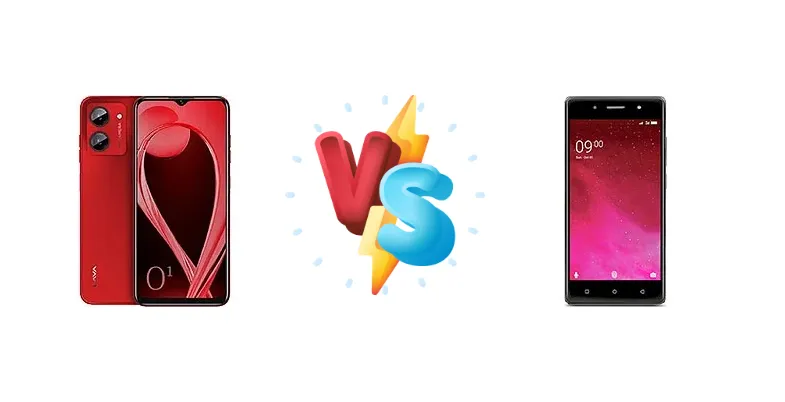
Lava is targeting the entry-level smartphone market with the O1 and Z80, but these phones represent very different approaches to affordability. The O1 leverages a newer, more efficient chipset, while the Z80 opts for a tried-and-true, albeit older, platform. This comparison dissects the key differences to help you determine which device delivers the best value for your needs.
🏆 Quick Verdict
For most users, the Lava O1 is the superior choice. Its Unisoc T606 chipset provides a significantly more responsive experience and better long-term software support potential. While the Z80 is cheaper, the performance deficit is substantial, making the O1 a worthwhile investment.
| Network |
|---|
| 2G bands | GSM 900 / 1800 | GSM 900 / 1800 - SIM 1 & SIM 2 |
| 3G bands | HSDPA 900 / 2100 | HSDPA 900 / 2100 |
| 4G bands | 1, 3, 5, 8, 40, 41 | 1, 3, 5, 40, 41 |
| Speed | HSPA, LTE | HSPA 42.2/5.76 Mbps, LTE Cat4 150/50 Mbps |
| Technology | GSM / HSPA / LTE | GSM / HSPA / LTE |
| Launch |
|---|
| Announced | 2023, July 04 | 2017, September. Released 2017, September |
| Status | Available. Released 2023, July 07 | Discontinued |
| Body |
|---|
| Build | Glass front, plastic frame, plastic back | - |
| Dimensions | 163.7 x 75.3 x 9.3 mm (6.44 x 2.96 x 0.37 in) | 148.5 x 73.1 x 8.1 mm (5.85 x 2.88 x 0.32 in) |
| SIM | Nano-SIM + Nano-SIM | Nano-SIM + Micro-SIM |
| Weight | 199.5 g (7.05 oz) | 136.8 g (4.83 oz) |
| Display |
|---|
| Resolution | 720 x 1600 pixels, 20:9 ratio (~267 ppi density) | 720 x 1280 pixels, 16:9 ratio (~294 ppi density) |
| Size | 6.56 inches, 103.9 cm2 (~84.3% screen-to-body ratio) | 5.0 inches, 68.9 cm2 (~63.5% screen-to-body ratio) |
| Type | IPS LCD, 90Hz | IPS LCD |
| Platform |
|---|
| CPU | Octa-core (2x1.6 GHz Cortex-A75 & 6x1.6 GHz Cortex-A55) | Quad-core 1.3 GHz Cortex-A53 |
| Chipset | Unisoc T606 (12 nm) | Mediatek MT6737 (28 nm) |
| GPU | Mali-G57 MP1 | Mali-T720MP2 |
| OS | Android 13 | Android 7.0 (Nougat) |
| Memory |
|---|
| Card slot | microSDXC (uses shared SIM slot) | microSDXC (uses shared SIM slot) |
| Internal | 64GB 4GB RAM | 16GB 3GB RAM |
| | - | eMMC 5.0 |
| Main Camera |
|---|
| Features | LED flash, HDR, panorama | LED flash |
| Single | 13 MP | 8 MP, f/2.0 |
| Video | Yes | 720p@30fps |
| Selfie camera |
|---|
| Features | - | LED flash |
| Single | 5 MP | 5 MP, f/2.0, 1/4.0", 1.4µm |
| Video | Yes | - |
| Sound |
|---|
| 3.5mm jack | - | Yes |
| 35mm jack | Yes | Yes |
| Loudspeaker | Yes | Yes |
| Comms |
|---|
| Bluetooth | 5.0, A2DP, LE | 4.0, A2DP |
| NFC | No | No |
| Positioning | GPS, GLONASS | GPS, GLONASS |
| Radio | FM radio | FM radio |
| USB | USB Type-C 2.0, OTG | microUSB 2.0 |
| WLAN | Wi-Fi 802.11 b/g/n/ac | Wi-Fi 802.11 a/b/g/n/ac, dual-band, Wi-Fi Direct |
| Features |
|---|
| Sensors | Fingerprint (side-mounted), accelerometer, proximity | Fingerprint (rear-mounted), accelerometer, gyro, proximity, compass |
| Battery |
|---|
| Charging | 18W wired | - |
| Type | Li-Po 5000 mAh | Li-Po 2500 mAh, removable |
| Misc |
|---|
| Colors | Prism Blue, Lively Lavender, Luxe Red | Black |
| Models | - | Z80 |
| Price | - | About 9000 INR |
Lava O1
- Significantly faster processor for smoother performance
- More efficient chipset for better battery life
- 18W fast charging support
- Potential for better camera image processing
- Likely a higher price point than the Z80
- May not have a dramatically superior display
Lava Z80
- Lower price point
- Simple and straightforward user experience
- Adequate for basic calling and texting
- Potentially longer standby time (due to less demanding processor)
- Slow processor and limited multitasking capabilities
- Poor performance with demanding apps and games
- Less power-efficient chipset
- Limited software update potential
Display Comparison
Display specifications are not provided, so a direct comparison is limited. However, given the price points, both devices likely utilize LCD panels. The Z80's older chipset may limit its ability to drive a high-resolution or high-refresh-rate display effectively. The O1, with its more modern processor, has the potential for a smoother visual experience, even if the resolution remains similar.
Camera Comparison
Camera details are absent beyond the devices themselves. Given the target market, both phones likely feature basic camera setups. However, the O1’s more powerful ISP (Image Signal Processor) within the Unisoc T606 chipset will likely result in better image processing, particularly in low-light conditions. The Z80’s older ISP will be more limited in its ability to reduce noise and enhance detail. We can assume both will have a primary camera and potentially a secondary depth or macro sensor, but image quality will heavily favor the O1.
Performance
The core difference lies in the chipsets. The Lava O1’s Unisoc T606, built on a 12nm process, features an octa-core configuration with a mix of Cortex-A75 and A55 cores. This architecture provides a substantial performance advantage over the Lava Z80’s MediaTek MT6737, a quad-core Cortex-A53 processor fabricated on a much older 28nm node. The 28nm process inherently consumes more power and generates more heat, leading to potential throttling under sustained load. The T606’s A75 cores offer significantly higher single-core performance, crucial for app launch times and general responsiveness. The Z80 will struggle with demanding applications and multitasking.
Battery Life
Battery capacity is not specified. However, the Lava Z80’s 28nm chipset will be less power-efficient than the O1’s 12nm Unisoc T606. While the Z80 might have a slightly larger battery, the increased power draw of the chipset will likely negate any capacity advantage. The O1’s 18W wired charging is a positive, suggesting faster replenishment compared to what the Z80 likely offers, though actual charging speeds depend on the included charger.
Buying Guide
Buy the Lava O1 if you prioritize a smooth user experience, multitasking, and future-proofing, even on a tight budget. It's ideal for users who frequently use social media, browse the web, or play casual games. Buy the Lava Z80 if your primary need is a basic calling and texting device, and you absolutely cannot exceed a very low price point, accepting significant performance limitations.
Frequently Asked Questions
❓ Will the Lava Z80 struggle with popular apps like WhatsApp and Facebook?
Yes, the MediaTek MT6737 is a relatively weak processor. While it can run these apps, you may experience noticeable lag, slow loading times, and difficulty multitasking. The Lava O1’s Unisoc T606 will provide a much smoother and more responsive experience with these applications.
❓ Is the Lava O1 a good choice for playing mobile games?
The Lava O1 is suitable for casual mobile games. However, demanding titles like PUBG Mobile or Call of Duty: Mobile will likely require significant graphics settings reductions and may still experience frame drops. The Lava Z80 is not recommended for gaming due to its limited processing power.
❓ How long will software updates be supported on each device?
Lava’s software update commitment is not widely publicized. However, given the newer chipset in the O1, it is more likely to receive at least one major Android version update and security patches for a longer period compared to the Z80, which is based on an older platform.
❓ Does the Lava Z80 support 4G LTE connectivity?
Yes, the MediaTek MT6737 does support 4G LTE. However, the modem’s performance may be less efficient than newer modems found in the Lava O1, potentially impacting data speeds and battery life while connected to 4G networks.