
Lava Agni 4 vs Samsung Galaxy A15 5G: A Deep Dive into Performance and Battery Life
| Phones Images | |||||
|---|---|---|---|---|---|
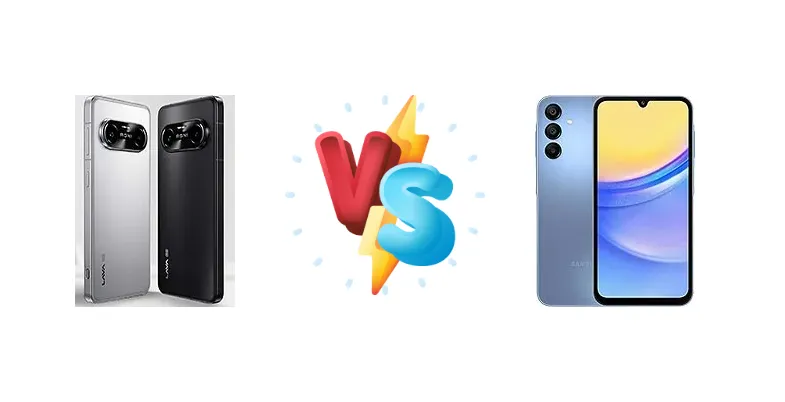
|
🏆 Quick Verdict
For users prioritizing raw performance and faster charging, the Lava Agni 4 is the clear winner. Its Dimensity 8350 chipset offers a significant leap over the Galaxy A15 5G’s Dimensity 6100+. However, if all-day battery life and a brighter display are paramount, the Samsung Galaxy A15 5G provides a compelling alternative.
| PHONES | ||
|---|---|---|
| Phone Names | Lava Agni 4 | Samsung Galaxy A15 5G |
| Network | ||
|---|---|---|
| 2G bands | GSM 850 / 900 / 1800 / 1900 | GSM 850 / 900 / 1800 / 1900 |
| 3G bands | HSDPA 850 / 900 / 1900 / 2100 | HSDPA 850 / 900 / 1700(AWS) / 1900 / 2100 |
| 4G bands | 1, 3, 5, 7, 8, 20, 28, 38, 40, 41 | 1, 2, 3, 4, 5, 7, 8, 12, 17, 20, 26, 28, 38, 40, 41, 66 |
| 5G bands | 1, 2, 3, 5, 7, 8, 20, 28, 38, 40, 41, 66, 77, 78 SA/NSA | 1, 3, 5, 7, 8, 26, 28, 40, 41, 66, 77, 78 SA/NSA/Sub6 |
| Speed | HSPA, LTE, 5G | HSPA, LTE, 5G |
| Technology | GSM / HSPA / LTE / 5G | GSM / HSPA / LTE / 5G |
| Launch | ||
|---|---|---|
| Announced | 2025, November 20 | 2023, December 11 |
| Status | Available. Released 2025, November 25 | Available. Released 2023, December 16 |
| Body | ||
|---|---|---|
| Build | Glass front (Gorilla Glass 5), aluminum frame | Glass front, plastic back, plastic frame |
| Dimensions | 160.7 x 75.3 x 8.6 mm (6.33 x 2.96 x 0.34 in) | 160.1 x 76.8 x 8.4 mm (6.30 x 3.02 x 0.33 in) |
| SIM | Nano-SIM + Nano-SIM | · Nano-SIM· Nano-SIM + Nano-SIM |
| Weight | 208 g (7.34 oz) | 200 g (7.05 oz) |
| Display | ||
|---|---|---|
| Protection | Corning Gorilla Glass 5 | - |
| Resolution | 1220 x 2712 pixels, 20:9 ratio (~446 ppi density) | 1080 x 2340 pixels, 19.5:9 ratio (~396 ppi density) |
| Size | 6.67 inches, 107.4 cm2 (~88.7% screen-to-body ratio) | 6.5 inches, 103.7 cm2 (~84.3% screen-to-body ratio) |
| Type | AMOLED, 1B colors, 120Hz, HDR, 2400 nits (peak) | Super AMOLED, 90Hz, 800 nits (HBM) |
| Platform | ||
|---|---|---|
| CPU | Octa-core (1x3.35 GHz Cortex-A715 & 3x3.20 GHz Cortex-A715 & 4x2.20 GHz Cortex-A510) | Octa-core (2x2.2 GHz Cortex-A76 & 6x2.0 GHz Cortex-A55) |
| Chipset | Mediatek Dimensity 8350 (4 nm) | Mediatek Dimensity 6100+ (6 nm) |
| GPU | Mali G615-MC6 | Mali-G57 MC2 |
| OS | Android 15, up to 3 major Android upgrades | Android 14, upgradable to Android 16, One UI 8, up to 4 major Android upgrades |
| Memory | ||
|---|---|---|
| Card slot | No | microSDXC (uses shared SIM slot) |
| Internal | 256GB 8GB RAM | 64GB 4GB RAM, 128GB 4GB RAM, 128GB 6GB RAM, 128GB 8GB RAM, 256GB 8GB RAM |
| Main Camera | ||
|---|---|---|
| Dual | 50 MP, f/1.9, (wide), 1/1.55", 1.0µm, PDAF, OIS 8 MP, 112˚ (ultrawide) | - |
| Features | Dual-LED flash, HDR, panorama | LED flash, panorama, HDR |
| Triple | - | 50 MP, f/1.8, (wide), AF 5 MP, f/2.2, (ultrawide) 2 MP (macro) |
| Video | 4K@30/60fps, 1080p@30fps | 1080p@30fps, gyro-EIS |
| Selfie camera | ||
|---|---|---|
| Single | 50 MP, (wide), 1/2.76", 0.64µm | 13 MP, f/2.0, (wide) |
| Video | 4K@30/60fps, 1080p@30fps | 1080p@30fps |
| Sound | ||
|---|---|---|
| 35mm jack | No | Yes |
| Loudspeaker | Yes, with stereo speakers | Yes |
| Comms | ||
|---|---|---|
| Bluetooth | 5.4, A2DP, LE | 5.3, A2DP, LE |
| Infrared port | Yes | - |
| NFC | No | Yes (market/region dependent) |
| Positioning | GPS, GLONASS | GPS, GALILEO, GLONASS, BDS, QZSS |
| Radio | FM radio | No |
| USB | USB Type-C 3.2, OTG | USB Type-C 2.0 |
| WLAN | Wi-Fi 802.11 a/b/g/n/ac/6e, dual-band | Wi-Fi 802.11 a/b/g/n/ac, dual-band, Wi-Fi Direct |
| Features | ||
|---|---|---|
| Sensors | Fingerprint (under display, optical), accelerometer, gyro, proximity, compass | Fingerprint (side-mounted), accelerometer, gyro, compass |
| Battery | ||
|---|---|---|
| Charging | 66W wired, 50% in 19 min, 100% in 51 min | 25W wired |
| Type | Li-Po 5000 mAh | 5000 mAh |
| Misc | ||
|---|---|---|
| Colors | Phantom Black, Lunar Mist | Brave Black, Personality Yellow, Magical Blue, Optimistic Blue |
| Models | - | SM-A156B, SM-A156B/DS, SM-A156P, SM-A156P/DS, SM-A156U, SM-A156U1, SM-A156U1/DS, SM-A156W, SM-A156P/N, SM-A156P/DSN, SM-S156VL, SM-A156M, SM-A156E, SM-A156E/DSN |
| Price | ₹ 24,998 | € 167.00 / $ 79.97 / ₹ 17,490 |
| SAR EU | - | 0.80 W/kg (head) 1.46 W/kg (body) |
Lava Agni 4
- Significantly faster processor for demanding tasks
- Much faster 66W charging
- Potentially better thermal management due to 4nm process
- Battery life is unknown and may be lower than the A15
- Display brightness likely lower than the A15
Samsung Galaxy A15 5G
- Excellent battery life (14:31h active use)
- Brighter display (786 nits)
- Samsung’s established brand and software support
- Slower processor for gaming and multitasking
- Slower 25W charging
Display Comparison
The Samsung Galaxy A15 5G boasts a brighter display, reaching a measured 786 nits, making it more usable in direct sunlight. While the Agni 4’s display specs are not provided, the A15’s brightness advantage is significant. The A15’s panel technology is likely LCD, while the Agni 4’s panel type is unknown. The A15’s brightness is a key advantage for outdoor users, while the Agni 4’s display quality will depend on its panel type and color calibration.
Camera Comparison
Without detailed camera specifications for the Lava Agni 4, a direct comparison is limited. However, the Galaxy A15 5G’s camera system is likely focused on everyday photography. The absence of information regarding sensor size and OIS on the Agni 4 suggests it may not compete directly with flagship camera features. Users should expect the A15 to deliver acceptable image quality in good lighting conditions, while the Agni 4’s camera performance will depend heavily on its sensor and image processing capabilities.
Performance
The Lava Agni 4’s Mediatek Dimensity 8350 (4nm) represents a substantial performance advantage over the Galaxy A15 5G’s Dimensity 6100+ (6nm). The 8350 features a more powerful CPU configuration – a 1x3.35 GHz Cortex-A715, 3x3.20 GHz Cortex-A715, and 4x2.20 GHz Cortex-A510 – compared to the A15’s 2x2.2 GHz Cortex-A76 and 6x2.0 GHz Cortex-A55. The 4nm process node of the Dimensity 8350 also contributes to better thermal efficiency, potentially reducing throttling during sustained workloads. This translates to smoother gaming, faster app loading times, and a more responsive overall experience on the Agni 4.
Battery Life
The Samsung Galaxy A15 5G excels in battery life, achieving an impressive 14:31 hours of active use. While the Agni 4’s battery capacity is unknown, its 66W wired charging significantly outperforms the A15’s 25W charging. The Agni 4 can reach 50% charge in just 19 minutes and 100% in 51 minutes, offering a substantial convenience advantage. The A15’s longer battery life is ideal for users who prioritize endurance, but the Agni 4’s faster charging mitigates downtime.
Buying Guide
Buy the Lava Agni 4 if you need a phone for demanding tasks like gaming, video editing, or heavy multitasking, and value quick charging. Buy the Samsung Galaxy A15 5G if you prefer a phone that can reliably last a full day on a single charge, and appreciate a brighter screen for outdoor visibility, even if it means sacrificing some processing power.