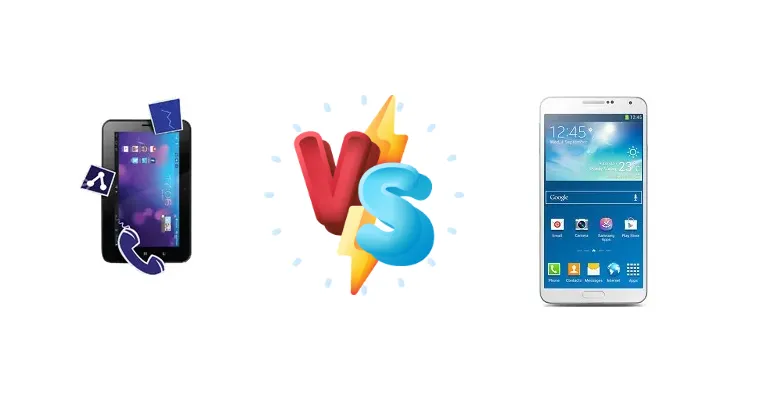
The Samsung Galaxy Note 3 represented the pinnacle of Android flagship devices in 2013, boasting a powerful processor and innovative features. The Karbonn A34, released much later, targets the budget-conscious consumer. This comparison examines how these devices stack up, considering the significant technological advancements that occurred between their releases.
🏆 Quick Verdict
For the average user in 2024, the Samsung Galaxy Note 3 remains the superior device. While the Karbonn A34 offers affordability, the Note 3’s Snapdragon 800 (or Exynos 5420) chipset delivers significantly better performance, making it more capable for demanding tasks and future-proofing it against software updates.
| Network |
|---|
| 2G bands | GSM 900 / 1800 / 1900 - SIM 1 & SIM 2 | GSM 850 / 900 / 1800 / 1900 - all models |
| 3G bands | - | HSDPA 850 / 900 / 1900 / 2100 - N9005, N9002, N9006 |
| 4G bands | - | 1, 3, 5, 7, 8, 20 - N9005 |
| EDGE | Yes | - |
| GPRS | Yes | - |
| Speed | - | HSPA 42.2/5.76 Mbps, LTE Cat4 150/50 Mbps |
| Technology | GSM | GSM / CDMA / HSPA / EVDO / LTE |
| Launch |
|---|
| Announced | 2013. Released 2013 | 2013, September 04. Released 2013, September |
| Status | Discontinued | Discontinued |
| Body |
|---|
| Build | - | Glass front (Gorilla Glass 3), plastic back, plastic frame |
| Dimensions | 197 x 124 x 12.3 mm (7.76 x 4.88 x 0.48 in) | 151.2 x 79.2 x 8.3 mm (5.95 x 3.12 x 0.33 in) |
| SIM | Dual SIM | Micro-SIM |
| Weight | 335 g (11.82 oz) | 168 g (5.93 oz) |
| Display |
|---|
| Protection | - | Corning Gorilla Glass 3 |
| Resolution | 480 x 800 pixels, 5:3 ratio (~133 ppi density) | 1080 x 1920 pixels, 16:9 ratio (~386 ppi density) |
| Size | 7.0 inches, 139.5 cm2 (~57.1% screen-to-body ratio) | 5.7 inches, 89.6 cm2 (~74.8% screen-to-body ratio) |
| Type | TFT | Super AMOLED |
| Platform |
|---|
| CPU | 1.0 GHz Cortex-A9 | Quad-core 2.3 GHz Krait 400 - N9005, N9002Octa-core (4x1.9 GHz Cortex-A15 & 4x1.3 GHz Cortex-A7) - N9000 |
| Chipset | Mediatek MT6515 | Qualcomm Snapdragon 800 (28 nm) - N9005, N9002Exynos 5420 Octa (28 nm) - N9000 |
| GPU | PowerVR SGX531 | Adreno 330 - N9005, N9002Mali-T628 MP6 - N9000 |
| OS | Android 4.0 (Ice Cream Sandwich) | Android 4.3 (Jelly Bean), upgradable to 4.4.2 (KitKat), upgradable to 5.0 (Lollipop) |
| Memory |
|---|
| Card slot | microSDHC (dedicated slot) | microSDXC (dedicated slot) |
| Internal | 4GB 512MB RAM | 16GB 3GB RAM, 32GB 3GB RAM, 64GB 3GB RAM |
| Main Camera |
|---|
| Features | - | LED flash, panorama, HDR |
| Single | 2 MP | 13 MP, f/2.2, 31mm (standard), 1/3.1", 1.12µm, AF |
| Video | Yes | 4K@30fps, 1080p@60fps (N9005, N9002)/ 1080p (N9000) |
| Selfie camera |
|---|
| Single | Yes | 2 MP, f/2.4, 27mm (wide) |
| Video | - | 1080p@30fps |
| Sound |
|---|
| 3.5mm jack | Yes | Yes |
| 35mm jack | Yes | Yes |
| Loudspeaker | Yes | Yes |
| Comms |
|---|
| Bluetooth | Yes | 4.0, A2DP, EDR, LE |
| Infrared port | - | Yes |
| NFC | No | Yes |
| Positioning | GPS | GPS, GLONASS |
| Radio | FM radio | No |
| USB | Proprietary | microUSB 3.0 (MHL 2 TV-out), OTG |
| WLAN | Wi-Fi 802.11 b/g/n, hotspot | Wi-Fi 802.11 a/b/g/n/ac, dual-band, Wi-Fi Direct, DLNA, hotspot |
| Features |
|---|
| Sensors | Accelerometer | Accelerometer, gyro, proximity, compass, barometer, temperature, humidity, gesture |
| Battery |
|---|
| Stand-by | Up to 240 h | Up to 420 h (3G) |
| Talk time | Up to 8 h | Up to 21 h (3G) |
| Type | Li-Ion 3000 mAh battery | Li-Ion 3200 mAh, removable |
| Misc |
|---|
| Colors | Gray/White | Black, White, Pink, Merlot Red, Rose Gold Black, Rose Gold White |
| Models | - | SM-N900, SM-N9002, SM-N9005, SM-N9007, SM-N9008, SM-N9008S, SM-N9008V, SM-N9009, SM-N9009V, SM-N900A, SM-N900K, SM-N900L, SM-N900P, SM-N900R4, SM-N900S, SM-N900T, SM-N900U, SM-N900V, SM-N900W8, SM-N900X, SM-N9000Q, SM-N9006, SM-9005 |
| Price | About 90 EUR | About 420 EUR |
| SAR EU | - | 0.29 W/kg (head) 0.36 W/kg (body) |
| Tests |
|---|
| Audio quality | - |
Noise -96.5dB / Crosstalk -96.3dB |
| Battery life | - |
Endurance rating 75h
|
| Camera | - |
Photo / Video |
| Display | - |
Contrast ratio: Infinite (nominal) / 3.997:1 (sunlight) |
| Loudspeaker | - |
-31.7 LUFS (Below average)
|
Karbonn A34
- Significantly lower price point
- Compact and lightweight design
- Functional for basic smartphone tasks
- Outdated processor and limited performance
- Lower-quality display
- Inferior camera capabilities
Samsung Galaxy Note 3
- Powerful Snapdragon 800 or Exynos 5420 processor
- Larger, higher-quality display
- More versatile camera system
- Older device, potential battery degradation
- May require purchasing used
- Larger and heavier than the Karbonn A34
Display Comparison
Both devices share an 'infinite' (nominal) contrast ratio and a 3.997:1 sunlight contrast ratio, suggesting similar panel characteristics in ideal conditions. However, the Note 3’s larger display and the processing power behind it likely translate to better color accuracy and brightness control. The Karbonn A34, being a budget device, likely utilizes a lower-quality panel with narrower viewing angles and less accurate color reproduction. The Note 3’s display was a key selling point in 2013, and that advantage persists.
Camera Comparison
Both devices offer photo and video capabilities, but the Note 3’s camera system is expected to be far more advanced. While specific sensor details are missing, the Note 3 likely featured a larger sensor and more sophisticated image processing algorithms. The Karbonn A34, typical of budget phones, likely uses a smaller sensor and simpler software, resulting in lower image quality, especially in low-light conditions. The Note 3’s camera was highly regarded in its era, and its capabilities remain competitive even today.
Performance
The performance gap is substantial. The Karbonn A34’s Mediatek MT6515, with its 1.0 GHz Cortex-A9 CPU, is significantly outmatched by the Samsung Galaxy Note 3’s Snapdragon 800 (2.3 GHz Krait 400) or Exynos 5420 (octa-core). The Snapdragon 800, built on a 28nm process, offered flagship-level performance in its time, capable of handling demanding games and multitasking. The Exynos 5420, also on 28nm, employed a big.LITTLE architecture for power efficiency. The Cortex-A9 in the Karbonn A34 is an older architecture, resulting in slower application loading times and a less responsive user experience. The Note 3’s superior GPU will also provide a much smoother gaming experience.
Battery Life
Both devices boast an endurance rating of 75 hours, suggesting comparable battery life under similar usage scenarios. However, the Note 3’s more efficient processor and software optimizations likely contribute to better real-world performance. The Karbonn A34’s older chipset may consume more power for the same tasks. While charging wattage isn’t specified for either device, the Note 3 likely supported faster charging technologies available at the time of its release.
Buying Guide
Buy the Karbonn A34 if you need a basic smartphone for essential tasks like calls, texts, and light social media use, and your budget is extremely limited. Buy the Samsung Galaxy Note 3 if you prioritize performance, a larger and higher-quality display, and a more versatile camera experience, even if it means purchasing a used device.
Frequently Asked Questions
❓ Is the Samsung Galaxy Note 3 still receiving software updates?
No, the Samsung Galaxy Note 3 is no longer officially supported with software updates. However, the Android community has developed custom ROMs that can provide newer Android versions and security patches, but installing these requires technical expertise and voids the warranty.
❓ Will the Mediatek MT6515 in the Karbonn A34 struggle with modern apps?
Yes, the Mediatek MT6515 is a very basic processor and will likely struggle with many modern apps, especially those that are graphically intensive or require significant processing power. Expect slow loading times, lag, and potential crashes.
❓ Does the Samsung Galaxy Note 3 support 4G LTE?
The Samsung Galaxy Note 3 had different variants. The N9005 model *does* support 4G LTE, while the N9000 (Exynos version) does not. Ensure you are purchasing the correct model if 4G connectivity is important to you.
❓ Is the battery on a used Samsung Galaxy Note 3 likely to be in good condition?
Given the age of the Note 3, the battery is likely to have degraded. Expect reduced battery life compared to when the device was new. Replacing the battery is possible, but requires some technical skill or a professional repair service.