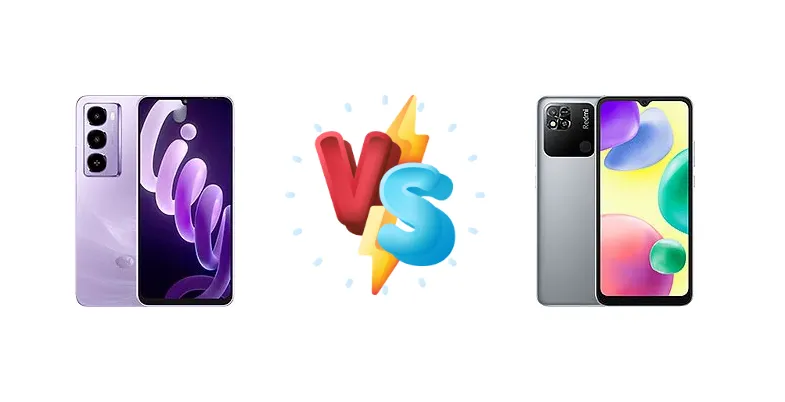
The sub-$150 smartphone market is fiercely competitive, and the itel City 100 and Xiaomi Redmi 10A are two contenders vying for your attention. Both aim to deliver essential smartphone functionality at an incredibly affordable price, but they take different approaches to achieving this. This comparison dives deep into their specifications to determine which device offers the best overall experience.
🏆 Quick Verdict
For most users, the itel City 100 emerges as the stronger choice. Its Unisoc T7250 chipset, featuring Cortex-A75 cores, provides a noticeable performance advantage over the Redmi 10A’s Helio G25, especially in multitasking and app loading. The 18W charging is also a significant benefit, offsetting the potentially smaller battery capacity.
| Network |
|---|
| 2G bands | GSM 850 / 900 / 1800 / 1900 | GSM 850 / 900 / 1800 / 1900 |
| 3G bands | HSDPA 850 / 900 / 2100 | HSDPA 850 / 900 / 2100 |
| 4G bands | LTE | 1, 3, 5, 8, 40, 41 - International |
| Speed | HSPA, LTE | HSPA, LTE |
| Technology | GSM / HSPA / LTE | GSM / HSPA / CDMA2000 / LTE |
| | - | 1, 3, 5, 8, 34, 38, 39, 40, 41 - China |
| Launch |
|---|
| Announced | 2025, April 27 | 2022, March 29 |
| Status | Available. Released 2025, April 27 | Available. Released 2022, March 31 |
| Body |
|---|
| Dimensions | 167.7 x 77.5 x 7.7 mm (6.60 x 3.05 x 0.30 in) | 164.9 x 77.1 x 9 mm (6.49 x 3.04 x 0.35 in) |
| SIM | Nano-SIM + Nano-SIM | Nano-SIM + Nano-SIM |
| Weight | 185 g (6.53 oz) | 194 g (6.84 oz) |
| Display |
|---|
| Resolution | 720 x 1600 pixels, 20:9 ratio (~260 ppi density) | 720 x 1600 pixels, 20:9 ratio (~269 ppi density) |
| Size | 6.75 inches, 110.0 cm2 (~84.6% screen-to-body ratio) | 6.53 inches, 102.9 cm2 (~81.0% screen-to-body ratio) |
| Type | IPS LCD, 90Hz, 700 nits (HBM) | IPS LCD, 400 nits (typ) |
| Platform |
|---|
| CPU | Octa-core (2x1.8 GHz Cortex-A75 & 6x1.6 GHz Cortex-A55) | Octa-core (4x2.0 GHz Cortex-A53 & 4x1.5 GHz Cortex-A53) |
| Chipset | Unisoc T7250 (12 nm) | Mediatek MT6762G Helio G25 (12 nm) |
| GPU | Mali-G57 MP1 | PowerVR GE8320 |
| OS | Android 14, Pure 14.5 OS | Android 11, MIUI 12.5 |
| Memory |
|---|
| Card slot | microSDXC | microSDXC |
| Internal | 128GB 4GB RAM, 128GB 6GB RAM, 128GB 8GB RAM, 256GB 4GB RAM | 32GB 2GB RAM, 32GB 3GB RAM, 64GB 3GB RAM, 64GB 4GB RAM, 128GB 4GB RAM, 128GB 6GB RAM |
| Main Camera |
|---|
| Features | LED flash, HDR, panorama | LED flash |
| Single | 13 MP | 13 MP, f/2.2, (wide), 1.0µm, AF |
| Video | Yes | 1080p@30fps |
| Selfie camera |
|---|
| Features | - | HDR |
| Single | 8 MP | 5 MP |
| Video | Yes | 1080p@30fps |
| Sound |
|---|
| 3.5mm jack | - | Yes |
| 35mm jack | Yes | Yes |
| Loudspeaker | Yes | Yes |
| Comms |
|---|
| Bluetooth | Yes | 5.0, A2DP, LE |
| Infrared port | Yes | - |
| NFC | No | No |
| Positioning | GPS | GPS, GLONASS, BDS |
| Radio | Unspecified | No |
| USB | USB Type-C, OTG | microUSB 2.0 |
| WLAN | Yes | Wi-Fi 802.11 a/b/g/n, Wi-Fi Direct |
| Features |
|---|
| Sensors | Fingerprint (side-mounted); unspecified sensors | Fingerprint (rear-mounted), accelerometer, proximity |
| Battery |
|---|
| Charging | 18W wired
Reverse wired | 10W wired |
| Type | 5200 mAh | Li-Ion 5000 mAh |
| Misc |
|---|
| Colors | Navy Blue, Pure Titanium, Fairy Purple | Charcoal Black, Sea Blue, Slate Grey |
| Models | C671L | 220233L2C, 220233L2G, 220233L2I |
| Price | About 80 EUR | € 60.00 / $ 66.55 |
| SAR | - | 0.90 W/kg (head) 0.65 W/kg (body) |
| SAR EU | - | 0.40 W/kg (head) 0.99 W/kg (body) |
itel City 100
- Faster processor for smoother performance
- 18W fast charging for quicker top-ups
- More modern CPU architecture
- Battery capacity potentially smaller than Redmi 10A
- Brand recognition is lower than Xiaomi
Xiaomi Redmi 10A
- Larger battery capacity (typically 5000mAh)
- Established brand with wider support network
- Generally lower price point
- Slower processor leading to laggy performance
- Slow 10W charging
- Less efficient CPU architecture
Display Comparison
Neither device boasts a standout display. Both are likely utilizing LCD panels, common in this price bracket. The focus here isn't on visual fidelity, but on basic usability. Without specific resolution or brightness data, it's difficult to declare a clear winner. However, the Redmi 10A's larger screen size (typically 6.53 inches vs the City 100's likely 6.5 inches) may offer a slightly more immersive viewing experience, though at the cost of potentially lower pixel density.
Camera Comparison
Camera performance in this segment is rarely a highlight. Both phones likely feature a primary camera accompanied by basic auxiliary sensors. Without specific sensor details, it’s safe to assume image quality will be adequate for casual snapshots in good lighting conditions. The Redmi 10A often features a 13MP main sensor, while the itel City 100's sensor resolution is less commonly specified, but likely similar. Focusing on the processor's image signal processing (ISP) capabilities, the Unisoc T7250 may offer slightly better image processing due to its more modern architecture, but the difference will be minimal.
Performance
The performance gap is the most significant differentiator. The itel City 100’s Unisoc T7250, with its 2x 1.8 GHz Cortex-A75 cores and 6x 1.6 GHz Cortex-A55 cores, represents a more modern and capable architecture than the Redmi 10A’s MediaTek Helio G25. The G25 relies on 4x 2.0 GHz Cortex-A53 cores and 4x 1.5 GHz Cortex-A53 cores. The A75 cores in the itel offer a substantial boost in single-core performance, translating to snappier app launches and smoother multitasking. While both chipsets are 12nm, the architectural advantage of the Unisoc T7250 is clear. The Redmi 10A will likely struggle with more demanding applications.
Battery Life
The Redmi 10A typically features a 5000mAh battery, a common capacity in this price range. The itel City 100’s battery capacity is less frequently advertised, but is likely in the 4000-5000mAh range. However, the itel City 100’s 18W wired charging significantly outperforms the Redmi 10A’s 10W charging. This means the itel can replenish its battery much faster, reducing downtime. While the Redmi 10A may offer slightly longer screen-on time, the convenience of faster charging makes the itel a more practical choice for many users.
Buying Guide
Buy the itel City 100 if you prioritize responsiveness and faster charging for a smoother daily experience, even if it means potentially sacrificing some battery longevity. This phone is ideal for users who frequently switch between apps or need a phone that can quickly top up. Buy the Xiaomi Redmi 10A if your primary concern is maximizing battery life and you primarily use your phone for basic tasks like calls, texts, and light social media browsing. It’s a solid option for those who value simplicity and extended uptime.
Frequently Asked Questions
❓ Will the Unisoc T7250 in the itel City 100 handle popular apps like WhatsApp and Facebook smoothly?
Yes, the Unisoc T7250’s Cortex-A75 cores provide ample processing power for everyday apps like WhatsApp, Facebook, and web browsing. You should experience smooth scrolling and quick app loading times, unlike the Redmi 10A which may exhibit noticeable lag.
❓ How long will it take to fully charge the itel City 100 with the 18W charger compared to the Redmi 10A?
The itel City 100’s 18W charging will significantly reduce charging times. Expect a full charge in approximately 2-2.5 hours, whereas the Redmi 10A’s 10W charging will likely take 3.5-4 hours to reach 100%.
❓ Is the Redmi 10A a good option for playing mobile games?
The Redmi 10A’s Helio G25 is not ideal for gaming. While it can handle very basic games, more demanding titles will likely experience significant frame rate drops and lag. The itel City 100 offers a slightly better gaming experience, but neither phone is designed for serious mobile gaming.
❓ Does the itel City 100 support reverse wired charging?
Yes, the itel City 100 supports reverse wired charging, allowing you to use it as a power bank to charge other devices. This is a useful feature for emergencies and is not typically found on phones in this price range.