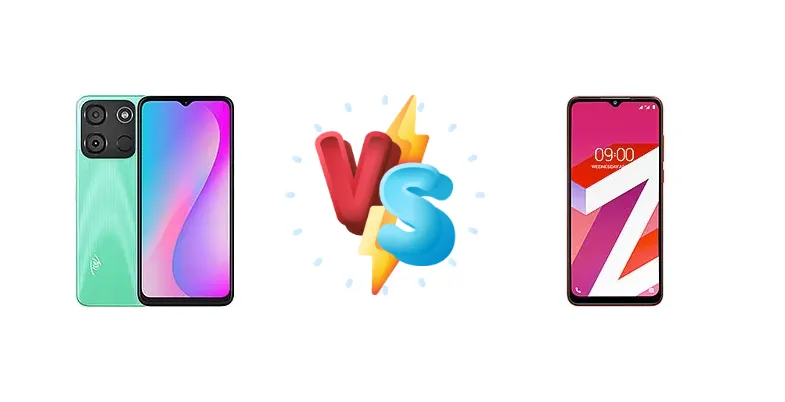
The itel A60 and Lava Z4 represent the fiercely competitive entry-level smartphone market. Both aim to deliver essential smartphone functionality at an incredibly affordable price point, but they take different approaches to achieving this. The itel A60 prioritizes extreme affordability, while the Lava Z4 attempts to offer a more robust performance profile. This comparison will dissect their key specifications to determine which device delivers the best value.
🏆 Quick Verdict
For the average user prioritizing basic tasks like calls, messaging, and light social media, the Lava Z4 is the superior choice. Its Mediatek Helio G35 chipset provides a significantly more responsive experience than the itel A60’s Unisoc SC9832E, justifying the likely price difference. However, the itel A60 remains a viable option for those on the absolute tightest of budgets.
| Network |
|---|
| 2G bands | GSM 850 / 900 / 1800 / 1900 | GSM 900 / 1800 |
| 3G bands | HSDPA 850 / 900 / 2100 | HSDPA 900 / 2100 |
| 4G bands | 1, 3, 5, 8, 40, 41 | 1, 3, 5, 8, 40, 41 |
| Speed | HSPA, LTE | HSPA 42.2/5.76 Mbps, LTE Cat4 150/50 Mbps |
| Technology | GSM / HSPA / LTE | GSM / HSPA / LTE |
| Launch |
|---|
| Announced | 2022 | 2021, January 07 |
| Status | Available. Released 2022 | Available. Released 2021, January 11 |
| Body |
|---|
| Build | - | Glass front, plastic back, plastic frame |
| Dimensions | - | 164.5 x 75.8 x 9 mm (6.48 x 2.98 x 0.35 in) |
| SIM | Dual SIM | Nano-SIM + Nano-SIM |
| Weight | - | 190 g (6.70 oz) |
| Display |
|---|
| Protection | - | Corning Gorilla Glass 3 |
| Resolution | 720 x 1612 pixels, 20:9 ratio (~267 ppi density) | 720 x 1600 pixels, 20:9 ratio (~270 ppi density) |
| Size | 6.6 inches, 104.6 cm2 | 6.51 inches, 102.3 cm2 (~82.1% screen-to-body ratio) |
| Type | IPS LCD | IPS LCD |
| Platform |
|---|
| CPU | Quad-core 1.4 GHz | Octa-core (4x2.3 GHz Cortex-A53 & 4x1.8 GHz Cortex-A53) |
| Chipset | Unisoc SC9832E (28 nm) | Mediatek MT6765G Helio G35 (12 nm) |
| GPU | Mali-T820 MP1 | PowerVR GE8320 |
| OS | Android 11 or 12 (Go edition) | Android 10 |
| Memory |
|---|
| Card slot | microSDXC | microSDXC (dedicated slot) |
| Internal | 32GB 2GB RAM | 64GB 4GB RAM |
| | - | eMMC 5.1 |
| Main Camera |
|---|
| Dual | 8 MP
0.3 MP | - |
| Features | LED flash | LED flash |
| Single | - | 13 MP, f/2.0 AF |
| Triple | - | 13 MP, f/1.9, (wide), 1/3.0", 1.12µm, AF
5 MP, (ultrawide)
Auxiliary lens |
| Video | Yes | 1080p@30fps |
| Selfie camera |
|---|
| Features | - | LED flash |
| Single | 5 MP | 16 MP, f/2.0, (wide), 1/3.06" 1.0µm |
| Video | Yes | 1080p@30fps |
| Sound |
|---|
| 3.5mm jack | - | Yes |
| 35mm jack | Yes | Yes |
| Loudspeaker | Yes | Yes |
| Comms |
|---|
| Bluetooth | Yes | 5.0, A2DP, LE |
| NFC | No | No |
| Positioning | GPS | GPS |
| Radio | Unspecified | FM radio |
| USB | microUSB, OTG | USB Type-C |
| WLAN | Yes | Wi-Fi 802.11 b/g/n, Wi-Fi Direct |
| Features |
|---|
| Sensors | Fingerprint (rear-mounted), accelerometer, proximity | Fingerprint (rear-mounted), accelerometer, proximity |
| Battery |
|---|
| Charging | 10W wired | - |
| Stand-by | - | Up to 270 h |
| Talk time | - | Up to 24 h (2G) / Up to 15 h 30 min (3G) |
| Type | 5000 mAh | Li-Po 5000 mAh |
| Misc |
|---|
| Colors | Dawn Blue, Vert Menthe, Sapphire Black | Blue, Red |
| Models | - | S7 |
| Price | - | About 100 EUR |
| SAR | - | 0.52 W/kg (head) 0.64 W/kg (body) |
itel A60
- Extremely affordable price point
- Potentially longer battery life due to lower power consumption
- Functional for basic smartphone tasks
- Significantly slower performance
- Struggles with multitasking and demanding apps
- Limited camera capabilities
Lava Z4
- Faster and more responsive performance
- Octa-core processor handles multitasking better
- Potentially better camera image processing
- Likely more expensive than the itel A60
- May have slightly shorter battery life
- Still limited by budget components
Display Comparison
Neither itel nor Lava provide detailed display specifications beyond the basic panel size. However, the difference in processing power suggests the Lava Z4 is more likely to handle higher resolution displays smoothly. While both likely utilize LCD panels, the Z4’s GPU could potentially offer better image processing. Bezels are expected to be substantial on both devices, typical of this price segment. Color accuracy is unlikely to be a strong point on either, but the Z4’s more powerful chipset *could* allow for software-based color calibration.
Camera Comparison
Detailed camera specifications are unavailable for both devices. Given the price point, both are likely to feature basic camera setups with limited capabilities. It's reasonable to assume both will include a primary camera and potentially a secondary depth sensor. Image quality will be heavily reliant on software processing, and the Lava Z4’s more powerful chipset *may* allow for slightly better image processing algorithms. The absence of OIS on either device means low-light performance will be limited. Any 2MP macro cameras included should be considered marketing features rather than genuinely useful.
Performance
The performance gap is the most significant differentiator. The Lava Z4’s Mediatek Helio G35, built on a 12nm process, is a substantial upgrade over the itel A60’s Unisoc SC9832E (28nm). The Helio G35’s octa-core configuration (4x2.3 GHz Cortex-A53 & 4x1.8 GHz Cortex-A53) provides significantly more processing power than the A60’s quad-core 1.4 GHz CPU. This translates to faster app loading times, smoother multitasking, and a more responsive user interface. The 12nm process also contributes to better power efficiency, potentially offsetting the increased processing load. The A60 will struggle with demanding applications and multitasking.
Battery Life
Battery capacity is not specified for either device. However, given the lower processing demands of the itel A60, it’s likely to offer comparable or even slightly better battery life than the Lava Z4, despite the Z4’s more efficient chipset. The itel A60’s 10W charging is standard for this segment, and the Lava Z4 likely offers a similar charging speed. Expect full charge times to be in the 2.5-3.5 hour range for both devices. The real-world impact will depend on usage patterns, but the A60’s less demanding processor will reduce overall power consumption.
Buying Guide
Buy the itel A60 if you need a smartphone solely for essential communication and have a strict budget under $70. It’s a functional device for first-time smartphone users or as a backup phone. Buy the Lava Z4 if you prefer a smoother, more capable experience for everyday tasks, occasional gaming, and appreciate the benefits of an octa-core processor, even if it means spending a bit more.
Frequently Asked Questions
❓ Will the Lava Z4 be able to run popular games like PUBG Mobile?
While the Helio G35 isn't a gaming powerhouse, the Lava Z4 should be able to run PUBG Mobile at low to medium settings with acceptable frame rates. Expect some stuttering during intense scenes. The itel A60 will struggle significantly with PUBG Mobile, likely offering an unplayable experience.
❓ Is the Unisoc SC9832E chipset in the itel A60 sufficient for everyday social media use?
The Unisoc SC9832E can handle basic social media tasks like browsing Facebook and Instagram, but expect noticeable lag when scrolling through image-heavy feeds or loading videos. The experience won't be as smooth or responsive as on the Lava Z4.
❓ How much storage does each phone offer, and is it expandable?
Storage details are not provided in the context data. However, entry-level smartphones typically offer 32GB or 64GB of internal storage. Both devices are highly likely to include a microSD card slot for storage expansion, which is crucial given the limited internal storage.
❓ What version of Android do these phones run?
The Android version is not specified. However, both devices will likely run a relatively recent version of Android Go Edition, optimized for low-RAM devices. This ensures a smoother experience on limited hardware.