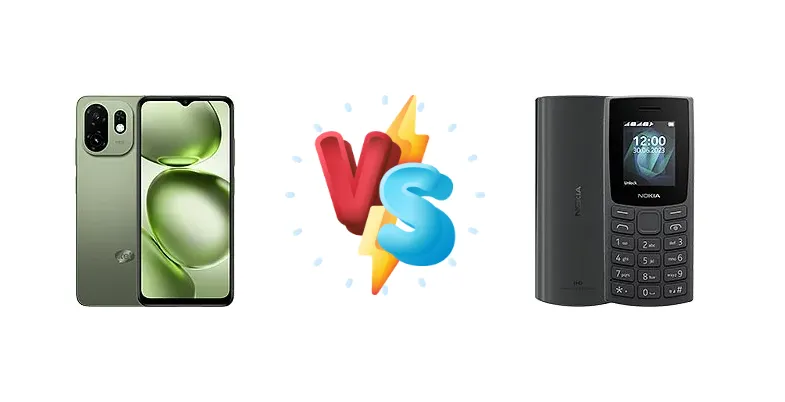
The itel A100C and Nokia 105 4G 2nd Edition represent opposite ends of the mobile spectrum. The itel aims to deliver a smartphone experience at an incredibly low price point, while the Nokia 105 4G clings to the simplicity and durability of a traditional feature phone with the added benefit of 4G connectivity. This comparison dissects their core differences to help you determine which device best fits your needs.
🏆 Quick Verdict
For users needing smartphone functionality like app access and internet browsing, the itel A100C is the clear winner, thanks to its Unisoc T7100 processor. However, if long battery life, extreme durability, and a simple user interface are paramount, the Nokia 105 4G remains a compelling, albeit limited, option.
| Network |
|---|
| 2G bands | GSM 850 / 900 / 1800 / 1900 | GSM 900 / 1800 |
| 3G bands | HSDPA 850 / 900 / 2100 | HSDPA 850 / 900 / 1700(AWS) / 1900 / 2100 |
| 4G bands | LTE | LTE |
| Speed | HSPA, LTE | HSPA, LTE |
| Technology | GSM / HSPA / LTE | GSM / HSPA / LTE |
| Launch |
|---|
| Announced | 2025, October 06 | 2024, December |
| Status | Available. Released 2025, October | Available. Released 2024, December |
| Body |
|---|
| Dimensions | 8.5 mm thickness | 121.5 x 50 x 14.4 mm (4.78 x 1.97 x 0.57 in) |
| SIM | Nano-SIM + Nano-SIM | · Nano-SIM· Nano-SIM + Nano-SIM |
| Weight | - | 93 g (3.28 oz) |
| Display |
|---|
| Resolution | 720 x 1612 pixels, 20:9 ratio (~267 ppi density) | 120 x 160 pixels, 4:3 ratio (~111 ppi density) |
| Size | 6.6 inches, 104.6 cm2 | 1.8 inches, 10.0 cm2 (~16.5% screen-to-body ratio) |
| Type | IPS LCD, 90Hz, 400 nits | IPS LCD |
| Platform |
|---|
| CPU | Octa-core 1.8 GHz | - |
| Chipset | Unisoc T7100 | - |
| GPU | PowerVR GE8322 | - |
| OS | Android 15 (Go edition), itel OS 15 | - |
| Memory |
|---|
| Call records | - | Yes |
| Card slot | microSDXC | microSDHC |
| Internal | 64GB 2GB RAM, 64GB 3GB RAM, 64GB 4GB RAM, 128GB 4GB RAM | 48MB 128MB RAM |
| Phonebook | - | Yes |
| Main Camera |
|---|
| Features | LED flash | - |
| Single | 8 MP | - |
| Video | 1080p@30fps | - |
| Selfie camera |
|---|
| Single | 5 MP | - |
| Video | Yes | - |
| Sound |
|---|
| 35mm jack | Yes | Yes |
| Loudspeaker | Yes | Yes |
| Comms |
|---|
| Bluetooth | Yes | 5.0, A2DP |
| Infrared port | Yes | - |
| NFC | No | No |
| Positioning | GPS | No |
| Radio | Unspecified | Wireless FM radio |
| USB | USB Type-C | USB Type-C |
| WLAN | Yes | No |
| Features |
|---|
| Games | - | Yes |
| Java | - | No |
| Messaging | - | SMS |
| Sensors | Fingerprint (side-mounted), accelerometer | - |
| Battery |
|---|
| Type | 5000 mAh | Li-Ion 1450 mAh, removable |
| Misc |
|---|
| Colors | Pure Black, Titanium Gold, Blaze Blue, Silk Green | Charcoal |
| Price | - | About 50 EUR |
itel A100C
- Smartphone functionality (apps, internet)
- More powerful processor for basic tasks
- Camera for photo capture
- Shorter battery life
- Lower build quality compared to Nokia
- Limited storage and RAM
Nokia 105 4G 2nd Edition
- Exceptional battery life (days/weeks)
- Durable and rugged design
- Simple and easy-to-use interface
- Limited functionality (no apps)
- Basic call and text features only
- Small, low-resolution display
Display Comparison
Given the Nokia 105 4G's feature phone nature, detailed display specifications are unavailable. It likely features a small, low-resolution color display suitable for basic text and icon viewing. The itel A100C, while also entry-level, benefits from a larger screen size, though specifics like resolution and panel type are not provided. The A100C’s display will be crucial for app usability, a feature entirely absent on the Nokia.
Camera Comparison
Camera details for the Nokia 105 4G are typically minimal or non-existent. The itel A100C likely includes a basic camera setup, but without specific sensor information, assessing its image quality is difficult. However, the presence of *any* camera on the itel A100C provides a functionality entirely absent on the Nokia 105 4G, allowing for basic photo capture. The A100C’s camera, even if low-resolution, offers a level of versatility the Nokia cannot match.
Performance
The itel A100C’s Unisoc T7100, an octa-core processor clocked at 1.8 GHz, represents a significant leap in processing power compared to the Nokia 105 4G. The Nokia 105 4G relies on a basic chipset designed for call functionality and simple tasks. The Unisoc T7100 enables the itel A100C to run Android apps, browse the web, and handle multitasking, albeit at a basic level. The Nokia 105 4G is limited to pre-installed apps and basic features. The core count difference alone highlights the A100C’s capability for more complex operations.
Battery Life
The Nokia 105 4G excels in battery life, typical of feature phones. Its low-power chipset and simple display contribute to days, even weeks, of standby time. The itel A100C, with its more demanding processor and larger display, will have a significantly shorter battery life, likely lasting a day or less with moderate use. While the A100C may offer faster charging (specifications unavailable), the Nokia 105 4G’s longevity is a major advantage for users prioritizing minimal charging.
Buying Guide
Buy the itel A100C if you need access to apps, social media, and basic internet browsing, and are willing to compromise on camera quality and overall performance. Buy the Nokia 105 4G 2nd Edition if you prioritize call quality, exceptional battery life, and a rugged, no-frills device for essential communication – a perfect secondary phone or for those new to mobile technology.
Frequently Asked Questions
❓ Is the Unisoc T7100 in the itel A100C powerful enough for WhatsApp and Facebook?
Yes, the Unisoc T7100 is capable of running apps like WhatsApp and Facebook, though performance will be basic. Expect some lag when switching between apps or loading media. It's sufficient for light social media use, but not for demanding games or multitasking.
❓ Can I use the Nokia 105 4G as a hotspot for other devices?
While the Nokia 105 4G supports 4G connectivity, its hotspot functionality is extremely limited, if available at all. It's primarily designed for voice calls and text messaging, not for sharing its internet connection with other devices.
❓ Does the itel A100C support expandable storage via microSD card?
While not explicitly stated in the provided data, most entry-level smartphones like the itel A100C *do* include a microSD card slot for expandable storage. This is crucial given the limited internal storage typically found in this price range.