
Infinix Zero Ultra vs Xiaomi Redmi Note 12 Pro+: The Ultimate Showdown
| Phones Images | |||||
|---|---|---|---|---|---|
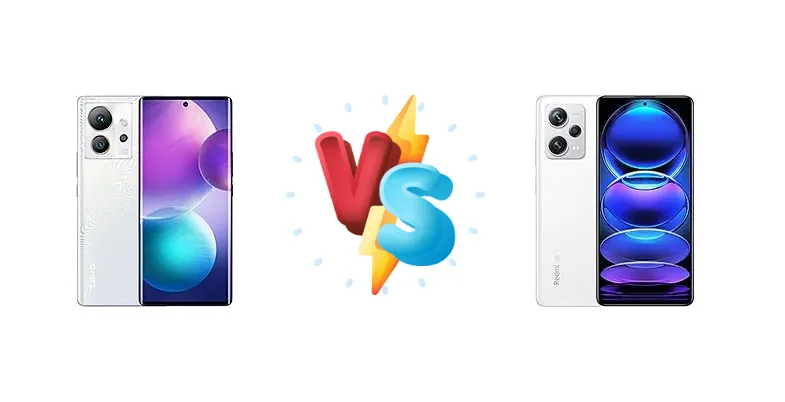
|
🏆 Quick Verdict
The Redmi Note 12 Pro+ edges out the Zero Ultra thanks to its superior battery life, slightly better performance, and refined software experience. While the Zero Ultra boasts incredibly fast charging, the Redmi Note 12 Pro+'s overall package makes it the more compelling choice for most users.
| PHONES | ||
|---|---|---|
| Phone Names | Infinix Zero Ultra | Xiaomi Redmi Note 12 Pro+ |
| Network | ||
|---|---|---|
| 2G bands | GSM 850 / 900 / 1800 / 1900 | GSM 850 / 900 / 1800 / 1900 - SIM 1 & SIM 2 |
| 3G bands | HSDPA 850 / 900 / 1700(AWS) / 1900 / 2100 | HSDPA 800 / 850 / 900 / 1900 / 2100 |
| 4G bands | 1, 2, 3, 4, 5, 7, 8, 20, 28, 38, 40, 41, 66 | 1, 3, 5, 8, 19, 34, 38, 39, 40, 41 - International, China |
| 5G bands | 1, 2, 3, 5, 20, 28, 38, 40, 41, 71, 77, 78, 79 SA/NSA/Sub6 | 1, 3, 5, 8, 28, 38, 40, 41, 77, 78 SA/NSA - International |
| Speed | HSPA 42.2/11.5 Mbps, LTE Cat7 300/75 Mbps, 5G | HSPA, LTE-A (CA), 5G |
| Technology | GSM / HSPA / LTE / 5G | GSM / CDMA / HSPA / EVDO / LTE / 5G |
| 1, 3, 5, 7, 8, 20, 28, 38, 40, 41, 77, 78 SA/NSA/Sub6 | 1, 3, 5, 8, 28, 38, 41, 77, 78 SA/NSA - China | |
| Launch | ||
|---|---|---|
| Announced | 2022, October 05 | 2022, October 27 |
| Status | Available. Released 2022, October 25 | Available. Released 2022, November 01 |
| Body | ||
|---|---|---|
| Build | - | Glass front (Gorilla Glass 5), glass back |
| Dimensions | 165.5 x 74.5 x 8.8 mm - Coslight Silver165.5 x 75.1 x 9.2 mm - Genesis Noir | 162.9 x 76 x 8.9 mm (6.41 x 2.99 x 0.35 in) |
| SIM | Nano-SIM + Nano-SIM | Dual SIM (Nano-SIM, dual stand-by) |
| Weight | 213 g (7.51 oz) | 208.4 g (7.34 oz) |
| - | IP53, dust and splash resistant | |
| Display | ||
|---|---|---|
| Protection | Corning Gorilla Glass 3 | Corning Gorilla Glass 5 |
| Resolution | 1080 x 2400 pixels, 20:9 ratio (~387 ppi density) | 1080 x 2400 pixels, 20:9 ratio (~395 ppi density) |
| Size | 6.8 inches, 111.6 cm2 (~90.5% screen-to-body ratio) | 6.67 inches, 107.4 cm2 (~86.8% screen-to-body ratio) |
| Type | AMOLED, 120Hz, 900 nits (HBM) | OLED, 1B colors, 120Hz, Dolby Vision, HDR10+, 500 nits (typ), 900 nits (HBM) |
| Platform | ||
|---|---|---|
| CPU | Octa-core (2x2.5 GHz Cortex-A78 & 6x2.0 GHz Cortex-A55) | Octa-core (2x2.6 GHz Cortex-A78 & 6x2.0 GHz Cortex-A55) |
| Chipset | Mediatek Dimensity 920 (6 nm) | Mediatek MT6877V Dimensity 1080 (6 nm) |
| GPU | Mali-G68 MC4 | Mali-G68 MC4 |
| OS | Android 12, XOS 12 | Android 12, MIUI 13 |
| Memory | ||
|---|---|---|
| Card slot | No | No |
| Internal | 256GB 8GB RAM | 256GB 8GB RAM, 256GB 12GB RAM |
| - | UFS 2.2 | |
| Main Camera | ||
|---|---|---|
| Features | Dual-LED flash, HDR, panorama | Dual-LED dual-tone flash, HDR, panorama |
| Single | 32 MP, f/2.0, (wide) | - |
| Triple | 200 MP, f/2.0, (wide), 1/1.22", 0.64µm, dual pixel PDAF, OIS 13 MP, f/2.4, (ultrawide), AF 2 MP | 200 MP, f/1.7, 24mm (wide), 1/1.4", 0.56µm, PDAF, OIS 8 MP, f/2.2, 120˚ (ultrawide), 1/4", 1.12µm 2 MP, f/2.4, (macro) |
| Video | 4K@30fps, 1080p@30/60fps | 4K@30fps, 1080p@30/60/120fps, 720p@960fps |
| Selfie camera | ||
|---|---|---|
| Features | Dual-LED flash | HDR |
| Single | 32 MP, f/2.0, (wide) | 16 MP, f/2.5, (wide), 1/3.06", 1.0µm |
| Video | 1080p@30fps | 1080p@30/60fps |
| Sound | ||
|---|---|---|
| 3.5mm jack | No | Yes |
| 35mm jack | No | - |
| Loudspeaker | Yes, with dual speakers | Yes, with stereo speakers |
| - | 24-bit/192kHz audio | |
| Comms | ||
|---|---|---|
| Bluetooth | Yes | 5.2, A2DP, LE |
| Infrared port | - | Yes |
| NFC | Yes (market/region dependent) | Yes (market/region dependent) |
| Positioning | GPS | GPS (L1), GLONASS (G1), BDS (B1I+B1c), GALILEO (E1), QZSS (L1) |
| Radio | FM radio | No |
| USB | USB Type-C 2.0, OTG | USB Type-C 2.0, OTG |
| WLAN | Wi-Fi 802.11 a/b/g/n/ac/6, dual-band | Wi-Fi 802.11 a/b/g/n/ac/6, dual-band, Wi-Fi Direct |
| Features | ||
|---|---|---|
| Sensors | Fingerprint (under display, optical), accelerometer, gyro, proximity, compass | Fingerprint (side-mounted), accelerometer, proximity, gyro, compass |
| Battery | ||
|---|---|---|
| Charging | 180W wired, 100% in 12 min | 120W wired, PD3.0, 100% in 19 min (advertised) |
| Type | 4500 mAh | Li-Po 5000 mAh, non-removable |
| Misc | ||
|---|---|---|
| Colors | Coslight Silver, Genesis Noir | Arctic White, Iceberg Blue, Obsidian Black, Trend edition |
| Models | X6820 | 22101316UCP, 22101316UG |
| Price | About 500 EUR | $ 348.00 / £ 439.00 / € 399.00 / ₹ 29,949 |
| Tests | ||
|---|---|---|
| Battery life | - | Endurance rating 88h |
| Camera | - | Photo / Video |
| Display | - | Contrast ratio: Infinite (nominal) |
| Loudspeaker | - | -26.7 LUFS (Good) |
| Performance | - | AnTuTu: 498710 (v9) GeekBench: 2208 (v5.1), 2372 (v6) GFXBench: 22fps (ES 3.1 onscreen) |
Infinix Zero Ultra
- Incredibly fast 180W charging
- Unique design
- AMOLED display
- Potentially shorter battery life
- Less known camera performance
- Dimensity 920 chipset slightly less powerful
Xiaomi Redmi Note 12 Pro+
- Excellent battery life (88h endurance)
- Dimensity 1080 chipset
- Potentially versatile camera system
- PD3.0 charging
- 120W charging is slower than Zero Ultra
- Advertised 'infinite' contrast ratio is nominal
- Software experience can vary by region
Display Comparison
Both phones feature AMOLED displays, offering vibrant colors and deep blacks. The Redmi Note 12 Pro+ advertises an 'infinite' contrast ratio, which is a nominal claim, but suggests excellent image quality. The Zero Ultra likely has a slightly higher refresh rate, potentially offering smoother scrolling, but specific details are needed for a definitive comparison. Screen brightness and color accuracy are key factors to consider, and reviews will provide more clarity.
Camera Comparison
The Redmi Note 12 Pro+ is expected to have a more versatile camera system, likely featuring a high-resolution main sensor (potentially 200MP) and improved image processing. The Zero Ultra's camera capabilities are less clear from the provided specs, but it likely focuses on delivering vibrant and shareable photos. Detailed camera comparisons, including low-light performance and video quality, are crucial.
Performance
The Redmi Note 12 Pro+'s Dimensity 1080 chipset holds a slight advantage over the Zero Ultra's Dimensity 920. While both are capable of handling everyday tasks and moderate gaming, the Dimensity 1080 generally offers better sustained performance and efficiency. Real-world usage and gaming benchmarks will reveal the extent of this difference.
Battery Life
The Redmi Note 12 Pro+ shines in this category with its impressive 88h endurance rating. The Zero Ultra's 180W charging is undeniably fast, but it doesn't compensate for potentially shorter battery life. The Redmi Note 12 Pro+'s larger battery capacity and efficient chipset contribute to its superior battery performance.
Buying Guide
The Infinix Zero Ultra is ideal for users prioritizing blazing-fast charging and a unique design. The Xiaomi Redmi Note 12 Pro+ is a better fit for those seeking long battery life, a reliable camera system, and a more polished software experience.