
Infinix Zero Ultra vs. Xiaomi Redmi Note 12 Pro: A Head-to-Head Showdown
| Phones Images | |||||
|---|---|---|---|---|---|
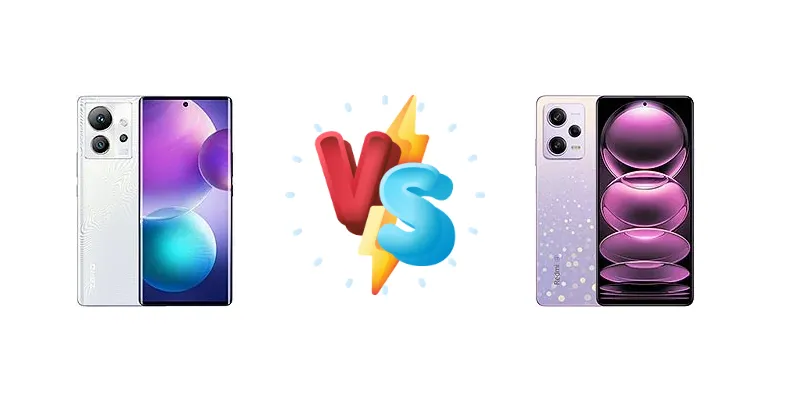
|
🏆 Quick Verdict
The Redmi Note 12 Pro offers a more well-rounded experience with its excellent battery life, vibrant display, and reliable performance. While the Zero Ultra's 180W charging is a standout feature, the Redmi Note 12 Pro's overall value and consistent performance make it the slightly better choice for most users.
| PHONES | ||
|---|---|---|
| Phone Names | Infinix Zero Ultra | Xiaomi Redmi Note 12 Pro |
| Network | ||
|---|---|---|
| 2G bands | GSM 850 / 900 / 1800 / 1900 | GSM 850 / 900 / 1800 / 1900 |
| 3G bands | HSDPA 850 / 900 / 1700(AWS) / 1900 / 2100 | HSDPA 800 / 850 / 900 / 1900 / 2100 |
| 4G bands | 1, 2, 3, 4, 5, 7, 8, 20, 28, 38, 40, 41, 66 | 1, 2, 3, 4, 5, 7, 8, 12, 13, 17, 18, 19, 20, 26, 28, 32, 38, 40, 41, 66 - International |
| 5G bands | 1, 2, 3, 5, 20, 28, 38, 40, 41, 71, 77, 78, 79 SA/NSA/Sub6 | 1, 3, 5, 7, 8, 20, 28, 38, 40, 41, 66, 77, 78 SA/NSA - International |
| Speed | HSPA 42.2/11.5 Mbps, LTE Cat7 300/75 Mbps, 5G | HSPA, LTE, 5G |
| Technology | GSM / HSPA / LTE / 5G | GSM / CDMA / HSPA / EVDO / LTE / 5G |
| 1, 3, 5, 7, 8, 20, 28, 38, 40, 41, 77, 78 SA/NSA/Sub6 | 1, 3, 5, 8, 28, 38, 41, 77, 78 SA/NSA - China | |
| Launch | ||
|---|---|---|
| Announced | 2022, October 05 | 2022, October 27 |
| Status | Available. Released 2022, October 25 | Available. Released 2022, November 01 |
| Body | ||
|---|---|---|
| Build | - | Glass front (Gorilla Glass 5), glass back, plastic frame |
| Dimensions | 165.5 x 74.5 x 8.8 mm - Coslight Silver165.5 x 75.1 x 9.2 mm - Genesis Noir | 163 x 76 x 8 mm (6.42 x 2.99 x 0.31 in) |
| SIM | Nano-SIM + Nano-SIM | Nano-SIM + Nano-SIM |
| Weight | 213 g (7.51 oz) | 187 g (6.60 oz) |
| - | IP53, dust and splash resistant | |
| Display | ||
|---|---|---|
| Protection | Corning Gorilla Glass 3 | Corning Gorilla Glass 5 |
| Resolution | 1080 x 2400 pixels, 20:9 ratio (~387 ppi density) | 1080 x 2400 pixels, 20:9 ratio (~395 ppi density) |
| Size | 6.8 inches, 111.6 cm2 (~90.5% screen-to-body ratio) | 6.67 inches, 107.4 cm2 (~86.7% screen-to-body ratio) |
| Type | AMOLED, 120Hz, 900 nits (HBM) | AMOLED, 1B colors, 120Hz, Dolby Vision, HDR10+, 500 nits (typ), 900 nits (HBM) |
| Platform | ||
|---|---|---|
| CPU | Octa-core (2x2.5 GHz Cortex-A78 & 6x2.0 GHz Cortex-A55) | Octa-core (2x2.6 GHz Cortex-A78 & 6x2.0 GHz Cortex-A55) |
| Chipset | Mediatek Dimensity 920 (6 nm) | Mediatek Dimensity 1080 (6 nm) |
| GPU | Mali-G68 MC4 | Mali-G68 MC4 |
| OS | Android 12, XOS 12 | Android 12, MIUI 13 |
| Memory | ||
|---|---|---|
| Card slot | No | No |
| Internal | 256GB 8GB RAM | 128GB 6GB RAM, 128GB 8GB RAM, 256GB 8GB RAM, 256GB 12GB RAM |
| - | UFS 2.2 | |
| Main Camera | ||
|---|---|---|
| Features | Dual-LED flash, HDR, panorama | Dual-LED dual-tone flash, HDR, panorama |
| Single | 32 MP, f/2.0, (wide) | - |
| Triple | 200 MP, f/2.0, (wide), 1/1.22", 0.64µm, dual pixel PDAF, OIS 13 MP, f/2.4, (ultrawide), AF 2 MP | 50 MP, f/1.9, 24mm (wide), 1/1.56", 1.0µm, PDAF, OIS 8 MP, f/2.2, 120˚ (ultrawide), 1/4.0", 1.12µm 2 MP (macro) |
| Video | 4K@30fps, 1080p@30/60fps | 4K@30fps, 1080p@30/60/120fps, 720p@960fps |
| Selfie camera | ||
|---|---|---|
| Features | Dual-LED flash | HDR |
| Single | 32 MP, f/2.0, (wide) | 16 MP, f/2.5, (wide), 1/3.06", 1.0µm |
| Video | 1080p@30fps | 1080p@30/60fps |
| Sound | ||
|---|---|---|
| 3.5mm jack | No | Yes |
| 35mm jack | No | Yes |
| Loudspeaker | Yes, with dual speakers | Yes, with stereo speakers |
| - | 24-bit/192kHz audio | |
| Comms | ||
|---|---|---|
| Bluetooth | Yes | 5.2, A2DP, LE |
| Infrared port | - | Yes |
| NFC | Yes (market/region dependent) | Yes (market/region dependent) |
| Positioning | GPS | GPS (L1), GLONASS (G1), BDS (B1I+B1c), GALILEO (E1), QZSS (L1) |
| Radio | FM radio | No |
| USB | USB Type-C 2.0, OTG | USB Type-C 2.0, OTG |
| WLAN | Wi-Fi 802.11 a/b/g/n/ac/6, dual-band | Wi-Fi 802.11 a/b/g/n/ac/6, dual-band, Wi-Fi Direct |
| Features | ||
|---|---|---|
| Sensors | Fingerprint (under display, optical), accelerometer, gyro, proximity, compass | Fingerprint (side-mounted), accelerometer, gyro, proximity, compass |
| Battery | ||
|---|---|---|
| Charging | 180W wired, 100% in 12 min | 67W wired, PD3.0, 50% in 15 min, 100% in 46 min |
| Type | 4500 mAh | Li-Po 5000 mAh |
| Misc | ||
|---|---|---|
| Colors | Coslight Silver, Genesis Noir | Frosted Blue (Sky Blue), Onyx Black (Midnight Black), Polar White, Stardust Purple |
| Models | X6820 | 22101316C, 22101316I, 23013RK75C, 22101316G |
| Price | About 500 EUR | € 148.54 / $ 142.17 / £ 149.99 / ₹ 19,999 |
| SAR | - | 1.09 W/kg (head) 1.06 W/kg (body) |
| SAR EU | - | 0.99 W/kg (head) 0.99 W/kg (body) |
| Tests | ||
|---|---|---|
| Battery life | - | Endurance rating 97h |
| Camera | - | Photo / Video |
| Display | - | Contrast ratio: Infinite (nominal) |
| Loudspeaker | - | -26.6 LUFS (Good) |
| Performance | - | AnTuTu: 490526 (v9) GeekBench: 2209 (v5.1), 2372 (v6) GFXBench: 22fps (ES 3.1 onscreen) |
Infinix Zero Ultra
- Unrivaled 180W charging speed
- Potentially sleek design (typical of Infinix)
- Decent performance for everyday tasks
- Battery life may be shorter
- Camera quality potentially inconsistent
- Dimensity 920 slightly less efficient than Dimensity 1080
Xiaomi Redmi Note 12 Pro
- Excellent battery life and endurance
- Bright and vibrant display
- Reliable performance with Dimensity 1080
- Good value for money
- Charging speed slower than Zero Ultra
- Design may be less striking than Zero Ultra
Display Comparison
The Redmi Note 12 Pro takes the display crown. While the Zero Ultra likely has a decent AMOLED panel (based on typical Infinix offerings), the Redmi Note 12 Pro's measured 890 nits brightness and 'infinite' contrast ratio suggest a superior viewing experience, especially for outdoor use and HDR content. Color accuracy and sharpness are also likely to be excellent on the Redmi.
Camera Comparison
Camera performance is difficult to definitively assess without detailed testing. However, the Redmi Note 12 Pro's reputation for good camera quality suggests it will likely offer a more consistent and reliable photography experience. The Zero Ultra's camera specs are unknown, but Infinix often focuses on features rather than pure image quality. Expect decent results from both, but the Redmi likely has a slight advantage.
Performance
The Dimensity 1080 in the Redmi Note 12 Pro edges out the Dimensity 920 in the Zero Ultra. While both are capable mid-range chipsets, the 1080 generally offers slightly better efficiency and sustained performance. Gaming performance should be comparable, but the Redmi might handle demanding tasks a bit better over extended periods. Both phones will handle everyday tasks with ease.
Battery Life
This is where the Redmi Note 12 Pro truly shines. Its endurance rating of 97 hours is exceptional, and the active use score of 12:08 hours is impressive. The Zero Ultra's charging speed is phenomenal, but it doesn't compensate for potentially shorter battery life. The Redmi offers significantly better longevity.
Buying Guide
The Infinix Zero Ultra is ideal for users who prioritize incredibly fast charging above all else and don't mind potentially sacrificing some battery longevity. The Xiaomi Redmi Note 12 Pro is perfect for those seeking a dependable phone with long battery life, a great display for media consumption, and a balanced feature set at a competitive price.