
Infinix Zero Ultra vs Samsung Galaxy S23 FE: A Deep Dive into Speed and Refinement
| Phones Images | |||||
|---|---|---|---|---|---|
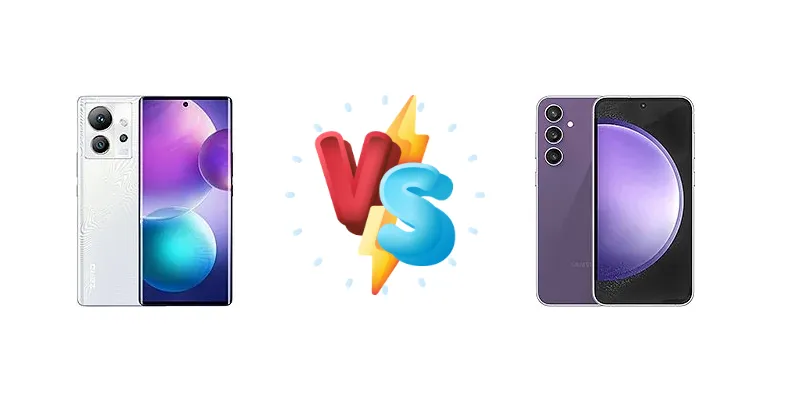
|
🏆 Quick Verdict
For the average user prioritizing a polished software experience, reliable camera performance, and long-term support, the Samsung Galaxy S23 FE is the stronger choice. However, the Infinix Zero Ultra’s unparalleled 180W charging is a game-changer for those constantly battling battery anxiety and willing to trade some software polish.
| PHONES | ||
|---|---|---|
| Phone Names | Infinix Zero Ultra | Samsung Galaxy S23 FE |
| Network | ||
|---|---|---|
| 2G bands | GSM 850 / 900 / 1800 / 1900 | GSM 850 / 900 / 1800 / 1900 |
| 3G bands | HSDPA 850 / 900 / 1700(AWS) / 1900 / 2100 | HSDPA 850 / 900 / 1700(AWS) / 1900 / 2100 |
| 4G bands | 1, 2, 3, 4, 5, 7, 8, 20, 28, 38, 40, 41, 66 | 1, 2, 3, 4, 5, 7, 8, 12, 13, 17, 20, 26, 28, 38, 40, 41, 66 - International |
| 5G bands | 1, 2, 3, 5, 20, 28, 38, 40, 41, 71, 77, 78, 79 SA/NSA/Sub6 | 1, 2, 3, 5, 7, 8, 20, 28, 38, 40, 41, 66, 77, 78 SA/NSA/Sub6 - International |
| Speed | HSPA 42.2/11.5 Mbps, LTE Cat7 300/75 Mbps, 5G | HSPA, LTE, 5G |
| Technology | GSM / HSPA / LTE / 5G | GSM / HSPA / LTE / 5G |
| 1, 3, 5, 7, 8, 20, 28, 38, 40, 41, 77, 78 SA/NSA/Sub6 | - | |
| Launch | ||
|---|---|---|
| Announced | 2022, October 05 | 2023, October 04 |
| Status | Available. Released 2022, October 25 | Available. Released 2023, October 05 |
| Body | ||
|---|---|---|
| Build | - | Glass front (Gorilla Glass 5), glass back (Gorilla Glass 5), aluminum frame |
| Dimensions | 165.5 x 74.5 x 8.8 mm - Coslight Silver165.5 x 75.1 x 9.2 mm - Genesis Noir | 158 x 76.5 x 8.2 mm (6.22 x 3.01 x 0.32 in) |
| SIM | Nano-SIM + Nano-SIM | · Nano-SIM· Nano-SIM + Nano-SIM· Nano-SIM + Nano-SIM + eSIM (max 2 at a time) |
| Weight | 213 g (7.51 oz) | 209 g (7.37 oz) |
| Display | ||
|---|---|---|
| Protection | Corning Gorilla Glass 3 | Corning Gorilla Glass 5 |
| Resolution | 1080 x 2400 pixels, 20:9 ratio (~387 ppi density) | 1080 x 2340 pixels, 19.5:9 ratio (~403 ppi density) |
| Size | 6.8 inches, 111.6 cm2 (~90.5% screen-to-body ratio) | 6.4 inches, 100.5 cm2 (~83.2% screen-to-body ratio) |
| Type | AMOLED, 120Hz, 900 nits (HBM) | Dynamic AMOLED 2X, 120Hz, HDR10+, 1450 nits (peak) |
| Platform | ||
|---|---|---|
| CPU | Octa-core (2x2.5 GHz Cortex-A78 & 6x2.0 GHz Cortex-A55) | Octa-core (1x2.8 GHz Cortex-X2 & 3x2.50 GHz Cortex-A710 & 4x1.8 GHz Cortex-A510) - InternationalOcta-core (1x3.00 GHz Cortex-X2 & 3x2.50 GHz Cortex-A710 & 4x1.80 GHz Cortex-A510) - USA |
| Chipset | Mediatek Dimensity 920 (6 nm) | Exynos 2200 (4 nm) - InternationalQualcomm SM8450 Snapdragon 8 Gen 1 (4 nm) - USA |
| GPU | Mali-G68 MC4 | Xclipse 920 - InternationalAdreno 730 - USA |
| OS | Android 12, XOS 12 | Android 13, up to 4 major Android upgrades, One UI 8 |
| Memory | ||
|---|---|---|
| Card slot | No | No |
| Internal | 256GB 8GB RAM | 128GB 8GB RAM, 256GB 8GB RAM |
| Main Camera | ||
|---|---|---|
| Features | Dual-LED flash, HDR, panorama | LED flash, HDR, panorama |
| Single | 32 MP, f/2.0, (wide) | - |
| Triple | 200 MP, f/2.0, (wide), 1/1.22", 0.64µm, dual pixel PDAF, OIS 13 MP, f/2.4, (ultrawide), AF 2 MP | 50 MP, f/1.8, 23mm (wide), 1/1.57", 1.0µm, dual pixel PDAF, OIS 8 MP, f/2.4, 76mm (telephoto), 1/4.5", 1.0µm, PDAF, OIS, 3x optical zoom 12 MP, f/2.2, 13mm, 123˚ (ultrawide), 1/3.0", 1.12µm |
| Video | 4K@30fps, 1080p@30/60fps | 8K@24fps, 4K@30/60fps, 1080p@30/60/120/240fps |
| Selfie camera | ||
|---|---|---|
| Features | Dual-LED flash | - |
| Single | 32 MP, f/2.0, (wide) | 10 MP, f/2.4, 25mm (wide), 1/3.0", 1.22µm |
| Video | 1080p@30fps | 4K@30/60fps, 1080p@30/60fps; gyro-EIS |
| Sound | ||
|---|---|---|
| 3.5mm jack | No | - |
| 35mm jack | No | No |
| Loudspeaker | Yes, with dual speakers | Yes, with stereo speakers |
| Comms | ||
|---|---|---|
| Bluetooth | Yes | 5.3, A2DP, LE |
| NFC | Yes (market/region dependent) | Yes |
| Positioning | GPS | GPS, GLONASS, GALILEO, BDS |
| Radio | FM radio | Unspecified |
| USB | USB Type-C 2.0, OTG | USB Type-C, OTG |
| WLAN | Wi-Fi 802.11 a/b/g/n/ac/6, dual-band | Wi-Fi 802.11 a/b/g/n/ac/6e, dual-band, Wi-Fi Direct |
| Features | ||
|---|---|---|
| Sensors | Fingerprint (under display, optical), accelerometer, gyro, proximity, compass | Fingerprint (under display, optical), accelerometer, gyro, compass |
| Battery | ||
|---|---|---|
| Charging | 180W wired, 100% in 12 min | 25W wired, PD3.0, 50% in 30 min 15W wireless Reverse wireless |
| Type | 4500 mAh | Li-Ion 4500 mAh |
| Misc | ||
|---|---|---|
| Colors | Coslight Silver, Genesis Noir | Mint, Cream, Graphite, Purple, Indigo, Tangerine |
| Models | X6820 | SM-S711B, SM-S711B/DS, SM-S711U1, SM-S711U, SM-S711W, SM-S7110, SM-S711N |
| Price | About 500 EUR | $ 219.95 / C$ 327.90 / £ 248.99 / € 272.00 / ₹ 34,999 |
| SAR | - | 0.80 W/kg (head) 0.72 W/kg (body) |
| SAR EU | - | 0.76 W/kg (head) 1.04 W/kg (body) |
Infinix Zero Ultra
- Unrivaled 180W fast charging
- Potentially more affordable price point
- Modern processor for everyday tasks
- Software experience may be less refined
- Camera performance likely trails the S23 FE
- Limited brand recognition
Samsung Galaxy S23 FE
- Polished software experience with One UI
- Strong camera system with OIS
- Reliable performance with Snapdragon or Exynos
- Significantly slower 25W charging
- Higher price compared to the Infinix Zero Ultra
- Potential for Exynos overheating (depending on region)
Display Comparison
The Samsung Galaxy S23 FE boasts a peak brightness of 985 nits, ensuring excellent visibility even in direct sunlight. While the Infinix Zero Ultra’s display specs are not provided, Samsung’s panel likely offers superior color accuracy and viewing angles. The S23 FE’s display technology, while not explicitly stated as LTPO, benefits from Samsung’s expertise in display calibration, resulting in a more consistent and visually pleasing experience. The absence of detailed display information for the Zero Ultra makes a direct comparison challenging, but the S23 FE holds a clear advantage in measured brightness.
Camera Comparison
The Samsung Galaxy S23 FE’s camera system is expected to deliver a more consistent and refined image processing experience, leveraging Samsung’s established camera algorithms. While specific sensor details are missing for the Infinix Zero Ultra, the S23 FE’s likely benefits from Optical Image Stabilization (OIS) on its main sensor, resulting in sharper images and smoother videos, particularly in low-light conditions. The S23 FE’s focus on photo and video quality, combined with Samsung’s image processing expertise, positions it as the superior choice for photography enthusiasts. The inclusion of a 2MP macro camera on the Zero Ultra is unlikely to significantly impact overall camera performance.
Performance
The Galaxy S23 FE utilizes either the Exynos 2200 (International) or Snapdragon 8 Gen 1 (USA) – both 4nm chips – while the Infinix Zero Ultra is powered by the 6nm MediaTek Dimensity 920. The 4nm process node of the Samsung chips offers improved power efficiency compared to the 6nm Dimensity 920, potentially leading to better sustained performance and reduced thermal throttling. The Snapdragon 8 Gen 1, with its Cortex-X2 core clocked at 3.0 GHz (vs 2.8 GHz in the Exynos and 2.5 GHz in the Dimensity), provides a performance edge in CPU-intensive tasks. However, the Dimensity 920’s Cortex-A78 cores are still capable, and its efficiency may be advantageous in less demanding scenarios. The S23 FE’s LPDDR5 RAM (spec not provided for Zero Ultra) further contributes to smoother multitasking.
Battery Life
The Infinix Zero Ultra’s 180W wired charging is its standout feature, achieving a 100% charge in just 12 minutes. This is dramatically faster than the Samsung Galaxy S23 FE’s 25W charging, which takes 30 minutes to reach 50%. While the S23 FE offers 15W wireless and reverse wireless charging, the Zero Ultra lacks these features. The Galaxy S23 FE’s active use score of 8:28h demonstrates solid battery life, but the Zero Ultra’s rapid charging mitigates concerns about battery capacity, allowing for quick top-ups throughout the day. The trade-off is convenience versus sheer charging speed.
Buying Guide
Buy the Infinix Zero Ultra if you absolutely need the fastest charging available and prioritize speed over brand recognition or software features. This phone is ideal for power users who frequently top up their battery throughout the day. Buy the Samsung Galaxy S23 FE if you value a well-rounded experience with a strong camera system, a refined user interface, and the backing of a major manufacturer, even if it means sacrificing the extreme charging speeds of the Infinix.